Soft Skills Matter in Business – Even if Not Measurable

Throughout my career, I have had the opportunity to work alongside some brilliant co-workers and clients. Whether it has been inside a public accounting firm, or as an advisor to engineering and construction companies, I am often surrounded by folks with strong technical skills. Since my role has usually involved organizational development, strategy, or marketing and business development, I have heard time and again how “soft and fuzzy” topics such as relationships, emotional intelligence, and creativity and communication are less needful than the technical skills.

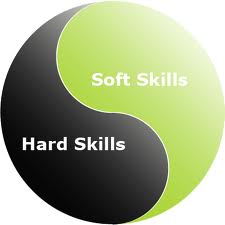
Susan Mazza, who writes a blog entitled Random Acts of Leadership, recognizes the dichotomy of “soft” versus “hard” skills in her recent post, “The Power of Soft.” She states in the post that, “the very need to distinguish “soft” vs. “hard” speaks to a paradigm that has long revered hard results as the only ones that really matter. Unless something can be quantified and measured the underlying belief is that it is somehow less valuable and hence of lesser importance.”Soft vs hard skills
Whether I have been in conversations with a CFO, a business owner, or a  VP of operations, I have heard over and again how that which cannot be measured must be insignificant and pale in priority. Mazza references a recent TED Talk by Dr. Brene’ Brown, “Leaning into Vulnerability” in which Brown shares how one of her research professors once stated, “If you cannot measure it, it doesn’t exist.” Mazza observes that many with advanced degrees subscribe to a scientific framework that assumes “measurable” is the only test for “real!”

Dr. Brown’s talk about vulnerability addressed the effort to view “soft” subjects with “hard” data. New insights have prevailed that challenge the long-held distinction within the business world of the value of each category of skills. Mazza’s view of the new awareness is that, “in our relentless pursuit to collect and analyze data, we all too often ignore the most important measure of all – our senses!”

The behavior we see and emotions we feel, according to Mazza, are the source of the most powerful tool we have as leaders and mangers – our ability to observe. She observes the following:

You have probably heard the phrase, “the tension was so thick you could cut it with a knife.” Can’t you feel that tension? How much productive work gets done when that kind of tension is present? Yet we often grind through what we see and feel through simple observation, knowing both the experience and the result are going to be less than satisfying.

Would having a mood Geiger Counter to assign the tension a number really make any difference?

By simply observing the mood and the impact it is having on your ability to fulfill your commitments, you are able to take action to make a difference in any moment. How to take that action is, of course, another subject.

The point here is the real power of soft comes from our innate ability to observe. So perhaps it’s time to give up our attachment to measuring all things and the belief that, “If you can’t measure it it doesn’t exist.”  Why not start  learning to better use the tools we have been born with – our senses – as an access to improving relationships, enhancing performance and creating great places to work?

The ability to navigate through tensions, create win-win scenarios, and build esprit de corps comes not from technical, “hard” skills, but from those soft and fuzzy assets that many C-suite executives and business owners underestimate. Think about your own organization and how greater respect for soft skills could make it a better place to work, where senses are valued equally with data and relationships that build goodwill are put on a pedestal.


Entrepreneurial Field of Dreams

Many communities across the United States are scrambling to come up with an agenda for entrepreneurship. With significant success stories in the San Francisco Bay and Boston areas, others have jumped onto a bandwagon. Each community pursuing the elusive prize is making wagers with a combination of public and private dollars to try and effect economic growth through encouraging start-ups. While the models being used are very different, the common denominator is that each effort, like a start-up itself, must determine where to focus to obtain the best trade-off of investment versus anticipated benefits.

Go For It  Start a BusinessInstead of one of the “hotbeds” of entrepreneurship, I like to look at what is working in the hinterlands. Columbia, Missouri certainly seems to fit that categorization at first blush. Mike Brooks leads REDI (Regional Economic Development, Inc.) in an effort to “promote positive economic expansion and provides increased economic opportunities in the Columbia area, assisting entrepreneurs, developing businesses, and companies relocating.”

His group sees the following as Benefits for Local Communities committed to the process:

  • Employment and Opportunity: Cities are places where people live, work, and play. Cities need opportunities for employment so citizens can afford to enjoy the metropolitan lifestyle. Harvard Business School professor Howard Stevenson defined entrepreneurship as “the pursuit of opportunity without regard to resources currently controlled.” Prosperous cities work to understand this dynamic, since entrepreneurs will establish their businesses in locales that support business growth. The jobs created by entrepreneurs not only support current citizens’ lifestyles, but they also make specific cities more attractive for future businesses to establish themselves in that location.
  • Tax Income: Communities require governance to provide a structured environment. The infrastructure of successful cities would not exist without money coming into local economies from the sale of products or services. The necessary public works and amenities that sustain a city depend on businesses, as well as resident taxes and purchases.
  • Identity and Character: Entrepreneurs help create the unique character of a community. This character enhances the sense of place and belonging that adds to the overall quality of life. Most entrepreneurs start businesses where they live, which allows companies to develop deeper connections to the community. Apple, Google, Dell, and HP started as entrepreneurial companies that were identified with, and formed a strong relationship with, their surrounding communities.

In order for these benefits to accrue to the community, an entrepreneurial ecosystem has to be built. In Raleigh, the Innovate Raleigh initiative is the rallying cry for such dedicated efforts, though many others are tackling the challenge in differing ways. The important thing is to, as Brooks recommends,

Support Entrepreneurs

  • Recognition and Shared Goals: Already-established entrepreneurs in the community can greatly help city organizations focus on effective economic development, prioritizing incentives, and planning strategies to encourage business growth. The presence of colleges or universities can also be a great channel for enticing businesses to launch or expand in a community. A diverse population of students, professors, visitors, and residents allows for more variety in business ventures.
  • Community Programs: Several communities around the nation continually find successful ways to encourage local entrepreneurs. In the 1980s, the city of Littleton, Colo., decided to focus on homegrown businesses as a community growth strategy. They established “economic gardening,” which focused on bringing sophisticated, corporate-level tools like database research, geographic information systems, search engine optimization, and social network mapping to small businesses within Littleton. This nurturing environment proved successful and serves as a model for similar communities throughout the nation.

Other best practices for supporting entrepreneurs have less to do with cool co-working spaces and meetups and more to do with helping someone who’s never run a business sort through what they will face. A proven entrepreneurship curriculum, complemented by personal mentoring of the founders by experienced start-up veterans, is so needful and should be a part of every community’s offering to all entrepreneurs they hope to serve.

Your Online Content Needs a Strategy

Many of my clients have made the jump into the digital age with their marketing. They know that they need to be involved in social media, but often have never heard of content management. While I do not pretend to be a content expert, I have picked up on some best practices over time and try to apply those to my own firm and the clientele I serve. My email inbox receives regular updates to keep me abreast of what thought leaders have to say about content. Over the weekend, I read about “8 Content Marketing Mistakes to Avoid,” a whitepaper that was very well written. The authors/sources quoted include Heinz Marketing’s Matt Heinz, Marketing Interactions’ Ardath Albee, Babcock & Jenkins’ Carmen Hill, The Funnelholic’s Craig Rosenberg, and The Sales Lion’s Marcus Sheridan. 

Excerpts appear below, followed by my own formatting for emphasis, observation and commentary:

1. Don’t neglect to do the groundwork. Before you start any marketing activity, you have to know why you’re doing it. How does this activity translate to immediate or eventual sales and revenue? (Heinz)

You have to know (to) whom you’re talking, what they need and want to know, and where their interests intersect with yours. (Hill)

2. Don’t focus on yourself—focus on the buyer instead. Think like the end user, not like a business owner. Great content marketing is about education.  To be great at content marketing, the focus has to be about the reader, and not the company/writer. (Sheridan)

Our content needs a lot less “we” and a lot more “you.” (Hill).

3. Don’t pitch your product at every stage. Give the people what they want: interesting content that makes their life better. (Rosenberg)

What are your customer’s issues? What do they need help with, right now? That’s the content that will spread like wildfire for you. (Heinz)

Question words4. Don’t overlook calls to action. Every content asset should have a call to action. Build pathways and tell connected stories that help to build momentum through the pipe. (Albee)

5. Don’t forget that effective content marketing is a two-way street. To really accelerate your audience and impact, you must devote time to responding, commenting, engaging questions and so on. (Heinz)

6. Don’t produce content that lacks substance. Audrey Gray of American Express advised that we put our energy into what we’re making rather than the platform: “Create content that makes you feel smarter, celebrates human artistry, or that has with real-world value.” (Hill)

7. Don’t treat content marketing as an afterthought. Content marketing is a practice that integrates all of your content-driven initiative into a consistent and holistic experience for your target markets. Content marketing is at its best when it’s used to pull everything together so that an experience in one channel makes sense or adds value when the audience switches to another channel. (Albee)

8. Don’t underestimate the power of various formats. Written content may be the core of your content strategy, but don’t forget video. Or podcasts. Or short, embedded slide presentations. Or whatever other formats your audience naturally gravitates toward. (Heinz) 

Marketers will benefit tremendously by embracing the Rule of 5. Take one topic and develop 5 different angles to approach it, creating 5 different formats of content. (Albee)

Sound advice from some stellar content curators and marketers. Incorporate these principles into your own business environment. Become engaging, relevant, and indispensable. Doing so will build a loyal following that can be turned into either revenues or referrals that produce revenues. At the very least, your brand gains equity for your efforts and that is no small feat!


Main Street Start-ups Better


Sean Ogle, the founder of Location Rebel, once faced the daunting challenge of whether to go the start-up route or begin a lifestyle business. He took the time to examine the two alternatives and feels that lifestyle businesses are a better option for many people. He offers 7 reasons why he thinks this way below:

1. You are not Instagram.

For every startup that sells and makes millions, there are hundreds — if not thousands — that fail or, even worse, continue to just barely make it, sucking the life out of you in the process.

2. Building a startup is building a 9-to-5.

While it’s fun to start up running on nothing but adrenaline and Red Bull, the excitement wanes and the monotony sets in after a few months. Many startup companies turn into really bad 9-to-5 jobs for the founders. For example, Jun Loayza who, after getting over a million in funding and successfully selling two companies, left his current startup to pursue a lifestyle business.

3. You won’t wait years to turn a profit.

When you work for yourself, your overhead is limited. Salaries, office space, benefits? That’s all on you. I started my most recent business with less than $500 and it took me three sales to become profitable. Most startups are lucky to be profitable after three years!

Lifestyle business4. You can work from a beach with a Mai Tai.

You know that dream everyone had after reading “The 4-Hour Workweek” where they’re chillin’ on a beach with a cocktail, working from a laptop? That really is possible. This year I’ve already worked from places like Vail, Playa del Carmen, Cuba, New York, China and Jordan among others — all without skipping a beat in my business.

5. You’ll have more flexibility than Gabby Douglas.

You wanted increased flexibility and control in your life? Fat chance in a startup, especially when you’re playing with someone else’s money. As a lifestyle entrepreneur, you truly have the flexibility to set your own schedule. For many, that’s more time with friends and family; for others, it’s travel and adventure. You get to decide.

6. Stress is minimized.

Thoughts like “How am I going to make payroll this month?” and “Revenues were 30 percent less than projections, what will the investors think?” or “My partners and I have drastically different opinions of where the business should go, what do I do?” are all common issues in a startup. A lifestyle entrepreneur has no one to answer to but themselves, thus reducing the stress that comes with common business problems. 

7. You can become a modern-day Renaissance person.

I can’t focus on just one thing; I’m always all over the place. Being a solopreneur has forced me to learn how to handle all aspects of business — marketing, accounting, sales…you name it, I do it. In this position, you grow your expertise and become a more well-rounded business person, and that will undoubtedly help you in any future endeavors. 


Much of what Ogle says has basis. Yet, when I think of a lifestyle business, the image that comes to mind is of a semi-retired person who has enough savings that income needs are very minimal. Solopreneur, a term used under the category of Renaissance leadership, seems more apt. The beauty of not being a sole proprietorship, however, is the opportunity to create jobs, build community, and share life with others. At EntreDot, we often refer to such an enterprise as a “Main Street business.” These types of businesses represent about 35%  of start-ups, where fast growth (often venture or angel-backed) is about 5%, and sole proprietorships about 60%. 

Let’s go create more Main Street businesses that have many of the benefits espoused above, but also help grow the economy for someone other than just ourselves!


Climbing Your Management Everest

Stretching oneself to the maximum can reveal what we are made of. Whether the subject matter is a test of mental strength or physical, it is exhilarating to overcome a daunting obstacle. Sir Edmund Hillary is celebrated for his perseverance in conquering Mount Everest. One of my LinkedIn contacts and an internationally known innovation resource is Gijs van Wulfen. Van Wulfen states that, in the 1950s, the route to Everest was closed by Chinese-controlled Tibet. Nepal allowed one expedition per year.

Sir Edmund Hillary had been part of a British reconnaissance expedition to the mountain  in 1951. The 1953 Everest expedition for which he is now famous consisted of a huge team of over 400 people. Expedition leader Hunt named two assault teams. Hillary and Norgay were the second assault team. The first team only reached the South Col, about 100 meters below the summit. Then Hillary and Norgay got their chance. They reached the 8,848-meter high summit, the highest point on Earth, at 11:30 a.m. on May 29, 1953.Mt Everest

Gijs says the following 10 management lessons came to mind as he read the Hillary accounts:

1. Passion. As a youngster, Hillary was a great dreamer, read many adventure books and walked many miles with his head in the clouds. He was unaware his passion for adventure would make him, together with Tenzing Norgay, the first man to set foot on the highest point on Earth.

2. Urgency. In 1952 the British heard that in 1954 the French had been given permission to attempt Everest. The British wanted more than anything to be first. The expedition just had to succeed.

3. Teamwork. Getting to the summit of Everest is all about teamwork. As Hillary wrote: “John Hunt and D Namgyal’s lift to the depot on the South-East Ridge; George Low, Alf Gregory and Ang Nyima with their superb support at Camp IX; and the pioneer effort by Charles Evans and Tom Bourdillon to the South Summit. Their contribution had enabled us to make such good progress.”

4. Courage. The higher you get on Everest the more courage you need. At 7,800 meters Hillary wrote in his diary: “Even wearing all my down clothing I found the icy breath from outside penetrating through my bones. A terrible sense of fear and loneliness dominated my thoughts. What is the sense of this all? I asked myself.”

5. Test. On the 1951 reconnaissance expedition, team members tested oxygen equipment and did research on high-altitude physiology. The results of both studies were important in determining the right approach for Everest in 1953.

6. Initiative. While in India, Hillary read in a newspaper that the British were taking an expedition to the south side of Mount Everest in 1951. He contacted expedition leader Eric Shipton and suggested that a couple of New Zealanders could make a substantial contribution to the team. And they were invited!

7. Choices. The British Himalayan Committee replaced the 1951 expedition leader Eric Shipton with Colonel John Hunt, a climber. After eight failed attempts on Everest they needed someone to the top first, before the French would have their chance.

8. Overcome setbacks. Along the way there are always major setbacks. After finding a new route up Everest during the reconnaissance expedition of 1951, the British heard that the Swiss had obtained permission for two attempts on Everest the following year. The only thing the British could do was wait and see if the Swiss would succeed.

9. Competition. Hunt proposed that Evans and Bourdillon should use the closed-circuit oxygen equipment to reach the South Summit and Norgay and Hillary would push to the top with the open-circuit oxygen. The competition fueled the eventual success of Hillary’s team.

10. Luck. Hillary, a New Zealander, was lucky to qualify as a British subject and be invited to join the British team. Secondly, in 1952 the Swiss failed to climb Everest on their two attempts. 

How do you view these management lessons in light of your own organization’s efforts to be innovative and competitive?