Jump Start Creativity For Growth

Matt May, who writes a blog for OPEN, recently described many businesses as having an entrepreneurial spirit that had gone “M.I.A.” He wrote of how established companies can become set in their ways, very resistant to change. It’s as though the status quo becomes hallowed and the perceived trouble of doing anything different keeps the organizations from innovation.

“As business begins to boom, the fight-to-survive instinct fades and the entrepreneurial spirit isn’t quite what it was when the company was a startup. Sometimes it’s completely M.I.A. More and more people seem to need more resources to get ideas implemented quickly. Eventually, the ability to flex, react and innovate is lost.

Addicted to Resources

But that’s not how the company began. Maybe it didn’t start in the proverbial basement or garage, but it certainly started with little of everything—money, space and labor. There was a goal, and a passion for reaching it. Those limits made the company more creative and resourceful than it is today. Today, the addiction to resources is blocking innovation.

The good news is that there’s a relatively simple (but not necessarily easy) fix. But before revealing it, it helps to physically experience what I’m referring to, because the complacency in question has a universal presence, no matter how creative or resourceful we think we are.

Greater Potential

Stand up, feet planted shoulder width apart, arms straight out at your sides, parallel to the floor, elbows locked. (Imagine Leonardo da Vinci’s sketch of the Vitruvian Man if you need a visual reference.)

Now, twist your torso all the way to right as far as you possibly can go. Look down your right arm and mentally mark your stopping point on the wall. Remember that mark.

Now, turn back around to face front. Now close your eyes and repeat the exercise, stopping when you think you’ve met your previous stopping point.

Now…go a little past it. Open your eyes.

Most people surpass their previous mark by a good margin, and are surprised when they do. The point is that we generally don’t know what our potential is until we put our capacity on trial. We don’t stretch the limits of what we are actually capable of. But every business needs to constantly stretch in positive ways to move the business forward, to remain relevant.

Embrace Limitations

The solution is to treat resource constraints the same way artists do. All artists work within the confines of their chosen mediums, and it’s the limits that spur their creativity. The canvas edge, the marble block, the eight musical notes—these are finite resources. It’s how we view and manage resource constraints that makes all the difference.

And that’s the key question: Are limited resources preventing innovation, or enabling it?

There’s only one right answer.

A team that doesn’t thrive on the challenge of limitations is a sure sign that big company sickness is lurking. It signals an inherent fear of failure in your company. And that spells danger for innovation, because most real innovation springs from failure and conflict. The bigger and more successful a company gets, the less they have tolerance for both. So they mismanage a valuable source of new thinking by adding a buffer zone: higher budgets, more layers and lower expectations.

Unfortunately, success usually isn’t what breeds the kind of thinking that produces the extraordinary results needed to add value and keep competitors at bay. In fact, success can often generate a defensive posture that discourages the very behavior that created it. It can absolutely stifle innovation.

Innovation—which is the specific tool of the entrepreneur—demands exploiting limits, not ignoring or lamenting them!”

Being able to create much out of little is a sign of innovation. When your company loses the will to break the mold, it’s a sign that you are becoming less competitive. Find ways to re-energize the creativity and risk-taking of your employees.
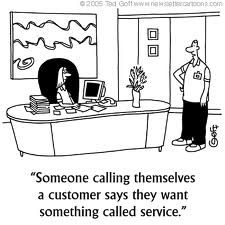

 

Wow Your Customer to Win

How many times have you heard a phrase like “user experience” or “customer experience” in the past decade? Quite a lot I bet–unless you live under a rock. Great companies from Starbucks to Ritz Carlton, Nordstrom’s to Apple have taken the time to be intentional about their offerings, including those small touches that are so memorable.

Paul Spiegelman is a business owner whom I follow on Twitter. He wrote for Inc. magazine over the weekend about a splendid resort experience he had recently. There were aspects of the stay where expectations were met. However, he was blown away by the special touches. Paul believes that small businesses would do well to:

1. Notice What’s Important

When my wife and I got to the check-in counter, we were assigned to our hotel room. The staffer noticed we had small children and immediately brought out a wagon full of stuffed animals and encouraged our kids to pick one. This seemingly small gesture showed the resort was paying attention to what is most important to us.

2. Be a Guide

Rather than just hand me the room key, the clerk stepped around the front desk, told me he was going to tour my family and me around the property and then escort us to our room. And that’s just what he did. Not sure how the hotel managed that with multiple people checking in at the same time, but it was impressive. Do you do this when you give clients direction?

3. Start the Morning Right

I love it when hotels offer morning coffee. But it is usually in very small cups, and you inevitably wind up going back repeatedly for more. At the (place we stayed), the coffee cups looked about the same size as a Starbucks Venti. And the coffee was free until 11 a.m. What a great way to start the day.

4. Empower the Unexpected

At breakfast one morning, we celebrated my 12-year-old nephew’s birthday. During the meal, unbeknownst to me or my family, our waiter slipped out of the hotel, went to his car, and brought back a book that he gave to my nephew as a gift. Can you imagine? What small, unexpected touches do you enable your employees to offer without having to ask permission?

5. Don’t Just Pass By

As usual, I often saw hotel employees in the hallways or outside walkways. But in addition to the standard “good morning” and pleasant smile, the workers went out of their way to purposely step aside and create a path for me, whether I was with a group or walking alone. Instead of two people mindlessly passing each other, we had a moment to interact.

6. Communicate Price Clearly

When I checked out of the hotel and asked for a bellman to help my family and me with our bags, he also brought our bill to the room so we could check it then and raise any issues or questions. I have never experienced that kind of active transparency; it was great to have someone make sure the details of the bill fit the service we paid for.

7. Leave Them With a Lasting Memory

When our car was loaded up and my family and I were ready to go, not only did we find the staffers had left two bottles of water in the car cup holders but also two logo baseball caps on the dashboard for my wife and me. We drove away with smiles on our faces.

Many of these noticeable expressions of customer care do not cost anything extra to provide, but make a huge impression. How do you show that you care about what’s most important to your customers? Are you the type who tells a customer what needs doing, or do you take the time to show? How do you go “above and beyond?” Do your customers feel respected by your actions? Have someone in your organization (as senior a level as possible is ideal) take the time to explain billing and offer to answer questions for customers. What memories would you like to build in the minds of your customers?

If you will think through these questions and best practices, you will win the hearts of your customers.


Resilient Leadership Anticipates Challenge

Leadership is full of challenges. It’s not so much whether problems will crop up, but how the leader responds. The ability to push through and come out on top is a hallmark of a resilient leader. Claudio Morelli, Superintendent/CEO of the Burnaby School District in British Columbia, thinks the ability to maintain resiliency is defined by elasticity, bend, stretch and not “breaking” during challenging situations:

All organizations encounter challenges, issues and difficulties everyday including financial shortfalls, downsizing, increased workloads, and succession issues. These challenges force the organization to turn inward and look at itself and its effectiveness. It is a time to regroup and assess where the organization stands.

If the organization embeds and nurtures a culture based on mutual trust and where all members of the organization strive to be trustworthy and treat one another with respect and caring, then you have a solid foundation to deal with the challenges and issues you face. But where do you begin? It begins with a focus on people and building/enhancing positive relationships.

Most people want to be part of the solution. They would like to have a sense that their ideas are heard, not necessarily accepted, but considered with some action taken. They want to be part of the team, participating, engaging and solving some of the challenges.

Inclusive leadership involves followers and teams. It engages the hearts, minds, and wills so that resiliency is imparted into the work group. 

Morelli’s 6 Steps to Lead When Facing Challenges

  • Make personal connections
  • Build important relationships
  • Interact face to face when possible
  • Be open, transparent and authentic
  • Model integrity with the right intent
  • Act on feedback and deliver results

When a leader takes the time to connect on a personal basis with followers, it demonstrates care and concern in something more than the task at hand. The investment of time in getting to know others pays off in multiple ways, not the least of which is learning about talents and interests that may lie beneath the surface. In the realm of human resources, the term “high potential” is used to identify those who strategically merit the attention of an organization’s leaders. Talent management is not the only reason to build strategic relationships…clients, key vendors, referral partners all are worth the effort to go deeper, beyond superficial workplace conversations.

The types and frequency of interactions are important in preparing a support structure to succeed in the face of challenge. Whenever possible, open up to those with whom you are working to build strategic relationships. Become more vulnerable, let them know what concerns you have, admit when you don’t have a solution and elicit the help of others.

Getting into the habit of acting with complete integrity is helpful in setting a good example, establishing an expectation, and creating a culture of trust. When others within the organization (or strategic relationships outside it) offer constructive input, be gracious. Listen, then act on what has been shared and communicate back the outcome(s) of implementing the advised course of action.

These leadership practices will enable your organization to withstand challenges through better collaboration and increased resiliency.

Lead Me – Don’t Manage Me!


“People don’t want to be managed. They want to be led. Whoever heard of a world manager? World leader, yes. Educational leader. Political leader. Religious leader. Community leader. Labor leader. Business leader. They lead. They don’t manage. The carrot always wins over the stick. Ask your horse. You can lead your horse to water but you can’t manage him to drink. If you want to manage somebody, manage yourself. Do that well and you’ll be read to stop managing. And start leading.”

-Printed by United Technologies Corporation in the Wall Street Journal

One of the most heated conversations we had in the MBA program at Elon (ranked #1 part-time program in the USA) was over the value of management versus leadership. One of our courses was in organizational leadership and many of the younger students did not enjoy the finesse and nuances of the subject matter. They wanted to stay in the realm of concrete, numbers driven topics wherein there is a clear cut “right” answer. Leadership, for people who have not held positions with substantial responsibility, is challenging to describe, pursue, evaluate, and articulate. Management, on the other hand, was easier for the cohort to articulate in terms of metrics and definitions that met with consensus.

Whether in class or on the job, very few people want to be managed per se, they would prefer to be led. Managing is a process better applied to resources rather than individual people. Even in our home lives, when we are trying to get our children to do the right thing, it is incumbent upon us as parents to inspire them to make good choices. Inspiration is one of the key results of leadership.

Cynthia Stewart, writing for the Lead Change Group’s website last week, made some keen observations about the dichotomy between management and leadership:

“One specific example of what I am talking about comes to mind that illustrates this perfectly.  In fact, I was speaking with a President of a company today and she mentioned the same example.  Most of us have been part of a United Way campaign.  In the early days, these campaigns were delegated to management to run.  Typically management would take the tact of talking to their employees about the importance of being a good citizen and helping to fund helping agencies so their patrons could have a hand up (effectively trying not to appear to strong arm you into giving so that the company goals could be met.)

Then, one year things changed.  The leaders asked for employee volunteers to lead the campaigns. Everyone couldn’t wait to show up to the next new event, and attendance and giving doubled and tripled.  You saw people showing their true talents, coming alive, doing things you had no idea they could do.  The fun quotient spiked, the giving exceeded goals, employee morale improved, and the new office stories were accompanied with more laughter.   Hmmm – no management in the picture.”

Stewart’s commentary reveals a gap in thought leadership. Many Millenials are misunderstood because Boomers think that they are too revolutionary and almost insubordinate. That’s because many in management are not leading them; they are trying to only tell them what to do. My experience with the younger generation is that they are in search of authentic leadership.

How can we individually and collectively make a commitment to leadership?


Add Value to Your Privately Owned Business

Most corporate governance articles, presentations, and conferences are focused on publicly owned businesses. With corporate and executive scandals galore occurring over the past few years, there have been outcries for better controls, systems, and oversight guidelines. Yet, the same emphasis and attention is grossly lacking in the privately owned business community. One of the areas in which governance best practices could be applied is in the realm of mergers and acquisitions. Nick Miller of Clayton Utz law firm in Australia offers some insights below for this unique situation:

Increasing the level of formal governance can assist in reducing risk, identifying issues that might emerge upon a sale and generally enhancing the credibility with which the business presents itself to potential buyers. Perhaps even more powerfully, governance is a means by which, both in fact and in perception, a business can present as less dependent on the involvement of its founders than it would without governance. This can add very significantly to value.

Many private business owners think that the absence of governance procedures makes them more flexible, more adaptable and more opportunistic. That may be so, but the benefits of that should be weighed against the benefits of formal governance when planning a sale. 

There are a range of ways to adopt some greater formality in governance:

  • without changing the make up of the board of a company, the company could implement a more structured system of monthly meetings. These may or may not be formal board meetings, but should nonetheless involve the directors and those who report into the CEO;
  • a company can set up one or more committees. These can be formal board committees or more informal, but they are set up to address areas of need, to bring in expertise and focus on how risk management can be improved and issues for the business addressed. Examples are an audit and risk committee, a brand development committee and an employee policies committee, to assist in developing those aspects of the business in readiness for sale. These committees might have outsiders on them and they might not, depending upon the need and the expertise available in the business;
  • an advisory board could be established. Properly structured, members of an advisory board will not carry director duties and liabilities and this can be a sensible stepping stone towards a more fully independent board;
  • one or more outsiders can be brought onto the board. This can be very beneficial, but it needs to be right for the business; and
  • governance can also be improved by developing appropriate governance policies and procedures.

Corporate buyers and private equity see many poorly organised privately‑owned businesses. They will take the opportunity to highlight the possible risks to them in undertaking an acquisition of a poorly organized or more risky business. Some investment in governance can dispel most of these apprehensions, and allow private business owners to defend the level of risk in the business and so achieve higher value for a seller. Nonetheless, formal governance should be introduced carefully, to ensure the owner’s ability to drive and control the business is not unduly impeded.

In summary, shareholder value is enhanced in privately owned businesses through better corporate governance. Opinions of value are enhanced by checks and balances, independent processes, and a decreased dependence on the founder(s). Make the necessary adjustments to your business. You will make better decisions, increase the market value of the business, and create an environment wherein others can grow in their roles and responsibilities.