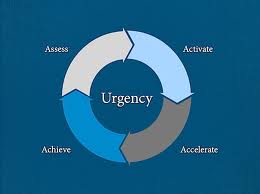
Urgency in Turnarounds

When a team has tried everything in their power to solve a dilemma and is unsuccessful, the turnaround manager must step in. The buck stops with him; if a third party cannot reach resolution with company staff, someone with more clout must reestablish credibility. Use of a consistent complain resolution process can prove quite effective. It frees the team up to not have to stress relationships with those with whom they have either had long term relationships or with whom they must transact business once the turnaround is complete. Even managers should appeal to the business owner or turnaround executive if a third party will not accept their efforts to resolve issues.

Doing the Job Effectively

Encouraging employees to perform their jobs thoroughly, to the point they exceed performance standards, is most easily done by providing responsibility and reward. Treat employees as peers, recognizing that they too have responsibilities and commitments. Offering them the opportunity to wield more authority is rarely rejected. Promote a diligent working atmosphere wherein employees want to go the extra mile.

Ask all employees to document any problems with suppliers, customers, or service providers. Often, taking it a step further and documenting issues with sales teams, distributors and governmental agencies (where appropriate) can provide a paper trail to  help the executive team and turnaround artist in their work to remove roadblocks. When relevant facts are understood, appropriate actions can be taken.

Dealing With a Lack of Resources

When a company is in the middle of a turnaround, certain items that would make work easier are not going to be available due to a lack of funds. Using skills and abilities creatively to overcome this lack of resources or other unpredicted occurrence as an example for employees to follow. In tough situations, executives should look for a way to overcome the situation rather than dwelling on the inconvenience caused.

Successful turnarounds are a tribute to employees who strive to overcome limitations and exceed performance standards rather than merely meet them. To bring work projects in early and under budget, everyone must strive to do much better than is required, constantly searching out ways to improve efficiency. No time can be wasted–every minute and every dollar that exceeds schedule or budget extends the distance between a struggling company and its ultimate goal of renewed profitability.

Following the Turnaround Plan

All employees need to be reminded that a plan has been developed to promote optimal recovery and that all actions taken are done so in accordance with the dictates of the plan. United by common objectives, the work force can and will help to implement the turnaround plan. Three essential principles apply:

  • Some short-term gains will be sacrificed for ling-term profitability.
  • Some long-term successes will have to be postponed for short-term cash flow.
  • The means of implementation is always open to suggestion and never open to argument.

Creating a Sense of Urgency

Certain goals, particularly dates and milestones, need to be met without fail. To accomplish these goals, a sense of urgency must prevail. Departures from the schedule can cause the company to lose out on windows of opportunity. The interest carrying cost of financing operations longer than anticipated is an example; if work projects are completed on time, lines of credit can be paid down sooner. Even one foot-dragging employee can impede the progress of the group, and the resulting missed deadlines can mean substantial financial losses.

Meet With Employees

Sit down with your staff and clearly and frankly describe the situation. Inform them that the company is experiencing some short-term problems in meeting its objectives and that actions are being undertaken to minimize long-term  impact. Explain and reiterate throughout the turnaround that company health can be restored through combined best efforts. Explain the turnaround plan, with an emphasis on the valuable role of each and every employee in reaching plan goals.

Meet With Management

Regular meetings with managers will be needed to discuss progress in detail. Begin with twice weekly meetings and progress to biweekly as the situation improves. Update reports should be given on activities since the prior meeting, with input required from managers from each department. Discuss problems and develop plans to resolve them within the meeting. Take advantage of a quorum of opinions to move the company forward in rapid-fire fashion.


 

Implementing Your Turnaround Plan

A turnaround plan presupposes that someone will be around to implement it. A lack of execution or inappropriate one (timing or lack of adaptation) will quickly undermine all earlier efforts that went into drafting the plan. Control over operations is therefore a must–no single part of the business should monopolize the company’s attention and efforts.

Controlling Operations

Motivation

The motivational skills of a “take charge” leader can enhance job performance in many ways. Many employees complain they are not being used effectively because they don’t have enough to do or their efforts are being applied inappropriately. Management that makes the most of employee work efforts has a knack for spotting actions that, if performed immediately, will have a tremendous, positive impact on company success.

Efficiency

To ensure that operations are monitored and controlled correctly, the individual who reviews system reports must make decisions based on indicators of company efficiency. For example, if variance reports show (project or product) costs exceeding budget, action must be taken immediately to prevent further overruns. Similarly, if non-payment has a vendor worried, the top financial manager must find a way to keep the vendor on board so a return to profitability can occur.

Sound management is exhibited when field operations or internal reports require responses to abnormalities. For example, a business owner in the midst of a turnaround had a new hire (< 2 months) supervisor request on Thursday to take Monday and Tuesday off to pursue some personal matters. The business owner was not in a production crunch and was short on cash, so he approved the time off–particularly since the supervisor was not using vacation (paid) time to take leave. When the supervisor strode onto the job Monday late morning, the owner was surprised. When he requested to work the balance of Monday and all of Tuesday, the owner declined the request, citing that she had to make other arrangements that inconvenienced others and that last-minute notice would not be accommodate in this or future instances.

In this instance, the owner did what was necessary to maintain control over operations. Though it may have ruffled the supervisor’s feathers for a few days, it demonstrated the importance of setting policies and commitments–and living by them. It was also to the owner’s advantage not to have to pay the supervisor for work that had been reassigned to someone else. Proper planning was used to make sure that someone would be able to supervise the work. Additional follow-up was necessary to make sure no problems were slowing down production for those two days. Had the owner failed to exercise sound management, proper planning, or follow-up, she would have lost time, money and credibility with others due to one employee’s circumstances.

Focusing on Common Objectives

Getting employees to focus on common objectives is a difficult task. Executives an managers who are able to motivate their workers to avoid distractions, do their jobs effectively, and remember to follow the turnaround plan do so with tremendous skills/abilities.

Employee Problem Solving

Employees can best avoid distractions and aid in the turnaround process by quickly resolving issues in which they have innate skills and referring all other issues to appropriate personnel. Additionally, employees should report any persisting problems or confrontations to the executive team.

Problem-solving should be a relatively painless process, requiring only that he or she utilize skills learned on the job and “do what seems best” based on prior experience. If an employee has little or no experience in the problem area , she should not hesitate to find someone who is experienced. It is far better to admit a need for help than to take a chance on behalf of the company.

Employees should be reassured that involving others is not “shirking” or “dumping” work into another’s lap. Rather, this process is a way of relieving employees of the likelihood of error in making an uninformed decision. However, employees are not absolved from making sure the problem is resolved. Make it a habit of celebrating when employees help one another out to build camaraderie.


The House on the Sand Went Smash

As a youngster, I remember learning a Vacation Bible School ditty about the wise man and the foolish man. In the song, there was a great rainstorm. One builder had built his house upon a rock, and that house stood firm. The other had built his house upon sand and the house fell down (went smash!) The morale of the story is to make a sure foundation before beginning an endeavor whose outcome is important.

Most businesses know that they need to do some business or strategic or turnaround planning. Planning is vital to creating shared mission and eliciting commitment from stakeholders in the outcome(s). Most executive teams, however, underestimate the value of educating employees to prepare them to execute the plan and achieve the desired results.

We all want employees and managers who maintain a cool head and concentrated focus. What is our role, however, within executive teams, to help our people become prepared? We would assert that our role is to lead and influence through empowerment. Empowerment enhances employee engagement and reduces the likelihood that only executives will be expected to take responsibility for outcomes. 

Skilled employees are usually made, not born. Therefore, key employees deserve professional education and job training. Be constantly grooming your staff to take on more and more responsibility. Much like a second-string player on a sports team, a second generation of managers should be in waiting, ready to step in when called. This intentionality is also very useful in succession planning, because those who vacate their positions already have trained backups who would be ready to perform the role should their predecessor no longer be able or willing.

Grooming Effective Managers

Continuously analyze employees for management potential through an interactive process of interview, observation, and written response. Be on the lookout for employees in all areas who posses strong analytical and evaluation skills, combined with the emotional intelligence to handle changes effectively and appropriately. Give your people the opportunity to prove themselves worthy of consideration for grooming.

When evaluating management candidates, leaders will often try to determine, through an employee’s actions or words, the employee’s perceptions about the company’s mission. A demonstrated commitment to the mission shows promise. Using individual interviews and feedback sessions, leaders can determine whether employees understand chain of command and critical success factors for business success. Asking employees how to improve the productivity of their part of the business, their own execution, and corporate profitability can reveal (through their responses and actions) whether they understand the key levers of management.

Education and Training

Those who can consistently make recommendations for company improvement should be considered for management positions and be given an opportunity to refine their skills through education and training. The employee development need not be formal; the one-to-one mentoring of high potential employees can yield significant results. Formal workshops and continuing education offered within your industry or organizations serving people in key roles can sharpen skills, focus, and performance.

Personnel files should document employee attendance at educational programs as well as innovative solutions they have offered to real problems. These files serve as the basis for performance reviews as well as management development. Difficult work assignments containing known problems offer the high potential employees to contribute on  meaningful decisions. If unsatisfactory decisions are made in these situations, the employees can be coached and mentored through what should have been done differently and learning will occur.

Adapting to Change

Over time, employees will learn to adapt to changing events in the operating environment. The first few times a managerial candidate faces unforeseen circumstances, it may be difficult to revise the game plan to suit the conditions. With effective coaching and a sprinkling of successes, however, the new manager will learn to handle tough situations without the need to involve a higher up.

Every business has its share of unpredicatable events that can influence performance. While these events cannot be anticipated exactly, they can be expected and planned for in a hypothetical sense. As employees become more flexible in the way in which they carry out their responsibilities, they will be able to aid the business plan execution by adapting to change more quickly and accurately.


Locating the Buyer Need

Is your organization in the habit of finding unresolved problems? If not, chances are high that you are currently–or will be soon–losing market share to more nimble competitors who are “tuned in” to buyer habits and frustrations. Many industries suffer from the slow and steady move to products and services that have largely become commoditized. Once your offering is viewed as a commodity, you are no longer competing on value; the playing field is reduced to price only (or at least as a primary decision criteria.)

One of the categories that suffered this fate about 15 to 20 years ago was televisions. Appliance stores (as opposed to the modern day consumer electronics big box specialty retailer or boutique provider) were where people shopped. When looking for a TV, most consumers would walk down the aisles of sets in their beautiful shades of grey or black. Sales staff may follow or approach and offer to explain or demonstrate features of a model you may have paused near. Most buyers, however, came in to the store armed with some knowledge about prices or consumer ratings and were planning to buy a certain model…until they came across a TV with a sticker that asked the simple question, “Ever lose your remote control?”

How did Magnavox determine that the Remote Locator function (in which pressing the power button causes the lost remote to beep several times) was a missing ingredient in the TV viewing experience of many viewers? Did they simply ask, “What problems do you have with your current TV?” No; instead, they asked penetrating questions about how the TV fit into the lives of consumers. They looked at family dynamics and how TV viewing paralleled relationships with other daily activities. What they discovered was that 80 percent of Americans admitted to losing the remote control; over half of the viewers lost their remote more than five times per week. Inanimate objects like sofas, pantries, and refrigerators swallowed up the devices when the owner wasn’t watching!

The typical consumer may never have offered up that losing the remote was a problem associated with TV viewing. The TV manufacturers were not responsible for the loss of the remote (though family members and friends were certainly thought to be culprits!) Yet, when asked if the loss of remote was a problem, most readily agreed that it was.

Note that the technology used in the Locator was not novel or cutting edge. But, Magnavox had created a temporary competitive advantage among buyers of TVs for whom keeping track of the remote control was now seen as a problem that technology could solve. While some may argue that the company was fortuitous in “stumbling upon” this idea, in fact, it was very deliberately planned.

Magnavox published survey data to validate the problem. Some of the key findings included:

  • 55 percent of respondents admitted losing the remote control 5+ times/week.
  • Of those who lost the remotes, 63% said that their average search to regain the device was about 5 minutes.
  • The remote was most likely to show up in/under a piece of furniture (38 percent), in the kitchen or bathroom (20 percent), or in the refrigerator (6%)

What was the process of discovery and meeting a previously unstated need?

  1. Magnavox tuned in to a problem that TV buyers really had.
  2. They created a product experience to solve it.
  3. They shared the powerful idea with the market. (Through survey results)
  4. They communicated to the market in ways the target audience wanted to hear.

Instead of taking a traditional, worn-out R&D approach, consider changing how your company develops and commercializes product ideas. Send team members out to collect data that can drive design, packaging, messaging and other aspects of product positioning. You will be better off for the new approach!

Don’t Mess With…the Customer Perspective

A deep understanding of your target audience is the only way to create ideas that resonate and break through the noise of modern life. Being able to connect authentically and directly to a buyer persona’s culture is an effort in alignment. Alignment is not just for vehicles–it is critical to business success! When people begin to see your product or service as a part of their identity, then you have built a connection with stickiness to it!

Keep America Beautiful launched a campaign years ago aimed at deterring littering. In it, an actor made to look like an Indian cries when he sees trash detracting from an otherwise majestic scene. While an emotional memory was built through the public service announcement, a cultural connection was not formed and very few behaviors were changed. Littering is still a problem today. (In fact, one of the things that irks many are cigarette butts all over the ground, thrown out car windows, and piled up at entrances to office buildings.) Why smokers can’t keep their butts to themselves is a mystery! 

A market research project in Texas sought to understand who litters. What they found in terms of demographics were that 70 percent of “litterbugs” were males, who also usually had the following characteristics:

  • they are young
  • they drive trucks
  • they drink beer
  • they have a “king of the world” attitude

The research project led to a marketing campaign recommendation to engage culturally with these young males. Ever heard the slogan, “Don’t Mess With Texas?”  In the mid 1980s, actors and athletes were recruited as spokespeople for a new breed of PSA in which the stars shouted out the now famous slogan. For instance, two burly defensive football players from the Dallas Cowboys team during that era are depicted roadside, picking up trash and vowing that they want to give litterers a personal message!

Megastars like Matthew McConaughey, Jennifer Love Hewitt, George Foreman, Owen Wilson, Chamillionaire, and Chuck Norris all did cameo endorsements for the campaign. YouTube videos show that it went viral. When a leading research organization suggested that a 10% reduction in littering would be good and 15% stellar, its team had no idea what a campaign that truly connected could do. In the first five years after the slogan was launched, litter in Texas was reduced by 72%!!!

Something else that really connected was Cadillac’s launch of is Escalade SUV. Escalades became iconic in hip hop culture, appearing in music videos, lyrics, and becoming the ride of choice for many to demonstrate status. John Manoogian, who oversaw external design at Cadillac, was asked why it became the bestselling full sized SUV for a number of years.  Rather than attributing success to something like product placement, he admitted that Cadillac missed its target audience with the Escalade. It was intended for  older affluent males. When it didn’t sell as planned, he visited a dangerous neighborhood in Detroit to see who else might be in the market for the luxury SUV. While the “business” that the owners of Escalades appeared to be in was not what bigwigs at headquarters may have wanted, he realized they had a winner. From there, it was a matter of building a strong marketing approach to reach the target audience and tweak the product based on feedback–just like any other niche!

What can be learned from these two “case studies?” Simply that we must not try to educate people into taking another perspective that is conducive to our personal or corporate success. Instead, we should find out what is important to the target and meet them culturally with an offering that resonates with their environment, way of living, and motivations.