Traffic Schmaffic – Get Conversions

In the course of advising startups (and some existing clients) on how to gain traction with their business proposition, I ultimately have a conversation about target buyers. Notice the word “buyer” –it is a different word altogether than “shopper” and “viewer.” When we obsess on trying to get web traffic, foot traffic, and the like–but not on conversion–we have lost sight of what is ultimately most important.

If given the choice between 100 website visitors of whom 20 become buyers or 1000 of whom only 15 become buyers, most would actually choose the 1000. Their reasoning would likely be that 1000 impressions is better than 100 and that they hope that the other 985 could be targeted for future conversion or word of mouth marketing. Yet, your business would have 5 fewer sales and a significantly lower conversion rate (1.5% vs 20%). Better, we would argue, to have a high conversion rate, more revenues, enhanced cash flow, and the opportunity to build relationships with five more people.

So much effort is wasted among entrepreneurs to get traffic–and not just in an online sense–that very little is left to think through conversions. Conversions are a better predictor of long term success than impressions. Get this thought into your psyche. It can make the absolute difference between success an failure.
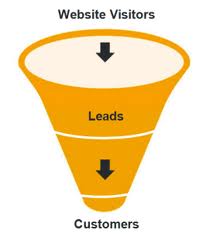
Matthew Toren, founder of Young Entrepreneur, offers the following 5 tips for lead nurturing:

1. Be a problem solver. You have to admit that at least part of business success has to do with the timeliness of your products or services. You must answer people’s needs. The key is settling into a business that has problems you really love to solve, with customers whose pressing needs you are very good at addressing. When you’re able to identify your niche, you don’t only go out there to earn, you have a unique passion and an offering that suits the needs of those people.

2. Get into your customers’ psyche. People buy not only because they need things, they often buy to satisfy something deeper in them. It’s often the feeling they associate with a product that they finally make the decision to buy. Everybody needs a pair of shoes, but not just any shoes can satisfy that need. This is when branding, reputation and customer service come into play. In fact, this is why there is marketing in the first place. Get into what excites and interests your target market. This is the only way you can tailor-fit your campaign to the people who would not think twice of paying for what you have to offer.

3. Where are your customers? In online marketing, determining how your market interacts with the Internet is very important. It gives you leads to “where” they are online. Online behavior can point you to what sites they frequent, the social-media networks they prefer, the news they’re more likely to read and so on. If you know where they are, you can be sure to focus on places you need to have a commanding presence. This assures you of a steady stream of traffic of ready-to-pay customers, and it prevents you from effectively barking up the wrong tree. We all know how costly and time consuming that can be.

4. Do you really know them? To really pinpoint who your target customer is, you’ll want to dig in deep… find out how they tick, if you will. The key is to learn about them, even change with them over time. So basically, this means you can’t just buy one customer list and operate off that in perpetuity. You’ll need to continuously find out about your target audience. Are they reading things you should be reading? Do they shop at stores you’ve never heard of? All of these puzzle pieces could fit together and help you identify the bigger customer picture, if you’re willing to spend time accumulating them.

5. Close in on the deal. Once you know your customers and understanding where they are and how they think, you can specifically design an online marketing campaign that appeals to those people who would love to pay for your products or services. By being a problem solver, you’re forced to know yourself and understand your brand’s strengths and weaknesses. But understanding who you want to engage with online really seals the success of your business.
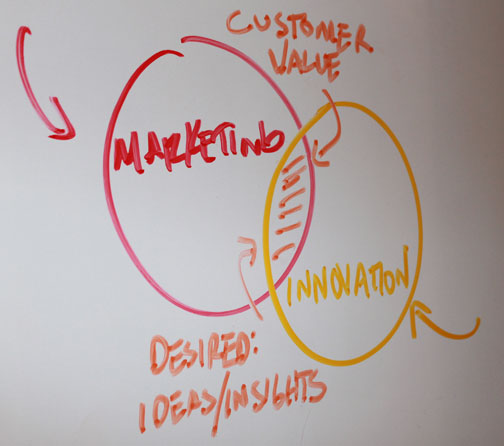
No Buyer Insight Equals No Innovation

Yesterday, the blog post was on the value of social media inputs in marketing strategy and planning. The core thought was engaging your target market. Once you figure out why consumers like your brand, you can focus on how to give them what they want faster and easier.

Jeff Hoffman, who was on the founding team of both Priceline and Ubid, tells the story of a road trip with the pop wonder band ‘N Sync: (He was in a huge Times Square music store and had the following observation.)

As the CEO of a start-up entertainment company, I was trying to remake the movie Grease with ‘N Sync in the starring role.  And while my friendship with the band didn’t make me one ounce cooler, it did give me a unique view into the inner workings of the music industry. Because of the immense popularity of the band at that time, the owners of the major music store chain were with us in the room.  Watching people come in and out of the giant store to buy music, I asked those owners why they thought people bought music from them.

“To buy CDs,” they told me.  I replied: “I don’t think so.”  

They looked at me like I was nuts.  “Nobody anywhere wants to buy a CD,” I offered.

They responded indignantly. “Do you have any idea how many millions of CDs we sell a year?”

I pushed further, adding, “Nobody in the world wakes up in the morning thinking to themselves, ‘Wow, I wish I was holding a round piece of plastic with a hole in it right now.’  They wake up in the morning thinking, ‘I want to hear that new song in my ear! Right now!’  They have to buy a CD, but what they want is to put a song in their ear.  Right now!” 

Walking away in disgust at my apparent stupidity, the CEO said to me: “What’s the difference?”

Clearly, the CEO did not understand how to give customers what they wanted faster and easier. Napster was the first to try and harness the power of the customer preference, but they ran into legal snags. Apple, through the iTunes brand and a legal approach, came up with  a service, then tied it to a proprietary device and made money on both. In the meantime, record companies and music stores have seen declining margins and top line revenues lost.

Pandora took the iTunes model and provided music on demand. More recently, Spotify began offering streaming music from playlists that consumers could create. Hoffman says that the music chain of stores he was visiting with ‘N Sync in New York City eventually filed for bankruptcy.  Why? Their executive team did not understand why customers came in to buy records.

Take a look at your own situation. Have you clearly identified your business objective and target market?  What motivates your customers?  Hoffman shares that, in the early days of Priceline, when a group of the founding executives and he discussed the fact that they were not selling airline tickets for a living.  Instead, the team saw their “product” as  helping someone get you to a sister’s wedding, at an affordable price.  The difference in perception resulted in an improvement in service.

You too can improve your service by paying better attention to what motivates and engages your target audience. Think through how you can connect with them. How can you make it as easy as possible for them to do business with you instead of the other company? What can you do to help them get what they want faster, at a competitive price?


Does Your Marketing Reflect These 5 Social Media Inputs?

Do you use social media to enhance the customer intelligence of your target market? If not, your marketing is incomplete. Part of establishing a brand is to know what buyers are thinking. What better way to engage than to have a dialogue? Yet, many businesses only have monologues–they don’t listen to what the other party is saying and adjust their conversation accordingly.

When you embrace the power of social media, you tap into the competitive intelligence that enables you to minimize risks associated with media buys, new product development, and misguided sales efforts. As you gather insights into the thoughts of your prospective audience, you are able to make decisions in real time. Molly Gallatin reports an Association of National Advertisers survey which finds that 90% of companies are using social media as part of their digital marketing efforts, but 62% report they are concerned about measuring ROI—indicating at least some difficulty in deriving useful intelligence from their social media efforts.

Gallatin’s article illustrates how you can tie the kind of rich, actionable customer intelligence you can glean from social media into five overarching marketing decisions.

1. Retail Partner Valuation
At Compass Labs, we recently executed a campaign for a major consumer packaged goods brand, in the process unearthing a simple yet extremely significant fact: Its customers had more affinity for one mass market retailer than for others–in fact, much more affinity. The company used this information to drive more sales through that particular retailer by steering more overall advertising dollars its way.

But that’s not the only way that information could have been used. For example, the company could have used the information to build business at a secondary retailer, or it could have used the information to affect pricing and packaging. As it is, that little piece of information paid huge dividends and informed critical decisions.

2. Customer Acquisition Strategies

Especially now that social media networks are connected to ad exchanges and real-time bidding (RTB) technology, brands have access to real-time customer intelligence,  not just to what their fans and followers said about them yesterday. You can get a complete profile of users who are interested in your brand that tells you who they are, what they like, and the things they do. Social intelligence reveals what websites they visit, what events they attend, and their favorite fashion brand.

Use such information to establish a relationship and two-way dialogue with users and acquire them as customers. Rely on your most engaged “fans” as brand advocates and use the interactivity of social to acquire customers through word of mouth. Discover an entirely new segment of users ripe for conversion that extends the audience you initially sought.

Customer acquisition has reached a whole new depth and level of interconnectivity. When considering growth strategies in a tough economy, intelligence you gain from social media is crucial in driving customer segmentation, audience targeting, and even off-social marketing.

3. Brand Sentiment

We’ve been in the middle of the election, and it’s been especially easy to see how brand sentiment can be understood and effectively managed across social media. What’s played out before us is a head-to-head brand battle the likes of which we haven’t seen since Coke and Pepsi’s taste-test wars.

For example, one presidential candidate’s messaging focuses on job creation; the other candidate’s messaging is about lower taxes. Seeing a positive reaction to these different points of view, the candidates’ campaigns immediately positioned messaging around “tax reform” (Romney) and “no off-shoring” (Obama). Don’t think the candidates and their advisors don’t know how these messages play.

This kind of sentiment strategy is not limited to politics. Social media intelligence can feed brand sentiment analysis and enable you to quickly execute your corresponding marketing strategies. On the flip side, negative brand sentiment can also be quickly detected and remedied by harnessing social media as a CRM strategy.

4. Media Placement and Value

You don’t have to guess which media are most effective at engaging your customers. You can track the actions a user takes on Facebook after seeing or clicking on your ad, and attribute off-site conversions to ad views or clicks. This allows you to make creative ad placements and strategically optimize them.

Plus, knowing your engaged audience’s favorite TV shows and websites allows you to take this kind of optimization off-social.

5. Competitive Evaluations

Let’s go back to the retailing analysis that we did for the CPG company, but let’s flip it around and analyze the retailers. If a set of five retailers were in this competitive picture, the retailers themselves could use the natural-language processing technology that drives sophisticated social media intelligence to understand one another’s fan base and social standing.

At the most basic level, each brand’s number of Facebook “likes” serves as a measure of customer engagement. But the retailers could go further and look at actual engagement levels via Facebook’s People Talking About This (PTAT) metric. Comments and shares, different affinity markers, and common interests are some other good ways to measure and predict competitive success.

Market Your Way to the Top

Businesses who are ineffective in conveying their mission and product offering  to the marketplace simply cannot effective and efficient enough to wring profits out of insufficient revenues. Image may not be everything, but it can mean a great deal in terms of buyer perceptions that influence purchasing decisions. Clearly, not every business can be recognized as the “best in category.” However, you can continuously improve your market position by marketing and positioning your company as one that fulfills its mission and satisfies customers. The public must know your company and its offering!

Name Recognition

One goal for keeping a business strong in its marketing efforts is to increase name recognition. Keeping the company–and often one or more of its top executives–in front of the local “players” (centers of influence who will talk you up) can provide tremendous benefits; when these individuals refer or bring a client to you, it is because they:

  • know you,
  • know your reputation, and
  • trust you to do a good job for their friend(s).

Other means of getting the word out include building a thought leadership role through public speaking. If you are not the type who enjoys standing in front of a room and attempting to engage them in a conversation, you may be more comfortable as a panelist or panel facilitator. Through active participation in community groups, you are afforded a unique opportunity to discuss your company’s success and how your core values, product offerings, and service standards are opportune for the listener or someone they know. 

Customer Research

The customer must be researched continually, paying particular attention to discriminating tastes and preferences. Your sales team should be your best source of information as to what buyers seek. Research reports should compile information gathered from key figures in your community–those “centers of influence” who are gateways to networks of potential buyers for you. Study what you find out with an eye towards possible adjustments in product offerings as quickly as possible; the key here is to beat competitors to the punch. When you meet new prospects, ask them questions about what they like, try to keep a running tab of demographic trends about them, and find out what may be holding them back from purchasing from you.

Marketing Trends

Attend industry meetings for either your vertical market or the markets in which your customers are likely to hang out–better yet–do both! Stay abreast of trends in the market, listening carefully for changes in design, pricing, or delivery. This information can serve as a launching point for later team discussion back at the office of how to “up your game.” On at least a quarterly basis, someone should “shop” the competition, pay attention to how they operate and promote, so you can glean strategic insights. Chances are high that, armed with better information, you will make significantly better decisions!

Weighing the Competition

Ask your management team what they hear about competitors from suppliers, attorneys, CPAs, banks, and the like. It can be very helpful to keep spreadsheets listing others’ products, price points, features, and promotional incentives. By monitoring these over time, your team begins to get a feel for where the competition feels the market is moving–and you can adjust your own planning accordingly. Try to figure out how many employees your rivals have, as well as their real estate expenses, number of sales or distribution arrangements, and other key metrics. Watching these statistics from one measurement period to another can provide you with opportunities to win market share. When you have a feel for what obligations the other guy has, you can estimate their break even point, which translates into pricing policies, potential availability of financing, and many other factors critical to your success!


Get More Sales on Purpose

To support your team and finance operations, an executive team must be able to generate large volumes of revenue throughout the year. This revenue generation takes place through a combination of marketing, sales, and service. The customer has to

  • know that a product is available (marketing)
  • be convinced to buy that product (sales), and
  • be pleased with the purchase (service).

We have been discussing how research leads to better product positioning, and that is certainly an important part of marketing. We will zero in on the other components of revenue generation in this edition.

Many companies assume that all they have to do is make a product or offer a service and everything else will fall into place. Nothing could be farther from the truth! If no one knows who your company is, what the offering is, and how/why to buy it, you will either have inventory (goods) or idle workers (services). Similarly, if buyers know your business has something to offer but have no reason to purchase your offering over another’s, you will not make sales critical to business survival and growth. Providing a quality product in a timely manner an correcting defects quickly translates into repeat sales in any industry. 

Sales

Sales depend on three critical elements:

  1. the quality of leads
  2. the quality of the sales team
  3. buyer perceptions

The three need to converge into transactions built on relationships. Buyers are like pupils in an educational system–the sales team and the marketing team are the teachers. The marketing team must supply enough information so that the target buying market can learn about your offering. What is supplied to the sales team is information to reinforce the message: these products or services meet a distinct need in the mind of the buyer. As feedback is collected from target buyers, those conversations become a means to qualify leads that are much easier to convert.

Marketing

Inform the general buying public both directly (in face to face situations) and indirectly (in various forms of media, including social). Failure to reach either audience results in insufficient leads for the sales team–both in quality and in quantity. If your marketing team is not accountable for lead generation, it should be. Those who do not perform the lead generation function well should be replaced with others who are tuned into what makes your business continue to exist: revenues. The marketers can improve effectiveness by paying attention to statistics–whether it is website inquiries, newsletter subscribers, store visitors, or something comparable. There has to be several metrics in your setting that you can identify that make the conversations very professional an on point all the time.

Selling

Think through things like your incentive programs for your sales team, but don’t neglect to think through how to equip the individuals for success with well produced collateral, clear messaging and selling tactics, and sufficient training to overcome potential objectives smoothly and respectfully. Appreciation notes to customers are an art that has lost ground, but that demonstrate a personal touch that often leads to new customers. In your training sessions, emphasize product or service features, how and why they are important, how you have positioned your offering versus the competition, what your perceived competitive advantage is, what common objectives are, and how you want prospects to be treated when in a consultative sales conversation.

Buyers

Buyers also need to be instructed about what they encounter. Make an effort through both marketing and selling activities to run through the competitive advantage positioning messages that you have developed. Be consistent. Be passionate. Be sensitive. Emphasizing your research findings as to what potential buyers want and how you have tailored your offering will go a long ways to build identification with your company and its product or service. Think about where the buyers hang out and “meet” them with a compelling invitation.

Service will be tackled in the next post!