Advice For Entrepreneurs RE: Succession

Sometimes, big company practices need to trickle down to the SMB world. Whether the subject is a hot start-up with co-founders who must one day shed decision-making authority or family-owned businesses, the selection of successors is a critical topic. Without true outside boards of directors, these decisions often become volatile and can ruin relationships as well as cause collateral damage to the company and its valuation. Having seen the drama play out more often than I’d like, I read extensively about ways to “head off at the pass” struggles that need not become an entrepreneur’s undoing.

A law firm client of mine has a nice boutique corporate practice with a penchant for corporate governance topics. Though I subscribe to Google alerts on corporate governance, I also rely on content curators like Beverly J. Conquest (@bconquest) to follow feeds that I cannot daily read. Conquest came across an HBR blog post recently, “Advice For Boards in CEO Selection and Succession Planning” that featured some superb insights from David A. Katz and Laura A. McIntosh. Their original work was featured in the New York Law Journal. Certain excerpts are featured below:

Selecting the chief executive officer and planning for CEO succession are among the most important responsibilities of a company’s board of directors. In ideal circumstances, the succession process will be managed by a successful and trusted incumbent CEO, with the board or a board committee overseeing the process, reviewing the candidates and providing advice throughout. However, in exceptional circumstances, such as when the board lacks full confidence in the incumbent CEO or when a crisis occurs and the normal succession process cannot be utilized, the board will need to take the lead in managing this crucial task…In 2011, the CEO turnover rate increased as compared to the previous two years…Directors facing these challenges should keep in mind that the attitude and smooth functioning of the board are crucial to a sound process and good result, and that the fates of the board and its chosen CEO often are inextricably entwined.

Process Is Key

CEO selection is, first and foremost, about the future. As the adage goes, one picks a general for the next war, not for the last one…We advise that there be a comprehensive discussion at least annually regarding internal candidates and planning for emergency circumstances…Breakout sessions of the independent directors should include regular discussions of the succession plan, so that the lead director can hear the views of the other independent directors privately. Boards should be active in identifying talented leaders so that there is a bench of qualified internal and external candidates at the ready. The directors may wish to seek first-hand exposure to the company’s most promising executives at board and company functions and may consider working with the CEO to establish policies and procedures for the development and evaluation of internal candidates…

In order to set priorities and find candidates who meet their requirements, directors must first establish a well-designed selection process, which may include the advice of counsel and other external consultants. A sound process will enable the board to achieve its goals while at the same time providing a roadmap to keep the directors on course through the inevitable difficulties they will encounter. In the event of disagreements, the process stands as the neutral, pre-agreed path to which the directors and any advisors can return in order to continue progress toward the final selection.

An organized, careful process is necessary to undertake the substantive evaluation of candidates’ capabilities. There is no better guide than past performance; however, in many situations, red flags from top executives’ pasts have been ignored by boards in their selection process, and the choice has, to some extent predictably (in hindsight), been a mistake. When boards feel rushed into selecting a new CEO—which can happen when the company faces a crisis or lacks a succession plan—due diligence can suffer. The board should look for examples in each candidate’s past that bear directly on how the candidate will cope with the future challenges identified by the board.

Two Elements to Consider

There are two key corporate-governance related elements that should be near the top of a board’s list for evaluating potential CEO candidates, particularly when the board is not able to rely on the incumbent CEO to lead the succession planning process. The first is that the new CEO should be a good fit culturally with the board and the company…The tone set by the CEO helps to shape corporate culture and permeates the company’s relationships with investors, employees, customers, suppliers, regulators, local communities and other constituents…The second key element is that the CEO should have a long-term vision for the company that accords with that of the board. A crucial aspect of this is the ability to resist the powerful forces of short-termism…

Healthy Board Dynamics

A healthy board dynamic is essential to an effective succession process and positive result…A 2009 working paper published by the Harvard Business School’s Corporate Governance Initiative observed: “As a practical matter it is difficult, if not impossible, to find directors who possess deep knowledge of a company’s process, products and industries but who can also be considered independent.” This lack of deep experience and expertise can make it more difficult to identify and evaluate candidates from other companies in the relevant industry or even from within the company…

CEO selection is one of the most formidable, as well as one of the most consequential, decisions a board must make. Using a thoughtful selection process, a well-functioning board that has taken the time to consider CEO succession on a regular basis will be in a good position to identify its top priorities and the best-suited candidates should a crisis present itself. 


Soccer, Fighter Planes, and Strategy

In most other countries around the world, soccer (“futbol”) is the national past time and a great source of the good kind of pride. It inspires its observers to sing national anthems, set differences aside, and salute efforts where one or many “put it on the line.” During the course of the weekend, I have been observing UEFA 2012, the European tournament held on the same four year schedule as the Olympic games.

One of the interesting things that occurs in the format of the tournament is the pairing of teams against one another wherein one appears–on paper–to have far superior credentials to another. In many cases, a starting lineup for one side can be stacked with players who have 100+ games (matches) on the international stage. With such vast experience, the veteran side enjoys a presumed advantage over the opposition. Often, the more veteran team enjoys an additional upper hand due to the superior ball-handling, striking, and passing skills of its players.

The scenario is analogous to young or smaller businesses trying to compete against prohibitively endorsed large, mature businesses. Yet, whether in futbol or in business settings, we see the underdog come out on top often enough that we realize competition is not decided through analysis and predictions. What, then, are some of the reasons that a presumably out-manned competitor emerges victorious?

If I may bring in yet another comparison without losing the train of thought, I’d like to reference the story of the Tuskegee Airmen, revived through the recent Red Tails movie produced by George Lucas. In the movie, the African-American pilots are disdained by both their own armed forces as well as the haughty Luftwaffe (German Air Force). The heroes are initially perceived as being less intelligent, having slower reflexes, and lacking the experience to get the job done of protecting U.S. bomber squadrons during the second World War strategic air campaigns to reach Berlin and help the Allied forces achieve victory. What the featured pilots bring to the air battles (at least in the movie version) are the following distinctives:

  1. They were not fighting for individual glory,
  2. They were not afraid to take reasonable risks,
  3. They were (for the most part) disciplined in their consistent approach.

In business, it is very important to observe how applying these distinct characteristics would benefit a company’s performance–whether going against peers or seemingly over-matched foes. In order to build the “esprit de corps” requisite to compete will require emotional intelligence. More self-awareness and significant amounts of empathy and self-regulation are traits that are uncommon in the masses, but very evident in those who are not selfish.

Risk taking and management of the risk-rewards trade-off is a nuance rather than the exact science some would have us to believe. As depicted both in the movie and in a game between Spain and Italy this weekend, there is a “right time” to go for the gusto. Italy was successful playing quick attacks over the top of the Spanish defense and the Red Tails had success in attacking peripheral targets after primary targets were taken out. Business strategies that include both a primary objective and additional (discretionary) targets are wise.

Finally, the commitment to the plan–a resolute determination to dismiss the criticism of others and stay focused–is vital. Don’t mistake this focus, however, for sticking to a bad idea too long. Strategies must be proven to be successful before being implemented far and wide and held up as the “best practice.” Once featured, the strategy should be re-evaluated based on results and feedback. While being pursued, however, there can be no dissension among the ranks.

Culture: Key to Performance

Recently, I had the opportunity to address a group of HR leaders on how to improve decision-making within their organizations. (Thank you RWHRMA, Masters Series participants!) The premise of our time together was that better decision-making translates into superior performance and that there are definite ways to improve the quality of decisions. Most of our workshop was used to define the components and use of emotional intelligence (EQ). In order for employees–and managers/executives–to consistently exhibit high EQ, valuing and engaging others is a key.

A focus on others and their needs is a result of purposeful culture development. Paul Spiegelman, founder and CEO of The Beryl Companies, writing for Inc. on June 6, described Beryl’s “10 Cs of Culture:” 

1. Core Values

..when we implemented our values strategy at Beryl about 10 years ago, I began to see how they guided everyday decision-making and how employees referenced them in meetings.  I came to realize they are essential guideposts when developed, communicated, and executed in a consistent manner…We start every big meeting with a conversation about values and tell stories about how our coworkers live by those values on a daily basis.  

2. Camaraderie 

It’s about getting to know colleagues not just as colleagues, but what they’re like outside the office.  To do that, Beryl hosts dress-up days, parties, games, and events all the time..We include not only employees, but also their families.  We publish a bi-monthly full-color magazine called Beryl Life that is sent to the homes of co-workers.  

3. Celebrations 

You can’t underestimate the importance of recognizing your team..we developed a program we call PRIDE (Peers Recognizing Individual Deeds of Excellence).  This allows coworkers to recognize others for living up to Beryl’s core values.  

4. Community

Part of the fabric of a successful company culture is connecting with and giving back to the local community.  

5. Communication

I hold quarterly Town Hall meetings, which includes six meetings over two days..I also have informal “chat and chews” where I bring in lunch for 12 to 15 people and just ask one question–How’s it going?–to get the conversation started.  

6. Caring

Show your employees you genuinely care about them in the totality of their lives..Any manager can explain a situation on an internal website that identifies a coworker, and lists what’s going on (birth, death, injury, wedding, among other things).  That submission generates an email to me that is my trigger to send a personal notecard, make a phone call, or visit someone in a hospital.  

7. Commitment to Learning

Show your employees you’re committed to their professional growth. This can be done in small, incremental steps. 

8. Consistency

Culture is based on traditions..One-time efforts to improve the culture will feel disingenuous.  

9. Connect

Don’t isolate yourself at the top.  Connect with people at all levels of your company.  Get out of your comfort zone.  

10. Chronicles

Does everyone in your organization know how the company started?  Do they know the personal stories of the founders and what led them to build a sustainable business?  People want to know they are part of something special and unique.  

Do you get the feel that, at Beryl, you could fit in and feel engaged in the key conversation(s) that contribute to its success? What about your company? Do you have a culture that is engaging? If not, what can you do about it? What’s holding you back? Talk with your peers and come up with a plan, then implement it!

Decision Making is Like Chopping Wood

The Woodcutter’s Story

Simon was a diligent son, but not that bright.  Eventually his mother became exasperated with him lying around the house and urged him to get a job.  Now Simon was good at one thing:  chopping down trees.  So, off he went, his axe over his shoulder, in search of work.

Soon he came upon a clearing in which logging was being carried out.  (Readers of a nervous disposition should be reassured that this logging was a fully sustainable and environmentally ethical operation.) He marched up to the supervisor and asked if there was any work available.  “Well it depends how good you are.  Chop down that tree and I’ll see.” Simon enthusiastically set about the task and completed it to the supervisor’s satisfaction. “You’re hired.  Start right away”, he said.

And Simon started work, applying himself with a commendable zeal.  It was Monday afternoon, and the day soon passed.  As did the following few days. On Friday afternoon, Simon happened to see the supervisor.  “I’m glad I’ve found you” the supervisor said.  “Please collect your cards and leave, your services are no longer wanted.”

Simon was flabbergasted!  “How come?  I am your most productive worker.  And now you’re rewarding me by sacking me!” “Well, it’s true you were the most productive worker on Tuesday.  But by Thursday you had sunk to the least productive.  And you’re doing even less well today.” “But I start early and finish last.  I work through lunch.  I spend all my time chopping down your trees.”

“I agree”, replied the supervisor, “but how much time do you spend sharpening your axe?”

-Anon

What is equivalent to sharpening the axe in your business? Management team and high potential employees choosing to pursue professional development through honing emotional intelligence (EQ) competencies. EQ is the unique intersection of heart and head—the outcome of which is effective use of feelings to enhance thought.

When EQ becomes a priority in an organization, good things happen. Consider:

  • In one study, experienced partners with high EQ in a multinational firm delivered $1.2 million more profitfrom their accounts — 139% — over their cohorts.
  • A study of manufacturing supervisors given EI training saw a reduction of 50% in lost-time accidents, 20% in formal grievances, and plant productivity goals exceededby $250,000.
  • In a cross-cultural study of senior executives, EI competencies outweighed both IQ and experience in top performers.

Superior performance is driven by strong decision making. Strong decision making is a physiological factor of: 1.) competency, preceded by 2.) behavior, preceded by 3.) cognition, preceded by emotional intelligence. EQ is a body of personal characteristics and social abilities that are closely tied to success in both our professional and personal lives. Dan Goleman, quoted in the Harvard Business Review, said, “Emotional intelligence isn’t a luxury tool you can dispense with in tough times. It’s a basic tool that, deployed with finesse, is the key to professional success.”

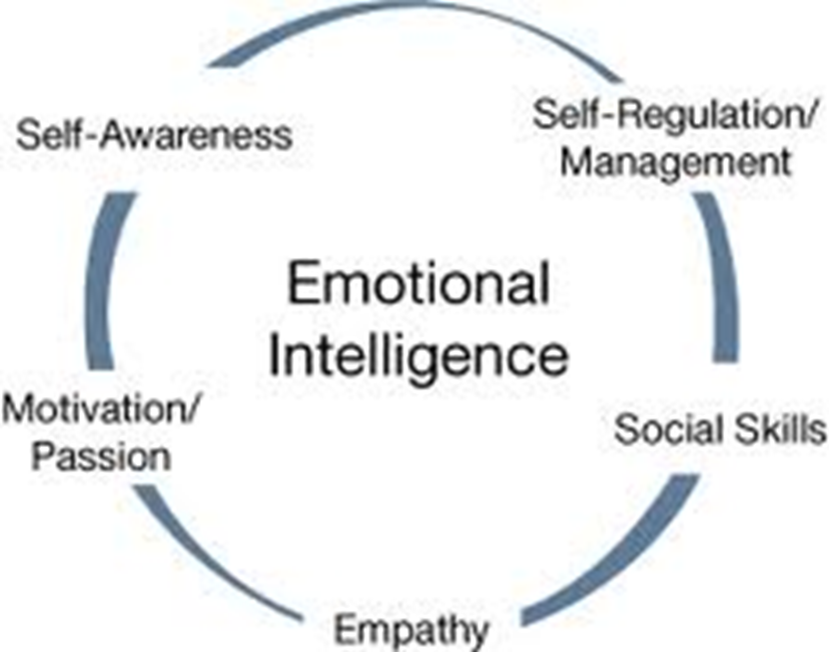
The tool is comprised of five core competencies: self-awareness, self-regulation, motivation (these three comprising the intrapersonal self), empathy and social skills (the latter two representing interpersonal acumen.) Think about bright, skillful people in your organization who are passed over for leadership and/or despised by subordinates. Chances are, these individuals are deficient in at least one of the EQ competencies.

EQ can be learned. What we try to do with clients is identify a small group to work with initially–usually direct reports to the president or high potential leaders. These are assessed individually for their relative emotional intelligence “scores.” The scores lead to individualized professional development plans (“axe sharpening”.) Mentoring occurs during which hypothetical scenarios are discussed in periodic sessions. The hypothetical gives way to the mentees bringing real life situations to discuss. With the mentor’s help, the mentees learn how to process decisions better. Over time, the team gels as its members learn how to “say hard things in soft ways,” and use feelings as an asset rather than a liability. When the team becomes high functioning in this manner, superior performance is likely its traveling partner!


Only Superheroes Make Tough Sales

Whether you are in the process of launching a business or have been at it a while, one of the things that is an important factor in your success is the ability to covert sales leads. The more prestigious the prospect, the more pressure we feel to say just the right thing and win the other party over. But…sometimes the meeting doesn’t go as planned and you feel the opportunity slipping away. 

Greg Digneo, the author of the blog Sales Leads in Thirty Days, recommends that, in order to become better at converting these opportunities consistently, you become a superhero. Surely you have seen the resurgence in movies about superheros of late. Why is that? Because we all want to believe that things will turn out rosy if we just had some hidden power that gave us an advantage. Just like Batman, or any other, superhero, you want to be able to save the prospect who is in distress from this situation and deliver them to the safety you can uniquely provide. How? Digneo recommends in an article that you find a superpower:

What’s Your Super Power?

I used to run a marketing agency where we helped B2B companies generate online sales leads in thirty days. Promising to get clients sales leads in thirty days is such a bold claim that it subjected me to a large helping of cynicism. That’s when I morphed from a mild-mannered marketing consultant into a superhero.

Here’s how it went down:

The prospect would be disengaged and skeptical. Then I would say: “I know you think what I’m proposing is impossible, but if I can get you sales leads by the end of this week, would you consider hiring us?” The prospect never believed we’d come through, so they usually answered “yes.” At the end of the week, when we had gotten the prospect sales leads, they were so impressed that hiring us became a no-brainer.

And you can do the exact same thing in your business!

The process to becoming a superhero, according to Digneo, requires the following 4 steps:

  1. Find the Ideal Prospect
  2. Identify the Problem
  3. Unleash Your Superpower
  4. Make the Sale

To find your ideal prospect, he recommends that you ask yourself three questions:

  1. Do you know who you want to work with?
  2. Do they need your services?
  3. Can they afford to pay you?

Only if you can answer “yes” to these three questions can you move on to the next step.

In order to identify the problem, one most overcome the objection to spend money with you. However, every prospect has a problem you can help them solve. Using consultative listening skills and asking poignant questions, you can develop a good understanding of the nature of the problem, what has been tried to resolve it, and how much a solution may be worth. 

Your “phone booth” trick is your ability to solve what confounds the prospective customer. Think up several ways you can demonstrate impact/success for your prospect. Digneo offers two examples–If you have a book keeping service, you know your prospect wants help with cash flow management. Or, your heroic deed may be that you show the prospect how they can source parts cheaper, making an immediate impact on their bottom line. Find a way to be wonderful!

Making sales becomes much easier once we have established credibility and respect. Promising, then delivering on what it takes to solve problems sets the table for sales.