Fear Need Not Keep You From Success


As an entrepreneur, you must be able to stare fear in the face and be an overcomer. But how? Jaime Tardy (on http://www.under30ceo.com) interviews millionaires to find out how they successfully dealt with their own fears. Excerpts from her takeaways appear below:

You Don’t Have to Be Fearless

You don’t need to be fearless! You just need to overcome it just enough to take action in spite of it. Millionaire Frank McKinney, who calls himself a real estate daredevil and creates $30 million dollar dream homes, said this about fear:

‘Realize there is a force at work subconsciously in your mind that is tempting you to say no. That’s the primary difference between my career and most others, especially in real estate, that I don’t let the fear that is there stop me.’

Recognize the Fear

Before you can get past that fear, the first thing you need to do is recognize it. It’s very easy to ignore fear. If you have tried to recognize it yourself and can’t seem to make your head go there, ask a friend for help. Ask them to pay attention and see if they can figure out what fear you have, in general conversation or when they are asking you questions about it specifically. Getting to the root of that fear–and realizing it is there–is the first step!

Putting Your Fear in Perspective

One millionaire’s mentor shared a story to put fear in perspective about a woman who had her children kidnapped, and the kidnappers were going to kill her children. Now that is true fear. Most of the time in business we fear things that might come true. Or we have fear because we need to step out of our comfort zone and risk something. The next time you are feeling fear, replace it with feeling grateful that you don’t have a life or death situation. Your business risk is not life threatening for you or those you love. Bankruptcy is not life threatening. I’ve interviewed millionaires that lost it all and came back to succeed.

Action Item: Put Fear in Perspective

The next time you feel that fear, put it in perspective in your mind. Imagine how small your issue truly is in the world. It seems big to you right now, but it’s not as big as you think.

Lean on Your Mentors

Another great tip I’ve heard from many millionaires is to find a mentor. Mentors have been where you are and faced the fear you are facing. It’s easier to get past it with their support, and expertise. Armando Montelongo, host of Flip this House on A&E, said:

‘I had the question, Can I really do this? Can this really happen? Is this pie in the sky? But I looked to my mentors for advice and started doing exactly what they told me. It helped me to almost immediately overcome the fear.’

Action Item: Lean on Your Mentors

If you already have a mentor, be honest with them about your fear. They have probably heard it before. It might feel a little vulnerable at first, but that is a good thing.   If you don’t have a mentor yet, find one! You don’t have to pay for one either.

Taking Action with the Fear

It’s not the fear that is the problem; it’s the inactivity that is. So focus on just taking whatever action you need to take in spite of the fear. The inaction will end up costing you a lot more in the long run than the “safety” you received from not doing it. 

Action Item: Commit in Advance

One technique to use to get past your fear is to make it feel farther away. Look at your calendar and pick a date that seems like a far away date. It might be a month for you or even three months. It’s far enough away that it doesn’t seem that scary. But once you commit to it and tell others you will feel obligated to do it. You don’t want to look like a fool if you don’t do it! So you do it anyway, even with the fear. 

Action Item: Logically Counteract It

Another action item you can try is to logically counteract the fear. Imagine you are listening to a great friend of yours talk about their fear. What would you say to them?

Fear is natural in entrepreneurship. Learning how to face it and use it to your advantage is key to your success. Hope these tips help!


Bureaucracy: The Entrepreneur’s Kryptonite

As Dan Sullivan says in The Strategic Coach® Program, “The human brain cannot do extraordinary things, only normal things.” “So the trick,” he says, “is to make the extraordinary normal.”

Corporate employees operate based on policy: that’s what keeps them from having to think. Entrepreneurs depend thrive on having the freedom to constantly grow and change, to make new connections, and to ask questions that shake everything up. To an entrepreneur, groupthink (i.e. bureaucracy) is like Kryptonite.

Just because we don’t like being bogged down by over reliance on structure doesn’t mean that we are always creative. Following established patterns and trying to approach every issue with the same solution is a bad habit even for an entrepreneur. Rather than seeing opportunity, we can become fixated on solving a problem.

When Jim Collins wrote about Big Hairy Audacious Goals (“BHAGs”), he was challenging small thinking. Simply considering an aggressive goal causes the mind to see the environment differently. Unable to stop thinking about the “What ifs,” we are empowered to consider new concepts,  linkage and alternative ways of viewing the same issue. Divergent thinking is modeled by the likes of Richard Branson, who tweeted, “My interest in life comes from setting myself huge, apparently unachievable challenges, and trying to rise above them.”

Your definition of “normal” daily experience becomes unique when you think in terms of BHAGs.  Dream for a moment about what life could look like in 5-7 years. Can you imagine performing at 10x today’s level? Earning 10X what you do today?

Bureaucracies are based on keeping everything the same so they can preserve their status. Policy and rules “protect” the structure from the effects of individuals, whose participation is measured in hours on the clock, not in results. In an entrepreneurial organization, by contrast, change is life, because “holding your ground” means stagnating and falling behind. Individuals are sought out and rewarded for their ability to think, create, and make a unique contribution.

Make a habit of  what Sullivan terms the “10x Mindset,” and innovation, risk-taking, and teamwork will all come together for you in a completely new way. Bureaucratic thinking and structures simply won’t survive in your environment because you and the people around you will be entirely focused on building, adapting, and expanding a path toward your “bigger future” vision.

Cultivate a creative mindset that makes growth and progress “normal.”

Better Feedback Models

Traditionally feedback has been seen as occurring externally between a customer and a provider and internally as flowing from a manager to a direct report. Many changes in the work environment, including self-directed project teams, matrix management, flat organizational structures, and doing more with less resources, lead employees to work more closely with one another and become less dependent on management to provide them with feedback.

The Feedback Cycle graphic below illustrates that, these days, we must recognize that feedback – from project team members, peers, and direct reports – is the primary way to give and provide information and suggestions to each other to improve work output and performance. We must also be certain to listen for emotions and feelings as part of the feedback process. Whether your role is within a multinational corporation or a small start-up, the need to look around you 360 degrees and see yourself and your work product as others see it is critical to charting your own and team success.

Within the field of emotional intelligence, there’s a best practice of trying to see matters from another’s perspective. It is in this ability to “be on the outside looking in,” observing our decisions as a series of choices based on information we have processed, that we gain insight, perspective, and mutually desirable outcomes. Intentionally studying how our actions will affect others, asking for their input, and incorporating a “win-win” scenario into our decisions makes for better management of self, projects, and others.

In the start-up world, the Feedback Model can be used to test and validate “fit” with co-founders, employees, strategic vendors, investors, professional services providers, and so on. If the other party is not incorporating your input into their communication, planning, and execution, they are not a good fit. Likewise, if we are not able to receive feedback from others, we will not be successful in executing our business/departmental/project strategy.

Reverse the Mentoring Stereotype

In its most common context, mentoring is understood as someone with experience (and a few grey hairs!) showing someone younger how to perform key job functions. Yet, one of the hottest trends in human resources is termed “reverse mentoring.” Whether due to job loss and the need for new training, or “Second Act” entrepreneurship, or simply the precipitous amount of change being introduced in organizations trying to compete globally, there has arisen a need for this practice where younger workers are now showing the older ones “the ropes.”

While the concept is that exposure to those outside the corporate suite may be good for staying in touch with the values held by newer workers, there are several other benefits. Higher employee retention rates among younger workers are cited as an unexpected, but welcome outcome. Exposure to management issues and how decisions are made are additional upsides.

When Jack Welch was the CEO of General Electric, he  was mentored on how to use the internet by a young employee in her 20s. He saw such promise from the process that he mandated that 500 of his top executives reach out to younger employees to do likewise. These days, mentees are learning how to use social media effectively from their younger mentors. Even at top ad agencies like Ogilvy & Mather, a worldwide managing director admitted that his more youthful mentors had shown him how to enhance his Twitter posts to be less boring. His eyes have been opened to new possibilities and he now plans to utilize Skype and videoconferencing to facilitate distance mentoring across the firm’s 450 offices. HP & Cisco also have reverse mentoring programs in place.

Michelle Rafter, in a blog post entitled “8 Ways to Make a Reverse Mentorship Work For You,” suggests the following guidelines:

1. Find a compatible partner –someone with skills in areas you’re lacking

2. Set expectations- create ground rules for what you want out of a partnership, such as how often you’ll meet and what both parties will get out of it

3. Get your boss’s OK- A lot of reciprocal mentoring can happen on an informal basis. But if you want or need to set up a formal program, you’ll need your manager’s or company’s approval.

4. Be open to suggestions and criticism- learn in days from someone else what one could take decades otherwise by having a thick skin

5. Make it more than just about tech- maybe a younger person could help you learn about sushi, Chinese, popular music, or even how to lead the next generation more effectively

6. Give as much as you get-the relationship should be mutually beneficial

7. Experiment with approaches– a single department, a program that crosses departments, and a multitude of variations

8. Don’t stereotype- not every 45-year-old has the same knowledge or expertise, so don’t assume every Gen Y worker does, either.

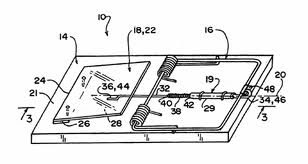
Better Mousetraps Require Divergent Thinking!

One of the people I follow in leadership blogs is Dan Rockwell, aka Leadership Freak. His post this morning cautions against working hard versus working smart:

It doesn’t matter how hard you work if you’re working on the wrong things.

He goes on to discuss how doing business without thinking strategically can be harmful to your business and personal health. While it’s needful to get work out the door (think lawyers focusing on billable work, carpenters hammering nails), to only do so is to lose sight of the bigger, value adding activities that distinguish great businesses from ordinary ones. Your efforts are not as productive as they could be because you are displacing the benefits of your focus and inertia that could be applied to thinking about what would make you more successful and pursuing those activities that promise reward for another day–not just the current one!

Some of the activities that suffer when you are not working on your business include:

  • Planning
  • Goal-setting
  • Brainstorming
  • Delegating
  • Organizing
  • Dreaming
  • Alliance building
  • Networking

When our attention is shifted to “working on the business” (thanks Michael Gerber for the E-Myth insights), we are thinking innovatively. Our efforts are building something that will stand the test of time. Net worth/business value soars as we are refining the business model instead of just trying to work harder. Think about franchise systems. The value is in the documented processes and controls. Even if you never plan to sell through a franchise agreement, you would do well to consider the genius behind the movement. Instead of being the person who only makes money off the sweat of his or her brow, you find a way to make money off others’ labors.

Rockwell suggests the following to help you get unstuck and more productive in creating a business with greater value:

  1. Create a weekly “working on” appointment with yourself. Identify and take a next step.
  2. Make small adjustments. You’ll never shift toward working on your business in one giant leap.
  3. Find new eyes. Discuss systems, strategies, and vision with experts outside your field.
  4. Listen. Many leaders and business owners have too many answers and too few questions.
  5. Try something. Waiting for stunning success prevents progress.
  6. Delegate more even if it takes longer at first.
  7. Follow-up and follow-through. Frustrations inspire conversations regarding improvements but follow-through changes things. Perhaps some form of accountability would help?

For entrepreneurs, mentors can be extremely valuable in holding one accountable to a process like the one commended.  Going it alone, without the benefit of outside advice and counsel, makes us technicians without hope of escaping the rat race.  You can change your future today–be daring to do so!