4 SmallBiz Keys to Success From Fieri

If you are a successful small business owner, chances are high that you didn’t get to that place without some setbacks. Rare is the one who never experiences setbacks–in business or life. However, in the sentiment of “turning lemons into lemonade,” it is important that we never allow the setbacks to keep us under. Guy Fieri of Food Network fame certainly has attained some notoriety. We love to watch his show Diners, Drive-ins, and Dives and have visited several of the restaurants featured on the show.

Guy has a certain flair about him–he of the big hair, fancy sports car, and distinctive gotee. Years ago, he and a friend, Steve Gruber, launched their successful food careers with Johnny Garlic’s, two California-style restaurants. The original location in Santa Rosa caught fire one night in 2001. Undeterred, the pair launched another restaurant in 2003, Tex Wasabi’s, which also developed a loyal following. A year later, Russell Ramsay’s Chop House replaced the first Johnny Garlic and the due felt they had come full circle. However, Russell Ramsay’s was slow to get off the ground. Tinkering with the menu and trying to woo former customers back were unsuccessful in helping turn things around.

Gwen Moran, writing for Entrepreneur, shares Guy’s journey:

…one day, Fieri was sitting at a traffic light, when a guy in the car next to him called over and asked, “Hey, why didn’t you reopen Johnny Garlic’s?” Fieri replied, “I did. It’s the Chop House.” His former customer said he couldn’t afford to eat at the Chop House, and he missed the original restaurant.

That was Fieri’s light-bulb moment. Customers wanted the familiar place they had grown to love. The Chop House gave off a too-rich-for-our-blood vibe—not a good fit for the eatery’s largely blue-collar following. Within a year, the Chop House closed and reopened Johnny Garlic’s, business was up 25 percent within the first month.

Moran says that Fieri learned four lessons from his experience:

1. Listen to feedback from your customers. If Fieri hadn’t paid attention to the guy who spoke to him at the red light, he might have continued trying to get customers to accept something they just didn’t want.

2. Understand your customers’ perception of your business. The Chop House menu wasn’t significantly more expensive than Johnny Garlic’s, but people thought it was. That’s what mattered — and what kept them away.

3. Check your ego at the door. Fieri could easily have let his track record as a successful restaurateur go to his head instead of admitting that the Chop House wasn’t the best fit. Really listen when you get feedback from customers and employees, he says. They’re telling you how you can be better.

4. Don’t give up on your dream. Find a way to make your dream work, even if you have to keep experimenting with new ideas and approaches until something sticks. “Surround yourself with good people who are dedicated and have good ideas, and can help you see what you’re missing. Don’t throw the baby out with the bath water [when times get tough],” he says.

These are four watchwords for any business owner. After we’ve been in business a while, it is so easy to forget what/who helped bring you to that point. Without competitive advantage, a business is not successful. Without customers, there can be no competitive advantage. Inattention to input and thoughts about your business leads to a lack of customers. A willingness to adapt to what the market needs is key to business success. Finally, as Fieri suggests, perseverance is the “glue” that holds it all together.

 

Real Estate Agents Must Understand Content Management

Today was a good day. In addition to meeting with some smart minds about artisan entrepreneurship, I had the opportunity to plan a pitch event for would-be entrepreneurs and meet with an existing business owner who desires to invigorate his enterprise. His business is real estate–specifically residential sales. What he’s hoping to accomplish is to build a powerhouse brand that competes statistically with the leading agents in our community while targeting an under-served niche market. He asked me about my philosophy on how to accomplish his goal(s).

We began with a conversation about the role of social media in marketing services organizations. Fairly quickly, I felt the need to draw a diagram to make a key series of points. The figure below is what I drew for him–allow me to explain it to you so that you can be on the same page as we ended up:


Everyone knows that Social Media is on the rise and important to reach niche audiences in engaging conversations. What I was able to point out to this entrepreneur is that social media is a subset of Content Management Marketing. Knowing what messages you want to get across is a precursor to sharing the right information through online channels. To begin making posts, tweets, updates, etc without in-depth knowledge of target prospects and their needs is like wearing a blindfold in an archery contest.

Whether it is your strategy as an agent to build your business through referrals from prior clients, key centers of influence, or new campaigns, it is unwise to get spread too thin and not have deep relationships. Given the huge number of users on many social networks, the agent must devise a strategy that isolates niches and pursues them with targeted strategies.

The diagram shows that thought leadership is obtained by creating great content that is shared through social media. In response, the various media provide a built-in feedback loop that should drive future thought leadership strategies. For instance, some agents provide insights in multiple categories for their target audience(s). Whether it is local community, national real estate trends, the agent’s own interests, or local real estate content, the point is to demonstrate that you know what you are talking about.

Lead generation is the holy grail for many agencies that advise real estate firms. They think that, if they can generate enough new prospects for the agents to pursue. they have earned their keep. However, as the agent with whom I was meeting explained, leads that are not qualified and filtered can waste a lot of time. Smart lead generation comes from site visitor capture initiatives that are driven by a content management system that relies on social media to create online experiences for web fans.


Having worked in marketing roles for multiple services firms, I have met many peers who are entirely comfortable being creative, attending wine and cheese events, and spending the money of the business owner(s). What many of them lack are measurement systems (metrics) that validate the marketing ROI.  Furthermore, when metrics are available (web analytics come with every website), the marketers often don’t use the information to change the messaging and means of communication. Smart agents know better and use metrics to verify that what they are doing is working.

Competitive advantage is what is so hard to achieve, yet worth the pursuit. It is that unique place where the audience you target perceives that you can solve their needs “better” than any other provider. “Better” means that the home buyer/seller connects with the agent on a personal and professional basis and feels that the fee they pay to be represented is a value that exceeds what else is available to them.

What is your Content Management Strategy? Do you have one?

Do Your Cultural Diligence in M&A!

Of course the merger was a success. Neither company could have lost that much money on its own.

-Steve Case, Former Chairman of the Board
AOL/Time Warner

Competitive markets create an environment wherein companies strive for revenue growth. When organic (internal) growth is hard to come by, inorganic growth becomes a target. Inorganic is a category that includes merger and acquisition (M&A) activity as a primary strategy.

While business exigencies demonstrate the “need” for change, often the hard facts found in classic due diligence processes have far less to do with ultimate success than the cultural fit of a transaction between parties. Consequently, organizations that understand their core values are much more likely to reach the kind of growth and success that nearly all businesses seek [Gallangher 2003].

Successful M&A has been known to grow markets, build on complementary strengths, and eliminate inefficiency. But what ultimately matters in an acquisition is what happens in the hearts and minds of the people who remain with the new organization and what culture these formerly distinct entities choose to build while moving forward [Gallangher].

The Mercer Consulting Group, in studying M&A activity, finds that, among unsuccessful ones that many of the failures are caused by not conducting the same kind of “due diligence” on the culture, structure, and processes of an acquisition target as they do on the financial balance sheet [Gallangher]. 

Traditional due diligence typically analyzes the following:
– Historical performance,
– Ownership and organizational structure,
– Management team,
– Products and services, 
– Assets and liabilities,
– Information systems and technology, and
– Organizational culture [Bouchard, Pellet 2002].

J. Robert Carleton, management consultant and senior partner of the Vector Group, says, “Unfortunately, little or no time is generally spent analyzing the nature, demeanor, and beliefs of the people who will be involved in carrying out the business plan”. He believes that standard due diligence does not address some of the key questions that must be asked to accurately assess organizational readiness for a major change, such as a merger or acquisition. Even when some of the “right” questions are asked, Carleton argues, they are often limited to brief interviews with key executives, who likely have differing views from the rest of the employee group. The people in the trenches, the ones doing much of the actual work are not even involved. He  finds it interesting that “in financial and legal due diligence no such ‘act of faith’ is acceptable” in terms of the investigative procedure [Bouchard, Pellet].

“Cultural due diligence” is a phrase that more strategists are using  to assess what stumbling blocks may hinder successful integration of entities and their operations. Key factors to be considered include:

– leadership and management practices, styles, and relationships,
– governing principles,
– formal procedures,
– informal practices,
– employee satisfaction,
– customer satisfaction,
– key business drivers,
– organizational characteristics,
– perceptions and expectations, and
– how the work gets done in your organization

[Bouchard, Pellet; see also Carleton, Lineberry 2004].

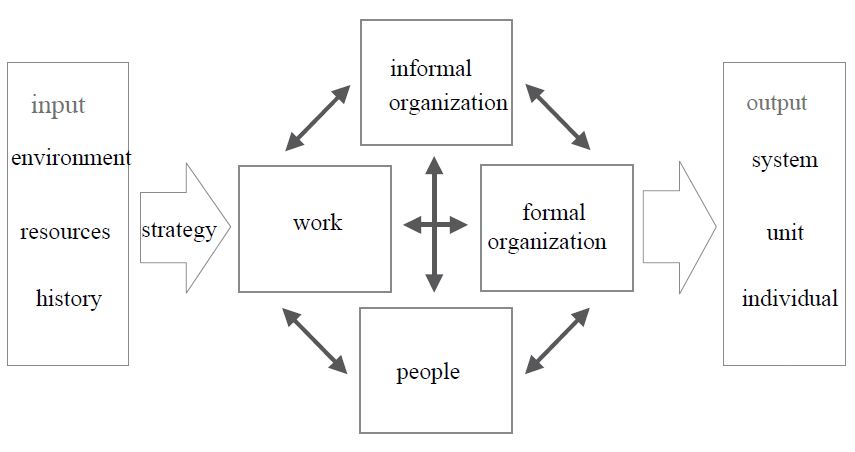
When HP and Compaq decided to combine forces, they used schematics like the one below to help them discuss the salient issues–

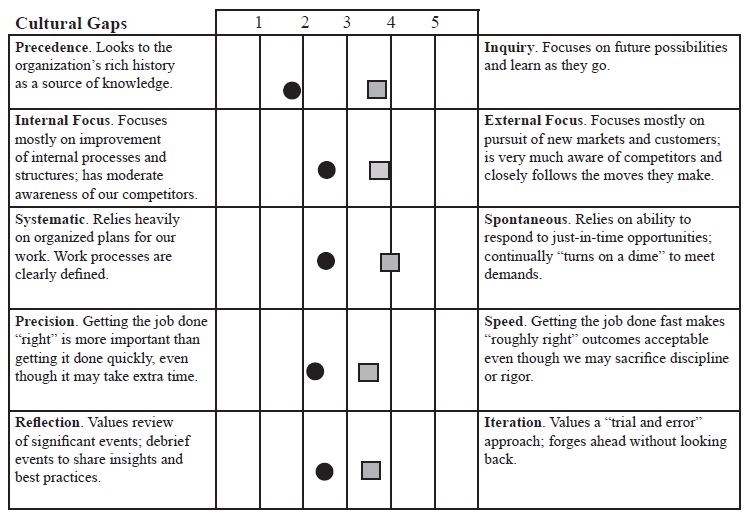
After looking through these issues and discussing each company’s culture, the merger team put together a chart like the one below to begin developing tactics to plan for a smooth post-closing integration.

As you look at this chart, think about key M&A transactions in your industry or local community. Of the ones that did not pan out as planned, do you think they would have stood a better chance had they systematically worked through these type issues during due diligence?

Cultural due diligence is vital to successful M&A processes. If earnest consideration were given to culture as it is to financial and other factors, inorganic growth and increased market share would be a realized outcome far more often!

(Thanks go out to Agata Stachowicz-Stanusch, who wrote of the value of cultural due dilgence and detailed a case study of the HP-Compaq merger in the Journal of Intercultural Management’s April, 2009 edition.)

Social Media Metrics for Your Firm

Professional services firms (law, CPA, architect, engineer, IT services, consulting, etc.) are struggling with modern marketing. Many firms were founded in an era wherein marketing was seen as a “necessary evil.” As marketing (or business development, client development, etc.) has become more essential for improved books of business, firms have begun to hire marketing staff. In most cases, these folks have been tasked with corporate marketing rather than marketing the individual professionals. With the onrush of social media as a marketing discipline, there is a sharp dichotomy between the corporate web presence and the “sum of the parts” of individual professionals’  social media presences.


Michelle Golden, who is  very active in professional services marketing organizations, recommends taking baseline measurements as early in the (any) marketing process as possible, and then identifying very specific objectives as part of an individual’s role in increasing his or her—and ultimately the firm’s—visibility. She writes of the individual versus company promotion trade-off, in a blog postWhy Social Media Rock Stars Are Good For Your Firm.(Sometimes CPA- or law-firm partners get frustrated about the attention an individual “supposedly representing the firm” starts getting when their online visibility increases. This (blog post) helps explain to those partners why they should encourage the individual “fame” and not squelch it.) 

Golden says that “You can rarely truly know exactly where a lead is generated anymore (unless it’s from a specific campaign) and that’s OK. We are looking for overall growth. This is all the ROI that you’ll need.”

Here are some specific ways she suggests to put marketing metrics in place:

BASELINE MEASUREMENTS

To accurately assess growth later, I recommend taking these broad baseline measurements now:

  • number of current clients
  • revenue (average and standard deviation)
  • revenue change % year over year
  • client longevity (length of stay with the firm)
  • frequency of client interactions
  • frequency of transactions (purchases)
  • number of clients lost per month, quarter, or year
  • number of new clients per month, quarter, or year

PLANNING AND GOALS

  • Increase retweets and mentions (by anyone) related to [practice topic] from [baseline #] to [goal #] by [date]
  • Obtain [#] retweets and mentions by target personas including peers and thought leaders in the specialty (i.e., Get on their radar. Knowing exactly who they are in advance is best.) by [date]
  • Receive at least [#] unsolicited invitations from trade organizations to speak or write by [date]
  • Earn [#] appearances as media “expert” in [publication or station] by [date]
  • Receive [#] questions or requests for advice from [define personas] every [frequency]
  • Build up to [#] of [define persona] Twitter (or blog) followers (or subscribers) by [date]
  • Move [# define persona, or specific names] from digital to personal conversations by [date]

TRACKING WORTHWHILE THINGS

  • Where did it appear?
  • Who said it?
  • Was it positive? Y/N
  • What was said? Categorize the nature of the comment and keep a clip file.
  • Was the mention about a particular practice, department, or person?
  • Did the mention include reference to your content or website? If so, to what specific content or page?
  • Who responded and how fast? You may want to keep the response in a clip file, too.

Keep the suggestions above in mind as you develop and refine a social media strategy as a part of your overall marketing plan. Helping your team members become better at their online thought leadership will enhance the brand reputation of the firm. In the process, your best indicator of ROI–increased revenues–should show enhanced performance as well.


European Media Incubators PepsiCo Style

Recently, we have noted that intrapreneurship is an emerging trend, perhaps even hotter than entrepreneurship. One of the hybrid expressions of these category leaders is the incubator inside the larger business. In the media industry in particular, the struggle to keep up with digital competitors creates a huge need for innovation. Chip Lebovtiz, writing for Fortune online, describes what two media companies across the Atlantic are doing.

The Irish Times and the BBC’s commercial arm, BBC Worldwide, are establishing intercompany startup incubators to harness young businesses’ disruptive energies. The (Irish Times Digital Challenge).. is akin to the plot of a Hollywood movie: a young up-and-comer works with a grumpy old mentor to overcome a problem, learning a valuable life lesson in the process. In this case, the problem is how to better monetize a company’s online presence and the life lesson is the experience startups get by working with a large company, says TheIrish Times Chief Innovation Officer Johnny Ryan.

Ryan is the brains behind (the competition), in which five early-stage companies  — 81 applied — spend eight weeks working at the Times to translate their pitch into virtual reality. While their ideas widely vary, their end goal is the same, to win €50,000 (about $61,000) from venture capital fund DFJ Esprit. The winning team must prove to the Times that its product provides the largest revenue potential and improvement to reader experience.

This is an interesting competition because large revenues and improved reader experience may be mutually incompatible. One has to wonder whether the intrapreneurs have the latitude to recommend strategies that may cannibalize longstanding business practices at the publisher.

BBC Worldwide Labs, a new business accelerator for startups, takes a similar but distinct tack. There is no competition between the fledgling companies and no prize money, but the six-month program offers a trophy of a different sort: the startups get a first client worth billions.

“The BBC can be a great first customer,” says BBC Worldwide Labs Head Jenny Fielding. The broadcasting giant can be “a partner at the point of commercialization for these companies.”

This approach is intriguing because of the built-in customer aspect. Many start-up companies struggle with defining a target market that is both large enough and profitable enough to serve as the fledgling enterprise scales. Yet, by becoming a captive supplier, does the intrapreneur become prejudiced against other viable market development opportunities?

What makes these programs distinctive is that the startups operate just down the hall from the people implementing their products. This proximity to the client is designed to overcome obstacles usually found in interactions between startups and large corporations.

Working with big companies is difficult for fledgling businesses. Fielding, in her role as the head of Digital Ventures at the BBC, often has to personally guide startups through the BBC’s diverse ecosystem. By situating the program in the BBC’s London Media Center headquarters, she expects the smaller startups to more quickly acclimate to and efficiently work with the larger BBC.

Neither the BBC nor The Irish Times will take equity stakes in the young companies they incubate. Instead, the media companies hope to establish a relationship with these startups that is ultimately scalable into a larger, future partnership…

Director of Global Digital and Social Media at PepsiCo Josh Karpf isn’t too surprised to see media companies adopt the (PepsiCo10 incubator approach)…”Technology is affecting every industry today, and media is no different, he says in an email to Fortune. “Companies that are trying to find technologies that will impact their businesses three to five years down the line are the ones who will win in the future.”