Endurance Runners Are Like Entrepreneurs

In writing for Inc magazine, Patricia Fletcher draws a comparison between entrepreneurs and marathon runners. In addition to being a little crazy, she says both have a plan to follow that prepares them for success. The performance for which you are judged is predictable from the “practice” that leads up to it. Here are Fletcher’s observations about the right mindset both need–

Get comfortable being uncomfortable for long periods of time.  Believe it or not, this will become a badge of honor.  Most of your work as an entrepreneur requires you to try new approaches, to push yourself beyond your limits. This means that you will fail a lot. You will struggle for funding–a lot. You will lose customers and opportunities–a lot. It’s all part of the training process. Your response to rejection is as good a determinant of your entrepreneurial ability as your response to success.

Adopt a resilient mindset. You are going to have some tough days; days when you question your own sanity and want throw in the towel.  Much like a marathon, the entrepreneurial experience is long, twisting, and filled with ups and downs. Every successful entrepreneur and marathoner I have talked with believes mindset is either your biggest asset or your biggest barrier. The pros handle it by maintaining an objective mindset that looks at setbacks as opportunities for improvement.

Embrace others like you. Working in a vacuum is not going to help you finish the race. Runners find running partners or join running clubs. They get faster because they push each other. They become stronger because they share tips for nutrition and avoiding injury. You can do the same thing. 

Connect with other entrepreneurs. Get together to practice your pitches, test your demos, and talk about go-to-market strategies. Working together will give you practice and insights while creating the relationships that will push you forward.

Don’t over-train. In my first few years as a runner and professional, I over-trained, thinking it would make me stronger and better, and prove that I belonged. Instead, I burned out. You will not succeed if you have 10 No. 1 priorities. Identify your top three goals. Don’t do anything that won’t make a big impact on your progress toward those three.

At conferences, I have heard several speakers tell up-and-coming women entrepreneurs and executives that they should say yes to any high-profile opportunities. I disagree. Go after new opportunities only if they’ll help you achieve one of your three big goals.

Measure. A good plan incorporates key performance indicators to track your progress. It also helps lessen risk by proactively addressing problems. What measurements will tell you that you are making progress?  How often should you track your progress?  What are your biggest obstacles?  Which do you need to address and which can be ignored? 

As someone who has been a distance runner for over 30 years, I can relate to each of these. When I was competing, I had a mental edginess honed from the daily effort I put into psyche and development of my skills. As an entrepreneur, I have  been more successful when I have brought my “A” game to what I do. How about you?

 

How To Grow Business All the Time


Whether your trade is producing software, computing tax liabilities, or manufacturing tangible goods, the success of your organization is going to be tied to strong sales (business development/ “bizdev”) performance over the long haul. Yet, few organizations are able to create a bizdev model that is sustainable and that constantly fuels the capital needs of the enterprise. Bizdev, however, is something that far too many senior executives (or, business owners in the SMB world) think must be acquired through osmosis or tenure. While I don’t actually believe that they think that, their actions would indicate otherwise.

Virtually everyone in North America has had a frustrating experience with bad sales execution. Either one has been on the end of trying to convince someone to buy, or the other end where we hate to be the recipient of “sales.” There’s much wrong with the selling models that are so pervasive that negative experiences abound on both sides of the equation.

Mahan Khalsa, who led the Sales Performance Group at FranklinCovey for a number of years, is one of my favorite authors on the subject of business development. His background included developing instruction for one of the old Big Eight CPA firms, then turning his attention to training almost 100,000 salespeople and consultants from all over the place in many different verticals.

Khalsa says, “Most professional sellers have good intent. They know manipulation and deceit hurt rather than build long-term sales success. They know that building trust is essential to both creating and capturing value. So they eliminate a lot of what would otherwise be dysfunctional—no surprise there. Yet most also consistently engage in actions that are not value adding–for them or for their customers. Even when great intent is present, there is a lot of room for improvement in eliminating dysfunctional behaviors.”

Both Khalsa and Neil Rackham find the tendency to jump to solutions before having completed the questioning process to be the bane of many folks involved in bizdev. I have observed noted rainmakers stumble in prospect meetings over this very subject. It’s as though the brain clicks into autopilot and, rather than seeking to understand, hubris takes over and the rainmaker is intent on being understood. Often, the solution that is recommended is premature–it doesn’t bear the wisdom of listening and consultative due diligence.

“Looking a little more holistically we could say the missing link is the ability to successfully blend excellent inquiry with excellent advocacy – to do a superb job of matching our story to the client’s story. Good inquiry is essential and most often the more undeveloped portion of the balance – and it is still only part of the equation. I’ve seen people get good at inquiry and still not be able to convert on advocacy.” (Khalsa)

When Khalsa left FranklinCovey, part of his intent was to transform the way business developers approach their work. He felt there was room for continuous improvement over an entire career. To that end, he began to wed together the twin concepts of business development and change management, with a sprinkling of performance measurement. In order to see strong long-term results, he argues, there must be an environment supportive of continuous improvement and a repeatable process that can be practiced and refined. 

Edward Deming once said, “It is not enough to do your best. You need to know what to do and then do your best.” So the quality of the practice and application is as important as the quantity of practice – and the quantity is essential. Khalsa subscribes to this concept as it relates to bizdev, stating “What I find liberating and motivating about the research is that everything, repeat everything, we need to do in order to get really good at sales is learnable – if we are willing to practice. It doesn’t have to do with our DNA, our native IQ, our personality type or social style, our years of experience. If we are willing to engage in a high number of repetitions of quality practice we can become as great as we want to be. That’s powerful.”

A key factor in effective bizdev is the ability to build a trusted relationship with the other party. Khalsa firmly believes that trust can be built intentionally and that it is tied strongly to value and information flow. In fact, he would argue that anyone who has two can obtain the third. Fundamentally, a rainmaker will have to become consistently better at doing what is promised and establishing a culture where the other party feels safe to share meaningful information.


INtrapreneurship On the Rise (at Big Companies)


Yes–we’ve previously written blog posts on the bureaucracy and lack of innovation in many big businesses. However, there are many big companies that “get it” when it comes to innovation–not just 3M, Apple and Coca Cola. Internal entrepreneurship programs in “sleeper” companies are intriguing. Dan Schwabel of Millenial Branding brought up the famous Skunk Works program of Lockheed Martin that produced the U-2 and SR-71 Blackbird plane designs from an intrapreneurial program internally back in the day.

Schwabel writes, “companies are starting new entrepreneurship initiatives because they need fuel for innovation, desire top talent and need to sustain a competitive advantage. Smart companies are catering to entrepreneurs, allowing workers to pitch their ideas, and even funding them. They are holding entrepreneurship contests, investing in startups and bringing on entrepreneurs in residence (EIR). In the war for talent and innovation, companies have to think entrepreneurially in order to survive and thrive:

Intrapreneurship is on the rise

Companies have embraced intrapreneurship to drive innovation, stay ahead of the competition and as a recruiting tool.  This trend has been driven in large part by Generation-Y, a generation of entrepreneurs that want to reinvent the business world as we know it.  Google is a great example of a company that understands this. If you work there, you are in a startup culture within a major corporation. 

Corporate entrepreneurship contests

Companies are using .. contests to engage their own workforce and as external recruiting and branding tools. Ernst & Young, for instance, has “The Innovation Challenge,” which is an internal competition where employees come up with new service offerings for their clients. PwC, another major consulting company, runs the “PwC PowerPitch”, which is an innovation contest where the winning team receives the sum of $100,000 to implement their idea. Amazon Web Services has the “Start-Up Challenge,” which is a competition for start-ups that use its Web, e-commerce and cloud-computing technology to build their infrastructures and businesses. 

Companies are investing in startups

Companies are investing in startups instead of just acquiring them. The most recent example of this is Microsoft’s “Bing Fund”, which is a new angel fund and incubator program that seeks to partner with entrepreneurs that focus on the mobile and web experience spaces. Last month, Dell announced the “Dell Innovators Credit Fund,” which provides entrepreneurs up to $100 million in financial and scalable technology resources. American Express announced last year that they would invest $100 million in digital commerce startups that would help fuel their digital transformation. 

Entrepreneurs in Residence

Both Google and Dell have recruited EIR’s to stay ahead of the curve and to advise them on startups. Stacy Brown-Philpot has been an entrepreneur in residence at Google Ventures since May. While Stacy never started her own business, she led operations for more than forty different products, including Google Search, Chrome and Google+.

More brands will start to bring on EIR’s in the future, especially in the technology industry, where acquisitions and investments are the norm. EIR programs are promising because they have knowledge on what startups are worth investing in, can oversee entrepreneurship programs, and can be used to attract new startups into corporate ecosystems.

Entrepreneurship/intrapreneurship programs drive business results

Industry experts believe that 30% of large companies now provide seed funds to finance intrapreneurial efforts. One of the most notable successes comes from 3M, who created the “Bootlegging Policy,” which is a program that allows employees to spend 15% of their time at work doing creative projects. In 1987, Art Fry took advantage of this program to create the ultra profitable “Post-it Notes” product.

Google, Facebook, & PwC have not only followed suit, but “upped the game! It’s interesting to mention a CPA firm in a sentence about corporate innovation alongside such stalwart consumer brands. Yet, it mid-sized and large businesses are to compete globally for talent, brand presence, and profits, more companies who may not be in innovative industries must learn how to spur intrapreneurship!

Jump Start Creativity For Growth

Matt May, who writes a blog for OPEN, recently described many businesses as having an entrepreneurial spirit that had gone “M.I.A.” He wrote of how established companies can become set in their ways, very resistant to change. It’s as though the status quo becomes hallowed and the perceived trouble of doing anything different keeps the organizations from innovation.

“As business begins to boom, the fight-to-survive instinct fades and the entrepreneurial spirit isn’t quite what it was when the company was a startup. Sometimes it’s completely M.I.A. More and more people seem to need more resources to get ideas implemented quickly. Eventually, the ability to flex, react and innovate is lost.

Addicted to Resources

But that’s not how the company began. Maybe it didn’t start in the proverbial basement or garage, but it certainly started with little of everything—money, space and labor. There was a goal, and a passion for reaching it. Those limits made the company more creative and resourceful than it is today. Today, the addiction to resources is blocking innovation.

The good news is that there’s a relatively simple (but not necessarily easy) fix. But before revealing it, it helps to physically experience what I’m referring to, because the complacency in question has a universal presence, no matter how creative or resourceful we think we are.

Greater Potential

Stand up, feet planted shoulder width apart, arms straight out at your sides, parallel to the floor, elbows locked. (Imagine Leonardo da Vinci’s sketch of the Vitruvian Man if you need a visual reference.)

Now, twist your torso all the way to right as far as you possibly can go. Look down your right arm and mentally mark your stopping point on the wall. Remember that mark.

Now, turn back around to face front. Now close your eyes and repeat the exercise, stopping when you think you’ve met your previous stopping point.

Now…go a little past it. Open your eyes.

Most people surpass their previous mark by a good margin, and are surprised when they do. The point is that we generally don’t know what our potential is until we put our capacity on trial. We don’t stretch the limits of what we are actually capable of. But every business needs to constantly stretch in positive ways to move the business forward, to remain relevant.

Embrace Limitations

The solution is to treat resource constraints the same way artists do. All artists work within the confines of their chosen mediums, and it’s the limits that spur their creativity. The canvas edge, the marble block, the eight musical notes—these are finite resources. It’s how we view and manage resource constraints that makes all the difference.

And that’s the key question: Are limited resources preventing innovation, or enabling it?

There’s only one right answer.

A team that doesn’t thrive on the challenge of limitations is a sure sign that big company sickness is lurking. It signals an inherent fear of failure in your company. And that spells danger for innovation, because most real innovation springs from failure and conflict. The bigger and more successful a company gets, the less they have tolerance for both. So they mismanage a valuable source of new thinking by adding a buffer zone: higher budgets, more layers and lower expectations.

Unfortunately, success usually isn’t what breeds the kind of thinking that produces the extraordinary results needed to add value and keep competitors at bay. In fact, success can often generate a defensive posture that discourages the very behavior that created it. It can absolutely stifle innovation.

Innovation—which is the specific tool of the entrepreneur—demands exploiting limits, not ignoring or lamenting them!”

Being able to create much out of little is a sign of innovation. When your company loses the will to break the mold, it’s a sign that you are becoming less competitive. Find ways to re-energize the creativity and risk-taking of your employees.


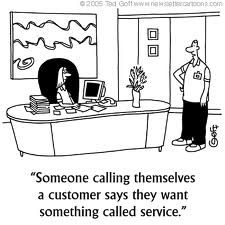
Wow Your Customer to Win

How many times have you heard a phrase like “user experience” or “customer experience” in the past decade? Quite a lot I bet–unless you live under a rock. Great companies from Starbucks to Ritz Carlton, Nordstrom’s to Apple have taken the time to be intentional about their offerings, including those small touches that are so memorable.

Paul Spiegelman is a business owner whom I follow on Twitter. He wrote for Inc. magazine over the weekend about a splendid resort experience he had recently. There were aspects of the stay where expectations were met. However, he was blown away by the special touches. Paul believes that small businesses would do well to:

1. Notice What’s Important

When my wife and I got to the check-in counter, we were assigned to our hotel room. The staffer noticed we had small children and immediately brought out a wagon full of stuffed animals and encouraged our kids to pick one. This seemingly small gesture showed the resort was paying attention to what is most important to us.

2. Be a Guide

Rather than just hand me the room key, the clerk stepped around the front desk, told me he was going to tour my family and me around the property and then escort us to our room. And that’s just what he did. Not sure how the hotel managed that with multiple people checking in at the same time, but it was impressive. Do you do this when you give clients direction?

3. Start the Morning Right

I love it when hotels offer morning coffee. But it is usually in very small cups, and you inevitably wind up going back repeatedly for more. At the (place we stayed), the coffee cups looked about the same size as a Starbucks Venti. And the coffee was free until 11 a.m. What a great way to start the day.

4. Empower the Unexpected

At breakfast one morning, we celebrated my 12-year-old nephew’s birthday. During the meal, unbeknownst to me or my family, our waiter slipped out of the hotel, went to his car, and brought back a book that he gave to my nephew as a gift. Can you imagine? What small, unexpected touches do you enable your employees to offer without having to ask permission?

5. Don’t Just Pass By

As usual, I often saw hotel employees in the hallways or outside walkways. But in addition to the standard “good morning” and pleasant smile, the workers went out of their way to purposely step aside and create a path for me, whether I was with a group or walking alone. Instead of two people mindlessly passing each other, we had a moment to interact.

6. Communicate Price Clearly

When I checked out of the hotel and asked for a bellman to help my family and me with our bags, he also brought our bill to the room so we could check it then and raise any issues or questions. I have never experienced that kind of active transparency; it was great to have someone make sure the details of the bill fit the service we paid for.

7. Leave Them With a Lasting Memory

When our car was loaded up and my family and I were ready to go, not only did we find the staffers had left two bottles of water in the car cup holders but also two logo baseball caps on the dashboard for my wife and me. We drove away with smiles on our faces.

Many of these noticeable expressions of customer care do not cost anything extra to provide, but make a huge impression. How do you show that you care about what’s most important to your customers? Are you the type who tells a customer what needs doing, or do you take the time to show? How do you go “above and beyond?” Do your customers feel respected by your actions? Have someone in your organization (as senior a level as possible is ideal) take the time to explain billing and offer to answer questions for customers. What memories would you like to build in the minds of your customers?

If you will think through these questions and best practices, you will win the hearts of your customers.