Tremendous Entrepreneurial Success From Reading


Charlie “Tremendous” Jones, who is well-known in the insurance industry as a motivational speaker, believes in helping people improve themselves. His conviction for years has been that one must take responsibility for their own success. The quote below illustrates how he thinks one can best accomplish success in life:

You are the same today you’ll be in five years except for two things: the people you meet and the books you read. In every turning point and crisis of my life, there’s always been a book that helped me think and see more clearly and keep laughing and keep looking up and keep my mouth shut. I would never tell anybody I ever had a problem, so everybody always thought I was on top of the world, and yet I was just like everybody else with problems coming out of my ears. Now, when people come to my office, they come to talk to me. Instead of conversing with me like they think they are going to do, I get them reading. I pick out some great books and have each person read three or four sentences. I just received another email from a person recounting how his life was changed by learning the power of reading together–rather than talking.

As you may have read in a previous blog or Twitter post, I follow Under30CEO.com. Matt Wilson, one of the co-founders, posted on the Under 30 blog today some insights he gained from reading books this year. A few excerpts are provided below, with Wilson’s comments.

  1. Who’s Got Your Back by Keith Ferrazzi  – Relationships should be about quality over quantity.  The goal should not be to “know everyone”.  Build a small group of people that want to go out and conquer the world together.
  2. Boomerang by Michael Lewis – Base your economy, your company, and your income on creating real value for others.
  3. Small Loans Big Dreams by Alex Counts – Entrepreneurship knows no borders or social classes.  Coupled with education and accountability, access to capital can create sustainable micro-businesses.
  4. 48 Laws of Power by Robert Greene – “Disdain things you cannot have: Ignoring them is the best revenge.”
  5. Startup Nation by Dan Senor and Saul Singer –  “Immigrants are not averse to start from scratch. They are by definition risk-takers. A nation of immigrants is a nation of entrepreneurs.”
  6. The Education of Millionaires by Michael Ellsberg – “The biggest thing you won’t learn in college is how to succeed professionally.”
  7. Start Something That Matters by Blake Mycoskie –  It is truly possible to build a business both rich in profit and in social good.
  8. The Greatest Salesman In the World by Og Mandino –  “You were not created for a life of idleness.”
  9. Iceland, India, Interstate by Colin Wright – Go out there and LIVE.  Life is short, take advantage of it, and when you get a crazy idea–go for it.
  10. The Art of Non-Conformity by Chris Guillebeau – “If something is worth doing, you might as well do it all the way–so I’ve added ‘radical goalsetting’ to my own unconventional life planning.”
  11. Delivering Happiness by Tony Hsieh – There will never be another 2013.  When Tony sold his first venture to Microsoft, he said there would never be another 1999, and went to work on his next act, passing up millions of guaranteed dollars if he had simply stayed with the company and let his shares vest… All to chase his passion.
  12. The 4 Hour Chef by Tim Ferriss – Whatever you want to do in life, think about how to hack the system, so you can compete with only the best.

Matt’s list was 17 items long. Since there are 12 months in the year, I condensed it to 12 books and corresponding lessons to be learned and applied. Hope you find a nugget to help now and a book to read later. May you be better in five years for having applied yourself to reading!

 

Do You Have an Innovative Strategy?


After a very long (10 days+) break from blogging, we are back on the job for the New Year today. The time away was refreshing and helped to restore focus. One of the reasons I began writing this blog last year was to develop a discipline for getting observations about small business management and strategy out of my head and into a “written” format. At some point in 2013, we will attempt to cull through last year’s blog posts, sort and organize them, and format all of the content into a cohesive story that should make a good book. It has been over 20 years since I published my last book and it will be fun to be in print again.

Back to the matters of management and strategy…I’d like to run through a few scenarios I’ve encountered with clients recently in an effort to highlight some of the ways business owners get “stuck” in their approach. One client is in the midst of a family business transition–none of which are what one would call a “piece of cake.” As with any business worth laboring over, this one has experienced enough success in its history that all parties think it has enduring value. All parties would be right–and wrong! 

Business valuations derive enhanced magnitude from observed plans for managing risk. The risk of the owner getting hit by a bus is, for instance, substantial. With no business continuity plan for such a horrible occurrence, the company that has taken years to build can be undone in a very short amount of time. Insurance is seen as a way to mitigate the impact of such an event on the financial performance of a business and its stakeholders. However, no amount of insurance can replace institutional knowledge. Most companies are operated based on lessons learned the hard way. When the person who remembers all the lessons is no longer around, others must climb the same painful learning curve and waste precious resources in the process. Taking the time to document what you have learned and how you apply that knowledge in daily management makes your company worth way more money–even if you never plan to sell it!

hourly billing agreementAnother client is a professional services firm that is struggling with the industry standard of billing fees on an hourly basis and all the timekeeping and dysfunction associated with this antiquated practice. In addition to the record keeping requirements, there are collection processes that are time consuming, result in write-downs, and become demoralizing. What we are implementing, then, is a change in the way business is done. We will begin to charge clients a retainer and a success fee. The retainer is some minor amount that basically allows this specialized practice to recoup some monies for overhead obligations while the team works on client issues. It is meant to encourage more calls from clients to discuss everyday items so that we become an extension of their management and leadership teams. The success fee is structured up front to be awarded to us for doing a better than average job. We work with clients when they are prospects to identify    how success will be measured before an engagement begins. we put the feedback responsibility in the hands of the client, and adjust our final payouts based on results.

These two examples illustrate how matters of strategy can be brought into the regular operations of any business. In every business we’ve encountered, there are things that are overlooked or left un-addressed because they are accepted rather than challenged. What are those things in your business that need to be tackled in 2013? How will you tackle them?

Create a Stronger Brand Through Research and Leadership

As an adviser to SMBs, we frequently are in the role of addressing branding issues in an organization either looking to jump start growth or figure out how to combine forces with a merger partner. In any such scenario, the effort to rebrand is a challenge. To take a known corporate identity and recast it in the minds of a target audience requires research data, creativity, and commitment.

Overture NetworksOverture Networks in the Research Triangle area of North Carolina merged with another competitor, who happened to be located in the same town. Both Overture and Hatteras Networks competed in the telecommunications equipment sector. After the merger, the new company had a broader product line, bigger sales distribution channel, and deeper expertise. Mark Durrett, Overture’s marketing director, and Alicia Smith, the communications director, shared seven lessons from their rebranding experience via the Marketing Profs website this morning:

1. Executive buy-in is critical

Our executive team recognized that our rebranding project had the power to help grow the business and change buying behavior. With the CEO’s support, every executive leader, a member of our board of directors, and other company leaders became involved. Vested in the project’s success and expecting measurable results, they all cleared their calendars to participate.

2. Set internal and external goals

The merger brought together two companies with complementary products, but different operating cultures. By marrying the objectives of our rebranding work with the company’s strategic business and growth goals, we helped ensure that everything we did drove business value and focused on growing the bottom line. We learned to be realistic with our timing, knowing that ships don’t turn on a dime, and gave ourselves time to define and then “live” our new brand.

3. Research can inform and guide

There’s tremendous power in asking questions—and in listening. Diving deep, we asked everyone—customers, analysts, internal stakeholders—what they thought we did, how we did it, how we could do it better (or different or easier or with more impact), what they wish we did, how they prefer to work with… you get the idea. After we created a safe forum to receive candid, useful responses, the input poured in. In any such exercise, you must be prepared to get quality feedback; you must listen carefully, evaluate honestly, and decide what really matters.

4. Collaboration (and outside experts) can bring you together

A valued and trusted partner will use your research, extract ideas from the entire team, and empower key leadership to make quality decisions. And just because you’ve expanded the circle of collaboration doesn’t mean you make decisions by committee. With everyone invested (and involved) in the process, our leadership made decisions that the other collaborators readily accepted.

5. Establish a foundation, then build on it

Before beginning any creative exercise—from your new logo to a datasheet—your team needs to have agreed on all the elements that define you as a company. Armed with those foundational brand elements, you can effectively build out the language, design elements, stories, and guidelines that allow your brand to grow in the direction you desire.

6. Convert collaborators to evangelists

Executives and other leaders have a unique role in sharing your brand story with customers, analysts, employees, and key stakeholders. Ideally, they will transition from collaborators to evangelists. 

7. Keep walking the walk: You have to live the brand

Once the launch party fades, the hard work begins. Hopefully, by now, your entire company agrees that your brand consists of everything that has anything to do with your company, and that your brand goes everywhere. Your stated values must become reality. Anyone who interacts with your people or your products, receives an invoice, or sees your logo—really anyone in any circumstance—expects an experience that aligns with your brand attributes. 


Even if you have not undertaken a rebranding project, you and your company can benefit from the advice offered above.  Think through how you can solicit and implement feedback from customers. Incorporate their input into your messaging, involve executive management in the process, and seek to build collaboration into brand evangelism.

Crank Up Content Marketing For 2013

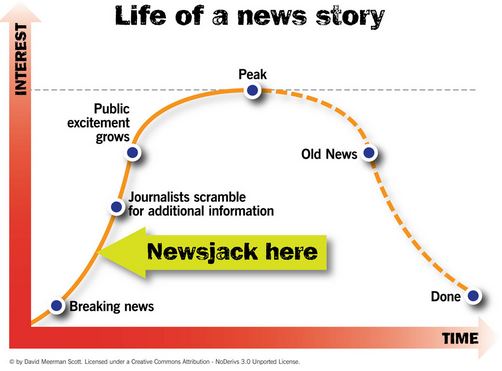
One of the leading developments in marketing has been the increased importance of content management strategies. With the proliferation of communication via the internet, companies of all sizes who are serious about engaging their target audience are looking to content as a significant tool. Clare McDermott, writing for the Content Marketing Institute today, took the opportunity to speak to to Amanda Nelson recently about how her organization creates content that is compelling, fresh, and engaging. Amanda manages content for Salesforce’s Marketing Cloud platform. Her job is to create and curate content for the Salesforce Marketing Cloud community. She manages everything from the blog and eBooks to webinars and infographics — with the help of a content team, of course.Newsjacking

Excerpts from Clare’s interview with Amanda appear below:

CMI: What issue do you think your content solves for your audience?

Amanda: Businesses want to become social, but they don’t always know where to start. What we do is create content to educate these organizations in the hope that when they are ready for social media monitoring, engagement, or publishing software, they will think of us. 

What kinds of content tactics are you using?

What we do is develop a content engine. A content engine starts with a central focus. In our case, it’s an eBook, but it could be a case study or any other piece of content that a company might have. From there, we publish the content by recycling and reusing it on multiple media:

  • We’ll read the eBook aloud and make it an audio book.
  • We’ll interview the customer for a quote in the eBook and then put that up as a video.
  • We’ll take the audio from the video and make a podcast.
  • We’ll create a presentation from the eBook with highlights.

What results have you gotten since you started using the “content engine”?

We’ve  had significant increases — about a 300 percent year-over-year increase in our eBook shares and downloads. I believe social shares of our blog posts increased by about 150 percent. What challenges have you run into?

A lot of people want to plan and curate, but at the end of the day, we need writers.. I sometimes have a need for (outside) writers..I’ll go out to the community and get guest bloggers. 

What’s your favorite tool used to communicate with the team?

We use Google Hangout because we’re actually all spread out across the country and Canada.. it is great because it’s video and it can hold up to 10 people. There are also fun things that you can do. You can do screen share or overlay funny faces. Whoever is talking is displayed predominately so it constantly changes. It’s in real-time, easy to use and free. The hangout is public so anyone else can join. People can see that you’re hanging out. It’s very social.

What are the most exciting examples of content marketing that you’ve see outside of your own business?

“News-jacking:” you see what’s going on in the media and they’re able to create content around it that becomes really shareable because it’s sitting where it’s hot. 

As you read through Amanda’s comments, take note of what she has done (with plenty of resources including a team of people) and think through how to interpret it and implement similar concepts in your business. We suggest the following:

  1. Think through your audience, where they hang out, and what your main message to each segment may be.
  2. Create a content engine that is your prescribed way of being consistent.
  3. Think about ways to use free, crowdsourced help for additional content.
  4. Investigate Google Hangout as a tool for enhanced collaboration.
  5. News-jack something interesting to supplement your original content. (Like we just did with this excerpt!)


Trends to Watch in Small Biz For 2013

In mid-December, small business owners are thinking about year end numbers and whether their companies will meet the annual goal(s). Advisers to small business owners are thinking about tax liabilities, the expiration of certain programs favorable to their clients, and whether the upcoming year will be better for their own businesses. What is little discussed but super important is what the future holds. In preparing to answer that very significant question, the small business leadership team is thinking proactively about strategy, innovation, and how to turn today’s customers and competitive advantages into a plan for sustainable success.

American Express publishes a blog under the OPEN Forum brand. One of its leading bloggers is John Jantsch of Duct Tape Marketing. A few weeks ago, he identified the following top 5 trends in business for 2013:Futuristic conference room

1. “Crowdsolving” becomes a hot innovation trend. Some of the greatest challenges we face in the world..are being tackled in unique ways. Instead of relying on the existing machines and organizations to address problems, innovative organizations such as the X Prize Foundation are creating competitions that reward disparate groups of individuals to collaborate and create innovative solutions in ways that had not previously been possible..This form of what is being called “crowdsolving” will make its way into the mainstream of business innovation. Asking our customers, vendors and employees to act as a community think tank will become one of next year’s hottest innovation trends.

2. Technology evolves to assist human contact. ..Instead of a world lacking human connections, these.. innovations have actually made it easier for some to create real human contact—one-to-one. For example, medical-monitoring devices provide the opportunity to create better doctor patient relationships and care; new scheduling and meeting services make it easier to connect in real life; and sharing ideas in virtual space leads to a greater desire to connect offline in social settings.

3. Content-filtering becomes a significant marketing practice. ..Moving forward valuable content must include insight, and filtering should be a central practice in order to help people and prospects get what they need when they need it. Service providers will be chosen based on their ability to find and share the good stuff in addition to making sense of the changing stuff.

4. Visual simplicity becomes the desired communication method. From a design standpoint you don’t need to look beyond sites and services such as Pinterest, Pinvolve and The Fancy to see that people want visual content. The current trend in Web design takes a cue from this desire for visual scanning and marries it with the need for simplicity and white space. 

5. Tablet optimization becomes the mobile standard. ..The new generation of mini tablets are going to impact responsive design and what we’ve been calling mobile devices. Tablets and mini tablets will see a tremendous jump in server logs and become the de facto design standard for mobile content. That doesn’t mean mobile phone size browsers aren’t important, it means there will eventually need to be a divide in how we address tablets vs. phones.

How you apply these trends to your own business is a big decision. Let’s take the trends in reverse order. If you have a website, it is simply inexcusable any more to not have it prepared to be read on multiple platforms/types of devices. Secondly, please take a look at your website and consider how to make it more simple, visually appealing, and written with the mindset of the user in mind. Everyone has content available–come up with a strategy of how you are going to share it with others professionally, opportunistically and systematically. Work with your leadership team to use technology to make your business more personable. When you encounter problems that need solving or innovation that needs to occur, outsource the brainstorming to others related to your business–they will be glad you thought to involve them and your ideas will be stronger as a result!