Develop Innovation Skills Through 6 Techniques

When we write of intrapreneurship, we are addressing the need for businesses to foster innovation. While process and procedure can create a friendly environment in which creativity can occur, there are times when some individuals inside an organization need a jump start. How does an organization encourage its people to overcome what would be called in literary circles “writer’s block?” For, if your company can identify how to unleash the power within the minds of its employees, great things can happen on behalf of the customer and the company and its stakeholders–including the employees!


Catch 22Woody Bendle penned an article for Innovation Excellence recently highlighting that innovation instincts can be sharpened and expanded. It is necessary, according to Bendle, to “sharpen your instincts.” Bendle reminds readers of Malcolm Gladwell’s writings (Blink and Outliers) on how to become more intuitive. Gladwell, says Bendle, “provides several deliciously compelling examples of the human “Adaptive Unconscious” at work. This Adaptive Unconsciousness is discussed as one’s ability to intuitively connect a myriad of seemingly disparate dots in a split second in order to form an accurate expert opinion. And, fortunately this Adaptive Unconsciousness is something that one can develop over time.”

Furthermore, writes Bendle, Gladwell makes the case for developing “expert” knowledge and abilities through what he calls “The 10,000 Hour Rule:”

Gladwell’s thesis is that after 10,000 hours immersed in a particular field or activity, one begins to have a seemingly innate level of knowledge or capability. Put another way, with 10,000 hours of effort you can take your Adaptive Unconsciousness (instincts and intuition) to a new, almost uncanny level. But at this point, one’s expertise is potentially narrow, and one way to bring even more value to your innovation process is to expand your instinctive base.

Bendle suggest the following 6 techniques to awaken your latent innovative capability:

  1. Occasionally take yourself out of your daily, weekly and monthly routines. You’ll be amazed by what doing something different or doing something differently can do for your mind.
  2. Purposefully seek out the new and the different – and pay attention. There is a whole lot of life going on out there and to borrow a quote from Ferris Bueller – “If you don’t stop and look around once in a while, you could miss it.”
  3. Go Wander and Wonder. Go see, do, and experience something completely out of your wheel-house. Get out of your comfort zone and whet your appetite for confusion. Seek out things that are amazing to you.
  4. Challenge your senses. Take a moment every now and then to mentally catalogue what your senses are experiencing and then, maybe even push them a little further.
  5. Make note of things that inspire. Each of us are moved in different ways. Pay attention when you are inspired. Ask yourself why you were inspired. Make note of what this feeling is inspiring in you.
  6. Play! Have you ever spent any time watching two young animals playing around or rough-housing? They are developing their instincts and this is one technique that we human simply don’t do often enough.

Try these techniques the next time that you are trying to solve a tough problem at work. See if they propel your thinking toward greater objectivity and clarity. If you find that the techniques are working for you, take it to the next level by sharing your experience with co-workers, a supervisor, or subordinate. As more people learn to think about the everyday work world with more innovative mindsets, “breakthroughs” should become far more common and frustrating “Catch-22” situations less so!


Soft Skills Matter in Business – Even if Not Measurable

Throughout my career, I have had the opportunity to work alongside some brilliant co-workers and clients. Whether it has been inside a public accounting firm, or as an advisor to engineering and construction companies, I am often surrounded by folks with strong technical skills. Since my role has usually involved organizational development, strategy, or marketing and business development, I have heard time and again how “soft and fuzzy” topics such as relationships, emotional intelligence, and creativity and communication are less needful than the technical skills.

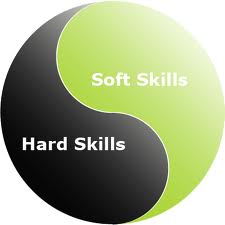
Susan Mazza, who writes a blog entitled Random Acts of Leadership, recognizes the dichotomy of “soft” versus “hard” skills in her recent post, “The Power of Soft.” She states in the post that, “the very need to distinguish “soft” vs. “hard” speaks to a paradigm that has long revered hard results as the only ones that really matter. Unless something can be quantified and measured the underlying belief is that it is somehow less valuable and hence of lesser importance.”Soft vs hard skills

Whether I have been in conversations with a CFO, a business owner, or a  VP of operations, I have heard over and again how that which cannot be measured must be insignificant and pale in priority. Mazza references a recent TED Talk by Dr. Brene’ Brown, “Leaning into Vulnerability” in which Brown shares how one of her research professors once stated, “If you cannot measure it, it doesn’t exist.” Mazza observes that many with advanced degrees subscribe to a scientific framework that assumes “measurable” is the only test for “real!”

Dr. Brown’s talk about vulnerability addressed the effort to view “soft” subjects with “hard” data. New insights have prevailed that challenge the long-held distinction within the business world of the value of each category of skills. Mazza’s view of the new awareness is that, “in our relentless pursuit to collect and analyze data, we all too often ignore the most important measure of all – our senses!”

The behavior we see and emotions we feel, according to Mazza, are the source of the most powerful tool we have as leaders and mangers – our ability to observe. She observes the following:

You have probably heard the phrase, “the tension was so thick you could cut it with a knife.” Can’t you feel that tension? How much productive work gets done when that kind of tension is present? Yet we often grind through what we see and feel through simple observation, knowing both the experience and the result are going to be less than satisfying.

Would having a mood Geiger Counter to assign the tension a number really make any difference?

By simply observing the mood and the impact it is having on your ability to fulfill your commitments, you are able to take action to make a difference in any moment. How to take that action is, of course, another subject.

The point here is the real power of soft comes from our innate ability to observe. So perhaps it’s time to give up our attachment to measuring all things and the belief that, “If you can’t measure it it doesn’t exist.”  Why not start  learning to better use the tools we have been born with – our senses – as an access to improving relationships, enhancing performance and creating great places to work?

The ability to navigate through tensions, create win-win scenarios, and build esprit de corps comes not from technical, “hard” skills, but from those soft and fuzzy assets that many C-suite executives and business owners underestimate. Think about your own organization and how greater respect for soft skills could make it a better place to work, where senses are valued equally with data and relationships that build goodwill are put on a pedestal.


Your Online Content Needs a Strategy

Many of my clients have made the jump into the digital age with their marketing. They know that they need to be involved in social media, but often have never heard of content management. While I do not pretend to be a content expert, I have picked up on some best practices over time and try to apply those to my own firm and the clientele I serve. My email inbox receives regular updates to keep me abreast of what thought leaders have to say about content. Over the weekend, I read about “8 Content Marketing Mistakes to Avoid,” a whitepaper that was very well written. The authors/sources quoted include Heinz Marketing’s Matt Heinz, Marketing Interactions’ Ardath Albee, Babcock & Jenkins’ Carmen Hill, The Funnelholic’s Craig Rosenberg, and The Sales Lion’s Marcus Sheridan. 

Excerpts appear below, followed by my own formatting for emphasis, observation and commentary:

1. Don’t neglect to do the groundwork. Before you start any marketing activity, you have to know why you’re doing it. How does this activity translate to immediate or eventual sales and revenue? (Heinz)

You have to know (to) whom you’re talking, what they need and want to know, and where their interests intersect with yours. (Hill)

2. Don’t focus on yourself—focus on the buyer instead. Think like the end user, not like a business owner. Great content marketing is about education.  To be great at content marketing, the focus has to be about the reader, and not the company/writer. (Sheridan)

Our content needs a lot less “we” and a lot more “you.” (Hill).

3. Don’t pitch your product at every stage. Give the people what they want: interesting content that makes their life better. (Rosenberg)

What are your customer’s issues? What do they need help with, right now? That’s the content that will spread like wildfire for you. (Heinz)

Question words4. Don’t overlook calls to action. Every content asset should have a call to action. Build pathways and tell connected stories that help to build momentum through the pipe. (Albee)

5. Don’t forget that effective content marketing is a two-way street. To really accelerate your audience and impact, you must devote time to responding, commenting, engaging questions and so on. (Heinz)

6. Don’t produce content that lacks substance. Audrey Gray of American Express advised that we put our energy into what we’re making rather than the platform: “Create content that makes you feel smarter, celebrates human artistry, or that has with real-world value.” (Hill)

7. Don’t treat content marketing as an afterthought. Content marketing is a practice that integrates all of your content-driven initiative into a consistent and holistic experience for your target markets. Content marketing is at its best when it’s used to pull everything together so that an experience in one channel makes sense or adds value when the audience switches to another channel. (Albee)

8. Don’t underestimate the power of various formats. Written content may be the core of your content strategy, but don’t forget video. Or podcasts. Or short, embedded slide presentations. Or whatever other formats your audience naturally gravitates toward. (Heinz) 

Marketers will benefit tremendously by embracing the Rule of 5. Take one topic and develop 5 different angles to approach it, creating 5 different formats of content. (Albee)

Sound advice from some stellar content curators and marketers. Incorporate these principles into your own business environment. Become engaging, relevant, and indispensable. Doing so will build a loyal following that can be turned into either revenues or referrals that produce revenues. At the very least, your brand gains equity for your efforts and that is no small feat!


Why Your Company Struggles to Innovate


Jeffrey Phillips, a friend of mine in Raleigh, North Carolina is a savvy adviser to companies on the topic of innovation. In a blog post today at Innovation Excellence, Phillips shares his top recommendations to companies who want to differentiate themselves from the competition. Excerpts from the blog post are cited below to provide a framework for you to consider with regards to your own situation. {Commentary in brackets represent my thoughts/contribution.)

The strange concept to me is that many executives want more innovation, but they don’t understand the investments, or perhaps recoil from the costs. Many mid and senior level managers want to do more innovation, for growth in their own careers, more differentiation of products and services, and simply to expand their horizons. But they don’t have any indications that if they do more innovation that the innovations will be favorably received. So two groups, that talk frequently to each other, have deep desires for more innovation, and both are waiting for the others to make the first move.

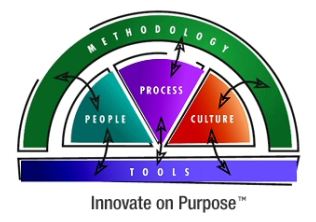
When everyone wants something and yet no one feels free to act, it makes sense to unpack the barriers and explore them.Innovate on Purpose

First Barrier – Immediate Results

While executives want innovation, to help differentiate the company or grow new revenues and profits, they also don’t want to risk distraction from existing revenues and quarterly promises. Potential revenue or differentiation is just never as interesting as near term results. To counteract this issue, we need to establish priorities and re-balance investments and commitments, or reduce the stated demand for innovation. 

{What are the priorities at your company? Are investments and commitments aligned with the need to make an impression in the short-term, or do they need to be matched with innovation initiatives?}

Second Barrier – Clear Goals

3M’s stated goal of driving 30% of revenues from products released in the last 3 years is a good example. It’s clearly stated, measurable and stakes out an important need for a continual stream of new products. Yes, it can be jockeyed, by claiming that an existing product is a “new product” because it has new features. But which argument would you rather have?  The debate about how “new” a substantial portion of your portfolio is, or why you are losing market share?

{Innovation can only be understood to be successful when “success” is well-defined and embraced by all.}

Third barrier – Time and Resource

After years of lean, Six Sigma, right sizing, downsizing and outsourcing, most people are working more than ever, and don’t have much slack time to take on innovation projects, especially when those projects may require new tools or new ways of thinking. If we can’t turn a project quickly with minimal risk and minimal investment, we probably won’t do it at all. 

{What will your “ask” be to upper management to allocate necessary time and resources? Do you have data that supports innovation as a good return on investment? How much time do you think should be invested on innovation on a pro rata basis?}

Fourth barrier – Internal Focus

If your firm can’t afford the internal resources and people necessary to innovate and sustain quarterly results, you can find incremental services for innovation from third parties, whether this is “open” innovation or something you choose to outsource. I’d argue that you should outsource the management and extension of existing products and services and in-source innovation of new products and services, because that’s where the growth lies.

{Too many companies have dysfunctional research and development teams that get bogged down in “skunk works” and function in a silo-like environment. By creating and pursuing horizontal work processes–whether they are interdepartmental or involving external strategic alliances, your organization can overcome the navel gazing so typical in larger, bureaucratic companies.}


Innovation: Spurred By Introverts or Not?

introvert v extrovert

We are all familiar with the stereotypes surrounding introverts. Yet, Stefan Lindegaard at 15inno.com, in a blog post today, while acknowledging that he is an introvert and prefers to be alone, looks at the unique role introverts can play in innovation.  He projects that, in terms of innovation, more innovation will happen in communities either in the b2c form of crowdsourcing or in the b2b form of innovation networks, alliances and challenges. He sees the communities as not just virtual/online, but also in person. Some of Lindegaard’s observations about introversion as it relates to innovation are below (he doesn’t perceive the shift to synchronized collaboration to be one that will exclude introverts from innovation.)

Reflection is an important, but forgotten capability. It is often said that introverts get more energy through reflection and that it dwindles during interaction. Well, we need more reflection. There is too much action in this fast paced world and when it comes to ideas and innovation, the best results seem to come when you take a break and reflect on the problems you are trying to solve.

Organizational structures need to make room for introverts. With the exception of a few pockets such as R&D and accounting most functions within a company seem to be driven with an extrovert-like attitude. But not all people are social. Many are introverts and don’t necessarily want to socialize and focus on external matters. What about them?

Introverts must learn to turn on the switch. Far too many meetings either take too long or should never have taken place at all. The matters could have been dealt with in more effective ways than a meeting. Introvert or not. 

But when I need to interact with others in the physical world, I have trained myself to turn on a switch that allows me to be a good networker (ask questions, focus on the other person) and deliver good talks. I would actually argue that introverts are capable of becoming better networkers than most other people because we are more likely to define a purpose and execute on this before we interact like this.

We need to develop the softer skills. Yes, it is kind of a cliché that soft skills such as networking, communication and “people skills” are really the hard skills, but this does not change the fact that too many companies fail to educate their employees on this. More importantly; they don’t give the employees the time needed to develop these skills. Those who want to succeed in the social era need to change this.

Social media works well for introverts. You can “hide” and still have a strong voice in your community or industry. This is one reason that I spent so much time with social media. It is a great way to communicate and since there is so much input (some call this information overload), it gives you plenty of opportunities to reflect on what is happening and thus build further on your own thoughts and ideas. Social media makes it easier for introverts to become more social. It is a win for everyone.

Introverts can challenge the crowd. Since most introverts shy away from the crowd, they often see the crowd in a different perspective. We need all perspectives when we work with innovation and good innovation leader make an effort to recognize this and thus pay extra attention to listen to the more “quiet” introverts.


Lindegaard’s comments should be challenging to traditional organizational development thought. He almost goes so far as to recommend diversity strategies to balance personality types in work groups. Furthermore, he portrays as valuable the tension between thinking and communication, solitary productivity vs group performance. Think about these concepts and your own organization. Consider how you may better organize yourselves to be more innovative.