Put Sharks & Jets to Work in Strategic Design Thinking

When we think of design, we think of products. Industrial design as a field is scarcely 10o years old. However, technology tools such as CAD (Computer Aided Design), 3-D modeling, and stereolithography catapulted design into a rapid prototyping process towards the end of the 20th century. Companies like Apple rode the crest of this wave–to an extent–but really took design to a new frontier. Rather than simply looking at features and benefits as expressions of design and product marketing, what emerged was a new way to view business problems. Many business schools have incorporated not only courses on innovation, but specific foci on “design thinking.”

Kevin Budelmann penned an article for Metropolis magazine last month discussing design thinking as a modern motif. Budelmann credits Bill Moggridge, cofounder of the pioneering design firm IDEO with contributing significantly to thought leadership in this domain. Moggridge is said to have been the genius who reengineered IDEO from a product design practice to strategic design thinking powerhouse. Budelmann notes that part of the transformation occurred as a result of asking staff from divergent disciplines to work together, requiring that they become humble in the process. 

Budelmann’s firm, Peopledesign, has amassed a team of talented contributors who may not have worked for design firms years ago. A clear distinction is made, however, in hiring MBAs who understand design and designers who understand business.  The inevitable difference of opinions pits “sharks” (MBAs) against “jets” (designers) in true West Side Story musical terminology. Here’s Budelmann’s take on the natural interaction between the two employee types in his design firm:

It’s not even clear anymore which neighborhoods are Sharks’ turf and which belong to the Jets. Maybe that isn’t such a bad thing. The gym is neutral territory, and we might be able to work something out at the dance. Clearly, we Jets could learn a few new moves from the Sharks. The Sharks need to cool their jets anyway, so to speak.

When it’s show time, it isn’t us against them. In truth, we’ve made great strides. We’re learning every day. A colleague once mentioned that when people talk about collaboration, they usually mean cooperation. True collaboration is hard. Real communication is hard. It’s not about holding ground; it’s about ceding turf.

Two decades ago I was in school at Carnegie Mellon, where everyone is a geek in their respective discipline.The least geeky and (excuse the perception) least interesting people got a business degree. General management, which we assumed was to generally manage something general. It left us scratching our heads.

Now that I own my own business, I value management greatly. Business is an engine, and we don’t go very far without it. Besides, what do designers really do anyway? How do they do it? Is it describable to a non-designer, or do you have to be part of the gang?

Today we operate in a post Sharks vs. Jets world. Our team looks different. Our projects look different. Our sketches, books, and processes look different. As for the star-crossed lovers, our children have certainly taken the best of both of us. It’s the same for our ensemble at work. This is clear: Our hybrid future is stronger than our disconnected past.

Designers focus on asking questions, but often don’t like to answer them. Business people focus on answers, but often don’t ask the right questions. The combination can be powerful. The future of business and design lies in our ability to overcome our small worlds to make room for a bigger one.

The phenomenal power of strategic design thinking is unveiled in that final paradox–designers must become better at answering questions and business folks must become better at asking the right questions. Seek to apply this principle to your own business. Challenge your concrete thinkers to think more divergently; your creatives to think more convergently. In doing so, you will experience some transformation and create a new language of productivity.

 

Sales Shifts Into 21st Century Mode

People wonder what will become of the sales profession in the new, creative economy. Some suppose that most transactions will be done online, without the interpersonal component that has existed since at least the Industrial Revolution. Few expect the demand, however, for sales folks to increase. Yet, in an article for Inc. magazine, Geoffrey James (the Sales Source columnist for the online magazine) shares some findings of a project he has conducted over a two year period with his peer, Howard Stevens. Reports on the project are available for free on the Chally website (HERE), so if you’re interested, you might want to download them (especially since there’s no guarantee they’ll be free forever.)

1. The Web will make salespeople MORE important.

Conventional wisdom says that the ability of customer to research products and buy them online should make salespeople less important. It turns out that the opposite is the case, and companies are hiring more salespeople than ever.

However, customers expect much more of the salespeople who contact and work with them. Customers now expect salespeople to have a expert’s view of the customer’s business, act as a manager of some crucial part of the customer’s business, and be effective at protecting the customer’s interests within the vendor organization.

2: Sales jobs will become further differentiated and specialized.

Conventional wisdom says that the best sales professionals are hard-driving mavericks who can drum up business, develop opportunities, and close deals like crazy. However,  according to Chally’s research, there is no “one size fits all” salesperson any longer.

While some sales jobs may demand the stereotypical “go-getter” behavior, other jobs favor employees with less showy strengths, like strong analytical skills, the ability to empathize with customer problems, or a deep understanding of complex business issues.

3. Universities and colleges will offer more courses on selling.

Conventional wisdom is that top sales professionals don’t need anything other than a high school diploma (if that) in order to sell. However, because selling is becoming more specialized, U.S. firms alone are spend $7.1 billion on sales training every year.

Given the demand, colleges are now ramping up dozens of sales-oriented business classes, many of which are producing exceptional graduates who “ramp up” 50% faster than the average candidate, and are 35% less likely to leave their employer.

4. Selling will be less of an art and more of a science.

Conventional wisdom says that sales is an art (aka “black magic”) that’s only measured by your financial results at the end of the quarter or fiscal year. However, sales-oriented technologies have now made it possible to use science to increase sales performance.

For example, using psychological assessment tests, it’s now possible to create an accurate map of a salesperson’s individual skills, competencies, motivational drivers, work habits and potential for developing new skills. Such metrics make selling (and forecasting sales) more predictable and therefore more manageable.

As you may be able to infer from the comments above, James sees the current flux in sales as monumental. He compares it, in fact, to a revolution, not unlike marketing advances in the 60s or computers in the 80s. The premise that online transactions will fuel the need for more sales is an exciting one. It will be interesting to see whether the need will be for technicians or consultants, or a hybrid. Enhanced consultative skills will be welcomed by purchasing professionals and consumers alike who cringe at the thought of having to interact with the stereotypical pushy salesperson. With a new sales training center, faculty dedicated to sales training, and a growing amount of resources being pledged to course offerings in sales topics, my MBA alma mater, Elon, is an example of a school that has picked up on the executive sales training movement.  Finally, the professionalization of sales through career development tools employed in other roles and fields is another encouraging development that should lead to smoother communication between sales teams and the remainder of corporate departments. What do you think about these trends as James has articulated them?

Smarter Family Business Via Communication

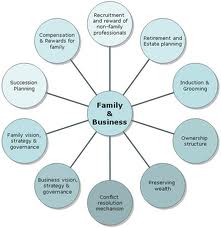
Having grown up in a family owned business, I have experienced a thing or two in common with many of my clients. Even when I was yet in middle school, I would be recruited to help out in the business, much to my own dismay at times when I would much rather be doing something (anything?) else. However, a little bit of pay went a long ways to making a young man very content. As I grew older, however, the conflict between what needed to be done in the business and what I wanted to do became greater. My goals, dreams, and ambitions had less and less to do with staying in town, working alongside my dad, and us building something together. As you can imagine, this difference of opinion caused a bit of a rift in our relationship. So it goes with many family businesses.

The mismatch between the expectations that a founder has in terms of the involvement of children in the business and their actual desire to be involved is one of the leading problems encountered in family businesses. The parent (substitute other type of founder, but effect is similar) wonders why the child doesn’t put forth the same effort, see the same vision, realize the potential, etc. I delivered a talk for Harley Davidson University on this subject a few years ago, “Why They Don’t Ride With You.” In my session, I spoke with dealers about their frustrations with family members who seemed disinterested in working in or taking over the business. My encouragement to them was to do three things:

  1. Hold the opportunity with an open hand. Instead of making up your mind that there is only one “right” scenario for family members to take part in your business, be flexible! Determine that, while you may have preferences, you will corral your opinions and keep them in check as you attempt to find a common ground.
  2. Communicate often, specifically, including listening. Far too often, a patriarch will squelch the input of a child, spouse, etc in the home–and at work–particularly if work and home blend as in the case of a family business. Rather than honing in on what the other person has to say, we can easily insist on getting our point across before seeking to understand the other person’s view. Ask open ended questions about what the family member enjoys doing, what role they see themselves in, and how those choices affect the business. Create an open dialogue-constantly.
  3. Distinguish between ownership and management. An heir may work in the business or out of it, but still function as an owner. Sometimes, it is best for all if it’s known to be a safe choice to be just an owner or just a manager, rather than both as the founder has been. Realizing that such options exist can diffuse tension, lead to productive conversations, and aid in succession planning. Quite often, outsiders are better successors to founders because they can be objective about the contribution family members make to the business.

There are many other issues that, seen operating in a family business, look and feel different than their counterparts in other types of businesses. Everything from performance measurement to compensation, perks to preferences, psychology to sociology, and very much in between can be seen at work and become a spark for emotions. By far, family businesses are more emotional than others. Whatever your situation, think about tools that help create objective conversations about business issues so that you can lessen the impact of emotions in decisions that are being made. Your business and your family will be better off for it!


Entrepreneurs Need Pilgrim Character and Gratitude

Thanksgiving is upon us. As a small business owner, think about the traits that make you successful…can you trace them back to the spirit of the Pilgrims whom we commemorate with gluttony once per year? What was it that set these pioneers apart and made them successful? Alan Hall, a columnist for Forbes, wrote a blog post about 9 behaviors our forefathers embodied that he thinks are significant to remember:

  1. Take Risks: The Pilgrims took a huge risk: they left their homes, got on a ship with few belongings, and set sail for the New World with little idea as to what would happen to them when they got there – if they got there at all.  While we might never take a chance as big as that one, every new business comes with significant risk.  Did you quit a full-time job?Risk. Bootstrap your business with credit cards maxed to the limit? Risk. Hire family members to cut costs? Huge risk. Bet the bank on a previous successful entrepreneur with potential in hopes of leveraging his/her expertise, no matter the costs? More risk. 
  2. Sacrifice: was a key characteristic of the early Pilgrims–homes, relationships with extended family members, money they would have earned in their jobs back home, or in worst cases, their own lives or those of their children. They believed in what they were doing and prayed that they’d be successful. But as William Bradford, the second governor of Plymouth Colony, once said: “All great and honorable actions are accompanied with great difficulties, and both must be enterprised and overcome with answerable courage.”
  3. Set Goals: someone had to make plans and set goals for success. Writing down the goals – and referring to them often – is critical to reaching them. 
  4. Be Flexible: As the Pilgrims quickly learned, though, they had to be flexible.  Their intended destination was (the) Hudson River. As we all know, rough seas and storms moved them far off course near the shores of Cape Cod… If you’re steadfast in your goals (yet flexible in how you reach them), you can overcome most any challenge.
  5. Be Persistent: Those that made it through the first winter were diligent..strong..(and) didn’t give up..You might feel like your struggling business can’t survive another day, but unless there’s really no hope, come back tomorrow and try again. 
  6. Work Hard:  Unfortunately, after the leaders organized a collective farm, without free enterprise, many of the men were unmotivated to work. The crops suffered.. (but) the leaders decided that the land could be divided and each family grow its own corn..Within two years they had a surplus and began trading it with Native Americans and other small settlements for furs to export to England in exchange for supplies. Corn became currency as entire families worked on their own patch of soil.. (E)ntrepreneurs!
  7. Form Partnerships: The Pilgrims learned to partner with each other and with the Native Americans to survive.. (P)artner up with an expert.
  8. Be Teachable: If the Pilgrims hadn’t been willing and humble enough to accept help from the natives, they would never have learned to live off the new land.  As entrepreneurs, we need to be willing to ask for help and be teachable enough to learn and apply the new direction. 
  9. Be Thankful:  After arriving at Plymouth Rock, Governor Bradford wrote in his journal, “Being thus arrived at a good harbor, and brought safely to land, they fell on their knees and blessed the God of heaven who had brought them over the vast and furious ocean and delivered them from all the perils and miseries thereof.”

What a great list! Take the time between now and Monday to thank those who have made your choice of entrepreneurship possible. Be reminded of these character traits of the Pilgrims and use them to develop into the entrepreneur you’d like to become.


Innovating Words Make Healthy Corporate Hearts


Cheryl Heller, Board Chair of PopTech, a laboratory for disruptive innovation focused on technology and social change, says that,

The wealth of jargon used to describe intrapreneurship (itself a bit of jargon), innovation and corporate social responsibility is more exhausting than enriching, and as their importance becomes more evident, the labels and complexities grow. What’s the difference between corporate social responsibility, cause branding, cause marketing, and a triple (or sometimes lately double, as if we can just decide to leave the environment out of it) bottom line? Should companies now stop all their work on sustainability in order to focus on resilience? Has all independent thinking, or even perhaps all generative thinking inside big organizations become intrapreneurship?  What’s the difference between social innovation and innovation? What’s the relationship between design thinking and innovation? What’s the difference between disruptive innovation and incremental innovation? Is some innovation more innovative than others and is more innovation always better? And does anybody else see this as a silly and dangerously circuitous trap of our own devising?

The significance of the debate about the proper terminology is to find a means to communicate disruptive breakthrough ideas as a valuable corporate asset–without simultaneously creating anarchy! Words cited in Heller’s comment (above) evoke values and desired activities that can help an organization create–or sustain competitive advantage.  Yet, if innovation is perceived as an altogether separate category than “ordinary business,”  then it can be argued that no one will want to do what is methodical if they can be celebrated and rewarded for dreaming over practical execution of existing initiatives. Most organizations and their leaders would prefer that employees see the process of introducing initiatives as a normal part of their positions, rather than stand alone activities that become the topic du jour and are jettisoned when times get tough in favor of “that’s the way we’ve always done it here. (TTWWADIH)” 

TTWWADIH can be a pervasive attitude that implies that we can add to what exists, but should not be expected to improve what exists. In this scenario, positions and/or departments are launched rather than tackling sticky, often political issues. Star studded teams are put together many times to represent cutting edge thinking, only to exempt the teams from performance, which ultimately leads to demotivated executive management.

Yesterday, we looked at Scott Anthony’s HBR article about Medtronic, a company well known for innovation, and their efforts to become even more adept at broad scale innovation. The Healthy Heart For All product has been launched towards the rural Indian population target market. Medtronic is large, smart, connected, positioned and incentivized enough to out-hustle upstart competitors. Though they brought in a key intrapreneur, the company was effective in changing the corporate cultural stance on what it takes to be competitive.

No one wants an unmotivated workforce. Nor do we want idealists who are not well grounded. The concept to “innovate properly” is a core value of a former employer of mine who understood that creativity and innate personal responsibility for the benefit of others must work in concert. By including this core value in position descriptions, the leadership team recognized the need to challenge employees to see advanced initiatives as the responsibility of every employee–not an isolated activity. Furthermore, when innovation becomes the expectation, we don’t have to “stop the presses” to encourage innovative thinking and actions.

Find a way to articulate your expectations for intrapreneurship (or innovation if you prefer) (or corporate social responsibility if you are a part of a grandiose cause) inside your environment. Ask people to define what they mean when using these terms. Expect all employees to take initiative!