Why Your Company Struggles to Innovate


Jeffrey Phillips, a friend of mine in Raleigh, North Carolina is a savvy adviser to companies on the topic of innovation. In a blog post today at Innovation Excellence, Phillips shares his top recommendations to companies who want to differentiate themselves from the competition. Excerpts from the blog post are cited below to provide a framework for you to consider with regards to your own situation. {Commentary in brackets represent my thoughts/contribution.)

The strange concept to me is that many executives want more innovation, but they don’t understand the investments, or perhaps recoil from the costs. Many mid and senior level managers want to do more innovation, for growth in their own careers, more differentiation of products and services, and simply to expand their horizons. But they don’t have any indications that if they do more innovation that the innovations will be favorably received. So two groups, that talk frequently to each other, have deep desires for more innovation, and both are waiting for the others to make the first move.

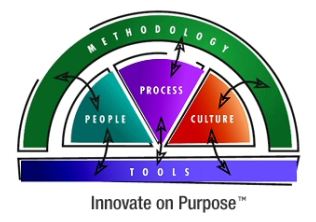
When everyone wants something and yet no one feels free to act, it makes sense to unpack the barriers and explore them.Innovate on Purpose

First Barrier – Immediate Results

While executives want innovation, to help differentiate the company or grow new revenues and profits, they also don’t want to risk distraction from existing revenues and quarterly promises. Potential revenue or differentiation is just never as interesting as near term results. To counteract this issue, we need to establish priorities and re-balance investments and commitments, or reduce the stated demand for innovation. 

{What are the priorities at your company? Are investments and commitments aligned with the need to make an impression in the short-term, or do they need to be matched with innovation initiatives?}

Second Barrier – Clear Goals

3M’s stated goal of driving 30% of revenues from products released in the last 3 years is a good example. It’s clearly stated, measurable and stakes out an important need for a continual stream of new products. Yes, it can be jockeyed, by claiming that an existing product is a “new product” because it has new features. But which argument would you rather have?  The debate about how “new” a substantial portion of your portfolio is, or why you are losing market share?

{Innovation can only be understood to be successful when “success” is well-defined and embraced by all.}

Third barrier – Time and Resource

After years of lean, Six Sigma, right sizing, downsizing and outsourcing, most people are working more than ever, and don’t have much slack time to take on innovation projects, especially when those projects may require new tools or new ways of thinking. If we can’t turn a project quickly with minimal risk and minimal investment, we probably won’t do it at all. 

{What will your “ask” be to upper management to allocate necessary time and resources? Do you have data that supports innovation as a good return on investment? How much time do you think should be invested on innovation on a pro rata basis?}

Fourth barrier – Internal Focus

If your firm can’t afford the internal resources and people necessary to innovate and sustain quarterly results, you can find incremental services for innovation from third parties, whether this is “open” innovation or something you choose to outsource. I’d argue that you should outsource the management and extension of existing products and services and in-source innovation of new products and services, because that’s where the growth lies.

{Too many companies have dysfunctional research and development teams that get bogged down in “skunk works” and function in a silo-like environment. By creating and pursuing horizontal work processes–whether they are interdepartmental or involving external strategic alliances, your organization can overcome the navel gazing so typical in larger, bureaucratic companies.}
 

Innovation: Spurred By Introverts or Not?

introvert v extrovert

We are all familiar with the stereotypes surrounding introverts. Yet, Stefan Lindegaard at 15inno.com, in a blog post today, while acknowledging that he is an introvert and prefers to be alone, looks at the unique role introverts can play in innovation.  He projects that, in terms of innovation, more innovation will happen in communities either in the b2c form of crowdsourcing or in the b2b form of innovation networks, alliances and challenges. He sees the communities as not just virtual/online, but also in person. Some of Lindegaard’s observations about introversion as it relates to innovation are below (he doesn’t perceive the shift to synchronized collaboration to be one that will exclude introverts from innovation.)

Reflection is an important, but forgotten capability. It is often said that introverts get more energy through reflection and that it dwindles during interaction. Well, we need more reflection. There is too much action in this fast paced world and when it comes to ideas and innovation, the best results seem to come when you take a break and reflect on the problems you are trying to solve.

Organizational structures need to make room for introverts. With the exception of a few pockets such as R&D and accounting most functions within a company seem to be driven with an extrovert-like attitude. But not all people are social. Many are introverts and don’t necessarily want to socialize and focus on external matters. What about them?

Introverts must learn to turn on the switch. Far too many meetings either take too long or should never have taken place at all. The matters could have been dealt with in more effective ways than a meeting. Introvert or not. 

But when I need to interact with others in the physical world, I have trained myself to turn on a switch that allows me to be a good networker (ask questions, focus on the other person) and deliver good talks. I would actually argue that introverts are capable of becoming better networkers than most other people because we are more likely to define a purpose and execute on this before we interact like this.

We need to develop the softer skills. Yes, it is kind of a cliché that soft skills such as networking, communication and “people skills” are really the hard skills, but this does not change the fact that too many companies fail to educate their employees on this. More importantly; they don’t give the employees the time needed to develop these skills. Those who want to succeed in the social era need to change this.

Social media works well for introverts. You can “hide” and still have a strong voice in your community or industry. This is one reason that I spent so much time with social media. It is a great way to communicate and since there is so much input (some call this information overload), it gives you plenty of opportunities to reflect on what is happening and thus build further on your own thoughts and ideas. Social media makes it easier for introverts to become more social. It is a win for everyone.

Introverts can challenge the crowd. Since most introverts shy away from the crowd, they often see the crowd in a different perspective. We need all perspectives when we work with innovation and good innovation leader make an effort to recognize this and thus pay extra attention to listen to the more “quiet” introverts.


Lindegaard’s comments should be challenging to traditional organizational development thought. He almost goes so far as to recommend diversity strategies to balance personality types in work groups. Furthermore, he portrays as valuable the tension between thinking and communication, solitary productivity vs group performance. Think about these concepts and your own organization. Consider how you may better organize yourselves to be more innovative. 

What Raleigh Can Learn From Chengdu

Many groups of people have been trying to spur innovation in Raleigh, North Carolina. One in particular, Innovate Raleigh, has sought to unite the educational community with economic development and entrepreneurship. Conferences, forums, and meetups all have been convened to help identify what needs to be done to create an ecosystem that is comparable to other areas of extreme innovation across the United States. What about overseas? What can be learned from places like Chengdu?Innovation ball

Chengdu, with a population of 14 million, is the capital of Sichuan province. It is the city where paper money — a colossal innovation — first appeared in 1024. The printing of the Buddhist canons “Four Books” and “Five Classics” made Chengdu the early center in the art of printing.Rowan Gibson, the co-founder of Innovation Excellence, describes Chengdu’s spirit this way: “Innovative thinking is part of its history, and it is shaping its future.”

John and Doris Naisbitt, who are well known for global trends and futuristic studies, have recently written a new book, Innovation in China: The Chengdu Triangle.  They make the following observations:

Innovation in Chengdu is growing out of a strategically planned nourishing business environment and an entrepreneur-friendly administration in a stable social climate. Following the principles of a well-run company, Chengdu’s leadership combines management and business acumen with social consciousness and, to a much greater extent than we have ever seen in a Western local government, a service-oriented administration. A good example of innovative service are the quarterly meetings the  mayor holds, and in which every problem, request or complaints must be solved or dealt with within three days. The first meeting was held in March 2003 and meetings have been held without interruption since that time.

The first pillar of Chengdu’s reform is its wider focus which is not exclusive on industrial development, but on a whole range of investment attractions. 

The second pillar of Chengdu’s innovation model is to seek to enhance the allocation and efficiency of “intangible assets.” 

The third pillar of the Chengdu model is bilateral exchange.  

Chengdu is dedicated to beat its innovation drums faster, louder and more insistently on all fronts. But Chengdu is only one of China’s many ambitious and competitive cities. High Tech Parks are growing like mushrooms after a warm summer rain and lure with high wages and $150,000 moving grant for top executives. Top-talents find support in Incubation Centers. Mentors, seed capital, offices and technological equipment are part of the package. China’s “Thousand Talents Program” aims to bring back 2,000 talented Chinese paying salaries between 60,000 and 360,000 Euro. Up to the year 2020 China is dedicating 15 percent of its GDP to human resources.

As we look at ways to broaden the Raleigh economy to capitalize on the success of the Research Triangle Park, the major research institutions, and a highly educated workforce, the Chengdu model is enlightening. We have witnessed the high tech park approach as a key economic driver in our history, and are hopeful that the next evolution of RTP will benefit Raleigh as strongly as the first few decades. The emphasis on Incubation Centers is important. Raleigh needs many such centers of innovation. Thankfully, organizations like the HUB and EntreDot are addressing this need. EntreDot is, in fact, expanding beyond its Kindred Boutique for artisan entrepreneurs and opening a new innovation center in Lafayette Village tomorrow (January 17, 2013).

Innovation centers that offer programs that do not include a strong mentoring component do not prepare entrepreneurs and existing businesses to optimize their talents. Seed capital is needed, as are offices and access to the right equipment. However, the entrepreneurial education and mentoring are key. Finding a way to attract talent back to the area is another idea whose time has come. Even in biotechnology and emerging, fast-growth sectors, study after study has stated the need for more top talent to run world class organizations. Let’s apply some of the principles of Chengdu to our own market and spur even greater innovation!

Avoid Deskitis

Business owners are a very interesting breed. In the early days, when they are most entrepreneurial, most are willing to do “whatever it takes” in order to get the business off the ground and well established. The average executive at this point in the life cycle of a small business wears every hat and can predictably be found doing dirty jobs because there’s no one else there to do them. As the business experiences a little success, hirings are made and there are others to whom some tasks can be delegated. At this point, the owner may still take on tough assignments like outside sales, negotiating contracts with vendors and customers, and handling sticky customer service situations. If the business grows beyond the first 5-10 employees, some specialization of labor begins to occur and the owner should be smartly stepping away from  business disciplines that don’t match what I’ve heard referred to as “motivated ability.” 

However, it is very common that a business will hit a plateau at some point in it’s first several years. When this occurs–whether due to changes in the competitive environment, or simply apathy on the part of the original 5-10 employees, it is time to do something that hasn’t been done in a while. One must roll up his sleeves and get the job done. What job? Spending time outside the office, talking to customers, suppliers, even competitors in an effort to determine what is working and what is not. Why don’t most executives do this? It can be attributed to an acute case of deskitis.

desk chainIn case you are not familiar with the term, deskitis is an affliction in which the infected feels attached to his desk at work and that prolonged contact with the desk will resolve all problems known to man. You chuckle only because you’ve encountered people who suffer from the malady described and it seems to you to be as trivial as the common cold. Unfortunately, this is a very severe disease and must be treated with the utmost care and concern.

Who are the prime sufferers from this affliction?

  • Billable hour professionals who think that billable work is more important than community involvement, networking, and relationship maintenance.
  • Owners of a trade business (one that relies on a specific skill that is often learned through apprenticeship)
  • Any executive in a small business whose base compensation is over six figures per year

What can be done to counteract onset of the condition known as deskitis?

  1. Leave the office, damn it!
  2. Visit someone who is important to the success of your business–
    • a referral source
    • a client
    • a fellow board member of a non-profit
    • your attorney, CPA, banker (as long as they are not going to charge you for the appointment)
    • your spouse
    • an association executive in your industry
    • someone who is a good networker
    • the local chamber of commerce executive
    • your friendliest competitor
    • a supplier
  3. Ask the other person what they think about the direction of your niche market.
  4. Take notes!
  5. Ask many follow-up questions; you do not know it all!
  6. Buy their lunch, coffee, etc; thank them; ask what you can do for them in return.
  7. Go to your vehicle and review your notes.
  8. Identify what new questions come to mind, what nuggets you’ve found, and actions you think you should take.
  9. Review your lists the very next day with your leadership team.
  10. Reinvent your business continually!

Hope that these suggestions are helpful to you. As a business development mentor, organizational development consultant, and management succession resource, I observe deskitis more often than I should. Don’t become a statistic–become vigilant instead!


Private Company M&A Lacking Objectivity

One of the area of my consulting practice that is most enjoyable is advising clients on merger and acquisition issues. While very few of my clients actually do a deal, more and more are considering inorganic growth as a means to address both the economies of scale that come from combining back office solutions as well as what are perceived as historic opportunities to perform “roll-ups” in a variety of vertical niches. Understand that my clientele is exclusively privately held businesses whose annual revenues are under $50 million. In fact, in the $1 – $50 million range, they are usually on the lower end when we start working together. 

When I have the opportunity to become involved in a strategy conversation about the potential benefits of a transaction, then, it is not with multinational, public companies who are measuring cross border opportunities as a defensive mechanism to preserve market share against more aggressive competition. These facts notwithstanding, I enjoy reading research performed on the larger company front because many of the issues studied trickle down into my part of the market. This past fall, the global law firm Eversheds published a study, The M&A Blueprint: Inception to Integration, wherein the authors claim that deal teams need a more holistic approach and stronger connections between the planning, completion and post-deal integration phases. Amen!

The universe of participants in the study included 400+ large businesses who had pursued cross-border deals in the period 2009-2012. Many respondents felt that the inability to envision the end from the beginning (think through integration and beyond during due diligence) was the single greatest cause of unrealized potential. 

Robin Johnson, M&A partner at Eversheds, said: (bolding of phrases added)

The current economic climate has made the business of doing deals much tougher, with the research highlighting an acute awareness of risk in the process…Our research shows that the overriding factor contributing to the success of a cross-border deal, is the presence of a core team providing the ‘connective tissue’ to link all the phases together, taking the deal from the inception stage through to post-completion integration. Businesses need to start joining the dots between the different stages of the deal cycle to move the focus from just simply ‘doing the deal’ to thinking about life for the business beyond the deal.

The Eversheds report recommends a methodology that rolls out as follows:

1. Inception

  • From the start – 38% of deals where the in-house team were brought in too late suffered problems during integration.
  • Early warning – 59% of all respondents said they had spotted potentially damaging issues early enough to advise that a deal should not go ahead.

2. Planning and due diligence.

  • The crucial stage – 43% said the most common cause of the failure to realise value in transactions was down to avoidable errors in the due diligence and planning phase.
  • Joined up thinking – 70% felt that linking due diligence and integration planning together would help to improve the deal process.

3. Deal execution

  • What matters most – The reasons General Counsel would advise not to proceed with a deal were illegality/regulatory (45%), e.g. bribery, competition and antitrust, and commercial concerns (45%), e.g. price and valuation, litigation risk, integration costs.

4. Integration

  • A false saving? – 83% did not use external lawyers to a large degree during integration, although they were acknowledged to add value. The main reason for this was cost.
  • Avoid mismatches – 26% felt that the failure to realise value in a recent cross-border M&A deal was due to a misalignment between legal dealmakers and the day to day business team.

Recognizing that Eversheds is acutely focused on the implications for the legal field, they found that involvement of external transaction advisory experts earlier in the deal process yielded better results. Applying this thought to and the process outlined above to my own experience, I strongly recommend that cultural due diligence be brought front and center early on. Internal teams are not usually objective enough to evaluate their own culture, let alone that of another entity. When we delve into matters of governance, decision making, core values in action, executive team personalities and styles, we are able to more accurately predict what may happen in integration and beyond. If red flags go up, back away!