You’re No Omni; Nor Am I


Rugged individualism is highly overrated. There’s a reason why many successful business owners have either an equally strong co-founder or a significant other who is a top cheerleader. It’s because most people are simply not omniscient, omnipotent, or omnipresent. We need others. When we are willing to become transparent and admit that need, we then are taking a requisite step towards success and away from failure. 

Transparency is akin to vulnerability and is one way trust is built. Determining that you would benefit from the input of another requires humility and is hard to do. Those who dare to become interdependent, however, are amazed at the benefits. Interdependency equals collaboration. Collaboration, by definition, means that we no longer have to carry a burden–positive or negative–alone.

“The fact that I don’t have any technical background means I’m not impeded by my knowledge of what it’s going to take to build something, so I’m free to just dream up features and ideas,” says Cyrus Farudi, founder along with Omri Cohen of Capsule, a web and mobile app built for event planning, group interaction and photo sharing. “Luckily, my partner, who has a technical background, has a very ‘yes, it can be done’ attitude. There have been screaming matches when I’ve tried to get too involved in something on the tech side.”

“Collaborating is about co-laboring,” says Nilofer Merchant, innovation expert, Harvard Business Review columnist and author of The New How: Creating Business Solutions Through Collaborative Strategy. “It’s not about hugs. I think people think about it as this positive thing, but it’s really about how you solve tough problems that neither party could solve on their own.”

If you’ve chosen someone based only on skills and intelligence, there might be a personality conflict that, under normal circumstances, could lead to a standoff. But you’re a team, so conflict over personalities would be distracting and frivolous. Sure, the tension of your differences might push both of you right up to the point of failure (the brink of doom, we’ll call it). But there are two reasons you’re not likely to go over the brink of doom: One, your fate is connected (by the handcuffs of mutual interest, for lack of a better metaphor); and two, because a lot of great ideas happen right before people fail–a kind of adrenaline kicks in, which keeps you from creative inaction (the abyss of “Man, we got nothin'”). The point is: Collaboration is harnessed conflict.

-Ross McCammon on entrepreneur.com

McCammon describes collaboration as “harnessed conflict.” It is important to realize that the best partnerships (not necessarily legal co-owners of a business, but in the general sense) pit people together whose worldviews can be decidedly different. Finding a way to respect one another and build consensus on how to move the organization forward is not just an internal exercise–it yields fruit outside the company in other key relationships as well!

When you set out to have a meeting with someone for collaborative purposes, here’s some advice from those who have gone before you:

  • “You have to have the difficult conversations first,” says Jim Moran, co-founder, president and COO of Yipit, a New York-based deals aggregator and recommendation service. “You have to determine who is better at what. That transparency will make everything flow.”
  • The habit of reflecting back to the other person what you have observed being communicated is a good way to build cohesion. “It’s nonverbal behavior beneath people’s awareness, but you can get skilled at doing it deliberately,” says Steve Kozlowski, professor of organizational psychology at Michigan State University and editor of the Journal of Applied Psychology. “You mirror the subtle behaviors of others during an interaction. It’s part of the attraction process. It tends to build rapport.”

Go find a new collaborator for your project/business!



Prepare Yourself to Become an Entrepreneur

There are two divergent schools of thought about whether entrepreneurs should get big company experience before starting a new business.  Some feel that learning how to run a department or project is a good training ground for managing a company. The argument is that entrepreneurial lessons are costly and it is better to learn “on someone else’s dime.”

Dave Lavinsky (the founder of Growthink), in an Inc magazine article, did start out with a corporate career, but feels it’s a bad idea:

Sure, you can learn some things from big companies–mainly how to run a big company. You’ll learn the type of corporate structures that are needed and the key departments, etc. But most of that doesn’t help you when you first start a company. For that, you need to think very differently. You need to think and act like an entrepreneur, which is the art and science of accomplishing more with less (less money, less human resources, less time, etc.)

Big companies are not great at accomplishing more with less, nor are they great innovators. So it’s very easy to pick up bad habits that actually make it harder to start your own business.

While the highly creative type can come up with an idea, it is often said that strong technical capabilities don’t necessarily translate to management and leadership abilities, let alone other significant soft skills requisite for successful start-ups.  General management/ jack-of-all-trade knowledge usually only comes through experience.  This factor prompts delving into how an entrepreneur can find the necessary experience to be successful. Lavinsky says, 

One option is to find a slightly older co-founder who has more managerial experience. Another option is to form a Board of Advisors consisting of several experienced entrepreneurs who lend guidance and advise. Another option is to raise funding and use it to hire several seasoned managers to help guide you.

If these options–either separately or pursued in concert with one another–seem daunting in terms of how someone with no prior business experience could feel qualified to identify and select such input, then there are other ways to gain experience besides working for a big company. One is to work for a VC-backed start-up. Another is to work as an independent sales contractor. Regardless of the type company that you may ultimately start, learning how to overcome rejection and meet quotas is going to be very important.

In summary, most successful entrepreneurs feel as though big company experience is incongruent with the skill development necessary to become a good entrepreneur. Yet, either by association with others possessing experience who join your start-up, or by acquiring skills before start-up, every entrepreneur can prepare.

Advice For Entrepreneurs RE: Succession

Sometimes, big company practices need to trickle down to the SMB world. Whether the subject is a hot start-up with co-founders who must one day shed decision-making authority or family-owned businesses, the selection of successors is a critical topic. Without true outside boards of directors, these decisions often become volatile and can ruin relationships as well as cause collateral damage to the company and its valuation. Having seen the drama play out more often than I’d like, I read extensively about ways to “head off at the pass” struggles that need not become an entrepreneur’s undoing.

A law firm client of mine has a nice boutique corporate practice with a penchant for corporate governance topics. Though I subscribe to Google alerts on corporate governance, I also rely on content curators like Beverly J. Conquest (@bconquest) to follow feeds that I cannot daily read. Conquest came across an HBR blog post recently, “Advice For Boards in CEO Selection and Succession Planning” that featured some superb insights from David A. Katz and Laura A. McIntosh. Their original work was featured in the New York Law Journal. Certain excerpts are featured below:

Selecting the chief executive officer and planning for CEO succession are among the most important responsibilities of a company’s board of directors. In ideal circumstances, the succession process will be managed by a successful and trusted incumbent CEO, with the board or a board committee overseeing the process, reviewing the candidates and providing advice throughout. However, in exceptional circumstances, such as when the board lacks full confidence in the incumbent CEO or when a crisis occurs and the normal succession process cannot be utilized, the board will need to take the lead in managing this crucial task…In 2011, the CEO turnover rate increased as compared to the previous two years…Directors facing these challenges should keep in mind that the attitude and smooth functioning of the board are crucial to a sound process and good result, and that the fates of the board and its chosen CEO often are inextricably entwined.

Process Is Key

CEO selection is, first and foremost, about the future. As the adage goes, one picks a general for the next war, not for the last one…We advise that there be a comprehensive discussion at least annually regarding internal candidates and planning for emergency circumstances…Breakout sessions of the independent directors should include regular discussions of the succession plan, so that the lead director can hear the views of the other independent directors privately. Boards should be active in identifying talented leaders so that there is a bench of qualified internal and external candidates at the ready. The directors may wish to seek first-hand exposure to the company’s most promising executives at board and company functions and may consider working with the CEO to establish policies and procedures for the development and evaluation of internal candidates…

In order to set priorities and find candidates who meet their requirements, directors must first establish a well-designed selection process, which may include the advice of counsel and other external consultants. A sound process will enable the board to achieve its goals while at the same time providing a roadmap to keep the directors on course through the inevitable difficulties they will encounter. In the event of disagreements, the process stands as the neutral, pre-agreed path to which the directors and any advisors can return in order to continue progress toward the final selection.

An organized, careful process is necessary to undertake the substantive evaluation of candidates’ capabilities. There is no better guide than past performance; however, in many situations, red flags from top executives’ pasts have been ignored by boards in their selection process, and the choice has, to some extent predictably (in hindsight), been a mistake. When boards feel rushed into selecting a new CEO—which can happen when the company faces a crisis or lacks a succession plan—due diligence can suffer. The board should look for examples in each candidate’s past that bear directly on how the candidate will cope with the future challenges identified by the board.

Two Elements to Consider

There are two key corporate-governance related elements that should be near the top of a board’s list for evaluating potential CEO candidates, particularly when the board is not able to rely on the incumbent CEO to lead the succession planning process. The first is that the new CEO should be a good fit culturally with the board and the company…The tone set by the CEO helps to shape corporate culture and permeates the company’s relationships with investors, employees, customers, suppliers, regulators, local communities and other constituents…The second key element is that the CEO should have a long-term vision for the company that accords with that of the board. A crucial aspect of this is the ability to resist the powerful forces of short-termism…

Healthy Board Dynamics

A healthy board dynamic is essential to an effective succession process and positive result…A 2009 working paper published by the Harvard Business School’s Corporate Governance Initiative observed: “As a practical matter it is difficult, if not impossible, to find directors who possess deep knowledge of a company’s process, products and industries but who can also be considered independent.” This lack of deep experience and expertise can make it more difficult to identify and evaluate candidates from other companies in the relevant industry or even from within the company…

CEO selection is one of the most formidable, as well as one of the most consequential, decisions a board must make. Using a thoughtful selection process, a well-functioning board that has taken the time to consider CEO succession on a regular basis will be in a good position to identify its top priorities and the best-suited candidates should a crisis present itself. 


Decision Making is Like Chopping Wood

The Woodcutter’s Story

Simon was a diligent son, but not that bright.  Eventually his mother became exasperated with him lying around the house and urged him to get a job.  Now Simon was good at one thing:  chopping down trees.  So, off he went, his axe over his shoulder, in search of work.

Soon he came upon a clearing in which logging was being carried out.  (Readers of a nervous disposition should be reassured that this logging was a fully sustainable and environmentally ethical operation.) He marched up to the supervisor and asked if there was any work available.  “Well it depends how good you are.  Chop down that tree and I’ll see.” Simon enthusiastically set about the task and completed it to the supervisor’s satisfaction. “You’re hired.  Start right away”, he said.

And Simon started work, applying himself with a commendable zeal.  It was Monday afternoon, and the day soon passed.  As did the following few days. On Friday afternoon, Simon happened to see the supervisor.  “I’m glad I’ve found you” the supervisor said.  “Please collect your cards and leave, your services are no longer wanted.”

Simon was flabbergasted!  “How come?  I am your most productive worker.  And now you’re rewarding me by sacking me!” “Well, it’s true you were the most productive worker on Tuesday.  But by Thursday you had sunk to the least productive.  And you’re doing even less well today.” “But I start early and finish last.  I work through lunch.  I spend all my time chopping down your trees.”

“I agree”, replied the supervisor, “but how much time do you spend sharpening your axe?”

-Anon

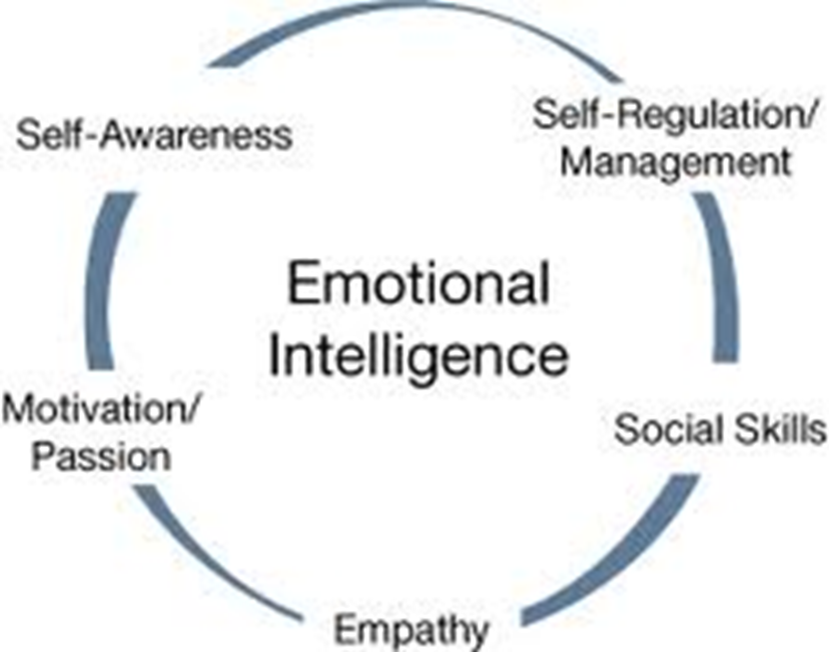
What is equivalent to sharpening the axe in your business? Management team and high potential employees choosing to pursue professional development through honing emotional intelligence (EQ) competencies. EQ is the unique intersection of heart and head—the outcome of which is effective use of feelings to enhance thought.

When EQ becomes a priority in an organization, good things happen. Consider:

  • In one study, experienced partners with high EQ in a multinational firm delivered $1.2 million more profitfrom their accounts — 139% — over their cohorts.
  • A study of manufacturing supervisors given EI training saw a reduction of 50% in lost-time accidents, 20% in formal grievances, and plant productivity goals exceededby $250,000.
  • In a cross-cultural study of senior executives, EI competencies outweighed both IQ and experience in top performers.

Superior performance is driven by strong decision making. Strong decision making is a physiological factor of: 1.) competency, preceded by 2.) behavior, preceded by 3.) cognition, preceded by emotional intelligence. EQ is a body of personal characteristics and social abilities that are closely tied to success in both our professional and personal lives. Dan Goleman, quoted in the Harvard Business Review, said, “Emotional intelligence isn’t a luxury tool you can dispense with in tough times. It’s a basic tool that, deployed with finesse, is the key to professional success.”

The tool is comprised of five core competencies: self-awareness, self-regulation, motivation (these three comprising the intrapersonal self), empathy and social skills (the latter two representing interpersonal acumen.) Think about bright, skillful people in your organization who are passed over for leadership and/or despised by subordinates. Chances are, these individuals are deficient in at least one of the EQ competencies.

EQ can be learned. What we try to do with clients is identify a small group to work with initially–usually direct reports to the president or high potential leaders. These are assessed individually for their relative emotional intelligence “scores.” The scores lead to individualized professional development plans (“axe sharpening”.) Mentoring occurs during which hypothetical scenarios are discussed in periodic sessions. The hypothetical gives way to the mentees bringing real life situations to discuss. With the mentor’s help, the mentees learn how to process decisions better. Over time, the team gels as its members learn how to “say hard things in soft ways,” and use feelings as an asset rather than a liability. When the team becomes high functioning in this manner, superior performance is likely its traveling partner!


Dispense With Heroics; Be Practical

Last night we tackled three themes from Contentrix founder Alice Seba’s top 40 lessons learned. As a reminder, the themes were: get others involved, focus, and execute. Tonight, in looking over numbers 21-40, we take a look at three more themes: batch processing, succession planning, and prioritization.

#21. It’s okay that a lot of people don’t understand what I do

#22. Technology is my friend, but I don’t mess around with it more than I have to or am capable of

#23. Customer service is a critical part of your business, but it’s a productivity inhibitor

#24. Other people’s blogs can be useful

#25. Nothing on the Internet is private

#26. If you don’t own the site you’re publishing too, you really don’t own that content

#27. Working in batches is great for productivity

#28. I used to think religion and business don’t mix

#29. There is no one quite like you, but you are dispensable…or at least you should be

#30. Tools and Software don’t grow your business, you do

#31. You don’t have to explore everything to diversify

#32. Listen to your audience…they can teach you a ton

#33. There is no shame in selling

#34. If you’re not confident, they’ll know

#35. Knowing the words to use is also important

#36. It’s okay to take a break when you just aren’t into it

#37. To do lists are always meant to be shortened

#38. Use your freedom to do good things

#39. Appreciate and be thankful for what you have

#40. Take care of yourself

People who are gifted at time management have been touting the virtue of “chunking your time” for years. The phrase means to set aside times when one type of activity is pursued exclusive to all others, thereby avoiding distractions and staying on course. Grouping tasks together into batches of similar issues can help build momentum.

Seba urges the entrepreneur to think of him/herself as dispensable.  “Start with the end in mind.” If we approach the process of building a business as trying to make it less and less dependent on the founder, then we are a.) empowering others to add their collective strengths to the development of the enterprise and b.) purposefully preparing for the day when others are making more of the major decisions. To arrive at the place where the business is capable of being handed over requires working on the business rather than in it.

It is so easy as a company founder to have an endless list of things that all seem important and urgent. We drive ourselves to work, work, work in headlong pursuit of milestones that indicate the business is on track and successful. With each passing day, the perfectionist inside drives towards an exhaustive, never-ending cataloging of “things to do.” here’s a secret: reduce the list to only a few things, execute at least the top two, and feel accomplishment rather than lack of fulfillment. You will be glad you did!

The combination of planning your own exit, prioritizing your work, and pursuing it in batches  should be beneficial for you. It has been for many others.