Foster Intrapreneurial Activity

Today I had the opportunity to attend an Innovation Symposium culminating a 125 year anniversary celebration at North Carolina State University. While NC State is the arch rival of my alma mater, UNC, it is a great university located in my hometown.  One of the recurring themes today as presidents of other land grant universities took their position at the  podium was how many schools have done a good job of incorporating the business community into campus life–particularly as it relates to launching novel startups with a research basis made possible by the work of faculty and students. An outgrowth of that theme was the concept that more corporate citizens needed to catch the entrepeneurial spirit and turn it into intrapreneurial initiatives.

When I did an internet search for examples of universities partnering with businesses in intrapreneurship, one of the results was a story from Louisville, Kentucky. Beth Avey, the Executive Director of the Kentucky Indiana Exchange said in a blog post on their website, “Over the years I’ve often heard people talk about how the corporate culture stymies creativity and new ideas, and how companies lose their most talented people in pursuit of more innovative opportunities. Well, in our region there are employers doing just the opposite.”

Health intrapreneurshipWhat a great idea! Companies who are tuned into the need of workers to have their ideas heard and implemented–regardless of whether the workers hold a management or traditional R&D role. Would that all companies embraced the challenge to foster intrapreneurial activity! Avey goes on to illustrate:

The Kentucky Indiana Exchange (Kix) has long sought to showcase the great entrepreneurial spirit of our region, but what about the “intrapreneurial” spirit of our employers? Maybe it’s a concept that some of you are aware of, but it was unknown to me until a recent visit to Signature HealthCARE as a member of the 2013 class of Leadership Louisville.

When we arrived for our monthly gathering, we were given the opportunity to select one of several regional employers, and I chose Signature. I had heard so much about the company — the decision its leaders made to move the headquarters to the region; the work they were doing with the University of Louisville to foster innovation and business start-ups in the long-term care industry; and about their leader, CEO Joe Steier, a Louisville native who guided the company’s move to Kentucky.

We spent much of the morning with our host Joe Barimo, the VP of Corporate Learning. His passion for the company was quite apparent. We then visited with what seemed to be the entire senior leadership team, including Joe Steier. We had a terrific exchange, learning about the company, their move to Louisville and Signature’s three organizational pillars – Learning, Spirituality and Intrapreneurship. Learning and Spirituality were certainly two concepts with which I was familiar, but not “Intrapreneurship.”

It’s the idea of acting like an entrepreneur within a larger organization where employees are expected to be innovative, to take risk and pursue the development of innovative products or services within the company. This style of management allows the employees to feel as if they’re part of something bigger, as well as something they have a stake in. Traits like conviction, zeal and insight are encouraged. As a result, employees become more likely to try the kinds of approaches they might take if they were running their own business. The end result can be a breakthrough technology or a new and profitable product line.

What a great lesson in visionary leadership. How can it be applied to your organization? Your alma mater? Your business community? 


Get Emails Read – Follow 7 Guidelines

Most businesses rely on emails for the majority of their communications. Yet, most of us are certain that some of our emails are ignored by the recipient. If you are trying to get your emails read, consider the below guidelines offered by Jonathan Borge of ToutApp. (Borge was contacted by Tom Searcy for a recent article for Inc.com on the subject.)

1. Subject lines: Remember that only 20 percent to 40 percent of your emails will actually get opened, though most of your subject lines will be seen. To boost your open rates, think of short, catchy, and informative subject lines. You should try to dangle compelling information (“The future of sales emails”), and you can even try adding some mystery (“Strange question”). We also recommend personalized subject lines, if possible (“Hunter Sullivan suggested I contact you”).]

2. Your tone: Portray yourself as someone that other people can connect to. You’ll want to show your recipients that you care about hearing back from them… so you can’t simply sound like you’re just sending another mass email. Never use “Dear sir or Madam,” and stay away from overly formal language.

3. Email content: Make your emails short, simple, and easy to quickly digest. Your leads are busy people with jobs, too, so you need to maintain their interest. Do your research and find out what resonates for your prospects. Try to get an introduction to them or, if that’s not possible, figure out in more detail what they or their company do. Tell them why you’re emailing them, specifically. Talk about how you can solve a problem for them.

Email

4. Your sign-off: End your emails with a definitive, clear call to action. Make it dead simple for your recipients to say yes—whether it’s to a meeting, phone call, or product demo. Don’t ask them for permission. If you want a phone call, then say “Call me right now at X for more details.”

5. Your timing: Reach out to your leads when they’re not too busy. Make sure you avoid heavy traffic times like Monday mornings. Based on our tracking data, we recommend the middle of the week, mid-day, as the best time to send emails.

6. Your image: First impressions are important both in person and online. The tone and formatting of your email is all your recipients have to judge you by. Make sure you are being professional, clear, and easy to understand. Stay away from over-formatted emails that look gimmicky, but don’t hesitate to call out important information in bold or bullet points.

7. Your homework: Send yourself a sales email. Put yourself in your leads’ shoes. If you were them, would you open this email? Would you spend more than two seconds reading it? If so, what would you do next?

Searcy notes that the list sounds almost too basic. Yet, when he went back and examined the last 10 recent emails he had sent to prospects and clients, he found that he only employed four of these guidelines on average per email. Why don’t you take the same challenge? Hopefully, you can learn from it –as he and I have!


Soft Skills Matter in Business – Even if Not Measurable

Throughout my career, I have had the opportunity to work alongside some brilliant co-workers and clients. Whether it has been inside a public accounting firm, or as an advisor to engineering and construction companies, I am often surrounded by folks with strong technical skills. Since my role has usually involved organizational development, strategy, or marketing and business development, I have heard time and again how “soft and fuzzy” topics such as relationships, emotional intelligence, and creativity and communication are less needful than the technical skills.

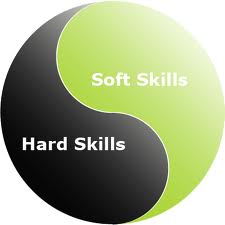
Susan Mazza, who writes a blog entitled Random Acts of Leadership, recognizes the dichotomy of “soft” versus “hard” skills in her recent post, “The Power of Soft.” She states in the post that, “the very need to distinguish “soft” vs. “hard” speaks to a paradigm that has long revered hard results as the only ones that really matter. Unless something can be quantified and measured the underlying belief is that it is somehow less valuable and hence of lesser importance.”Soft vs hard skills

Whether I have been in conversations with a CFO, a business owner, or a  VP of operations, I have heard over and again how that which cannot be measured must be insignificant and pale in priority. Mazza references a recent TED Talk by Dr. Brene’ Brown, “Leaning into Vulnerability” in which Brown shares how one of her research professors once stated, “If you cannot measure it, it doesn’t exist.” Mazza observes that many with advanced degrees subscribe to a scientific framework that assumes “measurable” is the only test for “real!”

Dr. Brown’s talk about vulnerability addressed the effort to view “soft” subjects with “hard” data. New insights have prevailed that challenge the long-held distinction within the business world of the value of each category of skills. Mazza’s view of the new awareness is that, “in our relentless pursuit to collect and analyze data, we all too often ignore the most important measure of all – our senses!”

The behavior we see and emotions we feel, according to Mazza, are the source of the most powerful tool we have as leaders and mangers – our ability to observe. She observes the following:

You have probably heard the phrase, “the tension was so thick you could cut it with a knife.” Can’t you feel that tension? How much productive work gets done when that kind of tension is present? Yet we often grind through what we see and feel through simple observation, knowing both the experience and the result are going to be less than satisfying.

Would having a mood Geiger Counter to assign the tension a number really make any difference?

By simply observing the mood and the impact it is having on your ability to fulfill your commitments, you are able to take action to make a difference in any moment. How to take that action is, of course, another subject.

The point here is the real power of soft comes from our innate ability to observe. So perhaps it’s time to give up our attachment to measuring all things and the belief that, “If you can’t measure it it doesn’t exist.”  Why not start  learning to better use the tools we have been born with – our senses – as an access to improving relationships, enhancing performance and creating great places to work?

The ability to navigate through tensions, create win-win scenarios, and build esprit de corps comes not from technical, “hard” skills, but from those soft and fuzzy assets that many C-suite executives and business owners underestimate. Think about your own organization and how greater respect for soft skills could make it a better place to work, where senses are valued equally with data and relationships that build goodwill are put on a pedestal.


My China Shop Needs No Bulls

Too many corporations put “bulls” in executive roles, and surprisingly hope for good things. Hard-nosed tactics may produce some short-term gains. Under the surface, employee engagement often suffers, which can spur greater turnover and undesirable business performance. Peter Friedes, founder of the management think tank Managing People Better, offers a parable to illustrate (below):

Roger the Bull

Roger always “tells,” rarely “asks.” He knows what he wants, demands it, and pushes everyone to adapt to his schedule and expectations. He believes that every second counts and does not view relationship-building as time well spent or a necessary activity for getting great work done.

He is not empathetic or understanding. He rarely changes his mind, even with new information. He operates solely on his own agenda, showing little or no interest in his employees’ opinions. He rejects suggestions quickly, as he knows others’ ideas won’t work. He easily confronts people, often using words that are harsh, strong, or judgmental. He can be arrogant, as if to say he has all the answers. He doesn’t trust his employees to do a good job, so he hovers and corrects them.

Roger doesn’t include others before making decisions. While he thinks he coaches his employees, his “coaching” comes across as demands. No one would call him nurturing or encouraging. His language and tone exude frustration and anger. He is extremely unpleasant to work for.

bull in china shopFriedes writes that, while Roger may have flourished as a department of one in the past, his lack of understanding of how to motivate others is a huge drawback to managerial effectiveness. What is recommended are two key skill sets:

  • Relating, which includes relationship-building activities such as asking, listening, including, coaching, and encouraging.
  • Requiring, which encompasses results-oriented activities such as setting expectations, focusing on goals, insisting on excellence, establishing appropriate controls, confronting performance issues, and asserting your views.

Read about Friedes’ experiences in trying to coach Roger-types:

Bulls are the hardest managers to coach. They typically don’t listen well. They often think they have the answers already. Over the years, I’ve tried the following messages, with limited success:

  1. “You are a results-oriented manager. But you would get far better results by asking, listening, including, coaching, and encouraging your people more often, and lowering the volume on how you demand and require of your people.”

  2. “You were an excellent, hard-working individual achiever. But now your success is measured by how well you let others achieve. This takes a different set of skills. Unless you develop these skills, you cannot be effective as a manager.”

  3. “Your goal is fine…to do a lot of excellent work and meet productivity objectives. But the manner you use to get results is damaging our business and sabotaging your career.”

  4. “Our top employees will not work for an over-Requiring, under-Relating manager very long. They will seek a more reasonable manager and leave or transfer. That will require you to start over with new people, lowering your productivity. Over time, the company will not want to give you any new people.”

  5. “You have taught your people to give you exactly what you want, but they no longer give you new ideas or suggestions for how to do things better. You have demotivated them, which is why you see them lacking.”

  6. “I know you don’t need to be liked. But you do need people to appreciate and respect being managed by you. You are not on track to get that respect.”

Since Bulls feel justified in their treatment of others, none of these statements are likely to produce changed behavior. However, being straightforward, according to Friedes, and saying “You are failing as a manager” or “You will be fired if this over-Requiring, under-Relating behavior continues.” may have the desired impact.

(Want to see how Bullish you are? Take a free assessment !)


Harness or Release the Intrapreneur Troublemaker?

Recently, the World Economic Forum convened in Davos for its annual meeting. What, one may ask, does such a high brow event have to do with intrapreneurship and innovation in business? Actually, one of the panel discussions at the Forum was on social intrapreneurship. The definition that was being used seemed to focus on the social implications of the issue as it relates to those change makers who offer creative solutions and drive growth. Gib Bulloch, the Executive Director for the Accenture Development Partnership, writing for the Huffington Post last week, noted that there exists no job title for the social intrapreneur. Admittedly, he argued, no one leaves college or university to become one and the  role lacks a clearly defined job description. Companies that embrace the power of these intrapraneurs to think differently and innovate, Bulloch said, have significant opportunities to leverage their passion and benefit the business.

Bulloch recalls Vodafone’s M-PESA mobile banking business as a prime example of the benefit of empowering intrapreneurs:

The idea of using mobile phones as bank accounts for the un-banked in Kenya was not born in the corporate boardroom. It was the brain child of a middle manager in the marketing department, Nick Hughes, who came up with the concept and brought it to the attention of those who could advance its development, both inside and outside the company. Seven years into the program, a thriving M-PESA business now delivers socio-economic benefits for Kenya and business benefits for Vodafone.

Therein lies the key to social intrapreneurship. It is not a corporate social responsibility (CSR) program. It is a business growth initiative that tears down barriers and embraces the passionate ideals and innovation of the millennial generation now flooding into the workplace. It is a concept that captures the zeitgeist of young people who care less about making a fortune on Wall Street and more about making a difference on Main Street.Intrapreneurman

For organizations that aspire to leverage the rare win-win of business benefit with social good in 2013, four key takeaways have emerged as guideposts for developing an effective social intrapreneurship program:

• The role of leadership is key: In the early stages of an innovation program, leadership must provide the air cover required to protect bottom-up ideas. As the best ideas mature, they must be promoted within the organization and embraced from the top down.

• Harness the troublemaker: Social intrapreneurs are at their core different from their peers. They march to a different drum beat and their passions fuel both their personal and work lives. Having a culture that both nurtures the change maker’s innovative spirit but also harnesses the troublemaker’s enthusiasm and energy to break molds and achieve where others have come up short will return significant rewards.

• Realize the retention value: For the social intrapreneur, making a difference is often equal to making money. For organizations that embrace the value of providing “bottom up” channels for creative business solutions that provide social good, the long term benefits for retaining your best innovators cannot be understated. Simply put, for the millennial generation, making a difference matters.

• Base decisions on the Business Case: Even for the most passionate social intrapreneurs, the numbers still matter. Innovations that pull on the heart strings as opposed to the levers of business value are unlikely to be sustainable or scalable in the long run

How do you see these guidelines at play inside your own organization? Is top leadership committed to openly supporting new ideas? Are those who see the world differently perceived as liabilities or assets? What are you doing to keep these change agents engaged and motivated? Does your group operate on emotional or sound business foundations? Harness the power of the intrapreneur!