5 Ways ‘treps Maximize Mentor Feedback


Asking a mentor for feedback is a critical step in turning an idea into a successful business. Noted members of the Young Entrepreneur Council share how they feel ‘treps should make the best use of mentors below–

Draft a Summary

Entrepreneurs’ ideas are often most easily “felt” through passion and an intuitive belief that great potential awaits. When expressed verbally, however, the vision can be easily misunderstood. Avoid this by taking some time to write a concise, one-page Executive Summary that you can share with mentors you respect. This will ensure they understand your idea and offer relevant and quality feedback.

Kent HealyThe Uncommon Life

Time Is Valuable

If you’re in a mentoring relationship with someone who is also an entrepreneur, there is one thing that you both know is ridiculously valuable: time. Regardless of whether your next business venture is the greatest or worst idea you’ve ever had, keep the call focused to keep mentors in your life. Have an agenda and stick to it. You can make small talk later. Time is money; spend it wisely.

Sydney Owen3Ring Media

No Hesitation

While preparation is important in pitching a business idea to anyone, the best tip for asking a mentor for feedback is not to hesitate about it. Your mentors are there for you to bounce ideas off. Most mentors are thrilled when you come to them with questions or feedback solicitations, so don’t pause in engaging them in your project. They — and you — will be glad if you don’t wait.

Doreen BlochPoshly Inc.

One Small Step

They’re busy and smart, so treat them as such. Don’t ask for a long term commitment up front and don’t waste their time. Start with a short email with options you’ve thought of to a problem you are facing. Ask them to simply reply with which option they think is the best. Implement, thank them, and show them how their advice got you results.

Josh ShippJSP, Inc.

Ask For Specific Feedback

If you’ve chosen the right mentor, they have a wide body of expertise and experiences to draw on. Too many entrepreneurs present a lot of information to mentors and then ask something akin to, “What do you think about all this?” That gets nowhere. Better to have structured information and ask for specific feedback: “Is this key assumption realistic?” or “Is this an appropriate place to start?”

Charlie GilkeyProductive Flourishing


How to Maximize an Incubator Experience

In yesterday’s VentureBeat post, entitled “15 Entrepreneurs Give Tips on Getting the Most Out of an Incubator or Accelerator,” the following  insights were offered:

Do your research to find the right fit

You should do your homework on any accelerator you’re considering. What do they offer? What are some of their success stories? What happens to companies that don’t succeed? How often do their teams get funded? Depending on the accelerator you join, you’ll get very different answers to those questions. Make sure to not only talk to the accelerator but also past companies, both successful and not.

Jason Evanish (@Evanish), Greenhorn Connect

Don’t be a perfectionist and accept the guidance

I think these groups are really important to early-stage startup attempts — the mentorship, community, and exposure they offer far outweigh any equity you might share with them in return. Don’t get caught up in trying to build something perfect; focus your efforts on customer development and proving your assumptions, so they can help you move that learning into a solid first product.

Derek Shanahan (@dshanahan ), Foodtree

Accomplish something on your own first

After having a detailed discussion with TechStars graduate and Contently.com co-founder Shane Snow, my takeaway was to have built an impressive resume of personal accomplishments to show you’re capable of actually building a real business. Incubators and accelerators want to train entrepreneurs, but they need to make sure you’re coachable and have actual potential to become a real star.

Danny Wong (@blanklabel), Blank Label Group

Be prepared to immerse yourself and go all in

You need to dedicate your time into this — it’s an endeavor that requires focus 24/7. Also, look at the opportunity as a time to find the right co-founder, strategic partners, and to be honest and upfront with the organizers about what you need. The more you give, the more you get!

Ash Kumra (@AshKumra ), DesiYou

Prove that you are committed

Demonstrate commitment and focus on results; incubators and accelerators invest in people and teams more than markets. It’s important to have a disruptive idea, but the drive and capabilities of the team are much more correlated to success than the size of the market or details of the business plan. They want to see a smart, dedicated team that is passionate about executing.

John Harthorne (@jharthorne), MassChallenge

Don’t settle for any incubator, find the best

If you are thinking of applying to an incubator or accelerator, be sure to find the best. Even if you have to give up a larger portion of your company, it will be worth it for the amount of growth it will help you with in comparison to a lesser organization. Also, look for synergy and people whom you work well with — you want to feel welcomed into your new home.

Louis Lautman (@louislautman), Young Entrepreneur Society

Make sure your goals match up

All incubators and accelerators are not created equal. Some incubators focus on landing funding, others focus more on helping you build a revenue-generating firm. Make sure your goals align with that of your program.

Doreen Bloch (@DoreenBloch), Poshly Inc.

Reach out to alums

Before applying to an accelerator program, I would talk to alums of the program to make sure they had a good experience. It also might help if you could get some time to validate your idea for a business before jumping into one of these programs. Make sure the “proof of concept” even makes sense.

Patrick Curtis (@WallStreetOasis ), WallStreetOasis.com

Perfect your pitch

Many incubators are looking for the entrepreneur to make some type of pitch, so it’s important to practice, practice, practice. The more excited that you can make them about your concept, the higher likelihood that you will get accepted to the accelerator.

Lawrence Watkins (@lawrencewatkins), Great Black Speakers

Paint a picture of success

When creating your pitch, keep in mind that you want to convince the judges that your startup is truly going places. It’s going to be so successful that they will want to attach their name to get behind it. Show them that you’re going to be successful no matter what, so it’s in their best interest to have you affiliated with their program.

Stephanie Kaplan (@stephaniekaplan), Her Campus Media

Tell a great story

Remember, people are investing in you more than your idea. Businesses are fluid in the startup stage. Which means your personality and background is what really counts. While pedigree or experience matter, your curiosity, obsession and commitment matter more. Character trumps credentials. What’s the riddle you’re trying to solve? How have you overcome failure? Make them believe in you.

Michael Margolis (@getstoried), Get Storied

Master the art of explaining your idea clearly

Good entrepreneurs know a lot about their business and their market. But can you communicate this expertise in a way that resonates with decision-makers in the incubator and accelerator programs? Start by reading “The Art of the Start” by Guy Kawasaki and learn the “business of business communication” in the startup phase.

Kent Healy (@Kent_Healy), The Uncommon Life

Timing is everything

Think about what you aim to get out of the incubator or accelerator program in mind. People tend to assume that these are great kickstarters, and they can be, but it all depends on timing. Joining one at the wrong stage of your cycle can be feedback overload, or slow your growth in other ways. Sometimes you need to collect input and test your idea, and sometimes you just need to build.

Caroline Ghosn (@carolineghosn ), The Levo League

Don’t join on your first venture

Entrepreneurs are going to make mistakes and get things wrong more often than not. I suggest getting as much accomplished in the real world before applying for incubation. The more you can do before you need the help, the better your terms will be and the more serious they will take your application.

Lucas Sommer (@audimated), Audimated

There’s life after an accelerator

These are great opportunities, but your business must happen with or without them. It’s easy to get caught up in the excitement and the aspiration of being accepted to a “prestigious program” — after all, it’s validation that you’re on to something! But if things don’t work out, the show must go on. Your goal is to create a company, so don’t lose sight of the bigger picture.

Tony Navarro (@hoostony ), Streamcal


NC Entrepreneurship On the Move

One of the best sources of information on entrepreneurship is the Ewing Marion Kauffman Foundation. The Kauffman Index of Entrepreneurial Activity looks at demographic trends in start-up activity over a 15 year time period.

Key findings last year:

Age Groups:

Growth was highest among 45- to 54-year-olds, rising from 0.35 percent in 2010 to 0.37 percent in 2011. The youngest group (aged 20 to 34) also showed a slight increase. In contrast, the 35- to 44-year-old and 55- to 64-year-old groups experienced declines in entrepreneurial activity rates from 2010 to 2011. Contrastingly, the share of new 55- to 64-year-old entrepreneurs has risen from 14.3 percent in 1996 to 20.9 percent in 2011 due to an aging U.S. population.

Ethnic Groups:

The Latino share of all new entrepreneurs rose from a little more than 10 percent in 1996 to 22.9 percent in 2011, reflecting longer-term trends of rising entrepreneurship rates and a growing share of the U.S. population. The Asian share of new entrepreneurs also rose substantially from 1996 to 2011, but remains relatively small at 5.3 percent. The white share of new entrepreneurs declined during this time period, while the African American share increased slightly. Both immigrant and native-born entrepreneurial activity declined slightly in 2011; however, immigrants remained more than twice as likely to start new businesses as were the native-born.

Industry Groups:

By industry, construction had the highest entrepreneurial activity rate at 1.68 percent, continuing an upward trend over the past several years, followed by the services industry at 0.42 percent. The manufacturing startup rate was the lowest among all industries, with only 0.11 percent of non-business owners starting businesses per month during 2011.

In North Carolina, while we don’t have pinpoint data to break down the Kauffman numbers on a local basis, we can extrapolate their impact on our entrepreneurial scene. We should anticipate more 45-54 year olds to start businesses, a greater demand among non-Caucasians, and a rebound of construction start-ups to complement the steady flow of services businesses.

The Huffington Post reported last week that North Carolina is one of the top 10 states for startup hiring in 2011, based on the growth in the total number of jobs at start-ups. While there is definitely start-up activity in all regions of the state, outside of North Carolina the start-up scene around the Research Triangle Park area is best known. It seems all of the Triangle research universities are wanting to champion entrepreneurship and its healthy impact on the state and local economy. Duke University recently completed another Startup Challenge. NC State University hosted the Lulu Games competition as a part of its Entrepreneurship Initiative.

Over at UNC, in a massive research project conducted at the Kenan Institute of Private Enterprise, Ted Zoller highlighted the role of the dealmaker in assisting entrepreneurial ventures to reach their funding milestones. While the person who matches the entrepreneur with the funding source is critical for many life science and high technology ventures, not all start-ups are so capital intensive. What is a common need among businesses of all types is mentoring. Whether one is using something similar to the programs developed at MIT or a localized version, mentoring–coupled with community and education–is critical to successful business launches.

Start-Up Savvy: Taught & Caught

Image

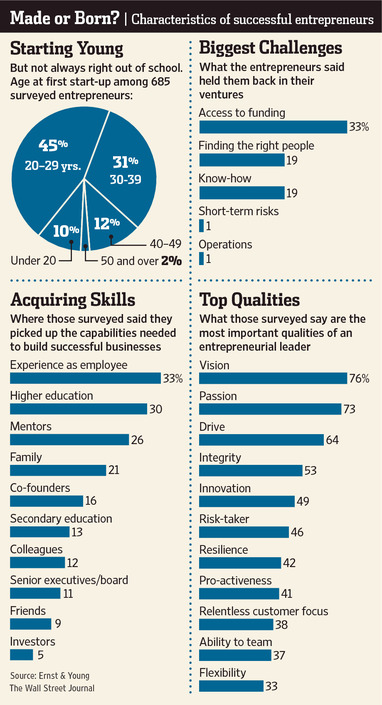
In an article last month entitled, “Can Entrepreneurship Be Taught?,” two sides of the argument were presented that, while equally valid, were at odds with one another. Noam Wasserman, Harvard Business School professor of Entrepreneurship and author of “The Founder’s Dilemmas: Anticipating and Avoiding the Pitfalls That Can Sink a Startup,” takes the position that too many founders have to climb the same steep learning curve as others before them, bereft of insights that could help great ideas become great businesses. Victor Hwang, co-author of “The Rainforest: The Secret to Building the Next Silicon Valley” and managing director of T2 Venture Capital in Silicon Valley, posits that only experience can teach an entrepreneur how to successfully launch a business.

Within the Wasserman camp are educators who believe that documented best practices and potential problem areas can be shared with the entrepreneurs. For instance, the idea that the founder must do the three following things has been challenged with research data to instruct otherwise:

  1. Following one’s gut
  2. Having a “glass half full” view about resources and time
  3. Stay in the top executive role as the company matures

Augmenting the classroom instruction with deliberate opportunities to “try out” a principle in a role play seem to yield good results. Additionally, self assessments are helpful in increasing one’s self awareness and ability to lead others. Notably mentoring is recognized as one of the best ways an entrepreneur can learn how to do the right thing in a myriad of scenarios.

What is also being learned is the need to not just offer principles of management (regardless the field of management–finance, operations, marketing, etc), but to also focus on the soft skills requisite to be an effective leader. Whether the entrepreneur is embracing better social skills, motivational techniques for self and others, or other facets of emotional intelligence, there are competencies to be gained that are simply not intuitive for most.

Hwang and the experiential learning community holds steadfastly to the conviction that entrepreneurship is taught rather than caught and is more of  an impartation than an education. Rather than the typical domain of business schools–resource allocation and risk management, it is argued that the necessary skills fall more into the following categories:

  • Comfort with a high degree of uncertainty
  • Willingness to become a generalist rather than a specialist
  • Abilities in inspiring others through storytelling and personal charisma

Since some programs are heading in the direction of trying to advise start-ups on what actions to avoid, Hwang is concerned that the willingness to try something unconventional may become minimalized. He and others believe that such a mindset is critical to entrepreneurial success. The main thesis behind Hwang’s proposed approach is that entrepreneurs would have the greatest chance of success if communities with resources, counsel and mentoring were available for their growth and development.

The common theme, then, is that mentoring and nurture is the best medicine for someone who “suffers” from entrepreneurial dreams. We wholeheartedly concur with this bottom line approach and advocate innovation centers (incubators with assigned mentors, education, and planned activities to build a sense of community) as a best practice!

No Freakin’, Entrepreneur

In a recent blog post Dharmesh Shah cites 8 examples of  things entrepreneurs freak out about. Do any of them sound familiar?

1. Your lead investor in a funding round backs out in the final stages. (By the way, when this happens, you’re almost never going to hear what the real reason is).

2. You get a certified letter in the mail from some big law firm you’ve never heard of (nobody’s heard of law firms, until they they do). The envelope the letter came in is the nice, creamy, heavy-stock kind. It’s more expensive-looking than the one you used for your wedding invitations. The letter uses a lot of words to basically say “you’re being sued”.

3. Your lead developer leaves. This is about half way into a project to rewrite your product in Scala, which he convinced you to do.

4. A very big customer deal you were just about to close falls through. Normally, this wouldn’t be a big deal, except that you spent a bunch of time and money trying to get this deal done. Time and money you couldn’t really afford to waste.

5. You were about to be acquired, and now the acquirer has “gone dark”. Despite your best intentions, the team and you have been making decisions based on the impending acquisition. “It would be silly to do X, Y and Z when we’re going to be acquired next month…”

6. The production system that hosts all your customers came crashing down. And that live backup system you thought you had isn’t all that live.

7. One of your competitors just went and raised a ton of money. They’re blanketing the industry with PR, marketing, fancy new booths at tradeshows, local events involving a winnebago and taking out ads, seemingly all over the Internet. Potential customers, investors, friends and even your mom ask you about this big, bad competitor. You get tired of saying: “But their product sucks!”

8. Co-founder takes a job somewhere. Feels really badly about it. Promises to help out nights and weekends. You don’t have the heart to say: “Yeah, but it’s the emotional support I’m going to miss the most…”

Any one of these events can cause an entrepreneur to overreact. Rash decisions are often made to the detriment of the business and its team. Instead of knee-jerk reactions, try to remain calm and seek the counsel of your mentor(s). For perspective, consider that many others before you have encountered and survived similar challenges.