Tremendous Entrepreneurial Success From Reading


Charlie “Tremendous” Jones, who is well-known in the insurance industry as a motivational speaker, believes in helping people improve themselves. His conviction for years has been that one must take responsibility for their own success. The quote below illustrates how he thinks one can best accomplish success in life:

You are the same today you’ll be in five years except for two things: the people you meet and the books you read. In every turning point and crisis of my life, there’s always been a book that helped me think and see more clearly and keep laughing and keep looking up and keep my mouth shut. I would never tell anybody I ever had a problem, so everybody always thought I was on top of the world, and yet I was just like everybody else with problems coming out of my ears. Now, when people come to my office, they come to talk to me. Instead of conversing with me like they think they are going to do, I get them reading. I pick out some great books and have each person read three or four sentences. I just received another email from a person recounting how his life was changed by learning the power of reading together–rather than talking.

As you may have read in a previous blog or Twitter post, I follow Under30CEO.com. Matt Wilson, one of the co-founders, posted on the Under 30 blog today some insights he gained from reading books this year. A few excerpts are provided below, with Wilson’s comments.

  1. Who’s Got Your Back by Keith Ferrazzi  – Relationships should be about quality over quantity.  The goal should not be to “know everyone”.  Build a small group of people that want to go out and conquer the world together.
  2. Boomerang by Michael Lewis – Base your economy, your company, and your income on creating real value for others.
  3. Small Loans Big Dreams by Alex Counts – Entrepreneurship knows no borders or social classes.  Coupled with education and accountability, access to capital can create sustainable micro-businesses.
  4. 48 Laws of Power by Robert Greene – “Disdain things you cannot have: Ignoring them is the best revenge.”
  5. Startup Nation by Dan Senor and Saul Singer –  “Immigrants are not averse to start from scratch. They are by definition risk-takers. A nation of immigrants is a nation of entrepreneurs.”
  6. The Education of Millionaires by Michael Ellsberg – “The biggest thing you won’t learn in college is how to succeed professionally.”
  7. Start Something That Matters by Blake Mycoskie –  It is truly possible to build a business both rich in profit and in social good.
  8. The Greatest Salesman In the World by Og Mandino –  “You were not created for a life of idleness.”
  9. Iceland, India, Interstate by Colin Wright – Go out there and LIVE.  Life is short, take advantage of it, and when you get a crazy idea–go for it.
  10. The Art of Non-Conformity by Chris Guillebeau – “If something is worth doing, you might as well do it all the way–so I’ve added ‘radical goalsetting’ to my own unconventional life planning.”
  11. Delivering Happiness by Tony Hsieh – There will never be another 2013.  When Tony sold his first venture to Microsoft, he said there would never be another 1999, and went to work on his next act, passing up millions of guaranteed dollars if he had simply stayed with the company and let his shares vest… All to chase his passion.
  12. The 4 Hour Chef by Tim Ferriss – Whatever you want to do in life, think about how to hack the system, so you can compete with only the best.

Matt’s list was 17 items long. Since there are 12 months in the year, I condensed it to 12 books and corresponding lessons to be learned and applied. Hope you find a nugget to help now and a book to read later. May you be better in five years for having applied yourself to reading!
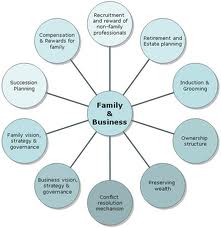
 

Smarter Family Business Via Communication

Having grown up in a family owned business, I have experienced a thing or two in common with many of my clients. Even when I was yet in middle school, I would be recruited to help out in the business, much to my own dismay at times when I would much rather be doing something (anything?) else. However, a little bit of pay went a long ways to making a young man very content. As I grew older, however, the conflict between what needed to be done in the business and what I wanted to do became greater. My goals, dreams, and ambitions had less and less to do with staying in town, working alongside my dad, and us building something together. As you can imagine, this difference of opinion caused a bit of a rift in our relationship. So it goes with many family businesses.

The mismatch between the expectations that a founder has in terms of the involvement of children in the business and their actual desire to be involved is one of the leading problems encountered in family businesses. The parent (substitute other type of founder, but effect is similar) wonders why the child doesn’t put forth the same effort, see the same vision, realize the potential, etc. I delivered a talk for Harley Davidson University on this subject a few years ago, “Why They Don’t Ride With You.” In my session, I spoke with dealers about their frustrations with family members who seemed disinterested in working in or taking over the business. My encouragement to them was to do three things:

  1. Hold the opportunity with an open hand. Instead of making up your mind that there is only one “right” scenario for family members to take part in your business, be flexible! Determine that, while you may have preferences, you will corral your opinions and keep them in check as you attempt to find a common ground.
  2. Communicate often, specifically, including listening. Far too often, a patriarch will squelch the input of a child, spouse, etc in the home–and at work–particularly if work and home blend as in the case of a family business. Rather than honing in on what the other person has to say, we can easily insist on getting our point across before seeking to understand the other person’s view. Ask open ended questions about what the family member enjoys doing, what role they see themselves in, and how those choices affect the business. Create an open dialogue-constantly.
  3. Distinguish between ownership and management. An heir may work in the business or out of it, but still function as an owner. Sometimes, it is best for all if it’s known to be a safe choice to be just an owner or just a manager, rather than both as the founder has been. Realizing that such options exist can diffuse tension, lead to productive conversations, and aid in succession planning. Quite often, outsiders are better successors to founders because they can be objective about the contribution family members make to the business.

There are many other issues that, seen operating in a family business, look and feel different than their counterparts in other types of businesses. Everything from performance measurement to compensation, perks to preferences, psychology to sociology, and very much in between can be seen at work and become a spark for emotions. By far, family businesses are more emotional than others. Whatever your situation, think about tools that help create objective conversations about business issues so that you can lessen the impact of emotions in decisions that are being made. Your business and your family will be better off for it!


Entrepreneurs Need Pilgrim Character and Gratitude

Thanksgiving is upon us. As a small business owner, think about the traits that make you successful…can you trace them back to the spirit of the Pilgrims whom we commemorate with gluttony once per year? What was it that set these pioneers apart and made them successful? Alan Hall, a columnist for Forbes, wrote a blog post about 9 behaviors our forefathers embodied that he thinks are significant to remember:

  1. Take Risks: The Pilgrims took a huge risk: they left their homes, got on a ship with few belongings, and set sail for the New World with little idea as to what would happen to them when they got there – if they got there at all.  While we might never take a chance as big as that one, every new business comes with significant risk.  Did you quit a full-time job?Risk. Bootstrap your business with credit cards maxed to the limit? Risk. Hire family members to cut costs? Huge risk. Bet the bank on a previous successful entrepreneur with potential in hopes of leveraging his/her expertise, no matter the costs? More risk. 
  2. Sacrifice: was a key characteristic of the early Pilgrims–homes, relationships with extended family members, money they would have earned in their jobs back home, or in worst cases, their own lives or those of their children. They believed in what they were doing and prayed that they’d be successful. But as William Bradford, the second governor of Plymouth Colony, once said: “All great and honorable actions are accompanied with great difficulties, and both must be enterprised and overcome with answerable courage.”
  3. Set Goals: someone had to make plans and set goals for success. Writing down the goals – and referring to them often – is critical to reaching them. 
  4. Be Flexible: As the Pilgrims quickly learned, though, they had to be flexible.  Their intended destination was (the) Hudson River. As we all know, rough seas and storms moved them far off course near the shores of Cape Cod… If you’re steadfast in your goals (yet flexible in how you reach them), you can overcome most any challenge.
  5. Be Persistent: Those that made it through the first winter were diligent..strong..(and) didn’t give up..You might feel like your struggling business can’t survive another day, but unless there’s really no hope, come back tomorrow and try again. 
  6. Work Hard:  Unfortunately, after the leaders organized a collective farm, without free enterprise, many of the men were unmotivated to work. The crops suffered.. (but) the leaders decided that the land could be divided and each family grow its own corn..Within two years they had a surplus and began trading it with Native Americans and other small settlements for furs to export to England in exchange for supplies. Corn became currency as entire families worked on their own patch of soil.. (E)ntrepreneurs!
  7. Form Partnerships: The Pilgrims learned to partner with each other and with the Native Americans to survive.. (P)artner up with an expert.
  8. Be Teachable: If the Pilgrims hadn’t been willing and humble enough to accept help from the natives, they would never have learned to live off the new land.  As entrepreneurs, we need to be willing to ask for help and be teachable enough to learn and apply the new direction. 
  9. Be Thankful:  After arriving at Plymouth Rock, Governor Bradford wrote in his journal, “Being thus arrived at a good harbor, and brought safely to land, they fell on their knees and blessed the God of heaven who had brought them over the vast and furious ocean and delivered them from all the perils and miseries thereof.”

What a great list! Take the time between now and Monday to thank those who have made your choice of entrepreneurship possible. Be reminded of these character traits of the Pilgrims and use them to develop into the entrepreneur you’d like to become.


Why Ignore the Obvious?

Margaret Heffernan wrote a book last year entitled Why We Ignore the Obvious at Our Peril, a look at how leaders have intentional blind spots. She queries why many people prefer ignorance over being well informed. In examining the Catholic Church, political despots, unethical corporate leaders, financial mismanagement, and the foibles of top military brass, Heffernan makes the tie between a leader’s choices and the impact on the organizations served. using psychology, researched accounts, and some intuition, she has been compared to Malcolm Gladwell and Nicholas Taleb and has received kudos from Dan Pink.

In an article published in Inc, she analyzes the General Petraeus fiasco and makes comparisons between others she covered for her book and the characters in the saga splashed across many websites, newspapers, and journals presently. Heffernan tries to get inside his head as to what he may be thinking about his new dilemma: soon to be unemployed and suddenly having destroyed a very accomplished career that others coveted until the story broke. 

Yet, was it so sudden? Hasn’t this revelation been building since the point of the first indiscretion? Digging more deeply, what was the thought process that led up to the first bad decision? Heffernan says she heard a CNN interview in which a Petraeus friend said that the general “sees this as a failure, and this is a man who has never failed at anything.” She asks the counterintuitive question–did he go wrong by never going wrong? An excerpt from her article:

If you have never failed at anything, then you haven’t been trying hard enough, aren’t very imaginative, or have had such extraordinarily good luck that you have come to believe you are invincible. And that, of course, is the problem.

“Success confers its own blindness,” Emily Brown told me. She’s a marriage counselor who has worked extensively with couples who have had the experience of infidelity.

“Successful people believe they can get away with it,” she says. “I talked once to a group of men who’d all become millionaires before the age of 40, and they’d had affairs. They don’t even see the danger! It isn’t a love of risk. They think: The wives will never know, so where’s the harm? Everything else in their lives has worked out, so they think they have some kind of magic, that their success has meant that they can have everything they want and they’re invulnerable. And they were completely blind to the harm they had done.”

Most of us make mistakes, and we should take some comfort in the fact that these usually remind us that we are fallible. If we are very lucky, we make mistakes from which we can learn and recover. Most of us have the oddly good luck not to imagine that we are infallible.

I’m a big believer in mistakes. Not just because I make lots of them–like everyone, I try very hard not to–but because every mistake contains learning. The best mistakes are the ones from which you learn the most and that you never forget. I would bet Petraeus thought that never failing was a sign of his genius. The truth is probably that he made mistakes, but he didn’t take time to learn from them. Or, hauntingly, he got away with mistakes by benefiting from everyone else’s care and attention, like a man who drinks too much but drives home safely.

No one is infallible. And those who think they are are probably going to be the most disappointed.

As you read about the former general’s mistakes, hopefully you can look at your own and have some perspective. Have you grown from them? Do others cover over your missteps — or do you have a circle close to you who will level with you at the expense of saying something that you may not want to hear in the short run?


Don’t Make a Monkey Out of Innovation


The story is told of five monkeys who were a part of an experiment studying group theory. Inside the cage wherein they were placed, a ladder led to a bunch of tantalizing bananas. What the test subjects initially did not know was that a high-pressure water hose was attached to the ladder.

One eager monkey raced up the ladder, reaching for one of the tasty bananas, only to cause the entire cage to be deluged with water. Undeterred, another monkey made her own attempt to reach the top. When she ascended the ladder, all the monkeys were again treated to a downpour. The lesson began to sink in–if any one of us tries to reach for the banana bunch, we are all going to get soaked, and that is unpleasant.

As the original test group was substituted out for individual newcomers, one by one the new arrival would make an effort to scale the ladder for the tasty treat. However, the existing group, fearing the dousing, would beat the newcomer down before he could make it to the top. The cycle was repeated, with the same result, until all the original monkeys had been replaced.

When the water hose was removed, it didn’t affect the curiosity of the monkeys–they had learned to avoid the bananas.

In most organizations, there is a built-in resistance to trying new things–particularly if hard lessons had been learned that discourage innovation. It is as though the expectation of risk bringing failure or reprimand begins to thwart spontaneity and creativity, until “group think” has overtaken individual expression. As you think about your own organization, to what degree does this thought process embed itself in your company culture?

Organizations who want to improve their organizational culture need to go to work on the four dynamics above. Perspective, defined as the way we look at the future and the problems we are trying to solve, determines destiny. If it is one’s approach to always be logical, for instance, that is a matter of perspective–not necessarily a reality for all player’s in a niche market. Lou Gerstner, in speaking about his turnaround of IBM, said, “I came to see in my time at IBM that culture isn’t just one aspect of the game–it is the game.” Some of the changes he made seemed like semantics, but his commitment to them made a huge difference:

  • Shift the focus from product to customer
  • Shift from “value me” (silo) to “value us” (the whole)
  • Shift from analysis paralysis to making decisions with 80% knowledge and moving forward

Experimental failure means creating a safe environment in which ideas can be tested and allowed to fail without the idea person being labeled a failure. Instead of making minor adjustments to what exists today, we need to foster an attitude that looks for tomorrow’s breakthroughs. Often, complacency is the doom of a department, division, or business. It has been said that we grow most in the valleys. If you are a part of an organization that only wants to play “king of the hill” through entrenchment, you should look for your next opportunity today!

Disruptive innovation begins with a deep understanding of the needs of your target audience. Customer obsession is an intentional effort to connect and engage..especially on an emotional level. When the connection is made, your product or service resonates with the customer in such a way that she cannot imagine a world without your offering as a part of her life.

Breaking down worn-out structures and processes that hinder our vision of market dynamics allows us to adapt effectively. Intentional destruction challenges the assumption that a strong titular leader makes an organization high-performing. Instead, ideology becomes the unifying factor. Empowered employees can react more quickly and build greater team capabilities that those languishing under an unwieldy reporting structure.

As you look at these recommended area to improve your organizational culture (thanks, by the way, to Jeremy Gutsche, again, for articulating many of these ideas in his writings), determine one thing you can obtain buy-in to change this week and do it!