Turnaround Analysis Information Sources

Information for planning and analysis during a turnaround needs to be derived from both the internal and external environments. The internal environment addresses the management of the marketing, finance, and operations functions of the company. Business management controls these functions. This is primary information that should be at the fingertips of the executive team.

Sources of Internal Information

Internal information is gathered from employees, vendors, creditors, and the customers. This information generates a picture of the business, which can be compared to recognized performance standards. Marketing information requires research into demographics, psychographics, and analytics. Financial information comes from the accounting system and is augmented by other types of management information and reporting. Operations information is derived from supervisors, vendors, and subcontractors and compared against benchmarks. Benchmarking indicates relative performance; actual performance against internal standards is also necessary.

External Information

The external environment consists of economic, competitive, technological, cultural/social, legal/political, and geographic influences. Management cannot control this external environment is secondary by nature. It is essential, however, that the management team analyze this information and plan in light of predicted changes.

Strengths, Weaknesses and Opportunities

Determining a company’s strengths, weaknesses and opportunities is essential to successful implementation of the turnaround plan. Though some can freely discuss their personal and business strengths, most lack the objectivity to understand their weaknesses–and determine how to minimize those weaknesses and maximize strengths.

Many entrepreneurs have stumbled upon an opportunity and made some money. However, those who desire long term success use management information systems in the process of reorganizing their companies. Moreover, the best executive teams create a setting that enables goals and objectives to become a reality. Plans are modified through flexible strategic planning. 

Strengths

Business strengths are those innate qualities that produce a competitive advantage and hold value for the end users of the product. In the case of home building, for instance, the “bells and whistles” that attract prospective buyers may be as simple as quality landscaping or as complex as multi-member molding. Some clothing designers offer an edgy look or unique fabrics; others go for utility like pockets. The object is to determine a specialty or basis for market niche, brand identification, and reputation. It is often helpful to solicit the advice of experts to identify market wants and how to fulfill them.

Weaknesses

Despite the ingrained resistance to admitting shortcomings, those with declining businesses must be willing to discuss their personal and business weaknesses freely. The team can only restructure the business by implementing solutions to problems caused by these weaknesses. For example, outside salesmen and the marketing team are in an ideal position to obtain data about the market and the position of the company’s products in that market.

Meaningful information can be learned from these professionals if the team is patient enough to listen and hear a bit of criticism. By taking the input to heart and allowing the feedback to challenge established business practices, the team members profit from it. The purpose of this exercise is not to dampen enthusiasm for the product but rather to point out areas that need improvement. 

Opportunities

Understanding the local market is essential. Opportunities, particularly those for market penetration, should begin to arise out of a deep knowledge of the market. Buyer profiles by demographic and psychographic patterns can be prepared to assess the features and qualities buyers want. Such profiles can be developed with professional assistance at a minimal cost using secondary data. 

As trends in preferences for various geographic and cultural markets emerge, executive teams can predict how they can service customers by price range, features, and channel. Promoting products that meet identified needs is half the solution; the other half is to transition to offering more of what is in demand and eliminating what is not. 

Preparing to Implement a Turnaround Plan

As mentioned in yesterday’s post, recognizing that you have reached a point where a turnaround is necessary is critical to getting the most out of the effort to reposition the company. By holding out for a better day, the executive team simply prolongs the agony as the business continues to deteriorate. An inability to assess the situation accurately can render the team “unhelpable.” Lifeguards are instructed not to try to rescue a drowning man who is still flailing about in the water and attempting to save himself. Likewise, a savvy turnaround artist will not step into a company until he or she is assured that the executive team is convinced of the trouble and unable to get out of it without outside help. More importantly, the team must want to be helped and willing to accept help. Further, the business must be capable of being saved, and the team must have the ability to make the necessary changes.

Bringing in Help

Unfortunately, the warnings of bankers, attorneys, creditors and accountants are too often ignored. With bankruptcy lurking around the corner, however, the team may finally concede and call in a competent adviser–a strategic thinker with experience in assisting companies survive and prosper. In addition to possessing the right mindset and skills, the adviser can provide needed credibility so vital to stakeholders’ acceptance of the turnaround plan. 

Anyone brought into the company will need the full cooperation–and honesty–of management and key staff during the recovery. Efforts to paint too rosy a picture of the situation will undermine the adviser’s ability to turn the business around. For example, hoping that an industry networking event will suddenly generate enough new prospects to overcome a current cash crisis is another form of avoiding the real issues. Similarly, increasing the stream of revenues alone may make the company appear more profitable for a season, but only internal changes can prepare one to withstand business cycles. An effective turnaround adviser can help create and implement these changes.

Implementing the Turnaround Plan

While decline must be reversed quickly to create the positive cash flow needed to fund operations, turnarounds cannot be accomplished overnight; it took a while to get here, and will take a while to get out. Six months of intensive restructuring is usually necessary to return the business to positive cash flow. A complete turnaround can be accomplished within eighteen months if all goes according to plan.

Gathering Information

Having decided to begin the process of turning the business around, the executive team should be prepared to gather extensive information for analysis. After analysis, meaningful tactical and strategic plans will be developed for immediate implementation. Be careful not to confuse tactics and strategies. Tactics are methods employed in the short-term (six months or less) to reverse decline; they are specifically targeted at crisis-oriented problems. Strategies, on the other hand, are longer in time and scope. Strategies are aimed towards growth goals and objectives.

A turnaround plan is gleaned from information gathered in the financial, marketing, and operations fact-finding process. Like every good plan, it has four main purposes:

  • to provide a standard reference for organizational focus
  • to establish priorities for allocation of capital resources and management effort
  • to identify and quantify objectives (one to three year focus) to encourage and monitor performance
  • to set timetables and goals (three to five year horizon) for achieving objectives

There are two primary areas of information to be gathered for planning and analysis in a turnaround: the internal and the external environments.

Crafting a Turnaround Plan

The turnaround plan for a company in decline is like a recipe to a cook. The effective restructuring of a business requires the preparation and implementation of a viable plan. The plan must be based information gathered from financial, operating and marketing sources. Good plans must also address cost containment and revenue enhancement, providing the executive team with a step-by-step process for reversing decline and stabilizing the business. It must also lead to orderly growth promoted through a flexible strategic plan.

In turnaround planning, objectives are created that can be accomplished quickly. Therefore, a turnaround plan should be direct, with a limited life not to exceed one year. Teams should initiate tactics (for example, increasing traffic to one’s website) on a weekly basis, then shift to biweekly and monthly to keep pace with the rate of change within the business. When objectives must be accomplished over a longer time span, it is time to prepare a flexible strategic plan.

The Purpose of a Turnaround Plan

The purpose of a turnaround plan is to provide an organizational focus and a timetable for all recovery activities. For example, measurable performance standards must be enforced. Therefore, key personnel should set objectives before the actual plan is drafted to encourage employees to commit to levels of performance that they believe are attainable. The team management approach will generate the ideal environment for enforcing the mandates of the plan, since every key employee will have been involved in its formulation and implementation.

Time and Money

Because turnarounds are time and dollar critical, the team should stick to the originally drafted plan as long as its underlying assumptions remain valid. When the parameters upon which the plan has been based change, it is time to modify all portions of the plan affected. However, the team should not abandon the plan upon first confrontation with undesirable results.

Outside Parties

To satisfy outside parties interested in the cause for company decline and the solutions underway to reverse it, the plan typically contains a brief section describing the background and historical evolution of the company. Additionally, some discussion of prior operating performance and an objective assessment of the current condition can help the team highlight the events that have caused the problems. Management should then state the problems that caused the decline and follow up with the solutions that have been implemented to address it. Sections on the vision and philosophy of the company are unnecessary, though some do outline the thought process that led to current strategies and goals. However, these thoughts may be more appropriate in a flexible strategic plan, since a turnaround plan is action oriented.

Reaching Ground Zero

In environments in which the business has always made money (and may still be making marginal, though unsatisfactory, returns), it may be difficult to deal with declining profitability. Reading financial reports that signal what may be the first downturn the company has suffered is not sufficient preparation for the struggles to come.  Some find it difficult to believe that what they are reading is accurate. The impulse to ignore the signals and hope that the situation improves can be overwhelming. At some point, however, the team must deal with the facts and acknowledge that money is being lost–either as a net loss or as a smaller return–and that radical change is needed.

Being brutally honest and objective about the status of the business is hard. But, if “ground zero” is never reached, recovery cannot begin in earnest.

Why You Can’t Turn the Company Around

Yesterday, we briefly touched on three different types of turnarounds–strategic, operational, and financial. The point was also made that many successful turnarounds are a combination of more than one type. If you have never had experience determining which type fits a given situation, chances are high that you will make some mistakes than could prevent the company’s successful recovery. There are at least two other reasons the desired recovery may never be seen–procrastination and delusion. We aim to explore both of these mindsets, but first want to dive deeper into our definitions of turnaround types. 

  • Strategic – the changing of markets and products, for instance going after new segments of the market.To do so would require new strategies and tactics with regards to promotions, pricing, design features that would need to be scheduled in the turnaround plan to guide management through the remarketing of the company.
  • Operational – transforms the cost structure of the operations. Unloading aged inventory and increasing sales efforts are two examples of use of this method. The operations section of a turnaround plan discusses schedules, budgets, estimating, purchase orders, direct costs, work in process, customer service, and time and dollars to get profitable work out the door.
  • Financial – this section of the turnaround plan ordinarily addresses debt structure, debt payment, accounts payable aging, accounts receivable strategy,  cash flow, inventory turns, revenue projections, and general and administrative cost structures (among other things). The costs recorded are actual, rather than accrual or standard, due to the time constraints of a crisis situation. 

The Danger of Procrastination

Too many companies decide to “ride it out” -like a foolish person in a coastal area with a category 5 hurricane approaching. Staying in the bad situation and only wringing one’s hands about lurking danger is NOT a solution! Management paralysis extends into business operations in the form of delayed strategic decisions. Those who refuse to admit that a problem actually exists do themselves, their employees, creditors, and customer a huge disservice. 

The business continues to lose credibility and money, and the loss of credibility can incapacitate a  leader’s ability to pursue many options. Teams must, therefore, avoid any procrastination and make the decisions necessary to initiate immediate action. Any delay simply makes the turnaround that much more difficult to accomplish.

The Investor Delusion

At this point, another common delusion is that a “white knight” investor exists who will swoop in and save the company with a cash infusion. Turnaround funds are only available when a credible turnaround exists, a plan that, not surprisingly, must include a substantial return for the turnaround investor. A desirable return normally includes the following:

  1. Origination fees for fund placements: 2 to 10 percent
  2. Management fees for recovery oversight: 5 percent
  3. Equity positions (transfer of ownership via stock): 25 percent or more
  4. Redemption based on retained earnings: 3 to 4 times retained earnings

As one can see…seeking the outside investor can make an imbalanced balance sheet much worse in a hurry. Instead, it’s wiser to work with existing stakeholders: vendors, lenders, (employees) and stockholders. Focus on management–not miracles!

Facing the Problem

When the executive team owns the fact that they must find a new, viable solution and they are willing to do “whatever it takes,” a new course of action must be chosen. Three distinct options should be considered:

  • A complete and comprehensive change in modus operandi–and the implementation of accountability and controls. This almost always is a shift to more team involvement in making decisions to counteract traditional one-man rule.
  • Pursuit of a bankruptcy procedure, led by attorneys, accountants, and others to protect the company assets and try to buy time. The turnaround plan is drafted in legal and accounting language and creditors are put at bay temporarily. Everything then hinges, however, on profitable growth moving forward.
  • Retaining a turnaround advisor who has significant experience in crisis situations is often the best choice. Often, bankruptcy filings can be avoided and the cash saved used to fuel a quicker recovery.

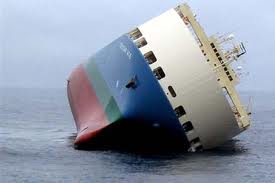
Your choice of option must be agreed upon by the entire management team if you plan to emerge with momentum. Greater transparency than ever before will win morale points with the team and the employees, plus help restore credibility with outsiders. With hard work, tighter controls, and improved leadership, you an “right the ship!”

Growth, Decline & Stabilization Via Turnaround

Clearly, many of the signals of company decline are a result of the growth a company may have experienced. When the growth ends and the business enters a period of stability, management may find itself unable to cope with the lack of growth. The team may continue to manage as if the rate of growth will continue in the near future. However, the plans for an expanding business differ markedly from those of a stable or declining one. When plans are not modified to address the new situation, companies often court trouble. A plan that is carved in granite will become part of the problem, rather than part of the solution.

Case Study: Be Tall Houses

be Tall Houses is an example of a company that has internal and external problems. Be Tall was building forty single-family homes in the $100,000-$150,000 price bracket annually. Sales stood at $4.5 million, and the company employed nine employees.  Internally, there were excessive layers of management, excess wages, material waste, cost overruns, employee morale problems, and information flow deficiencies. In short, the company had almost every signal of decline. Externally, new competition had entered the market. Since Be Tall had damaged its relationships with material suppliers, it could not receive the necessary materials to compete.

The company is now undergoing a turnaround. Part of the strategy is to reduce costs and payroll by a minimum of $250,000 per year. There is also a slump in Be Tall’s markets, so revenue has slipped. The internal elements were changed by laying off unnecessary supervisors, reducing wages, adding a profit-sharing plan, settling lawsuits with suppliers and resuming business on account, reducing costs, and adding computerized information systems to prevent selling homes below cost. External elements are being addressed by rebuilding relationships with suppliers and banks. Finally, Be Tall Houses’ image is being restored in the mind of new home buyers. For example:

  • low offers are being refused,
  • real estate agents are advised that the builder is doing fine, 
  • the builder’s presence in the local community has been heightened, and
  • the builder now meets personally with each buyer.

A building company–or any other company–that suffers from problems and decreased volume becomes a part of the industry and/or community “rumor mill.” Stakeholders–anyone who has an economic interest in the business–may begin to discuss the company’s demise before the business feels the impact of declining profitability. Customers may begin to complain about service. Small problems may take on monumental proportions.

Be hesitant to respond to rumors. Telling stakeholders optimistic stories only makes the situation worse when the stories never come true. A company in trouble needs to face its problems and seek advice on how to solve them. By managing the rumormongers part of the solution, rather than part of the problem, the top executive can begin to clear an effective path toward increased profitability.

Stabilization

Once the signals of a declining business are recognized, the hemorrhaging must be stopped. it is imperative that the company determine its future direction immediately. Faced with an enterprise that has suffered deteriorating value, direct and specific actions must be undertaken by the executive team to reverse the downward spiral. Clearly, changes need to be made; the question now becomes: how should this change be implemented?

The Turnaround: Three Methods

The methods employed in a turnaround vary from case to case but can generally be classified as strategic, operational, or financial (or some combination of the three): Strategic is a changing of markets and products. Operational is an emphasis on cost reductions, revenue generation, and asset reduction. Financial is a restructuring of the balance sheet and income statements to generate cash to fund business growth or reorganization.