Jump Start Creativity For Growth

Matt May, who writes a blog for OPEN, recently described many businesses as having an entrepreneurial spirit that had gone “M.I.A.” He wrote of how established companies can become set in their ways, very resistant to change. It’s as though the status quo becomes hallowed and the perceived trouble of doing anything different keeps the organizations from innovation.

“As business begins to boom, the fight-to-survive instinct fades and the entrepreneurial spirit isn’t quite what it was when the company was a startup. Sometimes it’s completely M.I.A. More and more people seem to need more resources to get ideas implemented quickly. Eventually, the ability to flex, react and innovate is lost.

Addicted to Resources

But that’s not how the company began. Maybe it didn’t start in the proverbial basement or garage, but it certainly started with little of everything—money, space and labor. There was a goal, and a passion for reaching it. Those limits made the company more creative and resourceful than it is today. Today, the addiction to resources is blocking innovation.

The good news is that there’s a relatively simple (but not necessarily easy) fix. But before revealing it, it helps to physically experience what I’m referring to, because the complacency in question has a universal presence, no matter how creative or resourceful we think we are.

Greater Potential

Stand up, feet planted shoulder width apart, arms straight out at your sides, parallel to the floor, elbows locked. (Imagine Leonardo da Vinci’s sketch of the Vitruvian Man if you need a visual reference.)

Now, twist your torso all the way to right as far as you possibly can go. Look down your right arm and mentally mark your stopping point on the wall. Remember that mark.

Now, turn back around to face front. Now close your eyes and repeat the exercise, stopping when you think you’ve met your previous stopping point.

Now…go a little past it. Open your eyes.

Most people surpass their previous mark by a good margin, and are surprised when they do. The point is that we generally don’t know what our potential is until we put our capacity on trial. We don’t stretch the limits of what we are actually capable of. But every business needs to constantly stretch in positive ways to move the business forward, to remain relevant.

Embrace Limitations

The solution is to treat resource constraints the same way artists do. All artists work within the confines of their chosen mediums, and it’s the limits that spur their creativity. The canvas edge, the marble block, the eight musical notes—these are finite resources. It’s how we view and manage resource constraints that makes all the difference.

And that’s the key question: Are limited resources preventing innovation, or enabling it?

There’s only one right answer.

A team that doesn’t thrive on the challenge of limitations is a sure sign that big company sickness is lurking. It signals an inherent fear of failure in your company. And that spells danger for innovation, because most real innovation springs from failure and conflict. The bigger and more successful a company gets, the less they have tolerance for both. So they mismanage a valuable source of new thinking by adding a buffer zone: higher budgets, more layers and lower expectations.

Unfortunately, success usually isn’t what breeds the kind of thinking that produces the extraordinary results needed to add value and keep competitors at bay. In fact, success can often generate a defensive posture that discourages the very behavior that created it. It can absolutely stifle innovation.

Innovation—which is the specific tool of the entrepreneur—demands exploiting limits, not ignoring or lamenting them!”

Being able to create much out of little is a sign of innovation. When your company loses the will to break the mold, it’s a sign that you are becoming less competitive. Find ways to re-energize the creativity and risk-taking of your employees.
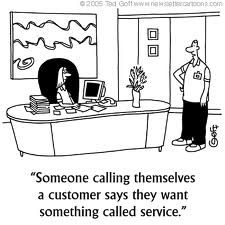

 

Wow Your Customer to Win

How many times have you heard a phrase like “user experience” or “customer experience” in the past decade? Quite a lot I bet–unless you live under a rock. Great companies from Starbucks to Ritz Carlton, Nordstrom’s to Apple have taken the time to be intentional about their offerings, including those small touches that are so memorable.

Paul Spiegelman is a business owner whom I follow on Twitter. He wrote for Inc. magazine over the weekend about a splendid resort experience he had recently. There were aspects of the stay where expectations were met. However, he was blown away by the special touches. Paul believes that small businesses would do well to:

1. Notice What’s Important

When my wife and I got to the check-in counter, we were assigned to our hotel room. The staffer noticed we had small children and immediately brought out a wagon full of stuffed animals and encouraged our kids to pick one. This seemingly small gesture showed the resort was paying attention to what is most important to us.

2. Be a Guide

Rather than just hand me the room key, the clerk stepped around the front desk, told me he was going to tour my family and me around the property and then escort us to our room. And that’s just what he did. Not sure how the hotel managed that with multiple people checking in at the same time, but it was impressive. Do you do this when you give clients direction?

3. Start the Morning Right

I love it when hotels offer morning coffee. But it is usually in very small cups, and you inevitably wind up going back repeatedly for more. At the (place we stayed), the coffee cups looked about the same size as a Starbucks Venti. And the coffee was free until 11 a.m. What a great way to start the day.

4. Empower the Unexpected

At breakfast one morning, we celebrated my 12-year-old nephew’s birthday. During the meal, unbeknownst to me or my family, our waiter slipped out of the hotel, went to his car, and brought back a book that he gave to my nephew as a gift. Can you imagine? What small, unexpected touches do you enable your employees to offer without having to ask permission?

5. Don’t Just Pass By

As usual, I often saw hotel employees in the hallways or outside walkways. But in addition to the standard “good morning” and pleasant smile, the workers went out of their way to purposely step aside and create a path for me, whether I was with a group or walking alone. Instead of two people mindlessly passing each other, we had a moment to interact.

6. Communicate Price Clearly

When I checked out of the hotel and asked for a bellman to help my family and me with our bags, he also brought our bill to the room so we could check it then and raise any issues or questions. I have never experienced that kind of active transparency; it was great to have someone make sure the details of the bill fit the service we paid for.

7. Leave Them With a Lasting Memory

When our car was loaded up and my family and I were ready to go, not only did we find the staffers had left two bottles of water in the car cup holders but also two logo baseball caps on the dashboard for my wife and me. We drove away with smiles on our faces.

Many of these noticeable expressions of customer care do not cost anything extra to provide, but make a huge impression. How do you show that you care about what’s most important to your customers? Are you the type who tells a customer what needs doing, or do you take the time to show? How do you go “above and beyond?” Do your customers feel respected by your actions? Have someone in your organization (as senior a level as possible is ideal) take the time to explain billing and offer to answer questions for customers. What memories would you like to build in the minds of your customers?

If you will think through these questions and best practices, you will win the hearts of your customers.


Get Your Creative Mojo Here

Creativity is essential for innovation–be that in the form of entrepreneurship or “intrapreneurship.” The ability to look at what everyone else sees and form a different conclusion requires a unique paradigm. Sometimes, it can be hard to know how to shift one’s paradigm if it is too similar to those in your environment.

@Nadiagoodman wrote for Entrepreneur recently an article entitled “How to Train Your Creative Mind.” An excerpt follows below:

As Louis Pasteur once famously said, “Chance favors only the prepared mind.” To be an innovative entrepreneur, you want to foster creativity in your daily life so that your mind is ready when opportunity arises.

“Creative ideas often come from unusual combinations,” explains Steven Smith, professor of cognitive psychology at Texas A&M University. “The best solution is not going to be the thing everyone thinks of. It’s going to be something unusual.”

These unusual combinations, called “remote associations,” are related ideas that may seem unrelated at first glance. They are the essence of creative thinking. To cultivate creativity, you want to increase your chances of stumbling on an unexpected link. 

Years ago, I was on a quest to understand why some people seemed to be creative and others were not. Additionally, I searched for tools to help inspire creativity. My favorite read on the subject–then and now–is Roger Von Oech’s classic work, A Whack on the Side of the Head: How to Unlock Your Mind for Innovation.

In the book, Von Oech lists 10 “mental locks” that have to be overcome in order to spur creativity. He offers tips to unlock one’s mind–

1. “The Right Answer” –
Tip #1: A good way to be more creative is to look for the second right answer. There are many ways to pursue this answer, but the important thing is to do it.
Tip #2: The answer you get depends on the questions you ask. Play with your wording to get different answers. One technique is to solicit plural answers. Another is asking questions that whack people’s thinking.

2. “That’s not logical!” –
Tip #1: For more and better ideas, I prescribe a good dose of soft thinking in the germinal phase, and a hearty helping of hard thinking in the practical phase.

3. “Follow the Rules” –
Tip #1: Play the revolutionary and challenge the rules – especially the ones you use to govern your day-today activities.
Tip #2: Remember that playing the revolutionary also has its dangers. Looking back on the decision, sometimes it goes too far.
Tip#3 : Have rule -inspecting and rule-discarding sessions within your organization. You may even find some  motivational side benefits in this activity – finding and eliminating outmoded rules can be a lot of fun.

4. “Be Practical” –
Tip #1: Each of you has an “artist” and a “judge” within you. The open-minded attitude of the artist typifies the kind of thinking you use in the germinal phase when you are generating ideas. The evaluative outlook of the judge represents the kind of thinking you use in the practical phase when preparing ideas for execution.
Tip #2: Be a magician. Ask “what if” questions and use the provocative answers you find as stepping-stones to new ideas.
Tip #3: Cultivate your imagination. Set aside time everyday to ask yourself what-if questions. Although the likelihood that any given “what-if” question will lead to a practical idea is not high, the more often you practice this activity the more productive you’ll become.

5. “Avoid Ambiguity” –
Tip #1: Take advantage of the ambiguity on earth. Look at something and think about what else it might be.
Tip #2: Try to use humour to put you or your group in a creative state of mind.

6. “To Err is Wrong” –
Tip#1: If you make an error, use it as a stepping-stone to some new idea you might not have otherwise discovered.
Tip #2: Strengthen your “risk muscle”. Everyone has one, but you have to exercise it or else it will atrophy. Make it appoint to take at least one risk every twenty-four hours.
Tip #3: Remember these two benefits of failure: First, if you do fail, you learn what doesn’t work. And second, the failure gives you an opportunity to try a new approach.

7. “Play is Frivolous” –
Tip #1: The next time you have a problem – play with it.
Tip #2: If you don’t have a problem, take the time to play anyway. You may find some new ideas.
Tip #3: Make your work place a fun place to be.

8. “That’s not my area ” –
Tip #1: Develop the hunter’s attitude, the outlook that wherever you go, there are ideas waiting to be discovered.
Tip #2: Don’t get so busy that you lose the free time necessary for idea hunting. Schedule hunting time into your day and week. Little side excursions can lead to new hunting grounds.
Tip #3: Look for analogous situations. Often problems similar to yours have been solved in other areas.

9. “Don’t be Foolish” –
Tip #1: Occasionally, let your “stupid monitor” down, play the fool, and see what crazy ideas you can come up with.
Tip #2: Recognize when you or others are conforming or putting down the fool. Otherwise, you may be setting up a “groupthink” situation.
Tip #3: May the FARCE be with you.

10. “I’m not creative!” –
Tip #1: Whack yourself into trying new things and building on what you find – especially the small ideas. The creative person has the self –faith that these ideas will lead somewhere.


Be An Ultimo Entrepreneur

Entrepreneur Country is a UK magazine I enjoy reading for stories that are refreshingly different insights. The views “from across the pond” provide a perspective on entrepreneurship that is distinct from the usual fare in the United States. Instead of a fascination with high-tech start-ups and deal making, the editors choose to feature entrepreneurs from other industries. The stories that are shared bring to light principles that can be applied across many settings.

Identifying a gap in the market to provide a unique solution to a problem can be hard, but very rewarding.  Michelle Mone found that helping women get what they want has been a path to success for her company, MJM International. MJM has made her one of the top 3 female entrepreneurs in the UK. Mone shared key points of her entrepreneurial journey in the July issue of the magazine.

In October 1996, at a dinner dance, Michelle was wearing an uncomfortable bra and decided she would invent her own in its place that would be comfortable, cleavage enhancing and improved in appearance. MJM International was born, (and the Ultimo brand was launched.)

Not only (has) Ultimo (been) revolutionizing the lingerie industry, it (is) now taking on cosmetics, with every product going through several rounds of testing [‘Every product has to be the best, I don’t accept second best’ – Michelle] and perfecting before it reaches the high street. “We have new products launching all the time and we have 13 inventions in total. The gel filled bra that we invented 12 years ago as an alternative to plastic surgery was what made us, because Julia Roberts wore it in Erin Brokovich. Then we have the 24 hour bra that you can’t feel that you’re wearing, and now UTan. I think next year we will expand further with a full on cosmetics range”.

Key points in Mone’s life story included:

  1. Taking a job to support her family as a teen when her father became wheelchair bound,
  2. Tacking Richard Branson posters on her wall instead of teen idols,
  3. Hiring 11 other teens to help her with a newspaper delivery route,
  4. Distributing Avon books,
  5. Working as sales and marketing lead for Labatt’s in her early 20s, and
  6. Launching MJM soon thereafter.

After taking her severance pay and putting it to good use with MJM, she moved from idea to commercialization. Here’s how she described the transition to becoming a successful entrepreneur:

“You have to do your research and find out if you have a viable product. See if you can meet a manufacturer too, because there will be issues in terms of shipping and some factories are too large for a new product. Go smaller, work out the volume and do as much homework as possible.”

“You just have to be incredibly organised, but I’m not super woman and I do get things wrong.” Ultimo suffered an enormous setback in 2002 when a married couple, distributors for MJM, fled with £1.6million.

She exhibited tremendous tenacity in overcoming this obstacle. a divorce, and other setbacks. Kelly Dolan, who conducted the interview with Mone, saluted her “ability to leverage MJM’s press position through PR campaigns (comprised of)  celebrity endorsements and clever marketing” Dolan asked how young businesses can optimize PR, to which Mone responded, 

“If you can’t afford a PR company then remember that there is nobody more passionate about your business than you. Write a press release, send it out to everyone and hope for the best. Hire a PR company if you have the money, but you have to get across to whoever is representing you that real passion for the business.” 

Well put! Every entrepreneur–female or male, in fashion or services, regardless of challenges–will meet with greater success if able to convey passion for the target audience and its needs.


Mainstreet Business Demonstrates Strategy Execution

One of the interesting conversations that keeps coming up  revolved around the hyperfocus on technology based start-ups to the exclusion of virtually every category. When I attend networking events, many of the entrepreneurs that I encounter are articulating the value proposition of their high tech start-up. Almost every single one speaks of the next competition they plan to enter to secure financing to fund their idea.

What seems to be missing in these conversations is a focus on executing a business strategy rather then simply a funding strategy. In the hot pursuit of obtaining seed capital, entrepreneurs  can become blind to what’s happening around them with the other important facets of the business. From human resources to operations, marketing & sales, there are many other aspects of development besides the capital raise that warrant attention.

In companies that do not claim to have a technology focus, it is a little easier to talk to the entrepreneur about business basics. Professional development, personal finance, market research, proof of concept, branding, feasibility, organizational design, supply chain, & sales are front and center topics in most companies. Instead of intellectual property, securities and like topics du jour, most of the companies that contribute to our way of life and represent the fulfillment of the American Dream struggle with these topics.

I fear that, by giving so much attention and publicity to technology companies who may have the outside chance of selling at a favorable multiple, we are failing to give earnest heed to companies with issues that are easier to address and that have a higher likelihood of making it to the five years in business mark. Simultaneously, we become so enamored with the perfection of code or intellectual property that we fail to talk about business basics with the technology companies, though they need to think through all of these issues in addition to theunique issues they face.

Please do not misunderstand my intentions here. This blog post is not about bashing technology companies. Quite the contrary, it is suggesting that all companies are best served by focusing on fundamentally sound business principles. In the very next breath, however, I would argue that non-tech companies not be relegated to second tier/ugly stepsister status simply because the multiples they usually generate are lower. The upsides of a “mainstreet business” is that it has less inherent  risk, requires less capital, and can generate revenues sooner. 

How can we, as the American business community, more effectively support mainstreet businesses? (And not fail to challenge tech companies to also execute on key business fundamentals as well?)