Take Away 10 and Add 6 For Innovation


Preparing for a monthly webinar on intrapreneurship has led me to literature searches for resources that represent thought leadership on intrapreneurship and innovation. Most of the literature recognizes the inherent dichotomy between organizations wanting to be cutting edge for the sake of competition, but not wanting the risks and change necessary to go there. Consequently, many stumble in their pursuit of innovation. The book, The Innovative CIO: How IT Leaders Can Drive Business Transformation (CA Press/Apress), addresses practical suggestions to overcome some common barriers to successful innovation. Dennis McCafferty writes that “it also demonstrates how to take advantage of your human and tech resources to effectively evaluate, track and “sell” the value of innovation within your company. The Innovation CIO coauthors Andi Mann, George Watt and Peter Matthews discuss the following 10 Ways to Kill Innovation:


1. Unhealthy Internal Competition  Healthy competition encourages achievement. But when employees focus more on beating each other than benefiting their organization, it’s unhealthy competition.

2. Inconsistency in Rewards  If workers feel there’s no rhyme or reason in performance awards, they’ll grow demoralized and stop trying.

3. A Culture of Intimidation  Bosses who ridicule “dumb” ideas to present themselves as “the smartest person in the room” ultimately choke innovation through fear and ridicule.

4. No Organizational Framework for Innovation  Without a companywide framework for fostering innovation, it’s difficult for lower-level managers to leverage innovation as it happens.

5. The Pursuit of Perfection  Perfectionists tend to “hide” work until they feel it’s 100% ready. But innovation thrives from collaboration and dialogue while work is in progress.

6. Protection Obsession  Company “protectors” are often guilty of shooting down any proposals that they feel will harm their organization or department.

7. Inbox Overload  A relentless barrage of emails, meetings and phone calls–many of them unnecessary–keeps CIOs and their teams preoccupied with the mundane and urgent instead of something fresh, new and valuable.

8. Voluntary Isolationism  IT teams will often “go dark” and bury themselves in projects while closing off contact with stakeholders, customers and others who can help greatly via feedback.

9. Clinging to Legacies  Outdated IT systems and processes hinder innovation. However, too many CIOs stick with them because they cost money and/or they don’t want these deployments to be perceived as “failures.”

10. No Strategic Focus  Innovation teams must always keep concrete, business-benefiting goals in mind during collaboration. Otherwise, it’s just a fun but ultimately pointless “creativity exercise.”

What is true in IT circles is true, to some extent, in any kind of business. The environment and culture have so much to do with successful innovation. Agility Innovation and Ovo Innovation, in a joint whitepaper, provided a list of 6 key capabilities needed by executives to foster the skills and capacities for innovation in their companies:

  • creating alignment,
  • deploying trusted methods and tools,
  • effective communication and engagement,
  • empowering people, providing skills,
  • refocusing attitudes, perspectives and rewards ,
  • defining a corporate “governance” for innovation

The whitepaper authors argue that  these skills or capabilities can be developed in an appropriate strategic manner when applying the Executive Innovation Workmat (shown below).  They believe that executives can be trained to both understand how to innovate and how to acquire and inspire the skills requisite to do it well. Beginning with establishing a language for innovation, complete with agreed upon definitions of key terms, a systematic approach serves organizations best. When corporate strategy and innovation have linkage, the likelihood of success goes way up!

Executive Innovation Workmat


Run Your Business Better With Games For the Mind

Owning a business is not a game. Seemingly, playing games is also irrelevant to running a business. Yet, there are skills requisite to entrepreneurship that may require development through practice. Whether one struggles with memory, focus, recall, or eliminating distractions, there may be a game to help you strengthen your mental capacity.

PositscienceThere is a growing number of “brain games” that help with decision making and memory improvement. Lumosity.com, which makes games for these needs, reached 35 million users earlier this year. Joe Hardy, PhD and Vice President of Research and Development for Lumosity, believes brain games are ideal for business owners. “Owning a business is one of the most cognitively challenging jobs,” Hardy says.

Lindsay LaVine, writing for Entrepreneur.com, says that, “Business owners have to process information accurately, balance projects, switch between tasks quickly and efficiently, divide their attention among tasks, and remember customers’ names. We took a look at three popular brain game providers to find out what the buzz is about:”

Lumosity.com

LumosityThe largest provider of brain games, the site works to train your brain in five categories: speed, memory, attention, flexibility and problem solving. “Each exercise is designed to train a different cognitive function of the brain,” Hardy explains. The games are based on neurological research performed by researchers from various institutions, including Columbia University and the University of California-Berkeley.

Lumosity’s in-house team of developers creates games based on what research shows exercises various parts of the brain. For example, Memory Matrix requires players to remember which tiles appear in a matrix and recall the pattern from memory, which helps improve spatial recall and working memory. “Think of it as a personal trainer for your brain,” Hardy says. He recommends that users spend 10-20 minutes every day playing brain games, as opposed to spending two hours one day and skipping out on the rest. “It’s like going to the gym,” Hardy says. “The more training you do, the better. The goal is to create a habit that’s sustainable and keeps you engaged.”

Lumosity offers a free limited membership that allows users to participate in some games, while the paid membership provides full access to the site and tracks your BPI (Brain Performance Index, a measure of cognitive performance) progress over time. Paid memberships range from monthly to lifetime options ranging from $15 a month to $80 a year.

Positscience.com

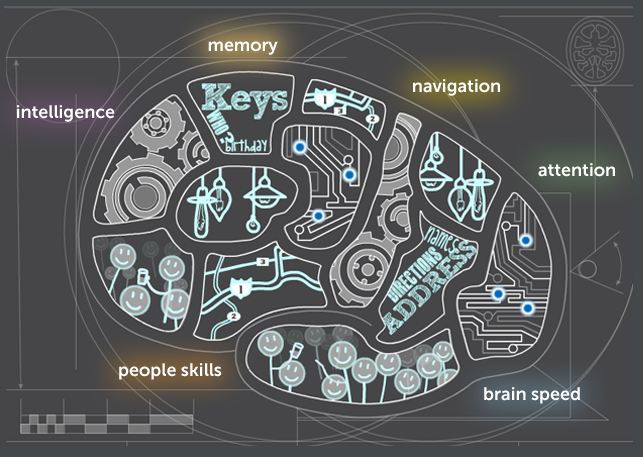
Positscience logoPositscience offers brain training in five categories: attention, brain speed, memory, people skills and intelligence. (A new category, navigation, will be available on the site soon.) Posit Science games include enhancing a user’s ability to read facial expressions, from easy (happy or sad) to the more difficult (puzzled or embarrassed). Its games also help users improve facial recognition as well as matching names with faces and remembering facts about people you meet, an important skill in networking and business.

Posit Science has developed games in collaboration with researchers from nearly a dozen universities, including Yale and Stanford. You can try some of the games out for free without having to sign up. Posit Science offers memberships at $14 a month or $96 a year.

Cogmed.com

CogmedCogmed is designed to improve working memory to allow users to learn new skills in academic or professional endeavors. Users are encouraged to spend up to 30 minutes a day, five days a week on training exercises over a five week period. Training is only available through programs offered by accredited coaches who monitor user results and provide motivation. Many programs are supervised by doctors or psychologists who specialize in attention problems.

Prices vary according to the program selected and the professional coach’s fees. The program is best for people who have working memory issues caused by ADHD, anxiety in social settings, or adjusting quickly to new tasks. 


Leadership Mindsets to Foster Innovation

When lively conversations abound on the subject of innovation, invariably, the matter of culture emerges. Does the organization have a suitable culture to nourish innovation? If not, why not? Often, management is held up as a scapegoat for the lack of innovation. Karl Ronn recently said, “Companies that think they have an innovation problem don’t have an innovation problem. They have a leadership problem.”

Scott Anthony, a regular contributor to the Harvard Business Review blog and managing partner of Innosight, took note of Ronn’s recent comment. Anthony  had featured Ronn in The Little Black Book of Innovation, and considers him to be “thoughtful, widely read, a seasoned practitioner, and a great communicator.” Anthony wrote of him in a recent HBR blog post:

Ronn’s basic idea was that four decades of academic research and two decades of conscious implementation of that work have provided robust, actionable answers to many pressing innovation questions. Practitioners have robust tools to discover opportunities to innovate, design, and execute experiments to address key strategic uncertainty; to create underlying systems to enable innovation in their organization; and to manage the tension between operating today’s business and creating tomorrow’s businesses. Large companies like IBM, Syngenta, Procter & Gamble, 3M, and Unilever show that innovation can be a repeatable discipline. Emerging upstarts like Google and Amazon.com show how innovation can be embedded into an organization’s culture from day one.

Pixar innovationIn Building a Growth Factory, David Duncan and Anthony suggested why many others have not been successful: too many companies use point solutions to address a systematic challenge. They may offer an idea challenge, ideation session, growth group, corporate venturing arm or incentives for innovation…

(writes Anthony,) “None of these is bad, but point solutions don’t solve system-level problems. Duncan and I suggest working on four systems — a growth blueprint, production systems, governance and controls, and leadership, talent, and culture. It isn’t easy to do all of that, but it is what is required to really make innovation work at scale.” (continuing:)

Ronn agrees, but notes that the responsibility for such systemic work ultimately rests with a company’s leadership team. And it’s absolutely necessary. Research by Clayton Christensen, Rita McGrath, Richard D’aveni, and Richard Foster make very clear that we are in a new era where competitive advantage is a transitory notion. (McGrath’s forthcoming book is provocatively titled The End of Competitive Advantage.) Any executive that doesn’t make innovation a strategic priority, ensure there is ample investment in it, and approach the problem strategically is committing corporate malfeasance.

Further, leaders can’t just set the context and hope that innovation happens. Innovation is enough of an unnatural act in most companies (which were built to scale yesterday’s business model, not discover tomorrow’s) that it requires the day-by-day attention of the company’s top leadership team or it simply won’t stick.

The leadership challenge facing executives today is to balance today’s needs versus tomorrow’s. In the current environment, productivity and risk management are priorities. In the longer run, being able to anticipate market needs and adjust one’s go-to-market strategy are critical. Leaders must now be good at both to create and sustain competitive advantage. 

Anthony acknowledges that, to justify why innovation is a struggle, leaders mention factors such as “short-term pressures from investors, talent deficiencies, the challenge of implementing innovation-friendly rewards structures, the still fuzzy nature of innovation, and, in candid moments, their own discomfort with the different mental frames required to lead innovation.”

Most importantly, the paradigm shift needs to occur whereby the goal moves from being most innovative among a peer group of companies to being cutting edge like some of the upstart organizations known for redefining the playing field. 

Are You Aggressive Innovators, or Defenders of Status Quo?

Our world has sped up. The demand for faster, “instant,” responsive products and services drives business competition for customers. A computer, for instance, with a faster processor is worth more than one with a slower one because faster page loads mean either a more enjoyable gaming experience or work productivity. Consequently, a higher price can be charged for a faster computer. In many markets, people are willing to pay a rush charge for added convenience or quicker availability. Why is the need for speed, then, missing in typical product development efforts? My friend, Jeffrey Phillips, addressed this issue with a recent blog post:

Three innovation clockspeeds

The pervasive lack of enthusiasm or even awareness of time in regards to innovation is a constant source of amazement for me.  In organizations transfixed by time, speed and efficiency, innovation and product development are often the slowest out of the gate, the longest efforts to accomplish and seem completely unrelated to the real world. There are, of course, reasons why innovation is slow:
  1. Innovation is uncertain and risky, so organizations try to move slowly to reduce risk
  2. Innovation (if done well) is often ahead of the market, so organizations try to time innovation to market needs and demands
  3. Innovation requires tools and techniques that are unfamiliar, which slows the process
  4. Innovation and subsequent product development processes are sclerotic, like blood vessels full of plaque, stuffed with unimportant but time consuming activities.

My stipulation is that you should do innovation as fast as humanly possible, even at the risk of skipping steps or bypassing checkpoints, because your internal clockspeed is almost certainly out of synch with the market’s clockspeed.

Your internal clockspeed

Your clockspeed (how fast your organization works) was set by management – this means that your clockspeed is relatively high when working on (the) familiar … and very slow otherwise.  Your operating models slow innovation down at exactly the time that they should be speeding up.  The strange thing about internal clockspeed is that it is similar to the weather – everyone complains about it but few do much about it.  

Clockspeed

External market clockspeed

Your markets are likely moving faster than your internal processes, since the markets are subject to competition, new entrants, substitutions and other factors that Porter and others made famous.  The real problem is innovation clockspeed.

Innovation clockspeed

If you compete in a lucrative market, there are a host of firms innovating right now, seeking to disrupt your market, create substitutes for your product or to simply replace the need for your product or potentially your market.  Clockspeed isn’t simply about bringing a new product to market faster, but about making the product or market obsolete or unnecessary.  

Getting obsolete faster 

Nobody cares about how efficient or fast your existing processes are to provide existing products and services.  What will differentiate firms in the future is an accelerated ability to innovate, at least as a fast follower if not an innovation leader, carefully tracking the external market clockspeed and anticipating innovation clockspeed.  

The challenge — should you choose to accept this mission, is to synchronize the clocks! Within your organization, take a long hard look at impediments to rapid prototyping. Examine systems that disincentivize risk taking and experimentation. Determine how to reject more ideas faster so that your organization is known for the rate of idea generation and implementation rather than the amount of time taken to vet one idea at a time. 

Private Equity Challenges in Family Businesses

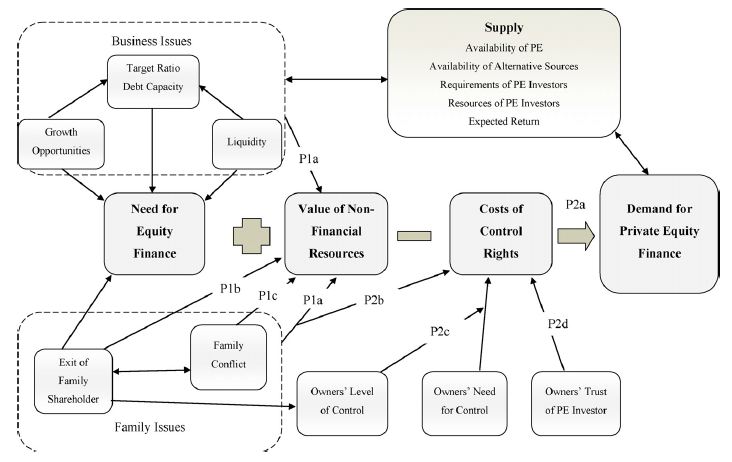
Most family owned businesses survive through the ingenuity, hard work, and resourcefulness of the founder(s) in the first generation. As the founders grow older and the business hits certain barriers to growth, often there is a need for a capital infusion to satisfy the goals of the founders and the other stakeholders in the continued growth and success of the business. Private equity, while a viable option for many privately owned businesses, can be perceived as a solution that is unworkable for the typical family owned business because of the fear of loss of control. In an article last year in the Journal of Family Business Strategy (Volume 3, Issue 1, Pages 38-51, March, 2012), authors Florian Tappeiner, Carole Howorth, Ann-Kristin Achleitner, and Stephanie Schraml describe some research they performed on a group of family firms in Germany. The research focused on issues these firms faced in soliciting private equity investment. Excerpts are provided below, along with a diagram, and accompanied by some commentary:

Under the pecking order hypothesis, private equity is a finance of last resort. Tests of the pecking order and its assumptions have provided conflicting results. For family firms, the pecking order hypothesis is incomplete because it ignores family effects. Case studies of 21 large family firms in Germany are analysed. Testable propositions are derived. Family firm owners balanced financial and non-financial resources of private equity with the need to cede control rights. Non-financial resources were valued more highly when resolving family issues. The observed pecking order was driven by control rights. Important implications for family firms and investors are discussed.

The authors articulate that private equity is perceived as a final option for owners of family businesses. No surprise there. Control is seen as the most important factor in determining what outside resources to enlist. Private equity is seen as less widely used than non-financial resources when the goal is to resolve family issues.

Family and business influences are equally important in terms of the demand for private equity in large family owned firms. Private equity was sought out for reasons that included the exit of a sibling, parents’ wealth diversification and business growth. The authors note an “interdependence of demand and supply in financing decisions, most noticeably in the negotiation of control rights, which featured strongly in the interviews. (Sometimes the underpinning reason for seeking an investor was to consolidate control, for example, buying out a family member with conflicting views or concentrating ownership in one branch of the family, which, it was argued, would free up decision making within the family firms.)”PE Finance in Family Firms

Minority private equity investments provided study participants with needed finance while allowing the family owners to maintain family control. Private equity also provides managerial resources. The presence of outside money and potential ensuing leverage in executive decision making illustrates the potential for better corporate governance practices and enhanced expertise to pursue business opportunities, such as IPOs or globalization. Said the authors, “Firms with family issues may value the non-financial resources that private equity investors may provide. In particular, family firms wishing to reduce family conflicts may value the neutral or professional role of a private equity investor.”

It was noted that business performance issues led to loss of control in two of the family firms receiving private equity infusions. Still others negotiated control rights guidelines aggressively because of their concerns over the potential of such an occurrence. The investors, for their part, acknowledged that dealing with family firms presented a unique set of challenges usually not experienced in other deals.