Wow Your Customer to Win

How many times have you heard a phrase like “user experience” or “customer experience” in the past decade? Quite a lot I bet–unless you live under a rock. Great companies from Starbucks to Ritz Carlton, Nordstrom’s to Apple have taken the time to be intentional about their offerings, including those small touches that are so memorable.

Paul Spiegelman is a business owner whom I follow on Twitter. He wrote for Inc. magazine over the weekend about a splendid resort experience he had recently. There were aspects of the stay where expectations were met. However, he was blown away by the special touches. Paul believes that small businesses would do well to:
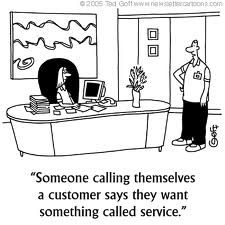
1. Notice What’s Important

When my wife and I got to the check-in counter, we were assigned to our hotel room. The staffer noticed we had small children and immediately brought out a wagon full of stuffed animals and encouraged our kids to pick one. This seemingly small gesture showed the resort was paying attention to what is most important to us.

2. Be a Guide

Rather than just hand me the room key, the clerk stepped around the front desk, told me he was going to tour my family and me around the property and then escort us to our room. And that’s just what he did. Not sure how the hotel managed that with multiple people checking in at the same time, but it was impressive. Do you do this when you give clients direction?

3. Start the Morning Right

I love it when hotels offer morning coffee. But it is usually in very small cups, and you inevitably wind up going back repeatedly for more. At the (place we stayed), the coffee cups looked about the same size as a Starbucks Venti. And the coffee was free until 11 a.m. What a great way to start the day.

4. Empower the Unexpected

At breakfast one morning, we celebrated my 12-year-old nephew’s birthday. During the meal, unbeknownst to me or my family, our waiter slipped out of the hotel, went to his car, and brought back a book that he gave to my nephew as a gift. Can you imagine? What small, unexpected touches do you enable your employees to offer without having to ask permission?

5. Don’t Just Pass By

As usual, I often saw hotel employees in the hallways or outside walkways. But in addition to the standard “good morning” and pleasant smile, the workers went out of their way to purposely step aside and create a path for me, whether I was with a group or walking alone. Instead of two people mindlessly passing each other, we had a moment to interact.

6. Communicate Price Clearly

When I checked out of the hotel and asked for a bellman to help my family and me with our bags, he also brought our bill to the room so we could check it then and raise any issues or questions. I have never experienced that kind of active transparency; it was great to have someone make sure the details of the bill fit the service we paid for.

7. Leave Them With a Lasting Memory

When our car was loaded up and my family and I were ready to go, not only did we find the staffers had left two bottles of water in the car cup holders but also two logo baseball caps on the dashboard for my wife and me. We drove away with smiles on our faces.

Many of these noticeable expressions of customer care do not cost anything extra to provide, but make a huge impression. How do you show that you care about what’s most important to your customers? Are you the type who tells a customer what needs doing, or do you take the time to show? How do you go “above and beyond?” Do your customers feel respected by your actions? Have someone in your organization (as senior a level as possible is ideal) take the time to explain billing and offer to answer questions for customers. What memories would you like to build in the minds of your customers?

If you will think through these questions and best practices, you will win the hearts of your customers.


 

Resilient Leadership Anticipates Challenge

Leadership is full of challenges. It’s not so much whether problems will crop up, but how the leader responds. The ability to push through and come out on top is a hallmark of a resilient leader. Claudio Morelli, Superintendent/CEO of the Burnaby School District in British Columbia, thinks the ability to maintain resiliency is defined by elasticity, bend, stretch and not “breaking” during challenging situations:

All organizations encounter challenges, issues and difficulties everyday including financial shortfalls, downsizing, increased workloads, and succession issues. These challenges force the organization to turn inward and look at itself and its effectiveness. It is a time to regroup and assess where the organization stands.

If the organization embeds and nurtures a culture based on mutual trust and where all members of the organization strive to be trustworthy and treat one another with respect and caring, then you have a solid foundation to deal with the challenges and issues you face. But where do you begin? It begins with a focus on people and building/enhancing positive relationships.

Most people want to be part of the solution. They would like to have a sense that their ideas are heard, not necessarily accepted, but considered with some action taken. They want to be part of the team, participating, engaging and solving some of the challenges.

Inclusive leadership involves followers and teams. It engages the hearts, minds, and wills so that resiliency is imparted into the work group. 

Morelli’s 6 Steps to Lead When Facing Challenges

  • Make personal connections
  • Build important relationships
  • Interact face to face when possible
  • Be open, transparent and authentic
  • Model integrity with the right intent
  • Act on feedback and deliver results

When a leader takes the time to connect on a personal basis with followers, it demonstrates care and concern in something more than the task at hand. The investment of time in getting to know others pays off in multiple ways, not the least of which is learning about talents and interests that may lie beneath the surface. In the realm of human resources, the term “high potential” is used to identify those who strategically merit the attention of an organization’s leaders. Talent management is not the only reason to build strategic relationships…clients, key vendors, referral partners all are worth the effort to go deeper, beyond superficial workplace conversations.

The types and frequency of interactions are important in preparing a support structure to succeed in the face of challenge. Whenever possible, open up to those with whom you are working to build strategic relationships. Become more vulnerable, let them know what concerns you have, admit when you don’t have a solution and elicit the help of others.

Getting into the habit of acting with complete integrity is helpful in setting a good example, establishing an expectation, and creating a culture of trust. When others within the organization (or strategic relationships outside it) offer constructive input, be gracious. Listen, then act on what has been shared and communicate back the outcome(s) of implementing the advised course of action.

These leadership practices will enable your organization to withstand challenges through better collaboration and increased resiliency.

Get Your Creative Mojo Here

Creativity is essential for innovation–be that in the form of entrepreneurship or “intrapreneurship.” The ability to look at what everyone else sees and form a different conclusion requires a unique paradigm. Sometimes, it can be hard to know how to shift one’s paradigm if it is too similar to those in your environment.

@Nadiagoodman wrote for Entrepreneur recently an article entitled “How to Train Your Creative Mind.” An excerpt follows below:

As Louis Pasteur once famously said, “Chance favors only the prepared mind.” To be an innovative entrepreneur, you want to foster creativity in your daily life so that your mind is ready when opportunity arises.

“Creative ideas often come from unusual combinations,” explains Steven Smith, professor of cognitive psychology at Texas A&M University. “The best solution is not going to be the thing everyone thinks of. It’s going to be something unusual.”

These unusual combinations, called “remote associations,” are related ideas that may seem unrelated at first glance. They are the essence of creative thinking. To cultivate creativity, you want to increase your chances of stumbling on an unexpected link. 

Years ago, I was on a quest to understand why some people seemed to be creative and others were not. Additionally, I searched for tools to help inspire creativity. My favorite read on the subject–then and now–is Roger Von Oech’s classic work, A Whack on the Side of the Head: How to Unlock Your Mind for Innovation.

In the book, Von Oech lists 10 “mental locks” that have to be overcome in order to spur creativity. He offers tips to unlock one’s mind–

1. “The Right Answer” –
Tip #1: A good way to be more creative is to look for the second right answer. There are many ways to pursue this answer, but the important thing is to do it.
Tip #2: The answer you get depends on the questions you ask. Play with your wording to get different answers. One technique is to solicit plural answers. Another is asking questions that whack people’s thinking.

2. “That’s not logical!” –
Tip #1: For more and better ideas, I prescribe a good dose of soft thinking in the germinal phase, and a hearty helping of hard thinking in the practical phase.

3. “Follow the Rules” –
Tip #1: Play the revolutionary and challenge the rules – especially the ones you use to govern your day-today activities.
Tip #2: Remember that playing the revolutionary also has its dangers. Looking back on the decision, sometimes it goes too far.
Tip#3 : Have rule -inspecting and rule-discarding sessions within your organization. You may even find some  motivational side benefits in this activity – finding and eliminating outmoded rules can be a lot of fun.

4. “Be Practical” –
Tip #1: Each of you has an “artist” and a “judge” within you. The open-minded attitude of the artist typifies the kind of thinking you use in the germinal phase when you are generating ideas. The evaluative outlook of the judge represents the kind of thinking you use in the practical phase when preparing ideas for execution.
Tip #2: Be a magician. Ask “what if” questions and use the provocative answers you find as stepping-stones to new ideas.
Tip #3: Cultivate your imagination. Set aside time everyday to ask yourself what-if questions. Although the likelihood that any given “what-if” question will lead to a practical idea is not high, the more often you practice this activity the more productive you’ll become.

5. “Avoid Ambiguity” –
Tip #1: Take advantage of the ambiguity on earth. Look at something and think about what else it might be.
Tip #2: Try to use humour to put you or your group in a creative state of mind.

6. “To Err is Wrong” –
Tip#1: If you make an error, use it as a stepping-stone to some new idea you might not have otherwise discovered.
Tip #2: Strengthen your “risk muscle”. Everyone has one, but you have to exercise it or else it will atrophy. Make it appoint to take at least one risk every twenty-four hours.
Tip #3: Remember these two benefits of failure: First, if you do fail, you learn what doesn’t work. And second, the failure gives you an opportunity to try a new approach.

7. “Play is Frivolous” –
Tip #1: The next time you have a problem – play with it.
Tip #2: If you don’t have a problem, take the time to play anyway. You may find some new ideas.
Tip #3: Make your work place a fun place to be.

8. “That’s not my area ” –
Tip #1: Develop the hunter’s attitude, the outlook that wherever you go, there are ideas waiting to be discovered.
Tip #2: Don’t get so busy that you lose the free time necessary for idea hunting. Schedule hunting time into your day and week. Little side excursions can lead to new hunting grounds.
Tip #3: Look for analogous situations. Often problems similar to yours have been solved in other areas.

9. “Don’t be Foolish” –
Tip #1: Occasionally, let your “stupid monitor” down, play the fool, and see what crazy ideas you can come up with.
Tip #2: Recognize when you or others are conforming or putting down the fool. Otherwise, you may be setting up a “groupthink” situation.
Tip #3: May the FARCE be with you.

10. “I’m not creative!” –
Tip #1: Whack yourself into trying new things and building on what you find – especially the small ideas. The creative person has the self –faith that these ideas will lead somewhere.


Be An Ultimo Entrepreneur

Entrepreneur Country is a UK magazine I enjoy reading for stories that are refreshingly different insights. The views “from across the pond” provide a perspective on entrepreneurship that is distinct from the usual fare in the United States. Instead of a fascination with high-tech start-ups and deal making, the editors choose to feature entrepreneurs from other industries. The stories that are shared bring to light principles that can be applied across many settings.

Identifying a gap in the market to provide a unique solution to a problem can be hard, but very rewarding.  Michelle Mone found that helping women get what they want has been a path to success for her company, MJM International. MJM has made her one of the top 3 female entrepreneurs in the UK. Mone shared key points of her entrepreneurial journey in the July issue of the magazine.

In October 1996, at a dinner dance, Michelle was wearing an uncomfortable bra and decided she would invent her own in its place that would be comfortable, cleavage enhancing and improved in appearance. MJM International was born, (and the Ultimo brand was launched.)

Not only (has) Ultimo (been) revolutionizing the lingerie industry, it (is) now taking on cosmetics, with every product going through several rounds of testing [‘Every product has to be the best, I don’t accept second best’ – Michelle] and perfecting before it reaches the high street. “We have new products launching all the time and we have 13 inventions in total. The gel filled bra that we invented 12 years ago as an alternative to plastic surgery was what made us, because Julia Roberts wore it in Erin Brokovich. Then we have the 24 hour bra that you can’t feel that you’re wearing, and now UTan. I think next year we will expand further with a full on cosmetics range”.

Key points in Mone’s life story included:

  1. Taking a job to support her family as a teen when her father became wheelchair bound,
  2. Tacking Richard Branson posters on her wall instead of teen idols,
  3. Hiring 11 other teens to help her with a newspaper delivery route,
  4. Distributing Avon books,
  5. Working as sales and marketing lead for Labatt’s in her early 20s, and
  6. Launching MJM soon thereafter.

After taking her severance pay and putting it to good use with MJM, she moved from idea to commercialization. Here’s how she described the transition to becoming a successful entrepreneur:

“You have to do your research and find out if you have a viable product. See if you can meet a manufacturer too, because there will be issues in terms of shipping and some factories are too large for a new product. Go smaller, work out the volume and do as much homework as possible.”

“You just have to be incredibly organised, but I’m not super woman and I do get things wrong.” Ultimo suffered an enormous setback in 2002 when a married couple, distributors for MJM, fled with £1.6million.

She exhibited tremendous tenacity in overcoming this obstacle. a divorce, and other setbacks. Kelly Dolan, who conducted the interview with Mone, saluted her “ability to leverage MJM’s press position through PR campaigns (comprised of)  celebrity endorsements and clever marketing” Dolan asked how young businesses can optimize PR, to which Mone responded, 

“If you can’t afford a PR company then remember that there is nobody more passionate about your business than you. Write a press release, send it out to everyone and hope for the best. Hire a PR company if you have the money, but you have to get across to whoever is representing you that real passion for the business.” 

Well put! Every entrepreneur–female or male, in fashion or services, regardless of challenges–will meet with greater success if able to convey passion for the target audience and its needs.


Antarctic Innovation

If you didn’t have the opportunity to watch the IMAX movie about Sir Ernest Shackleton’s now-legendary 1914-1916 British expedition to Antarctica, you missed out on a big screen adventure. Yet, as can be the case, cinema leaves out key details in non-fiction stories. As it happened, Shackleton had a lot of difficulty recruiting a crew to accompany him in exploration. A LinkedIn acquaintance of mine, Gijs van Wulfen, found that an advertisement was run in a London paper in 1913. The ad could, as Gijs points out, just as easily be an appeal for those looking to become innovators:

Men wanted for hazardous journey. Small wages, bitter cold, long months of complete darkness, constant danger, safe return doubtful. Honour and recognition in case of success.

van Wulfen points out that there are numerous similarities between expeditions and innovation:

  • A promised land. Most people searched for the adventure only when it was really necessary and when they had nothing to lose. This is so familiar in our organisations today. Real urgency is only experienced when ‘old solutions’ do not work anymore and markets are saturated. And it is felt by people expecting big promising treasures.
  • The challenge of being 1st. Explorers strive being first. Amundsen discovering the North-West passage. Livingstone searching for the source of the Nile. Hillary climbing Mount Everest. Entrepreneurs have the same ambition: developing ‘new-to-the-world’ innovations to outsmart competition.
  • A group effort. Explorers almost never went alone. Hillary could not have conquered Everest if he wasn’t saved first by Tenzing Norgay from falling in a crevasse. You can invent a new product, service or business model alone. But within organizations you cannot innovate alone. You need people from every discipline to develop it, produce it, market it, sell it, bill it and service it.
  • A long journey. Discovery voyages lasted many years, due to unexpected setbacks such as an unknown illness, a tropical storm or mutiny by the crew. The average time for the development process of a new product, which takes 18 months from idea to introduction, follows similar patterns.
  • High risk of no return. Many ships perished along the way. On one of the voyages of Magelhaes, four of the five ships did not return. One ship survived and made the expedition worthwhile. It’s similar in innovation. From the seven new developed product ideas only one product enters the market successfully. The remaining six perish along the way.
  • Serendipity leads to even bigger rewards. Sometimes explorers thought they landed on a small island, which proved to be an enormous continent afterwards. As the Vikings did who discovered North America long before Columbus.  Compare this with the development of SMS-services. It was originally developed for the business market, but it did not take off. After young people caught on to the idea of SMS as a modern cheap way to contact each other, it became a worldwide market with more than three billion users.

Entrepreneurship, like innovation, is an expedition for the hearty. Those who aspire to start enterprises must be willing to take risks, have a clear vision of a better solution, work hard for a long time, recognize opportunity, and work through teams.