Soft Skills Matter in Business – Even if Not Measurable

Throughout my career, I have had the opportunity to work alongside some brilliant co-workers and clients. Whether it has been inside a public accounting firm, or as an advisor to engineering and construction companies, I am often surrounded by folks with strong technical skills. Since my role has usually involved organizational development, strategy, or marketing and business development, I have heard time and again how “soft and fuzzy” topics such as relationships, emotional intelligence, and creativity and communication are less needful than the technical skills.

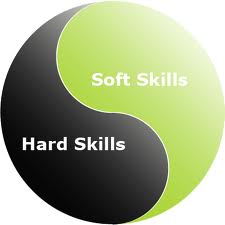
Susan Mazza, who writes a blog entitled Random Acts of Leadership, recognizes the dichotomy of “soft” versus “hard” skills in her recent post, “The Power of Soft.” She states in the post that, “the very need to distinguish “soft” vs. “hard” speaks to a paradigm that has long revered hard results as the only ones that really matter. Unless something can be quantified and measured the underlying belief is that it is somehow less valuable and hence of lesser importance.”Soft vs hard skills
Whether I have been in conversations with a CFO, a business owner, or a  VP of operations, I have heard over and again how that which cannot be measured must be insignificant and pale in priority. Mazza references a recent TED Talk by Dr. Brene’ Brown, “Leaning into Vulnerability” in which Brown shares how one of her research professors once stated, “If you cannot measure it, it doesn’t exist.” Mazza observes that many with advanced degrees subscribe to a scientific framework that assumes “measurable” is the only test for “real!”

Dr. Brown’s talk about vulnerability addressed the effort to view “soft” subjects with “hard” data. New insights have prevailed that challenge the long-held distinction within the business world of the value of each category of skills. Mazza’s view of the new awareness is that, “in our relentless pursuit to collect and analyze data, we all too often ignore the most important measure of all – our senses!”

The behavior we see and emotions we feel, according to Mazza, are the source of the most powerful tool we have as leaders and mangers – our ability to observe. She observes the following:

You have probably heard the phrase, “the tension was so thick you could cut it with a knife.” Can’t you feel that tension? How much productive work gets done when that kind of tension is present? Yet we often grind through what we see and feel through simple observation, knowing both the experience and the result are going to be less than satisfying.

Would having a mood Geiger Counter to assign the tension a number really make any difference?

By simply observing the mood and the impact it is having on your ability to fulfill your commitments, you are able to take action to make a difference in any moment. How to take that action is, of course, another subject.

The point here is the real power of soft comes from our innate ability to observe. So perhaps it’s time to give up our attachment to measuring all things and the belief that, “If you can’t measure it it doesn’t exist.”  Why not start  learning to better use the tools we have been born with – our senses – as an access to improving relationships, enhancing performance and creating great places to work?

The ability to navigate through tensions, create win-win scenarios, and build esprit de corps comes not from technical, “hard” skills, but from those soft and fuzzy assets that many C-suite executives and business owners underestimate. Think about your own organization and how greater respect for soft skills could make it a better place to work, where senses are valued equally with data and relationships that build goodwill are put on a pedestal.


Harness or Release the Intrapreneur Troublemaker?

Recently, the World Economic Forum convened in Davos for its annual meeting. What, one may ask, does such a high brow event have to do with intrapreneurship and innovation in business? Actually, one of the panel discussions at the Forum was on social intrapreneurship. The definition that was being used seemed to focus on the social implications of the issue as it relates to those change makers who offer creative solutions and drive growth. Gib Bulloch, the Executive Director for the Accenture Development Partnership, writing for the Huffington Post last week, noted that there exists no job title for the social intrapreneur. Admittedly, he argued, no one leaves college or university to become one and the  role lacks a clearly defined job description. Companies that embrace the power of these intrapraneurs to think differently and innovate, Bulloch said, have significant opportunities to leverage their passion and benefit the business.

Bulloch recalls Vodafone’s M-PESA mobile banking business as a prime example of the benefit of empowering intrapreneurs:

The idea of using mobile phones as bank accounts for the un-banked in Kenya was not born in the corporate boardroom. It was the brain child of a middle manager in the marketing department, Nick Hughes, who came up with the concept and brought it to the attention of those who could advance its development, both inside and outside the company. Seven years into the program, a thriving M-PESA business now delivers socio-economic benefits for Kenya and business benefits for Vodafone.

Therein lies the key to social intrapreneurship. It is not a corporate social responsibility (CSR) program. It is a business growth initiative that tears down barriers and embraces the passionate ideals and innovation of the millennial generation now flooding into the workplace. It is a concept that captures the zeitgeist of young people who care less about making a fortune on Wall Street and more about making a difference on Main Street.Intrapreneurman

For organizations that aspire to leverage the rare win-win of business benefit with social good in 2013, four key takeaways have emerged as guideposts for developing an effective social intrapreneurship program:

• The role of leadership is key: In the early stages of an innovation program, leadership must provide the air cover required to protect bottom-up ideas. As the best ideas mature, they must be promoted within the organization and embraced from the top down.

• Harness the troublemaker: Social intrapreneurs are at their core different from their peers. They march to a different drum beat and their passions fuel both their personal and work lives. Having a culture that both nurtures the change maker’s innovative spirit but also harnesses the troublemaker’s enthusiasm and energy to break molds and achieve where others have come up short will return significant rewards.

• Realize the retention value: For the social intrapreneur, making a difference is often equal to making money. For organizations that embrace the value of providing “bottom up” channels for creative business solutions that provide social good, the long term benefits for retaining your best innovators cannot be understated. Simply put, for the millennial generation, making a difference matters.

• Base decisions on the Business Case: Even for the most passionate social intrapreneurs, the numbers still matter. Innovations that pull on the heart strings as opposed to the levers of business value are unlikely to be sustainable or scalable in the long run

How do you see these guidelines at play inside your own organization? Is top leadership committed to openly supporting new ideas? Are those who see the world differently perceived as liabilities or assets? What are you doing to keep these change agents engaged and motivated? Does your group operate on emotional or sound business foundations? Harness the power of the intrapreneur!


A Matrix of Insights Into Innovation

Have you ever listened to a “friend of a friend of a friend” story and wondered why the storyteller was recounting something? Surely, you thought, there must be something substantial lost in translation–kinda like the old “telephone game” in which you are in a circle with others, share a statement with someone to your left, who does likewise around the circle only to have a totally different statement return to you. Well, I hope this blog post is nothing like that! However, I would like to share a book review by a friend of mine, Jeffrey Phillips. (Do the math–I have not read the book, do not know the author or his content except vicariously, but I do know Jeffrey and respect his commentary on a number of matters.)

Phillips is a prolific writer, speaker, and practitioner of innovation. As often happens with people who have created a following, he has been asked on numerous occasions to review books written by others having to do with his favorite professional subject–innovation. A couple weeks ago, he wrote a review of Creative Strategy, A Guide for Innovation, written by William Duggan, describing the book as follows: “a step-by-step guide to help individuals and organizations put Strategic Intuition to work for their own innovations.” It is to be noted that Duggan previously wrote Strategic Intuition. Innovation, as defined by Duggan, encompasses products, business models, entrepreneurship, and social enterprises. Phillips finds the book to be “a real conundrum, very specific in recommending (a) three step process (detailed below) and refuting or denigrating many innovation and creativity techniques, while at the same time the book can be annoyingly vague or indeterminate.” So, let me save you the experience of reading the entire book and just hone in on the three step process: rapid appraisal, the “what-works” scan and creative combinations. To quote Phillips:

Rapid appraisal is about breaking the problem into “chunks” or more discrete elements, often known as decomposition.  This simply makes a larger problem an association of smaller problems or challenges.  The What Works scan entails looking across industries, geography and time to see if anyone, anywhere has created a solution to any of the smaller “chunks”.  If so, can we adopt or modify the solution elsewhere to the problem at hand?  The third stepcreative combinations, asks us to look for creative solutions across what Duggan calls the Insight Matrix.  The Insight Matrix is a simple X-Y chart:  problem “chunks” down the vertical axis, potential solutions on the horizontal axis and interesting combinations at the intersections.

While Duggan may be the first to design his “Insight Matrix”, none of these tools will be new to innovators.  The concept of breaking challenges into smaller components (known as decomposition) is well-known to innovators and one that many innovation methodologies practice.  It is often easier to break a challenge or need into smaller components and build a solution up, rather than address the entire challenge at once.  

Creativity wordleLikewise, what Duggan calls the “what-works” scan is not new either.  There is an entire school of thought within innovation that argues that every problem has already been solved, it is simply our job to discover how and where the solution exists.  Bio-mimicry, for example, stipulates that nature has already solved many problems that we encounter, and we can learn from, adapt and adopt those solutions.  

Finally, Duggan’s creative combination approach simply suggests that we adopt the “best” solution for each chuck from the best alternative solution from the what-works scan, and create a total solution by putting these discrete solutions back together.  Again, nothing new here.  Good innovators know that most good ideas happen at the intersection of new technologies and markets. 

In the final analysis, the Insight Matrix is the best thought of the book–probably worth checking out, even if many other concepts take longer to develop and may not be innovative themselves.


Motivations From Branson’s Mom

Business leaders–whether of start-up or large businesses, should possess certain qualities in order to lead their organizations well. In the domain of emotional intelligence, these characteristics often include empathy, social skills, motivation, self awareness and self regulation. In a recent blog post on Entrepreneur.com, the following question was asked:


Q: Is self-motivation an innate quality or is it something that can be learned and improved upon?
– Chris Prior, Liverpool, England


Richard Branson, the founder of Virgin (Records, Airways, Mobile, etc) offered the following response:

If you aren’t good at motivating yourself, you probably won’t get very far in business – especially as an entrepreneur. When you’re starting up a company and for the first couple of years afterward, there are a lot of long nights and stressful days, and the workload is heavy. You have to be able to give the job everything you’ve got every day, or it will easily get the better of you.

The ability to tap into your determination and grit is not just an innate skill. You can teach yourself to get up every day and try to keep a new business going despite long odds, partly by structuring your life and job to make sure you are working toward your larger goals.Branson Virgin Brands

(My mother) feels that shyness is very selfish, as it means you are only thinking of yourself, and so she was very insistent that I look adults in the eye and shake their hands, and carry on conversations with guests at dinner and at parties — no excuses. (She) also taught me to dive into situations even if I wasn’t completely sure about my own abilities, and then solve the problems that came up as I went along. When I was almost 12, she once sent me alone on a long bike-riding expedition to another town, knowing that I would be fine, but also that I’d have to find water and ask for directions along the way.

Before I left school at 16, I was already working on launching what became one of my first businesses, Student magazine. Then when my friends and I put ourselves in a position that forced the issue, by moving into a basement in West London that served as both our office and our living quarters, we really gave our magazine everything we had.

There were times when we struggled to pool together enough money to afford a proper meal — that in itself was a great motivator to follow through on calls to potential advertisers. In the larger picture, we were willing to live with such uncertainty because we wanted to give our generation a voice on issues that we felt strongly about, such as the Vietnam War; this shared goal meant a great deal to everyone involved.

It’s important to understand what your main motivation is so that you can focus your efforts on reaching those goals. Then structure your job – perhaps by delegating some work – so that you can spend as much time as possible turning this energy to your company’s advantage.

Above all, you should work on building a business you’re proud of. This has always been a motivator for me, from my Student magazine days, through to our latest start-ups today. I have never gone into any business purely to make money. If money is your only motive, then I believe you shouldn’t launch the business at all.

Once you know what your own motivations and aspirations are, talk to your employees and colleagues about theirs, if you haven’t already. Then structure their jobs in a way that allows them to tap into this energy, too. With you and your employees approaching your work with renewed energy and commitment, you’ll find that there’s little that you can’t accomplish together.

Good advice, indeed, from one of the most successful serial entrepreneurs on the planet. Branson understands what it takes to be successful. As you evaluate your own level of motivation and how you inspire others to be self-motivated, hopefully you can take notes from him on some best practices and the proper mindset.


Why Your Company Struggles to Innovate


Jeffrey Phillips, a friend of mine in Raleigh, North Carolina is a savvy adviser to companies on the topic of innovation. In a blog post today at Innovation Excellence, Phillips shares his top recommendations to companies who want to differentiate themselves from the competition. Excerpts from the blog post are cited below to provide a framework for you to consider with regards to your own situation. {Commentary in brackets represent my thoughts/contribution.)

The strange concept to me is that many executives want more innovation, but they don’t understand the investments, or perhaps recoil from the costs. Many mid and senior level managers want to do more innovation, for growth in their own careers, more differentiation of products and services, and simply to expand their horizons. But they don’t have any indications that if they do more innovation that the innovations will be favorably received. So two groups, that talk frequently to each other, have deep desires for more innovation, and both are waiting for the others to make the first move.

When everyone wants something and yet no one feels free to act, it makes sense to unpack the barriers and explore them.Innovate on Purpose

First Barrier – Immediate Results

While executives want innovation, to help differentiate the company or grow new revenues and profits, they also don’t want to risk distraction from existing revenues and quarterly promises. Potential revenue or differentiation is just never as interesting as near term results. To counteract this issue, we need to establish priorities and re-balance investments and commitments, or reduce the stated demand for innovation. 

{What are the priorities at your company? Are investments and commitments aligned with the need to make an impression in the short-term, or do they need to be matched with innovation initiatives?}

Second Barrier – Clear Goals

3M’s stated goal of driving 30% of revenues from products released in the last 3 years is a good example. It’s clearly stated, measurable and stakes out an important need for a continual stream of new products. Yes, it can be jockeyed, by claiming that an existing product is a “new product” because it has new features. But which argument would you rather have?  The debate about how “new” a substantial portion of your portfolio is, or why you are losing market share?

{Innovation can only be understood to be successful when “success” is well-defined and embraced by all.}

Third barrier – Time and Resource

After years of lean, Six Sigma, right sizing, downsizing and outsourcing, most people are working more than ever, and don’t have much slack time to take on innovation projects, especially when those projects may require new tools or new ways of thinking. If we can’t turn a project quickly with minimal risk and minimal investment, we probably won’t do it at all. 

{What will your “ask” be to upper management to allocate necessary time and resources? Do you have data that supports innovation as a good return on investment? How much time do you think should be invested on innovation on a pro rata basis?}

Fourth barrier – Internal Focus

If your firm can’t afford the internal resources and people necessary to innovate and sustain quarterly results, you can find incremental services for innovation from third parties, whether this is “open” innovation or something you choose to outsource. I’d argue that you should outsource the management and extension of existing products and services and in-source innovation of new products and services, because that’s where the growth lies.

{Too many companies have dysfunctional research and development teams that get bogged down in “skunk works” and function in a silo-like environment. By creating and pursuing horizontal work processes–whether they are interdepartmental or involving external strategic alliances, your organization can overcome the navel gazing so typical in larger, bureaucratic companies.}