Starting A Biz Late in Life is Great!

We are strong believers in Boomerpreneurs– Baby Boom generation individuals who start businesses later in life, often as a second career choice. Michelle Rafter wrote the following article for Entrepreneur online about those who overcame adversity by redirecting their misfortunes into something positive and successful. She features 7 business owners who became entrepreneurs as a “second act.” Five of them are mentioned below:

Chris Gardner, Gardner Rich LLC

Second act: The Pursuit of Happyness. A homeless dad turned his life around by becoming a stockbroker in his mid-30s, and then went on to open his own investment company. Now 58, Gardner continues to reinvent himself as a motivational speaker and founder of an investment fund supporting business development in South Africa.

Lesson learned: “Probably the hardest question I get asked is ‘How do I choose between passion and practicality?’ I can’t answer that. I had to do both. I was passionate about pursuing a career in financial services. But I was also passionate about feeding my child,” Gardner told an audience at AARP’s Life@50+ convention in 2011.

Paula Deen, Paula Deen Enterprises LLC

Second act:  Paula Deen was 42, divorced, broke and battling agoraphobia when she started a catering company to makes ends meet. Six years later, the Savannah, Ga., restaurant she opened serving cheesy meatloaf, deep-fried Twinkies and other Southern specialties earned her national acclaim and the nickname Queen of Comfort Food. Aided by sons Jamie and Bobby, she parlayed her initial success into a food empire that extends to cookbooks, books, a magazine, TV shows and frozen foods.

Lesson learned: “I’m livin’ proof that the American dream is alive and well, that you can be an imperfect person and still end up with so much fun in your life you can hardly stand it,” Deen wrote in her 2007 memoir, It Ain’t All About the Cookin’ (Simon & Schuster). 

Bethenny Frankel, Skinnygirl

Second act: The 35-year-old culinary school graduate already had overcome a privileged but tough childhood — with an absent dad and an alcoholic mom — to open a natural foods bakery when she was cast in Real Housewives of New York City in 2005. Buoyed by her new found reality TV celebrity status, she launched a string of self-help books and the Skinnygirl line of cocktail mixes, sold to Beam Global in 2011 for more than $100 million. Ellen DeGeneres produced the recent pilot for Frankel’s Fox TV talk show, Bethenny.

Lesson learned: “When you find you are off track or your actions aren’t in line with your true nature, you change course. You start again. It’s never wrong. It just is,” Frankel wrote her 2011 book A Place of Yes: 10 Rules for Getting Everything You Want Out of Life. 

Bernard ‘Bernie’ Marcus, The Home Depot

Second act: Marcus was a cabinet maker and pharmacist before taking a shine to business, working his way up to running the Handy Dan hardware chain before getting fired at 50 after a disagreement with his new boss. He and partner Arthur Blank used their accumulated knowledge to open The Home Depot, revolutionizing the home-improvement industry with their mix of warehouse pricing and hands-on customer service. Marcus retired in 2002 to focus on philanthropy, funding everything from autism research to the Georgia Aquarium. Forbes pegs his current net worth at $2.3 billion.

Lesson learned: “The first thing I did was surround myself with people who were brighter than I was,” Marcus says in a 2011 Forbes interview. “If I didn’t have the best people around, we weren’t going to make it.”

Gert Boyle, Columbia Sportswear Co.

Second act: Boyle was a 42-year-old housewife and mother of three in 1970 when her husband died of a heart attack, forcing her to take over as chairman of the outdoor apparel maker her parents had started as a hat company 33 years earlier. Assisted by son Tim, Boyle has grown Columbia Sportswear from $800,000 in annual revenue to close to $1.7 billion in fiscal 2011. In the interim, she earned the nickname “One Tough Mother,” a moniker the company built an ad campaign around and Boyle used to title her 2005 autobiography. She’s still tough: Police credited instincts and grit for helping her outwit a would-be kidnapper in 2010.

Lesson learned: “After making funeral plans all weekend, I showed up for work at Columbia Sportswear on Monday morning, and I’ve been showing up ever since,” Boyle told The Oregonian.

With EntreDot and Boom! Magazine, we are putting together a Boom!erSlam event in October for boomers to vet their ideas in front of a panel and feedback from peers. Come join us at the Cary Innovation Center on October 17th at 6pm!

Delegating By Degrees is Effective Leadership

In advising private businesses, I am frequently trying to help owners delegate more effectively to their teams. It is hard to get the executives to give up making all the decisions. Making fewer decisions is part of the challenge; influencing less decisions is even harder.

Sergio Zyman, the former Chief Marketing Officer at Coca-Cola, in his book “The End of Marketing As We Know It,” wrote about the decision making process he used with his team, broken down into 5 levels:

  • Level 1 – His decision with no input from the team
  • Level 2 – His decision with input from the team
  • Level 3 – Consensus decision
  • Level 4 – A team member’s decision with his input
  • Level 5 – A team member’s decision with no input or influence from him

When other organizations have experimented with processes similar to Zyman’s, some employees found the five level decision making process difficult. Others perceived it as freeing because the knew in advance what was required to keep an initiative going.

Many organizations have a disproportionate number of Level 2 and Level 3 decisions. Level 5 is the least common. A critical success factor seems to be selectively choosing what to care about (not to be confused with apathy.) The evolution needs to be towards a focus on being involved personally only in decisions that are strategic in nature and require knowledge or experience unique to your role. What is likely to ensue is a new paradigm in which the executive’s willingness to let go creates unexpected, but still very positive outcomes. It may not look the way it would have with your hand print, but can still “work out.”


Wow Your Customer to Win

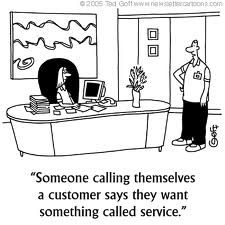
How many times have you heard a phrase like “user experience” or “customer experience” in the past decade? Quite a lot I bet–unless you live under a rock. Great companies from Starbucks to Ritz Carlton, Nordstrom’s to Apple have taken the time to be intentional about their offerings, including those small touches that are so memorable.

Paul Spiegelman is a business owner whom I follow on Twitter. He wrote for Inc. magazine over the weekend about a splendid resort experience he had recently. There were aspects of the stay where expectations were met. However, he was blown away by the special touches. Paul believes that small businesses would do well to:

1. Notice What’s Important

When my wife and I got to the check-in counter, we were assigned to our hotel room. The staffer noticed we had small children and immediately brought out a wagon full of stuffed animals and encouraged our kids to pick one. This seemingly small gesture showed the resort was paying attention to what is most important to us.

2. Be a Guide

Rather than just hand me the room key, the clerk stepped around the front desk, told me he was going to tour my family and me around the property and then escort us to our room. And that’s just what he did. Not sure how the hotel managed that with multiple people checking in at the same time, but it was impressive. Do you do this when you give clients direction?

3. Start the Morning Right

I love it when hotels offer morning coffee. But it is usually in very small cups, and you inevitably wind up going back repeatedly for more. At the (place we stayed), the coffee cups looked about the same size as a Starbucks Venti. And the coffee was free until 11 a.m. What a great way to start the day.

4. Empower the Unexpected

At breakfast one morning, we celebrated my 12-year-old nephew’s birthday. During the meal, unbeknownst to me or my family, our waiter slipped out of the hotel, went to his car, and brought back a book that he gave to my nephew as a gift. Can you imagine? What small, unexpected touches do you enable your employees to offer without having to ask permission?

5. Don’t Just Pass By

As usual, I often saw hotel employees in the hallways or outside walkways. But in addition to the standard “good morning” and pleasant smile, the workers went out of their way to purposely step aside and create a path for me, whether I was with a group or walking alone. Instead of two people mindlessly passing each other, we had a moment to interact.

6. Communicate Price Clearly

When I checked out of the hotel and asked for a bellman to help my family and me with our bags, he also brought our bill to the room so we could check it then and raise any issues or questions. I have never experienced that kind of active transparency; it was great to have someone make sure the details of the bill fit the service we paid for.

7. Leave Them With a Lasting Memory

When our car was loaded up and my family and I were ready to go, not only did we find the staffers had left two bottles of water in the car cup holders but also two logo baseball caps on the dashboard for my wife and me. We drove away with smiles on our faces.

Many of these noticeable expressions of customer care do not cost anything extra to provide, but make a huge impression. How do you show that you care about what’s most important to your customers? Are you the type who tells a customer what needs doing, or do you take the time to show? How do you go “above and beyond?” Do your customers feel respected by your actions? Have someone in your organization (as senior a level as possible is ideal) take the time to explain billing and offer to answer questions for customers. What memories would you like to build in the minds of your customers?

If you will think through these questions and best practices, you will win the hearts of your customers.


Resilient Leadership Anticipates Challenge

Leadership is full of challenges. It’s not so much whether problems will crop up, but how the leader responds. The ability to push through and come out on top is a hallmark of a resilient leader. Claudio Morelli, Superintendent/CEO of the Burnaby School District in British Columbia, thinks the ability to maintain resiliency is defined by elasticity, bend, stretch and not “breaking” during challenging situations:

All organizations encounter challenges, issues and difficulties everyday including financial shortfalls, downsizing, increased workloads, and succession issues. These challenges force the organization to turn inward and look at itself and its effectiveness. It is a time to regroup and assess where the organization stands.

If the organization embeds and nurtures a culture based on mutual trust and where all members of the organization strive to be trustworthy and treat one another with respect and caring, then you have a solid foundation to deal with the challenges and issues you face. But where do you begin? It begins with a focus on people and building/enhancing positive relationships.

Most people want to be part of the solution. They would like to have a sense that their ideas are heard, not necessarily accepted, but considered with some action taken. They want to be part of the team, participating, engaging and solving some of the challenges.

Inclusive leadership involves followers and teams. It engages the hearts, minds, and wills so that resiliency is imparted into the work group. 

Morelli’s 6 Steps to Lead When Facing Challenges

  • Make personal connections
  • Build important relationships
  • Interact face to face when possible
  • Be open, transparent and authentic
  • Model integrity with the right intent
  • Act on feedback and deliver results

When a leader takes the time to connect on a personal basis with followers, it demonstrates care and concern in something more than the task at hand. The investment of time in getting to know others pays off in multiple ways, not the least of which is learning about talents and interests that may lie beneath the surface. In the realm of human resources, the term “high potential” is used to identify those who strategically merit the attention of an organization’s leaders. Talent management is not the only reason to build strategic relationships…clients, key vendors, referral partners all are worth the effort to go deeper, beyond superficial workplace conversations.

The types and frequency of interactions are important in preparing a support structure to succeed in the face of challenge. Whenever possible, open up to those with whom you are working to build strategic relationships. Become more vulnerable, let them know what concerns you have, admit when you don’t have a solution and elicit the help of others.

Getting into the habit of acting with complete integrity is helpful in setting a good example, establishing an expectation, and creating a culture of trust. When others within the organization (or strategic relationships outside it) offer constructive input, be gracious. Listen, then act on what has been shared and communicate back the outcome(s) of implementing the advised course of action.

These leadership practices will enable your organization to withstand challenges through better collaboration and increased resiliency.

Lead Me – Don’t Manage Me!


“People don’t want to be managed. They want to be led. Whoever heard of a world manager? World leader, yes. Educational leader. Political leader. Religious leader. Community leader. Labor leader. Business leader. They lead. They don’t manage. The carrot always wins over the stick. Ask your horse. You can lead your horse to water but you can’t manage him to drink. If you want to manage somebody, manage yourself. Do that well and you’ll be read to stop managing. And start leading.”

-Printed by United Technologies Corporation in the Wall Street Journal

One of the most heated conversations we had in the MBA program at Elon (ranked #1 part-time program in the USA) was over the value of management versus leadership. One of our courses was in organizational leadership and many of the younger students did not enjoy the finesse and nuances of the subject matter. They wanted to stay in the realm of concrete, numbers driven topics wherein there is a clear cut “right” answer. Leadership, for people who have not held positions with substantial responsibility, is challenging to describe, pursue, evaluate, and articulate. Management, on the other hand, was easier for the cohort to articulate in terms of metrics and definitions that met with consensus.

Whether in class or on the job, very few people want to be managed per se, they would prefer to be led. Managing is a process better applied to resources rather than individual people. Even in our home lives, when we are trying to get our children to do the right thing, it is incumbent upon us as parents to inspire them to make good choices. Inspiration is one of the key results of leadership.

Cynthia Stewart, writing for the Lead Change Group’s website last week, made some keen observations about the dichotomy between management and leadership:

“One specific example of what I am talking about comes to mind that illustrates this perfectly.  In fact, I was speaking with a President of a company today and she mentioned the same example.  Most of us have been part of a United Way campaign.  In the early days, these campaigns were delegated to management to run.  Typically management would take the tact of talking to their employees about the importance of being a good citizen and helping to fund helping agencies so their patrons could have a hand up (effectively trying not to appear to strong arm you into giving so that the company goals could be met.)

Then, one year things changed.  The leaders asked for employee volunteers to lead the campaigns. Everyone couldn’t wait to show up to the next new event, and attendance and giving doubled and tripled.  You saw people showing their true talents, coming alive, doing things you had no idea they could do.  The fun quotient spiked, the giving exceeded goals, employee morale improved, and the new office stories were accompanied with more laughter.   Hmmm – no management in the picture.”

Stewart’s commentary reveals a gap in thought leadership. Many Millenials are misunderstood because Boomers think that they are too revolutionary and almost insubordinate. That’s because many in management are not leading them; they are trying to only tell them what to do. My experience with the younger generation is that they are in search of authentic leadership.

How can we individually and collectively make a commitment to leadership?