Belief, Hereticism, and Innovative Leadership


“Tribes are about faith – about belief in an idea and in a community.” -Seth Godin

Mike Henry of the Lead Change Group chose to enter the social media world by focusing on leadership. He says that he  started reading what others wrote about leadership and he tweeted and re-tweeted their posts. Guy Kawasaki, according to Henry, suggested that your own content be 10% or less of what you plugged online. 

As Henry went into the Twitterverse, he found many leadership gurus working as individuals. Consequently, he perceived there to be an opportunity to create a model that could actually move the global leadership needle through collaboration. He felt that real change would take “a movement; an army of leaders willing to address the need for a new leadership model.” Henry founded the Lead Change Group as a means of addressing the need to amass an army:

On Twitter, I could find a small army of people committed to making a difference about leadership. Sure, there are people who are more interested in promoting themselves, and there have been many who tried Twitter but couldn’t remain engaged.  But there were (and continues to be) a growing number of people sincere about addressing a global leadership problem; and one that Godin was writing about.

“So here we are. We live in a world where we have the leverage to make things happen, the desire to do work we believe in and a marketplace that is begging us to be remarkable. And yet, in the middle of these changes, we still get stuck.” -Seth Godin, Tribes

He goes on to say that the status quo and our systems and habits make us stuck. We’re stuck in a “factory” which he describes as any system that forces us to reinforce the status quo. The antidote is people who believe in what they’re doing. He calls them heretics.Pioneer

“Heretics are the new leaders. The ones who challenge the status quo, who get out in front of their tribes, who create movements.” -Seth Godin, Tribes

I don’t want to simply be a heretic. I want to encourage leadership heretics.

Lead Change would be something different; not your mama’s leadership group. We went so far as to claim the intention “instigating a leadership revolution.” We didn’t start the revolution, but many of us recognized we were all in it. So we decided to band together.

Lead Change Group is based on the ideas:

  1. Anyone can lead. Leadership is an attitude, a decision.
  2. You don’t need permission. You simply need to start.
  3. Your greatest influence comes from who you are, not what title you have.
  4. The world needs you to bring your best self and make a positive difference.
  5. Others believe in your leadership if you start with yourself.
  6. If you’re going to do something, do it with everything you have.

What Godin advocates and Henry describes resonates very deeply with me. Being heretical just for the sake of drawing attention is a misguided notion. However, taking initiative to inspire others, having the courage to pursue a dream, and embracing the perseverance requisite to see results is a kind of heresy that captures my heart!

When I describe my business model for Hippotential, I describe it as helping business owners get unstuck. This is congruent with Godin’s challenges to be remarkable and make things happen while we do that which beckons us. Every entrepreneur should feel so moved–or stop being an entrepreneur! Every intrapreneur should feel the same way:)

 

Dissimilarity Creates Innovative Thinking

How often does your organization examine ways to apply a concept from one part of the business to an entirely different component? I’d like to suggest that you do it far more often. Many innovative ideas flow from simultaneously considering two thoughts that, on the surface, seem to have little connection. For instance, what do you think of design mixed with meeting planning? Dennis Shiao, Director of Product Marketing at INXPO and author of the book “Generate Sales Leads With Virtual Events,” thinks this juxtaposition is an interesting one. After watching a 60 Minutes episode recently that featured an interview with David Kelley, founder of both IDEO and Stanford’s d school, Shiao was inspired:

Overview: Design Thinking
The design thinking process can be broken down into three components: inspiration, ideation and implementation. To quote a design thinking article co-authored by Mr. Brown:

  • Inspiration: “Think of inspiration as the problem or opportunity that motivates the search for solutions.”

  • Ideation: “Ideation as the process of generating, developing, and testing ideas.”

  • Implementation: “Implementation as the path that leads from the project stage into people’s lives.”

Corporate events

Incorporating Design Thinking into Meetings and Events

I’ve (Shiao) taken a look at the tenets and methodologies of design thinking and considered how they could be applied to meetings and events. Let’s consider some.

Attend Your Own Event (Empathy)

Meeting and event planners should take off their “planning hats” and attend one of their events solely with their “attendee hats” on. That means that you can have no part in planning the event. Go through the entire cycle of registration, travel, sessions, workshops, social events, etc. Practice further empathy by understanding how fellow attendees are experiencing the event.

Deepen (and Broaden) Your Team Roster

Design thinking introduces the notion of “multidisciplinary teams,” in which people of assorted backgrounds (and schools of thought) ideate, iterate and collaborate. You need a group that creates divergent thinking, which, according to Mr. Brown of IDEO, “is the route, not the obstacle, to innovation.” I’d recommend adding folks from Finance, HR and Engineering. 

Where No Idea is a Bad Idea
If you make an early judgment on the quality of an idea, you may have just squashed a “germ” that would develop into a breakthrough. The ideation process is critical in creating the next breakthrough event. Instead, design thinking teaches you to build upon each other’s ideas, sort of like the “yes, and..” methodology in improvisational theater. 

Meeting and Event Prototypes
Recall that part of the ideation phase is “testing ideas.” It’s an iterative process in which you deploy a prototype, collect “real user feedback,” determine what you learned, then ideate on product refinements (repeating the cycle all over again).

Let’s say you’re planning next year’s 5,000 person sales kick-off meeting and you have innovative new ideas for it. Create a prototype using 50 sales people and actually implement those ideas in a “real prototype” (event). Determine what worked, make adjustments, then plan another prototype. When the “real thing” comes around, you’ll have a much better “product.”

This type approach is both novel and holds promise for adaptation to a variety of other tasks, disciplines and situations. What dissimilar business processes can be combined in a brainstorming session to help you approach your customers, employees, or suppliers differently? What may be the outcome of such crazy thinking? Does your culture support such “frivolous” exercises, or disdain them? While the temptation would be to apply the concept only to new product development, the value is cross-functional!


Soft Skills Matter in Business – Even if Not Measurable

Throughout my career, I have had the opportunity to work alongside some brilliant co-workers and clients. Whether it has been inside a public accounting firm, or as an advisor to engineering and construction companies, I am often surrounded by folks with strong technical skills. Since my role has usually involved organizational development, strategy, or marketing and business development, I have heard time and again how “soft and fuzzy” topics such as relationships, emotional intelligence, and creativity and communication are less needful than the technical skills.

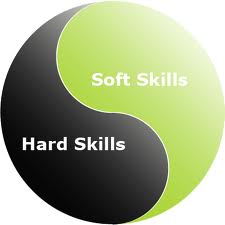
Susan Mazza, who writes a blog entitled Random Acts of Leadership, recognizes the dichotomy of “soft” versus “hard” skills in her recent post, “The Power of Soft.” She states in the post that, “the very need to distinguish “soft” vs. “hard” speaks to a paradigm that has long revered hard results as the only ones that really matter. Unless something can be quantified and measured the underlying belief is that it is somehow less valuable and hence of lesser importance.”Soft vs hard skills

Whether I have been in conversations with a CFO, a business owner, or a  VP of operations, I have heard over and again how that which cannot be measured must be insignificant and pale in priority. Mazza references a recent TED Talk by Dr. Brene’ Brown, “Leaning into Vulnerability” in which Brown shares how one of her research professors once stated, “If you cannot measure it, it doesn’t exist.” Mazza observes that many with advanced degrees subscribe to a scientific framework that assumes “measurable” is the only test for “real!”

Dr. Brown’s talk about vulnerability addressed the effort to view “soft” subjects with “hard” data. New insights have prevailed that challenge the long-held distinction within the business world of the value of each category of skills. Mazza’s view of the new awareness is that, “in our relentless pursuit to collect and analyze data, we all too often ignore the most important measure of all – our senses!”

The behavior we see and emotions we feel, according to Mazza, are the source of the most powerful tool we have as leaders and mangers – our ability to observe. She observes the following:

You have probably heard the phrase, “the tension was so thick you could cut it with a knife.” Can’t you feel that tension? How much productive work gets done when that kind of tension is present? Yet we often grind through what we see and feel through simple observation, knowing both the experience and the result are going to be less than satisfying.

Would having a mood Geiger Counter to assign the tension a number really make any difference?

By simply observing the mood and the impact it is having on your ability to fulfill your commitments, you are able to take action to make a difference in any moment. How to take that action is, of course, another subject.

The point here is the real power of soft comes from our innate ability to observe. So perhaps it’s time to give up our attachment to measuring all things and the belief that, “If you can’t measure it it doesn’t exist.”  Why not start  learning to better use the tools we have been born with – our senses – as an access to improving relationships, enhancing performance and creating great places to work?

The ability to navigate through tensions, create win-win scenarios, and build esprit de corps comes not from technical, “hard” skills, but from those soft and fuzzy assets that many C-suite executives and business owners underestimate. Think about your own organization and how greater respect for soft skills could make it a better place to work, where senses are valued equally with data and relationships that build goodwill are put on a pedestal.


Entrepreneurial Field of Dreams

Many communities across the United States are scrambling to come up with an agenda for entrepreneurship. With significant success stories in the San Francisco Bay and Boston areas, others have jumped onto a bandwagon. Each community pursuing the elusive prize is making wagers with a combination of public and private dollars to try and effect economic growth through encouraging start-ups. While the models being used are very different, the common denominator is that each effort, like a start-up itself, must determine where to focus to obtain the best trade-off of investment versus anticipated benefits.

Go For It  Start a BusinessInstead of one of the “hotbeds” of entrepreneurship, I like to look at what is working in the hinterlands. Columbia, Missouri certainly seems to fit that categorization at first blush. Mike Brooks leads REDI (Regional Economic Development, Inc.) in an effort to “promote positive economic expansion and provides increased economic opportunities in the Columbia area, assisting entrepreneurs, developing businesses, and companies relocating.”

His group sees the following as Benefits for Local Communities committed to the process:

  • Employment and Opportunity: Cities are places where people live, work, and play. Cities need opportunities for employment so citizens can afford to enjoy the metropolitan lifestyle. Harvard Business School professor Howard Stevenson defined entrepreneurship as “the pursuit of opportunity without regard to resources currently controlled.” Prosperous cities work to understand this dynamic, since entrepreneurs will establish their businesses in locales that support business growth. The jobs created by entrepreneurs not only support current citizens’ lifestyles, but they also make specific cities more attractive for future businesses to establish themselves in that location.
  • Tax Income: Communities require governance to provide a structured environment. The infrastructure of successful cities would not exist without money coming into local economies from the sale of products or services. The necessary public works and amenities that sustain a city depend on businesses, as well as resident taxes and purchases.
  • Identity and Character: Entrepreneurs help create the unique character of a community. This character enhances the sense of place and belonging that adds to the overall quality of life. Most entrepreneurs start businesses where they live, which allows companies to develop deeper connections to the community. Apple, Google, Dell, and HP started as entrepreneurial companies that were identified with, and formed a strong relationship with, their surrounding communities.

In order for these benefits to accrue to the community, an entrepreneurial ecosystem has to be built. In Raleigh, the Innovate Raleigh initiative is the rallying cry for such dedicated efforts, though many others are tackling the challenge in differing ways. The important thing is to, as Brooks recommends,

Support Entrepreneurs

  • Recognition and Shared Goals: Already-established entrepreneurs in the community can greatly help city organizations focus on effective economic development, prioritizing incentives, and planning strategies to encourage business growth. The presence of colleges or universities can also be a great channel for enticing businesses to launch or expand in a community. A diverse population of students, professors, visitors, and residents allows for more variety in business ventures.
  • Community Programs: Several communities around the nation continually find successful ways to encourage local entrepreneurs. In the 1980s, the city of Littleton, Colo., decided to focus on homegrown businesses as a community growth strategy. They established “economic gardening,” which focused on bringing sophisticated, corporate-level tools like database research, geographic information systems, search engine optimization, and social network mapping to small businesses within Littleton. This nurturing environment proved successful and serves as a model for similar communities throughout the nation.

Other best practices for supporting entrepreneurs have less to do with cool co-working spaces and meetups and more to do with helping someone who’s never run a business sort through what they will face. A proven entrepreneurship curriculum, complemented by personal mentoring of the founders by experienced start-up veterans, is so needful and should be a part of every community’s offering to all entrepreneurs they hope to serve.

How to Start Blogging As a CPA or Lawyer

Professional services firms have been very good clients for me over the years. With many firms, I am charged with improving their marketing results. One of the topics that often comes up is social media. Many billable hour professionals struggle with making the commitment to initially launch a social media presence; others with how to optimize what they have. Kevin O’Keefe, who blogs about the need for lawyers to blog, is someone I follow on Twitter. Kevin wrote a blog post some time back wherein he referenced Steve Robinson, a small business specialist for Constant Contact, whom I also follow.law firm library

O’Keefe summarizes Robinson’s top recommendations to small business bloggers, with an emphasis on how to apply the principles to a professional services firm:

  • Find your target audience. Before you set up a Twitter account or create a Facebook Business Page, research who’s participating there and ask your clients and their influencers (reporters, bloggers, association leaders) which forums hold their attention. You may find they like blogs and email as opposed to Twitter and Facebook. Once you determine where they are, follow them to their preferred destinations.
  • Focus your efforts. Identify the top two places where your audience is most active and fully engage them there as opposed to spreading yourself too thin across a variety of social media platforms. Professional services firms often want to do a little bit of everything resulting in going a mile wide and an inch deep. Following relevant sources and subjects via readers such as Google Reader or Flipboard; truly using LinkedIn; and blogging will enable professionals to build relationships and enhance their reputation. Other social media tools can follow.
  • Identify the most active participants on your target social media platforms. Then initiate conversations, respond and repost their messages, follow their feeds, comment on their blogs, and cite their blog posts on your blog. Third parties have tremendous influence over your clients and prospective clients. If you can get these third parties (bloggers, reporters, business association leaders etc) referencing and sharing what you are saying online, your stature and reputation is only going to go up. When people get your name from a referral source, they’ll Google you and see positive references by the influencers to what you have shared via social media.
  • Balance social media with other marketing efforts. Social media should be part of a balanced marketing effort that includes online and offline activities. Leverage the enhanced reputation you are establishing by going to networking events, speaking to groups, or even asking to have coffee or lunch with someone you’ve met via LinkedIn or other social media. Share your blog posts via email to relevant clients now and again to show them you are thinking of them. Social accelerates relationships and reputation, but talking with and meeting people is needed.
  • Don’t mistake silence for disengaged. A lot of social media is built around listening and responding only when it makes sense. If you aren’t getting a lot of responses to your blog posts or items you share online, don’t assume that your audience has tuned you out. Ask questions, inquire about your followers specific interests, and reach out on a one-on-one basis.
  • Position yourself as an expert resource. This is what it is all about. Individuals, businesses, and trusted advisers to your clients are looking for a reliable authority in their field. Don’t be afraid to focus on a niche area, industry area, or client issue that you truly enjoy working in or on. What may have taken 15 years or more, if ever, to establish a strong word of mouth reputation in a niche has been greatly accelerated via social media.

All of this makes such great sense that I chose to excerpt it almost verbatim from an O’Keefe blog post. Hope it’s helpful for you!