JTECH Your Way to a True Competitive Advantage

First things first: what/who is JTECH? It’s the former name of a restaurant paging company that eventually became a subsidiary of MICROS Systems. It was founded by a couple of guys from Florida who owned a great restaurant that had too many “walkaways”–people who were not willing to endure the wait for a table seating. In the old days (19990s, mind you!), patrons of their restaurant (like diners in most other establishments) used to have to wait by the hostess stand for an indeterminate amount of time until a table became available. By providing the electronic pager, these guys gave their patrons the freedom–and most importantly, peace of mind–to leave the front door area, relax, and look forward to a sumptuous meal.
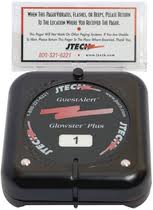
But, what of the “true competitive advantage?” To even throw the phrase out suggests that false competitive advantages exist! Don’t they? You be the judge. How many businesses do you know of where price is the main negotiating point in the sales cycle? Unfortunately, way too many. You see, when price becomes the only distinction between a business and its competition, then it is not long before that business enters into a death spiral of decline. At the point that price is all that separates one business offering from another, the battle for customers is lost.

What, then, is a legitimate means of creating a distinctive in the marketplace? Many will argue that Service separates them from others. Alternately, Quality (products) or Experience (Services) are touted as key concepts that persuade one to buy from us versus them. Yet, I have seen over and over (and over !) where these are just words in many situations, without anything to back up the claim–OR anything that is being said that the competition cannot also say!

The original owners of JTECH ended up leasing their restaurant to others because they had found a much better opportunity. It was a great opportunity because and only because they had found a way to monetize the value they had created for restaurants and their customers. True competitive advantage is objective, quantifiable, uniquely claimed, and not a cliche’. (With due thanks to Jaynie L. Smith.)

What was the statement that JTECH developed to carve out such a market -leading position? Of the 50 largest chains who use paging, 100 percent use JTECH! Obviously, they were not able to make this claim Day One. It was something that was earned, one customer at a time.  What absolutely amazes is the recurring bad habit in many companies (and agencies) of developing marketing messages without customer input. Existing customers will tell you why they selected you, what you do better than the competition, and what it would take for someone else to snatch the business away. If you don’t know what your customers would say for each of these categories, you are tuned out. If tuned out, you have no strong competitive advantage positioning!


Cultural Due Diligence Breeds Success(ion)

In a blog post (“The Human Side of Due Diligence”) of October 2011, Michael Bittle talks about the challenge of sizing up a company’s culture in the midst of a private equity transaction. Even if your team is savvy in its financial analysis, interviews customers and executives, and puts together airtight LOIs, he argues, you can miss the important undercurrents that are culture.  Too many companies are dressed up for a suitor, only to prove to look to good to be true.

A recurring drama plays out wherein performance swoons, key managers leave, and morale sinks as well. The investors scratch their heads and wonder what has happened. Enter the concept of the informal culture–what values, unspoken agreements, collaborative tendencies, etc existed prior to the transaction. Bittle argues that, in the heat of getting a deal done, that the quant jockeys often have neither the time nor the training to be extra discerning about these nuances than can be a company’s undoing.

In the Research Triangle Park, we are developing a national reputation for angel or venture-backed technology and life science start-ups that all aspire to make their commercialized product/service a household name. Along the way, they receive outside investment and some matriculate to a successful revenue path that ultimately leads to a liquidity event. Very few take an approach wherein the founders want to stay with the company as it matures. This can be good and bad. In the cases where the founder brought an academic mindset to enterprise, it is often better that professional management run the company longer term.  On the positive side, emotional bonds are built between employees 1, 2, 3 …and #50, #100, etc. These bonds create stability, a sense of community that can be disrupted by the introduction of outside ownership/management.

George Bradt, in an article in Forbes on February 8, “Corporate Culture: The Only Truly Sustainable Competitive Advantage,” takes the position that competitors, given time and money, can duplicate almost anything except culture. “In sustainable, winning cultures, behaviors (the way we do things here) are inextricably linked to relationships, informed by attitudes, built on a rock-solid base of values, and completely appropriate for the environment in which the organization chooses to operate.”

Organizational development principles can be brought to bear in the due diligence process if the consultant focuses on soft issues rather than concrete, easily measured ones. Whether an EQ assessment is administered to managers, or some type of DISC or MBTI with their direct reports, it can be helpful to understand who is the backbone of the company and how they may behave/make decisions. Transparency can drive smooth transitions if the former owners/executive team is willing to give the private equity/acquiring company access to employees earlier in the process. If people are made aware of the potential transaction and given an opportunity to design their own future, they are more likely to be/remain engaged in positive behaviors and outcomes.

Eventually, the first generation leadership will have to give way to new leaders, even if there is no transaction. The succession is more likely to be successful if the culture is aligned with the company direction through thoughtful interaction with employees and casting vision for how their contributions will continue to be needed. Such best practices are more likely to reinforce trust and a desire to build something great together.