Harness or Release the Intrapreneur Troublemaker?

Recently, the World Economic Forum convened in Davos for its annual meeting. What, one may ask, does such a high brow event have to do with intrapreneurship and innovation in business? Actually, one of the panel discussions at the Forum was on social intrapreneurship. The definition that was being used seemed to focus on the social implications of the issue as it relates to those change makers who offer creative solutions and drive growth. Gib Bulloch, the Executive Director for the Accenture Development Partnership, writing for the Huffington Post last week, noted that there exists no job title for the social intrapreneur. Admittedly, he argued, no one leaves college or university to become one and the  role lacks a clearly defined job description. Companies that embrace the power of these intrapraneurs to think differently and innovate, Bulloch said, have significant opportunities to leverage their passion and benefit the business.

Bulloch recalls Vodafone’s M-PESA mobile banking business as a prime example of the benefit of empowering intrapreneurs:

The idea of using mobile phones as bank accounts for the un-banked in Kenya was not born in the corporate boardroom. It was the brain child of a middle manager in the marketing department, Nick Hughes, who came up with the concept and brought it to the attention of those who could advance its development, both inside and outside the company. Seven years into the program, a thriving M-PESA business now delivers socio-economic benefits for Kenya and business benefits for Vodafone.

Therein lies the key to social intrapreneurship. It is not a corporate social responsibility (CSR) program. It is a business growth initiative that tears down barriers and embraces the passionate ideals and innovation of the millennial generation now flooding into the workplace. It is a concept that captures the zeitgeist of young people who care less about making a fortune on Wall Street and more about making a difference on Main Street.Intrapreneurman

For organizations that aspire to leverage the rare win-win of business benefit with social good in 2013, four key takeaways have emerged as guideposts for developing an effective social intrapreneurship program:

• The role of leadership is key: In the early stages of an innovation program, leadership must provide the air cover required to protect bottom-up ideas. As the best ideas mature, they must be promoted within the organization and embraced from the top down.

• Harness the troublemaker: Social intrapreneurs are at their core different from their peers. They march to a different drum beat and their passions fuel both their personal and work lives. Having a culture that both nurtures the change maker’s innovative spirit but also harnesses the troublemaker’s enthusiasm and energy to break molds and achieve where others have come up short will return significant rewards.

• Realize the retention value: For the social intrapreneur, making a difference is often equal to making money. For organizations that embrace the value of providing “bottom up” channels for creative business solutions that provide social good, the long term benefits for retaining your best innovators cannot be understated. Simply put, for the millennial generation, making a difference matters.

• Base decisions on the Business Case: Even for the most passionate social intrapreneurs, the numbers still matter. Innovations that pull on the heart strings as opposed to the levers of business value are unlikely to be sustainable or scalable in the long run

How do you see these guidelines at play inside your own organization? Is top leadership committed to openly supporting new ideas? Are those who see the world differently perceived as liabilities or assets? What are you doing to keep these change agents engaged and motivated? Does your group operate on emotional or sound business foundations? Harness the power of the intrapreneur!


A Matrix of Insights Into Innovation

Have you ever listened to a “friend of a friend of a friend” story and wondered why the storyteller was recounting something? Surely, you thought, there must be something substantial lost in translation–kinda like the old “telephone game” in which you are in a circle with others, share a statement with someone to your left, who does likewise around the circle only to have a totally different statement return to you. Well, I hope this blog post is nothing like that! However, I would like to share a book review by a friend of mine, Jeffrey Phillips. (Do the math–I have not read the book, do not know the author or his content except vicariously, but I do know Jeffrey and respect his commentary on a number of matters.)

Phillips is a prolific writer, speaker, and practitioner of innovation. As often happens with people who have created a following, he has been asked on numerous occasions to review books written by others having to do with his favorite professional subject–innovation. A couple weeks ago, he wrote a review of Creative Strategy, A Guide for Innovation, written by William Duggan, describing the book as follows: “a step-by-step guide to help individuals and organizations put Strategic Intuition to work for their own innovations.” It is to be noted that Duggan previously wrote Strategic Intuition. Innovation, as defined by Duggan, encompasses products, business models, entrepreneurship, and social enterprises. Phillips finds the book to be “a real conundrum, very specific in recommending (a) three step process (detailed below) and refuting or denigrating many innovation and creativity techniques, while at the same time the book can be annoyingly vague or indeterminate.” So, let me save you the experience of reading the entire book and just hone in on the three step process: rapid appraisal, the “what-works” scan and creative combinations. To quote Phillips:

Rapid appraisal is about breaking the problem into “chunks” or more discrete elements, often known as decomposition.  This simply makes a larger problem an association of smaller problems or challenges.  The What Works scan entails looking across industries, geography and time to see if anyone, anywhere has created a solution to any of the smaller “chunks”.  If so, can we adopt or modify the solution elsewhere to the problem at hand?  The third stepcreative combinations, asks us to look for creative solutions across what Duggan calls the Insight Matrix.  The Insight Matrix is a simple X-Y chart:  problem “chunks” down the vertical axis, potential solutions on the horizontal axis and interesting combinations at the intersections.

While Duggan may be the first to design his “Insight Matrix”, none of these tools will be new to innovators.  The concept of breaking challenges into smaller components (known as decomposition) is well-known to innovators and one that many innovation methodologies practice.  It is often easier to break a challenge or need into smaller components and build a solution up, rather than address the entire challenge at once.  

Creativity wordleLikewise, what Duggan calls the “what-works” scan is not new either.  There is an entire school of thought within innovation that argues that every problem has already been solved, it is simply our job to discover how and where the solution exists.  Bio-mimicry, for example, stipulates that nature has already solved many problems that we encounter, and we can learn from, adapt and adopt those solutions.  

Finally, Duggan’s creative combination approach simply suggests that we adopt the “best” solution for each chuck from the best alternative solution from the what-works scan, and create a total solution by putting these discrete solutions back together.  Again, nothing new here.  Good innovators know that most good ideas happen at the intersection of new technologies and markets. 

In the final analysis, the Insight Matrix is the best thought of the book–probably worth checking out, even if many other concepts take longer to develop and may not be innovative themselves.


Know the Customer Before Business Planning

Previously, I have referenced the column from Inc.com on “Herding Gazelles,” written by Karl Stark & Bill Stewart. These guys have a consultancy that works with businesses on strategy as it relates to attracting investment. Their contributions to Inc are well thought out and I enjoyed this morning’s edition:

We have been working with an early-stage enterprise tech company to help them get their product to market. We recently gathered to watch their first customer installation. They were naively fearless–they knew things would go wrong, but they didn’t know what or how severe the problems would be.

No one, however, expected the install to go as badly as it did. If there was a feature that could be broken, it was. If there was a process that could be challenged by the new technology, it was. If there was a remote possibility that some network setting would cause chaos, it did.

All the testing they did in advance didn’t prepare them for “real” users. The tech team was at first horrified by the volume and severity of the challenges they experienced. But then something amazing happened. They showed us exactly why we are excited about their potential.

They took a deep breath, stopped trying to gloss over the challenges, and instead embraced their flaws. They encouraged users to try to break things. They feverishly took notes as they learned what they needed to do better.Customer insight wordle

The customer wasn’t scared off by the bugs because our client had prepared them for possible issues. The team was honest about where the problems were, but more importantly, they showed the customer their resolve to learn everything that they could to develop a great product. The customer’s attitude actually shifted from tolerance to excitement as they realized the system was going to be refined beyond just fixing flaws and that they were going to be a part of designing a system that they would love to use.

The tech company accepted that they didn’t know it all and eagerly solicited feedback from the customer. The experience gave them the best free product development input they could ever expect.

We thought to our own client experiences, and the experiences our other clients have with their customers. If we can all listen to customers as openly as this tech start-up did, we will not only build great products and services, but we will forge the sort of lasting relationships that most companies seek.

When developing new products and services, it’s good to trust your intuition and your internal expertise–to a point. But when an opportunity to learn from a real live customer presents itself, you need to be all ears. You can’t possibly know it all if you don’t recognize the wisdom of others.

What is recommended here echoes what I am sharing with entrepreneurs on a recurring basis: until you fully understand the needs of your (target) customer, you are fooling yourself as to the viability of your business model. Taking the time to first identify target market segments, then messaging appropriate to each, followed by testing your proof of concept in an effort to revise your offerings is Business 101.

We are passionate about the need to understand how your target buyer thinks, what is important to them, and how you can produce something that they perceive as highly valuable. Asking is a great start! Slowing down from product or service development, let alone ongoing business operations, and asking yourself tough questions requires discipline and commitment. Kudos to those who are strategic enough to realize the potential compound payback on the investment!


‘Treps Funded Through Future Earnings

Previously, I blogged about Ami Kassar’s views on the state of small-business lending. Kassar, the founder of Multifunding, feels that we need to find a way to “break through the gridlock in order to open up access to reasonably priced capital for small-business owners and entrepreneurs.” He is a big advocate for alternative lending approaches.

multifundingIn a newer post from last week, Multifunding’s founder goes so far as to recommend the creation of new financial products with entrepreneur and small business needs front of mind. Here’s his concept: change the rules so that “loans” would have a component that allows lender to be repaid through the entrepreneur’s future earnings. Then, he takes it a step further to recommend that the earnings pay back continue regardless of where the entrepreneur goes in terms of employment, running a company, or starting another one. In his own blog, Kassar elaborates that the payments would need to continue until the obligation to the lender was satisfied in full. Quotes from the NY Times blog post last week appear below:

While I am sure that many will consider this idea controversial, it’s also fairly simple. If you are an entrepreneur looking for a loan, and you have enough confidence in your business or idea, you should be willing to pledge to pay a percentage of your future earnings — regardless of whether your current idea succeeds — until you have fulfilled your obligation. This way, the lender is betting not just on a particular company or idea but on a person, one who is willing to put his or her neck on the line.

Perhaps this financing could be offered by Federal Deposit Insurance Corporation-regulated banks that could leverage their low cost of capital to help small businesses. Of course, this would require federal bank regulators to think outside of the box, but a form of this type of financing exists. It’s called revenue-based financing, and it involves a lender’s making a loan to a company in exchange for a future piece of the company’s revenue. In this case, the financing is tied to the success of a specific company, and not to the future of the entrepreneur. And it comes with expensive rates.

The market clearly needs new forms of collateral in order to keep rates reasonable and in check. In today’s environment, many small-business owners are forced to use their homes as collateral — but with so many homes underwater, many entrepreneurs do not even have that option. The upshot is that this “collateral crisis” either stymies innovation or forces the entrepreneur to obtain capital from an alternative source at very high interest rates.

In the new model I am proposing, because the lender is assured of a piece of the entrepreneur’s future earnings regardless of whether the current business succeeds, the lender should be willing to be more flexible with terms and rates. And finally, the mechanisms to enforce these loans do exist. If we can track down deadbeat fathers for a piece of their future earnings, we should be able to do so with entrepreneurs.

Like the blog author, I wonder if entrepreneurs would be interested in such a loan. To offer up future earnings as a form of collateral seems drastic–unless you really believe that you have some great ideas in you. The upside, as Kassar presents his case, is an interest rate that is lower, though the term would likely be longer. Lenders, on the other hand, seem to be better protected against entrepreneurs who jump ship, but may have to wait longer for repayment. What are your thoughts about the approach?


Why Your Company Struggles to Innovate


Jeffrey Phillips, a friend of mine in Raleigh, North Carolina is a savvy adviser to companies on the topic of innovation. In a blog post today at Innovation Excellence, Phillips shares his top recommendations to companies who want to differentiate themselves from the competition. Excerpts from the blog post are cited below to provide a framework for you to consider with regards to your own situation. {Commentary in brackets represent my thoughts/contribution.)

The strange concept to me is that many executives want more innovation, but they don’t understand the investments, or perhaps recoil from the costs. Many mid and senior level managers want to do more innovation, for growth in their own careers, more differentiation of products and services, and simply to expand their horizons. But they don’t have any indications that if they do more innovation that the innovations will be favorably received. So two groups, that talk frequently to each other, have deep desires for more innovation, and both are waiting for the others to make the first move.

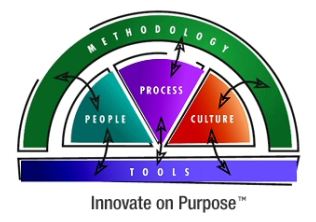
When everyone wants something and yet no one feels free to act, it makes sense to unpack the barriers and explore them.Innovate on Purpose

First Barrier – Immediate Results

While executives want innovation, to help differentiate the company or grow new revenues and profits, they also don’t want to risk distraction from existing revenues and quarterly promises. Potential revenue or differentiation is just never as interesting as near term results. To counteract this issue, we need to establish priorities and re-balance investments and commitments, or reduce the stated demand for innovation. 

{What are the priorities at your company? Are investments and commitments aligned with the need to make an impression in the short-term, or do they need to be matched with innovation initiatives?}

Second Barrier – Clear Goals

3M’s stated goal of driving 30% of revenues from products released in the last 3 years is a good example. It’s clearly stated, measurable and stakes out an important need for a continual stream of new products. Yes, it can be jockeyed, by claiming that an existing product is a “new product” because it has new features. But which argument would you rather have?  The debate about how “new” a substantial portion of your portfolio is, or why you are losing market share?

{Innovation can only be understood to be successful when “success” is well-defined and embraced by all.}

Third barrier – Time and Resource

After years of lean, Six Sigma, right sizing, downsizing and outsourcing, most people are working more than ever, and don’t have much slack time to take on innovation projects, especially when those projects may require new tools or new ways of thinking. If we can’t turn a project quickly with minimal risk and minimal investment, we probably won’t do it at all. 

{What will your “ask” be to upper management to allocate necessary time and resources? Do you have data that supports innovation as a good return on investment? How much time do you think should be invested on innovation on a pro rata basis?}

Fourth barrier – Internal Focus

If your firm can’t afford the internal resources and people necessary to innovate and sustain quarterly results, you can find incremental services for innovation from third parties, whether this is “open” innovation or something you choose to outsource. I’d argue that you should outsource the management and extension of existing products and services and in-source innovation of new products and services, because that’s where the growth lies.

{Too many companies have dysfunctional research and development teams that get bogged down in “skunk works” and function in a silo-like environment. By creating and pursuing horizontal work processes–whether they are interdepartmental or involving external strategic alliances, your organization can overcome the navel gazing so typical in larger, bureaucratic companies.}