Changes in Marketing You Need to Know For 2013

In advising my clients on marketing and related business development issues, it is often difficult to get them focused on integrated marketing approaches. Many have been sold marketing services by an agency that is not necessarily coordinated with either the overall business strategy or other marketing strategies and tactics. With the advent of a new year come a series of questions regarding the future and direction of marketing given the increased importance of the internet. Recently, Uri Bar-Joseph, director of marketing at Optify, in a blog post on the Marketing Profs website, addressed what his firm sees as trends in marketing for 2013. His opinions are offered below:

Digital-Marketing-Picture

1. Digital marketing will continue to grow

It’s pretty obvious to just about everyone that digital marketing is becoming the main channel for demand generation. But despite the adoption levels of digital marketing, there’s still a lot more upside. In 2013, digital marketing will continue to see huge adoption rates as businesses of all sizes implement all manner of digital marketing tactics.

2. Digital marketing services will surge

Subsequent to digital marketing’s mass adoption, adoptions, digital marketing services will spike. Consultants, agencies, and new services will surge to support new users and meet their demand for assistance.

3. Content creation services and software will proliferate

Content marketing is becoming the core of just about every marketing initiative for B2B marketing as well as B2C. In 2013, we will see a host of software and services solutions for content creation and syndication emerge as companies try to use content for more demand- and lead-generation results.

4. Integrated marketing will gain popularity

After new channels stabilize as standalone, consistent lead-gen options (social media, content marketing) and new channels and tactics emerge with enormous promise (mobile, re-targeting), 2013 will become the year of integrated marketing campaigns. Marketers will try to combine tactics to make use of the compounded effect of multiple channels’ working in unison. The market will react as more solutions will come to offer the ability to manage and measure integrated campaigns in one place, marking a decline in the adoption of one-dimensional solutions.

5. Direct mail will make a return

While digital marketing rises, sophisticated marketers will recognize the potential of direct mail coupled with an online connection to break through the noise. Solutions and services that offer integrated—offline and online—approaches will emerge and gain traction as a result of being affordable and highly measurable.

6. Big Data applications will emerge

Big Data has been the hot topic in the media for the last 18 months, and big companies such as HP, IBM, Microsoft, and other software conglomerates have been developing solutions to tackle Big Data. In 2013, we will see solutions emerge and adopted that offer big data applications for day-to-day marketing campaigns.

7. The immeasurable will become measurable

In 2012, we noticed a lot of talk about measurement and the ability to justify marketing efforts. As ROI becomes essential to the broad adoption of any marketing tactic, in 2013 solutions and services will find ways to measure previously immeasurable tactics and evaluate their contribution to the bottom line.

8. PPC will decline as budgets move to other paid solutions

In 2012 we’ve seen the first signs of decline in PPC usage for B2B companies. In the next year, more budgets will move away from PPC to new and more affordable channels and tactics.

9. Marketing spend on software will increase

As more software and infrastructure for marketing is required, Marketing’s budget will match IT’s.

10. Sales responsibilities will move to Marketing

The expansion of lead generation responsibilities in B2B marketing is resulting in the moving of more sales-related tasks to Marketing. In 2013 we will see marketing teams take over more sales tasks, such as lead qualification, inside sales team management, and sales operations.

How about you and your company? As you think about your strategy for business growth for 2013, which of these trends have you thought about? For me, the top 3 things I want my clients to focus on are integrated marketing, metrics, and a digital marketing (including content) strategy.


 

What Matrix Guides the Artisan Entrepreneur?

Recently, I read the story of a graduate student in her first arts entrepreneurship course. She recounts that the first assignment her class had to complete was to analyze The Matrix with a view towards entrepreneurship. The instructor wanted the students to analyze a.) four key components that converged, and b.) the value created as a result of the convergence. The four components were:

  1. factors within our control,
  2. ones outside our control,
  3. inspiration, and
  4. time.

MatrixUnderstand that the paradigm from which the class was operating had far less to do with the thought of a start-up business venture than the combination of behaviors, attributes, qualities, propensities, and actions requisite to think entrepreneurially. Prior to the assignment, the students had come to a place of agreement that key qualities of the mindset would likely include innovation, discipline, vision, and leadership.

In yesterday’s blog post, we studied the comparative mindset of artisan versus opportunist entrepreneurs. Clearly, the ability to recognize an opportunity is critical to either group to attain optimal revenues. In like manner, organizational skills with regards to people, tasks and ideas are important to possess or acquire. Planning, which is envisioned differently in the mind of some, is a discipline that helps the entrepreneur anticipate and become prepared. Thinking of both conventional and unconventional ways to fund the pursuit of the idea is also generally agreed to be important.

As you look at the paradigm, mindset, skills, and habits listed above, a system emerges. Yet, the system relies on the artisan entrepreneur’s ability to observe a competency model that is unlike any at work in corporate HR circles. This competency model values:

  • intellectual and personal entrepreneurial skills,
  • basic professional skills, and 
  • a general understanding of arts culture, policy, and management.

Students in the class mentioned above pursued their respective competency models through a series of exercises administered by the professor. They were encouraged to develop a vision, produce a comprehensive feasibility plan, write a series of process papers, and prepare “pitches” of their proposed ventures to mock audiences of various forms. The assignments became more challenging when the students found out that they had to work interdependently with one another for the work products. For the average participant, this was an unwelcome wrinkle, as most artisans enjoy their individualism. This is not unlike other types of entrepreneurs, but is a personality trait that we documented in the artisan versus opportunist dichotomy that becomes significant when you think about the components the students had to analyze in their Matrix project.

In order to address factors outside one’s control, there has to be a letting go that is ever so hard for an entrepreneur. Without admitting defeat, one must admit the need for help. Realizing that help may be needed forces the individual to think in terms of team development–not just development, but additional sub-processes like recruiting, training, nurturing, and vision casting. If you’ve had no prior experience doing these types of things, they can become your undoing in an enterprise.

The factors that appear to be within one’s control seem not to present a problem. Yet, as we think about these factors, we realize that we must be delusional to honestly think that, as complexity arrives on the scene in terms of additional team members, the external demands upon the enterprise, and the need to divest ourselves of tasks that don’t match out motivated ability, even the internal environment becomes dicey.

Inspiration seems to come naturally to the creative mind. Finding a way to balance newness and executing on prior thoughts is significant, because being able to do so can determine ultimate success versus floundering. Time is an asset that gets swallowed up despite out best intentions. As we build teams, boards, advisory experts, etc, we are able to free up time to focus on the truly important. 

Value has been created, but not without some proverbial “blood, sweat, and tears.” Please don’t be dismayed. You can do this–but you need to embrace a competency model that guides the members selected for your team to collectively represent the diversity you will need to pursue your vision!

Iterate Instead of Analyze for Innovation Success

Intrapreneurship is needed in large companies.  Commonly, these companies tend to have plenty of data that has been collected to document market dynamics. Whether it is corporate strategy or corporate development, larger businesses have departments that constantly evaluate opportunities for growth–be they organic or inorganic.  Encouraging innovation and breakthroughs can be hard. The main reason big business becomes stagnant is that the mindset required for disruptive advances is very different than the risk management and mitigation approach of many market leaders.

Kevin McFarthing, who leads the Innovation Fixer consulting firm, suggests in a recent blog that “These companies also have a very rational approach to the assessment of investment opportunities. Of course, they find that the expenditure line has a much higher level of confidence than either the timeline or the scale of revenue. For that reason large companies want to increase the level of confidence in the income stream. Various techniques are used; for example, many consumer goods companies will undertake a fairly standard sequential program of qualitative and quantitative market research. This will relate to a database of similar products launched in the past. So, as long as you do the market research correctly, you can reduce your uncertainty and proceed.”

As is pointed out above, the traditional analytical tools used to evaluate comparable opportunities are somewhat like the comparables sought out when buying a new residence: intended to estimate what already exists instead of what has never been built. Relying on historical information rather than anticipating future demand is like driving down the road only looking in the rear view mirror!

On the opposite end of the spectrum, small businesses being run by visionary entrepreneurs tend to rely far less on the projection techniques of their larger counterparts. These start-ups rely on gut instinct, passion, and drive rather than systems. Instead of evaluating a market based on dozens of data points, the executive teams of thriving young businesses gather market information, develop a proof of concept, test it on a limited basis, revise the offering, and are nimble in their adjustments to feedback so that they can quickly bring something new to the marketplace. 

leap of faith

Large companies find what is done in the entrepreneurial space to be akin to a leap of faith. It’s very hard for a corporate type to operate from a place of judgment rather than logic. The willingness to produce something that is not perfect is much less in an organization with extensive quality initiatives.  The whole concept of try…try…try again that is the mantra of an entrepreneur is eschewed in favor of taking calculated risks. While it sounds stereotypical, it is not at all uncommon for the large company approach to be one that avoids undertaking projects without tons of documentation and extensive project and/or product planning down to minute details.  This predictable approach has severe shortcomings in an environment where responsiveness can make the difference between producing an offering that resonates versus one that is a “me too” alternative.

Instead of performing market and buyer research that resembles a canned, rote methodology, what is needed is flexibility, customization, and the ability to constantly iterate. Instead of sequence and a step-wise stage gate process, truly innovative organizations are far more willing to engage in trial and error.

McFarthing says that many large organizations lack the right mindset to explore potential. Changes he advocates that they make to become more innovative include: 

–   Rely much more on judgment to move projects ahead rapidly;

–   Don’t apply the same criteria to incremental and radical innovation;

–   Use a fast and iterative sequence of prototyping and market testing to learn and reduce uncertainty;

–   Go to market as soon as you can, don’t wait for all the facts.

Follow these suggestions and you will change your culture to become more intrapreneurial!


Traffic Schmaffic – Get Conversions

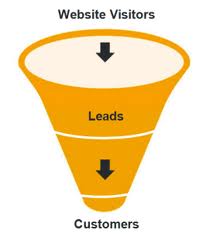
In the course of advising startups (and some existing clients) on how to gain traction with their business proposition, I ultimately have a conversation about target buyers. Notice the word “buyer” –it is a different word altogether than “shopper” and “viewer.” When we obsess on trying to get web traffic, foot traffic, and the like–but not on conversion–we have lost sight of what is ultimately most important.

If given the choice between 100 website visitors of whom 20 become buyers or 1000 of whom only 15 become buyers, most would actually choose the 1000. Their reasoning would likely be that 1000 impressions is better than 100 and that they hope that the other 985 could be targeted for future conversion or word of mouth marketing. Yet, your business would have 5 fewer sales and a significantly lower conversion rate (1.5% vs 20%). Better, we would argue, to have a high conversion rate, more revenues, enhanced cash flow, and the opportunity to build relationships with five more people.

So much effort is wasted among entrepreneurs to get traffic–and not just in an online sense–that very little is left to think through conversions. Conversions are a better predictor of long term success than impressions. Get this thought into your psyche. It can make the absolute difference between success an failure.

Matthew Toren, founder of Young Entrepreneur, offers the following 5 tips for lead nurturing:

1. Be a problem solver. You have to admit that at least part of business success has to do with the timeliness of your products or services. You must answer people’s needs. The key is settling into a business that has problems you really love to solve, with customers whose pressing needs you are very good at addressing. When you’re able to identify your niche, you don’t only go out there to earn, you have a unique passion and an offering that suits the needs of those people.

2. Get into your customers’ psyche. People buy not only because they need things, they often buy to satisfy something deeper in them. It’s often the feeling they associate with a product that they finally make the decision to buy. Everybody needs a pair of shoes, but not just any shoes can satisfy that need. This is when branding, reputation and customer service come into play. In fact, this is why there is marketing in the first place. Get into what excites and interests your target market. This is the only way you can tailor-fit your campaign to the people who would not think twice of paying for what you have to offer.

3. Where are your customers? In online marketing, determining how your market interacts with the Internet is very important. It gives you leads to “where” they are online. Online behavior can point you to what sites they frequent, the social-media networks they prefer, the news they’re more likely to read and so on. If you know where they are, you can be sure to focus on places you need to have a commanding presence. This assures you of a steady stream of traffic of ready-to-pay customers, and it prevents you from effectively barking up the wrong tree. We all know how costly and time consuming that can be.

4. Do you really know them? To really pinpoint who your target customer is, you’ll want to dig in deep… find out how they tick, if you will. The key is to learn about them, even change with them over time. So basically, this means you can’t just buy one customer list and operate off that in perpetuity. You’ll need to continuously find out about your target audience. Are they reading things you should be reading? Do they shop at stores you’ve never heard of? All of these puzzle pieces could fit together and help you identify the bigger customer picture, if you’re willing to spend time accumulating them.

5. Close in on the deal. Once you know your customers and understanding where they are and how they think, you can specifically design an online marketing campaign that appeals to those people who would love to pay for your products or services. By being a problem solver, you’re forced to know yourself and understand your brand’s strengths and weaknesses. But understanding who you want to engage with online really seals the success of your business.

No Buyer Insight Equals No Innovation

Yesterday, the blog post was on the value of social media inputs in marketing strategy and planning. The core thought was engaging your target market. Once you figure out why consumers like your brand, you can focus on how to give them what they want faster and easier.

Jeff Hoffman, who was on the founding team of both Priceline and Ubid, tells the story of a road trip with the pop wonder band ‘N Sync: (He was in a huge Times Square music store and had the following observation.)

As the CEO of a start-up entertainment company, I was trying to remake the movie Grease with ‘N Sync in the starring role.  And while my friendship with the band didn’t make me one ounce cooler, it did give me a unique view into the inner workings of the music industry. Because of the immense popularity of the band at that time, the owners of the major music store chain were with us in the room.  Watching people come in and out of the giant store to buy music, I asked those owners why they thought people bought music from them.

“To buy CDs,” they told me.  I replied: “I don’t think so.”  

They looked at me like I was nuts.  “Nobody anywhere wants to buy a CD,” I offered.

They responded indignantly. “Do you have any idea how many millions of CDs we sell a year?”

I pushed further, adding, “Nobody in the world wakes up in the morning thinking to themselves, ‘Wow, I wish I was holding a round piece of plastic with a hole in it right now.’  They wake up in the morning thinking, ‘I want to hear that new song in my ear! Right now!’  They have to buy a CD, but what they want is to put a song in their ear.  Right now!” 

Walking away in disgust at my apparent stupidity, the CEO said to me: “What’s the difference?”

Clearly, the CEO did not understand how to give customers what they wanted faster and easier. Napster was the first to try and harness the power of the customer preference, but they ran into legal snags. Apple, through the iTunes brand and a legal approach, came up with  a service, then tied it to a proprietary device and made money on both. In the meantime, record companies and music stores have seen declining margins and top line revenues lost.

Pandora took the iTunes model and provided music on demand. More recently, Spotify began offering streaming music from playlists that consumers could create. Hoffman says that the music chain of stores he was visiting with ‘N Sync in New York City eventually filed for bankruptcy.  Why? Their executive team did not understand why customers came in to buy records.

Take a look at your own situation. Have you clearly identified your business objective and target market?  What motivates your customers?  Hoffman shares that, in the early days of Priceline, when a group of the founding executives and he discussed the fact that they were not selling airline tickets for a living.  Instead, the team saw their “product” as  helping someone get you to a sister’s wedding, at an affordable price.  The difference in perception resulted in an improvement in service.

You too can improve your service by paying better attention to what motivates and engages your target audience. Think through how you can connect with them. How can you make it as easy as possible for them to do business with you instead of the other company? What can you do to help them get what they want faster, at a competitive price?