Decision Making is Like Chopping Wood

The Woodcutter’s Story

Simon was a diligent son, but not that bright.  Eventually his mother became exasperated with him lying around the house and urged him to get a job.  Now Simon was good at one thing:  chopping down trees.  So, off he went, his axe over his shoulder, in search of work.

Soon he came upon a clearing in which logging was being carried out.  (Readers of a nervous disposition should be reassured that this logging was a fully sustainable and environmentally ethical operation.) He marched up to the supervisor and asked if there was any work available.  “Well it depends how good you are.  Chop down that tree and I’ll see.” Simon enthusiastically set about the task and completed it to the supervisor’s satisfaction. “You’re hired.  Start right away”, he said.

And Simon started work, applying himself with a commendable zeal.  It was Monday afternoon, and the day soon passed.  As did the following few days. On Friday afternoon, Simon happened to see the supervisor.  “I’m glad I’ve found you” the supervisor said.  “Please collect your cards and leave, your services are no longer wanted.”

Simon was flabbergasted!  “How come?  I am your most productive worker.  And now you’re rewarding me by sacking me!” “Well, it’s true you were the most productive worker on Tuesday.  But by Thursday you had sunk to the least productive.  And you’re doing even less well today.” “But I start early and finish last.  I work through lunch.  I spend all my time chopping down your trees.”

“I agree”, replied the supervisor, “but how much time do you spend sharpening your axe?”

-Anon

What is equivalent to sharpening the axe in your business? Management team and high potential employees choosing to pursue professional development through honing emotional intelligence (EQ) competencies. EQ is the unique intersection of heart and head—the outcome of which is effective use of feelings to enhance thought.

When EQ becomes a priority in an organization, good things happen. Consider:

  • In one study, experienced partners with high EQ in a multinational firm delivered $1.2 million more profitfrom their accounts — 139% — over their cohorts.
  • A study of manufacturing supervisors given EI training saw a reduction of 50% in lost-time accidents, 20% in formal grievances, and plant productivity goals exceededby $250,000.
  • In a cross-cultural study of senior executives, EI competencies outweighed both IQ and experience in top performers.

Superior performance is driven by strong decision making. Strong decision making is a physiological factor of: 1.) competency, preceded by 2.) behavior, preceded by 3.) cognition, preceded by emotional intelligence. EQ is a body of personal characteristics and social abilities that are closely tied to success in both our professional and personal lives. Dan Goleman, quoted in the Harvard Business Review, said, “Emotional intelligence isn’t a luxury tool you can dispense with in tough times. It’s a basic tool that, deployed with finesse, is the key to professional success.”
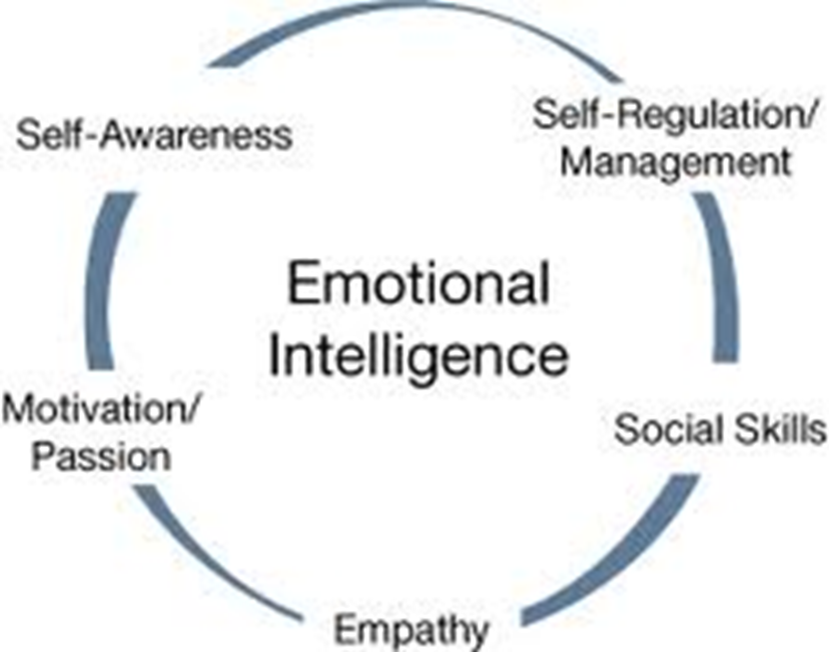
The tool is comprised of five core competencies: self-awareness, self-regulation, motivation (these three comprising the intrapersonal self), empathy and social skills (the latter two representing interpersonal acumen.) Think about bright, skillful people in your organization who are passed over for leadership and/or despised by subordinates. Chances are, these individuals are deficient in at least one of the EQ competencies.

EQ can be learned. What we try to do with clients is identify a small group to work with initially–usually direct reports to the president or high potential leaders. These are assessed individually for their relative emotional intelligence “scores.” The scores lead to individualized professional development plans (“axe sharpening”.) Mentoring occurs during which hypothetical scenarios are discussed in periodic sessions. The hypothetical gives way to the mentees bringing real life situations to discuss. With the mentor’s help, the mentees learn how to process decisions better. Over time, the team gels as its members learn how to “say hard things in soft ways,” and use feelings as an asset rather than a liability. When the team becomes high functioning in this manner, superior performance is likely its traveling partner!


Execute The Idea

Many businesses start these days by vetting a good idea in front of an audience. We present at conferences, competitions, and events like the IdeaSlam at Cary Innovation Center. For some, the whole process of deciding what idea to pursue can be daunting. (The director of a small business center at a local community college who has been asked to tell an inquirer what kind of business to start validates this fact.) Those who never start a business, but envy those who do, will say that they could have been rich if only they had thought of a concept first. Whichever category above fits you, know this: the initial idea is not the key to success–execution is!

Herein lies the “rub” — that many entrepreneurs expend enormous amounts of energy, financial capital, and (often) human capital in an effort to make an idea work that needs to be rethought. Frequently, we call in favors and have been know to burn bridges in the headlong pursuit of our personal holy grail. Emotionally, it is easy to become consumed with the idea to the point that we are blinded to any and every other thing around us–even important things! Along with the emotional “sunk cost,” we often lose our objectivity because of the amount of money invested in the initial idea.

Far more important is a rock-solid business model that creates value for a customer, especially relative to existing solutions. When the business model is battle tested through the incubation process, it becomes invincible. Very few businesses end up creating billions of dollars of value based on the initial idea – superstars such as Facebook, Apple, and Microsoft changed their business models many times before settling on a scalable solution.

-Karl Stark & Bill Stewart

Stark & Stewart go on to say that too many folks are afraid to share their idea with others for fear it will be stolen/copied. They are quick to point out that the true value lies “not in the idea, but in the execution.” Their approach is to share the idea broadly enough with others with different points of view, more experience, and who can offer healthy skepticism that will help you to re-work the idea. It is the supreme compliment to have your idea “stolen.” But, fear not–you still win the competition with superior execution. Three tips they offer for improving execution:

1. Stop perfecting the idea, and get out in front of customers.

The business you develop through a test and learn approach will be worth multiple times more than your original idea.

2. Don’t focus on things that don’t exist.

Instead, look at existing solutions and figure out ways to create more customer value than what those solutions offer.

3. Positively differentiate yourself from the competition.

Most products can’t be all things to all people. A differentiated product will attract a segment of customers that value different things. An innovative start-up is almost always advantaged when chipping away at a market leader if they can offer something different that appeals to a small group of customers.

What is needed, in the final analysis, is a process to create value. One process that I’ve observed to work is the Six Steps to Success program being used with mentees of EntreDot:

  • Ideation – Determine if the idea has any commercial merit
  • Conceptualization – Complete the concept development and determine market value
  • Creation – Perform R&D and establish proof of concept
  • Evaluation – Complete the business plan and determine business value
  • Preparation – Prepare the launch plan for the business
  • Commercialization –  Commence business operations

As the business owner goes through the steps, sustainable customer and shareholder value is created. When the process is “complete,” it is, in fact, just beginning as entrepreneurs are encouraged to go back to the drawing board with the next idea. The commitment to executing idea after idea creates a strong market position that is hard to duplicate.

A Cord of Three Strands For Start-Ups

You know the old saying…that a cord of three strands is not easily broken. Yet, a cord with only one strand has much less strength. In the sports world, we see this concept played out most clearly in tournaments or playoffs. During the regular season, a dominant athlete can carry the team on his or her shoulders to seemingly improbable heights. Yet, under the microscope of postseason competition, the stakes are higher, the other team has similar talent, and the group with the most balanced attack with strong chemistry usually wins. Think Michael Jordan early in his career versus mid-career. Or, Robert Griffin III more recently. There are many stories of similar outcomes.

In the world of entrepreneurship, the principle rings true as well. Rare is the company founder who reaches great success who hasn’t enjoyed some substantial help along the way. Sometimes, it can be a co-founder. At other times, key employees. Externally, the founder may rely on a mentor or some key strategic allies. Whatever the dynamic, it is important to recognize our need for objectivity, resources, and expertise that we personally lack. 

Steve Olsher, the author of Internet Prophets, writing for Under30 CEO, espouses the virtue of serving before being served, and explores joint ventures versus alliances as a way to build a company. In the article, “You Can’t Do it Alone,” Steve defines joint ventures as being a more short-term relationship established for mutual benefit. He compares this approach to  the real estate market where someone invests in a condominium development, expecting a return as soon as the unit is built and sold. Alliances, continuing the analogy, are more like apartment investing because the return is longer-term and the fundamental math lends itself to retirement of debt early and increasing profits later.

Olsher offers the following advice on how to build a strong alliance:

Developing and maintaining strong alliances requires understanding the art and science behind the magic.

The first step is to know yourself. Grant yourself time and permission to understand who you are. Devote focused, quiet time to identifying your WHAT—that is, the one thing you were born to do. In order to form powerful alliances, you must know who you are. The reason is simple: an alliance is predicated upon providing value to others. If you’re unclear about what you have to offer, providing meaningful value will be met with consistent incongruities. The successful know exactly who they are and how they can best serve the world.

Before seeking to form alliances, understand who are the most likely beneficiaries of your knowledge and identify partners who can provide access to those who fit your desired profile. Ideally, the more you choose to live like a sniper and takes aim for the center of the bull’s eye, the more success you’ll realize. The successful focus on forging alliances with perfect partners and bring tangible value to the relationship. Like marriage, creating long-term mutually beneficial alliances takes work—a lot of work. The time and effort required for this to happen represents the single biggest difference between a joint venture and an alliance.

The “fiber’ of the strong cord is recognizing that one does not have a corner on knowledge–that there are others who have just as much–if not more–knowledge and/or experience in other areas. Taking the time to truly understand those with whom you need to build a strategic relationship is the “yarn” that is woven into your approach to business, and hopefully, your company culture. If you can systematically seek to know what will make others successful and determine to play a role in their success, you add strength to  their efforts as well as your own. Strands, then, are the individual interactions that you have with these allies, mentors, etc. They are periods of time when a significant exchange of ideas, perhaps monies, occurs and the interaction reaffirms the value of the relationship. While it is more allegorical than empirical, I’d argue that three mutually beneficial “strands” of interaction are a minimum for long-term success. Don’t be in a hurry to get an immediate return, as would a condominium investor–think about who and what you need for the long-term!

Fashion Entrepreneurship Lessons

Last night in Raleigh, North Carolina, there was a great convergence of people interested in fashion and design with others interested in fostering entrepreneurship. The Raleigh Emerging Designers Innovation Incubator (REDii) Launch Party was held at Solas restaurant and lounge on Glenwood South. Approximately 300 people turned out for the three hour event, which featured Kitty Kinin from local radio station 100.7, the River, as emcee. During the course of the gala, there was a fashion show with over 20 designers featuring their work, a silent auction for a live painting of the event, and much power networking to be enjoyed. The goal of the evening was to raise money for the support of the new REDii space at 131 S Wilmington St and its participants.

EntreDot, the not-for-profit who is responsible for the event and the incubator, seeks to supply retail display space for emerging designers locally in the apparel, jewelry, handbag, and related category niche(s) with a caveat: the designers will be more successful if enrolled in some educational courses on entrepreneurial best practices and paired with a mentor. Accordingly, as is mentioned on the website: www.rediiraleigh.org, those who are approved to exhibit their designs are required to sign up for assistance. The intent is to wed right brain and left brain competencies and mindsets to create something wonderful and, in the process, become a catalyst in the establishment of a Fashion District in Raleigh which, while it may not be as tight geographically as some of the fashion destinations across the country, will unite the community around great design elements and the opportunity to both buy local and support talent that may otherwise migrate elsewhere.

Brigid Sweeney, writing last month in Crain’s Chicago Business, featured the story of the Gilt Groupe and some lessons learned by its founders, Alexis Maybank and Alexandra Wilkis Wilson. Sweeney describes their story as follows:

The two young women, who met as Harvard University undergrads and reconnected at Harvard Business School in 2002, launched Gilt Groupe in 2007 as a way to bring designer sample sales online. In the process, they upended the way women shop and made 11 a.m. Central time (the moment new merchandise goes up daily) a witching hour for corporate women, who click over from Excel sheets and status reports to snag pieces from Carolina Herrera, Dolce & Gabbana, Zac Posen, et al. Ms. Maybank and Ms. Wilson also created a New York-based company that’s now valued at $1 billion, has more than 1,000 employees and runs sales in 36 cities in 14 countries.

In the course of her interview with Ms. Wilson, Sweeney was able to tease out some words of wisdom from her. Wilson feels the lessons below are important to any start-up business, but especially a fashion one:

  1. Relationships matter,
  2. Take calculated risks,
  3. Seek mentors who can help you recognize whether you have the right idea at the right time, and
  4. Seek out partners with complementary, not necessarily similar, personalities.

The folks at EntreDot are attempting to reinforce these principles with the REDii target crowd. During the event, it was noted that not enough well-heeled investor-types were present to maximize either the fundraising effort or the introductions to talented designers who, upon completion of their training, will need access to capital in most cases.  In our community, angel and venture capital has been raised successfully for life science and technology companies. it will be a wonderful day to witness when the same can be said of the local fashion and design entrepreneurship niche! Please support this effort through introductions, volunteering as a mentor or instructor, or sponsorship as you are able.


Minority Entrepreneurship & Mentoring Needs

Minority entrepreneurs like Rene Diaz are playing a bigger role in America’s growth story. Diaz was featured in a Forbes magazine article last year about the growing impact of minority entrepreneurship. In 2010 immigrants accounted for nearly 30% of new business owners in the United States, versus 13% in 1996, according to the Kauffman Foundation. Nationally, 40% of minority-owned businesses are owned by Hispanics, and about 28% each by Asian- and African-Americans.

Urban futurist Joel Kotkin provides unique insights into what drives the increased rate of entrepreneurship among minorities. Those who are immigrants, he argues, are far more likely to start businesses because they are risk-takers in general, as evidenced by their willingness to pick up and move. Kotkin and a couple of other researchers were asked by Forbes magazine to examine the immigrant entrepreneur phenomena across the top 52 metropolitan areas. Based on rates of self-employment, housing affordability, income growth and migration, immigrant entrepreneurs tend to prefer sprawling, heavily suburbanized regions, many of them clustered in the South and Southwest. Cities in these regions (Raleigh-Cary ranked 22nd on the list) are usually characterized by cheap rents, affordable space, job growth, strong immigration and general economic health. Traditional hotbeds of entrepreneurship have not fared as well among minority entrepreneurs (San Francisco was 35th, Minneapolis, New York #39, Boston#45, San Diego #48,  San Jose #46, and Chicago #50, all in the same strata as cities like Detroit, Cleveland, and Milwaukee), largely due to the affordability issue.

North Carolina is now 6th in the country in number of African-American residents and 11th in Hispanics. North Carolina has seen a boom in its Hispanic population, with the percentage of total residents growing by 111% over the past 10 years. Locally, we have seen many minorities move to our area due to a stronger economy than other parts of the country. As these newcomers begin to start businesses, we expect our market to look very different.  From 2007 to 2011, Hispanic-owned businesses in North Carolina grew from 9,000 to 21,301, according to the census and the Latino chamber. The Research Triangle Park is also home to a large and growing Asian population, with the two biggest subgroups being Indian and Chinese. There are now an estimated 200,000 minority-owned businesses in North Carolina, increasing at a rate of 50-60% every five years.

Minorities own 15% of all businesses, but 20% of franchises nationally.

Why are minorities attracted to franchise concepts?

Survival rates among minority-owned businesses ranked highest among Asians, and Asians were the only minority population whose rate surpassed the general population.

Why do non-Asian minorities struggle to attain similar survival rates?

We think the answers to these questions are actually one-and-the same. The franchise concept is attractive because it comes with a business plan, a blueprint as to how to make an idea profitable, complete with templates for each and every category of decisions to be made. When the business is not a franchise, it is imperative that the entrepreneur find a mentor and other key resources to guide the preparation and implementtation of a solid business plan as well as the other key decisions. Perhaps the Asian-Americans are doing a better job of this than others?