Is LinkedIn a Tool of Choice?


With all the raving about Facebook, Twitter, and Google+, the redheaded stepchild is often LinkedIn. Too few business folks know how to make good use of this powerful tool. Some have a profile because they have been told it is a good idea. Others, because they have heard it is a good job search tool. Yet, there are so many ways that LinkedIn can help you become a better marketer.

As the leading social media tool aimed at business executives, LinkedIn boasts 150 million users. As indicated in the infographic, most users subscribe only to the free version, with only about 8% who use the paid version with additional bells & whistles. Much has been written about the almost addictive level of engagement social networks enjoy; 12% of LinkedIn users spend 5-6 hours a week on the system, 26% are moderately engaged at 3-4 hours/week, and about 48% fall into the 0-2 hours category.

When people use a social media tool, one of the primary motivators is to connect and network. However, about 30% of subscribers have 100 connections or less. Another 30% have 300 or more; approximately 40% have between 100 and 300. While we could get into a point/counterpoint discussion for hours on the value of quality versus quantity of contacts, that conversation would seem to apply only to the choice of LinkedIn strategy between the two groups with the largest number of connections. The larger question looms as to why some, claiming that they have created a profile on LinkedIn in order to connect, have only made 100 connections or less.

Among favorite features, the Groups capability ranks highest, followed by the ability to search for people and the ability to be reminded of people we may know. Again, of those who join groups, fully 45% are members of 10 groups or less. It is important here to distinguish between members and participants. Most who are not “power users” of LinkedIn do not make the most of the Groups feature. By choosing not to read and respond to discussion board posts, the user decreases the value of the tool to themselves. When someone does use the search or people known features, they may not take the next step and ask for an introduction by someone who is able to help build the “triangle of trust” to the targeted contact.

The ways that LinkedIn has been most helpful to subscribers are numerous, but the top three are:

  1. Researching people and companies
  2. Reconnecting with past associates
  3. Networking to find prospects

If it is not your habit of using LinkedIn for these important business functions, you are missing out on a great opportunity. LinkedIn is a tool of choice for those who understand its value. For it to become powerful for you, learn it better and explore ways to make the features work for you.

How Do You Show Value to Customers?

Most companies that I know are frustrated that they cannot get customers to appreciate what they do. The real rub lies in not being able to monetize what we believe sets us apart from the competition. Unfortunately, we find ourselves competing on unfavorable terms instead of the ones we’d prefer. How does one go about turning this scenario around to one that delivers superior results via customers who see the value in what is being offered? How do you show value to customers? Can you demonstrate savings in dollars, time, or some other resource? If so, you have a competitive advantage!

Take the time today to write out how your company makes the customer’s life easier, produces more opportunity, or decreases their costs. Do you provide complimentary training? As a result of doing business with you, do they have better control over quality–how can that be measured? Is your logistics solution extra convenient for them–what is that worth to them? How about the way you package your product–any advantage for them/how can you quantify it? All of these factors are significant to the customer if you find a way to communicate the value.

The story is told of a supplier to the apparel industry who found a way to get their customers to articulate the value proposition. As a provider of zippers, trim, buttons, lining, hangers, and garment bags, H.B. Trim was looking for a way to communicate how valuable it was versus the competition. Ross Nadelman, the owner, told his consultant “I do everything better than my competition. I offer more. I understand the business more, and I can deliver better.” Do you feel this way about your business? Guess what? None of this matters if you don’t find a way to monetize your value to the customer! What Ross did to turn the corner was to send a cover letter and an attachment to two prospects he’d been trying to reach for years. In the letter, he listed his company’s competitive advantages; the attachment was a worksheet that he asked the prospects to fill out estimating their current costs and anticipated savings if they did business with him. Not only did he pick up the two prospects, but enough others to increase his business by 60% Would you like to increase your business by 60%?

If you are not in the manufacturing world, but perhaps in a services business, then it is likely that your differentiation will be slightly different. Speak to your customers/clients about information–how you collect, manage, and wield it to their advantage. If you are doing a lot of work for small to medium sized businesses, they often lack access to key statistics and trends for their industries. You have some of that information just from your interaction with them, their competitors, and peers in related industries. All you have to do is summarize what you know and share it to show how much you care. The next step would be telling a new prospect that you will help them avoid costly mistakes or find new opportunities because of what you share by way of information. Be ready with a story of how an existing customer benefited from your thoughtfulness. This is how you build an unassailable customer base!

JTECH Your Way to a True Competitive Advantage

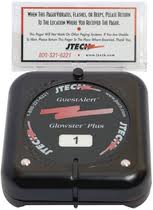
First things first: what/who is JTECH? It’s the former name of a restaurant paging company that eventually became a subsidiary of MICROS Systems. It was founded by a couple of guys from Florida who owned a great restaurant that had too many “walkaways”–people who were not willing to endure the wait for a table seating. In the old days (19990s, mind you!), patrons of their restaurant (like diners in most other establishments) used to have to wait by the hostess stand for an indeterminate amount of time until a table became available. By providing the electronic pager, these guys gave their patrons the freedom–and most importantly, peace of mind–to leave the front door area, relax, and look forward to a sumptuous meal.

But, what of the “true competitive advantage?” To even throw the phrase out suggests that false competitive advantages exist! Don’t they? You be the judge. How many businesses do you know of where price is the main negotiating point in the sales cycle? Unfortunately, way too many. You see, when price becomes the only distinction between a business and its competition, then it is not long before that business enters into a death spiral of decline. At the point that price is all that separates one business offering from another, the battle for customers is lost.

What, then, is a legitimate means of creating a distinctive in the marketplace? Many will argue that Service separates them from others. Alternately, Quality (products) or Experience (Services) are touted as key concepts that persuade one to buy from us versus them. Yet, I have seen over and over (and over !) where these are just words in many situations, without anything to back up the claim–OR anything that is being said that the competition cannot also say!

The original owners of JTECH ended up leasing their restaurant to others because they had found a much better opportunity. It was a great opportunity because and only because they had found a way to monetize the value they had created for restaurants and their customers. True competitive advantage is objective, quantifiable, uniquely claimed, and not a cliche’. (With due thanks to Jaynie L. Smith.)

What was the statement that JTECH developed to carve out such a market -leading position? Of the 50 largest chains who use paging, 100 percent use JTECH! Obviously, they were not able to make this claim Day One. It was something that was earned, one customer at a time.  What absolutely amazes is the recurring bad habit in many companies (and agencies) of developing marketing messages without customer input. Existing customers will tell you why they selected you, what you do better than the competition, and what it would take for someone else to snatch the business away. If you don’t know what your customers would say for each of these categories, you are tuned out. If tuned out, you have no strong competitive advantage positioning!


Your Firm’s Marketing is Unaccountable

Small firms (CPA, law, architects, engineers, etc.) often cannot afford full-time marketing staff. If there is full-time staff, budgets may limit the caliber of the person manning the position.  As a result of the lack of an executive, full-time presence, most firms subcontract with outside agencies for some or all of their marketing.

Unfortunately, the outsourcing of this key business function leads to marketing that is not accountable to the goals of the business. Many agencies are specialists in one area and weaker in others. Consequently, the marketing strategies that are often pursued are not integrated and, therefore, unable to achieve results that are superior and sustainable. In addition to the lack of breadth in approach, there is also likely a lack of measurement as to how successful the programs have been.

Marketing can be one area of the business for which metrics are hard to establish, monitor, and enforce. Internally, your leadership team needs to determine your goals before retaining an agency. Is reputation management your main concern, or is lead generation the focus, or are you trying to develop brand presence in a new niche? Starting with the end in mind will drive your goal setting. Break the goals down into intermediate measurements. For instance, if a firm is looking for more leads and you know how many leads are desired, then establishing a desired cost per lead generated seems like a reasonable measurement. An intermediate measurement may be determining how many leads are desired. Or, the size of the marketing budget. (As a general best practice, it is encouraged that you think in terms of 1-2% of revenues for marketing budget.)

After the metrics have been developed, then it is time to contract with an agency. Interview multiple ones–even if one of your partners has a relationship with a principal in one firm in town. During the interviews, challenge the agencies to provide you a proposal as to how they could meet your goals, including budget. Ask them if they would be willing to provide reports on progress against budget and step aside if they do not help you meet your goals.

Adding accountability into your marketing will yield appreciable benefits over time. The ability to anticipate the outcome of certain marketing actions becomes a competency that drives business performance. Sensitivity analysis can then be applied to determine how minor tweaks to the mix will affect the overall outcome(s). Get started today. Don’t wait until you are less busy. You will be glad you did!