Why Your Company Struggles to Innovate


Jeffrey Phillips, a friend of mine in Raleigh, North Carolina is a savvy adviser to companies on the topic of innovation. In a blog post today at Innovation Excellence, Phillips shares his top recommendations to companies who want to differentiate themselves from the competition. Excerpts from the blog post are cited below to provide a framework for you to consider with regards to your own situation. {Commentary in brackets represent my thoughts/contribution.)

The strange concept to me is that many executives want more innovation, but they don’t understand the investments, or perhaps recoil from the costs. Many mid and senior level managers want to do more innovation, for growth in their own careers, more differentiation of products and services, and simply to expand their horizons. But they don’t have any indications that if they do more innovation that the innovations will be favorably received. So two groups, that talk frequently to each other, have deep desires for more innovation, and both are waiting for the others to make the first move.

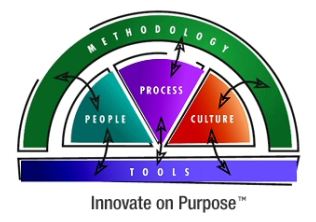
When everyone wants something and yet no one feels free to act, it makes sense to unpack the barriers and explore them.Innovate on Purpose

First Barrier – Immediate Results

While executives want innovation, to help differentiate the company or grow new revenues and profits, they also don’t want to risk distraction from existing revenues and quarterly promises. Potential revenue or differentiation is just never as interesting as near term results. To counteract this issue, we need to establish priorities and re-balance investments and commitments, or reduce the stated demand for innovation. 

{What are the priorities at your company? Are investments and commitments aligned with the need to make an impression in the short-term, or do they need to be matched with innovation initiatives?}

Second Barrier – Clear Goals

3M’s stated goal of driving 30% of revenues from products released in the last 3 years is a good example. It’s clearly stated, measurable and stakes out an important need for a continual stream of new products. Yes, it can be jockeyed, by claiming that an existing product is a “new product” because it has new features. But which argument would you rather have?  The debate about how “new” a substantial portion of your portfolio is, or why you are losing market share?

{Innovation can only be understood to be successful when “success” is well-defined and embraced by all.}

Third barrier – Time and Resource

After years of lean, Six Sigma, right sizing, downsizing and outsourcing, most people are working more than ever, and don’t have much slack time to take on innovation projects, especially when those projects may require new tools or new ways of thinking. If we can’t turn a project quickly with minimal risk and minimal investment, we probably won’t do it at all. 

{What will your “ask” be to upper management to allocate necessary time and resources? Do you have data that supports innovation as a good return on investment? How much time do you think should be invested on innovation on a pro rata basis?}

Fourth barrier – Internal Focus

If your firm can’t afford the internal resources and people necessary to innovate and sustain quarterly results, you can find incremental services for innovation from third parties, whether this is “open” innovation or something you choose to outsource. I’d argue that you should outsource the management and extension of existing products and services and in-source innovation of new products and services, because that’s where the growth lies.

{Too many companies have dysfunctional research and development teams that get bogged down in “skunk works” and function in a silo-like environment. By creating and pursuing horizontal work processes–whether they are interdepartmental or involving external strategic alliances, your organization can overcome the navel gazing so typical in larger, bureaucratic companies.}

 

Trends to Watch in Small Biz For 2013

In mid-December, small business owners are thinking about year end numbers and whether their companies will meet the annual goal(s). Advisers to small business owners are thinking about tax liabilities, the expiration of certain programs favorable to their clients, and whether the upcoming year will be better for their own businesses. What is little discussed but super important is what the future holds. In preparing to answer that very significant question, the small business leadership team is thinking proactively about strategy, innovation, and how to turn today’s customers and competitive advantages into a plan for sustainable success.

American Express publishes a blog under the OPEN Forum brand. One of its leading bloggers is John Jantsch of Duct Tape Marketing. A few weeks ago, he identified the following top 5 trends in business for 2013:Futuristic conference room

1. “Crowdsolving” becomes a hot innovation trend. Some of the greatest challenges we face in the world..are being tackled in unique ways. Instead of relying on the existing machines and organizations to address problems, innovative organizations such as the X Prize Foundation are creating competitions that reward disparate groups of individuals to collaborate and create innovative solutions in ways that had not previously been possible..This form of what is being called “crowdsolving” will make its way into the mainstream of business innovation. Asking our customers, vendors and employees to act as a community think tank will become one of next year’s hottest innovation trends.

2. Technology evolves to assist human contact. ..Instead of a world lacking human connections, these.. innovations have actually made it easier for some to create real human contact—one-to-one. For example, medical-monitoring devices provide the opportunity to create better doctor patient relationships and care; new scheduling and meeting services make it easier to connect in real life; and sharing ideas in virtual space leads to a greater desire to connect offline in social settings.

3. Content-filtering becomes a significant marketing practice. ..Moving forward valuable content must include insight, and filtering should be a central practice in order to help people and prospects get what they need when they need it. Service providers will be chosen based on their ability to find and share the good stuff in addition to making sense of the changing stuff.

4. Visual simplicity becomes the desired communication method. From a design standpoint you don’t need to look beyond sites and services such as Pinterest, Pinvolve and The Fancy to see that people want visual content. The current trend in Web design takes a cue from this desire for visual scanning and marries it with the need for simplicity and white space. 

5. Tablet optimization becomes the mobile standard. ..The new generation of mini tablets are going to impact responsive design and what we’ve been calling mobile devices. Tablets and mini tablets will see a tremendous jump in server logs and become the de facto design standard for mobile content. That doesn’t mean mobile phone size browsers aren’t important, it means there will eventually need to be a divide in how we address tablets vs. phones.

How you apply these trends to your own business is a big decision. Let’s take the trends in reverse order. If you have a website, it is simply inexcusable any more to not have it prepared to be read on multiple platforms/types of devices. Secondly, please take a look at your website and consider how to make it more simple, visually appealing, and written with the mindset of the user in mind. Everyone has content available–come up with a strategy of how you are going to share it with others professionally, opportunistically and systematically. Work with your leadership team to use technology to make your business more personable. When you encounter problems that need solving or innovation that needs to occur, outsource the brainstorming to others related to your business–they will be glad you thought to involve them and your ideas will be stronger as a result!


What Matrix Guides the Artisan Entrepreneur?

Recently, I read the story of a graduate student in her first arts entrepreneurship course. She recounts that the first assignment her class had to complete was to analyze The Matrix with a view towards entrepreneurship. The instructor wanted the students to analyze a.) four key components that converged, and b.) the value created as a result of the convergence. The four components were:

  1. factors within our control,
  2. ones outside our control,
  3. inspiration, and
  4. time.

MatrixUnderstand that the paradigm from which the class was operating had far less to do with the thought of a start-up business venture than the combination of behaviors, attributes, qualities, propensities, and actions requisite to think entrepreneurially. Prior to the assignment, the students had come to a place of agreement that key qualities of the mindset would likely include innovation, discipline, vision, and leadership.

In yesterday’s blog post, we studied the comparative mindset of artisan versus opportunist entrepreneurs. Clearly, the ability to recognize an opportunity is critical to either group to attain optimal revenues. In like manner, organizational skills with regards to people, tasks and ideas are important to possess or acquire. Planning, which is envisioned differently in the mind of some, is a discipline that helps the entrepreneur anticipate and become prepared. Thinking of both conventional and unconventional ways to fund the pursuit of the idea is also generally agreed to be important.

As you look at the paradigm, mindset, skills, and habits listed above, a system emerges. Yet, the system relies on the artisan entrepreneur’s ability to observe a competency model that is unlike any at work in corporate HR circles. This competency model values:

  • intellectual and personal entrepreneurial skills,
  • basic professional skills, and 
  • a general understanding of arts culture, policy, and management.

Students in the class mentioned above pursued their respective competency models through a series of exercises administered by the professor. They were encouraged to develop a vision, produce a comprehensive feasibility plan, write a series of process papers, and prepare “pitches” of their proposed ventures to mock audiences of various forms. The assignments became more challenging when the students found out that they had to work interdependently with one another for the work products. For the average participant, this was an unwelcome wrinkle, as most artisans enjoy their individualism. This is not unlike other types of entrepreneurs, but is a personality trait that we documented in the artisan versus opportunist dichotomy that becomes significant when you think about the components the students had to analyze in their Matrix project.

In order to address factors outside one’s control, there has to be a letting go that is ever so hard for an entrepreneur. Without admitting defeat, one must admit the need for help. Realizing that help may be needed forces the individual to think in terms of team development–not just development, but additional sub-processes like recruiting, training, nurturing, and vision casting. If you’ve had no prior experience doing these types of things, they can become your undoing in an enterprise.

The factors that appear to be within one’s control seem not to present a problem. Yet, as we think about these factors, we realize that we must be delusional to honestly think that, as complexity arrives on the scene in terms of additional team members, the external demands upon the enterprise, and the need to divest ourselves of tasks that don’t match out motivated ability, even the internal environment becomes dicey.

Inspiration seems to come naturally to the creative mind. Finding a way to balance newness and executing on prior thoughts is significant, because being able to do so can determine ultimate success versus floundering. Time is an asset that gets swallowed up despite out best intentions. As we build teams, boards, advisory experts, etc, we are able to free up time to focus on the truly important. 

Value has been created, but not without some proverbial “blood, sweat, and tears.” Please don’t be dismayed. You can do this–but you need to embrace a competency model that guides the members selected for your team to collectively represent the diversity you will need to pursue your vision!

Your Perspective May Undermine Innovation and Value Creation

Every company, whether privately owned or with public stockholders, is concerned about its valuation. The value of an enterprise is enhanced when its future growth opportunities are well understood, documented, and pursued. Why is it, then, that so many small to medium size enterprises fail to articulate a compelling innovation strategy that will fuel the needed growth? Kevin McFarthing, who operates the Innovation Fixer consulting firm, argues that it can be a lack of perspective. He has seen too many companies obsessed with current period performance of the exclusion of the long term “big rocks” that must be put in place to build a foundation for sustainable success.

McFarthing evokes the Three Horizons model of the late 20th century in many consulting projects as a means to draw corporate executives’ focus into more far-reaching and significant perspective. Baghai, Coley and White first outlined the model in “The Alchemy of Growth” in 1999. Markets and technology are seen as drivers in the model and are depicted in the diagram below (from Tim Kastelle’s blog).

Three Horizons Model


McFarthing’s interpretation of the Three Horizons model is as follows:

The Three Horizons process forces an assessment of technology strengths and market dynamics. It then forces a view of how much resource is allocated to each of the Three Horizons. The example above shows Google’s allocation of 70/20/10, which will differ for different companies in each category. It also forces a portfolio approach to innovation.

It also helps to retain the concept of emergent strategy in your approach to the innovation portfolio, as the days of fixed long term planning are diminishing…You can’t just write a five-year plan, lock it down and expect it to deliver. Large companies must continually revise their perspective of the role radical innovation will play in their growth.

The balance of the projects and resource applied to each element of the portfolio should be decided by the top team in the company, and be dictated by corporate strategy. Incidentally, it’s not just the resource that should follow a strategic allocation; the use of management time should also follow the Horizon split. Too often resource is applied to the opportunities on the edge, but thinking time is taken up by the short term. It should be followed through, and the temptation to reallocate Horizon Three resources to fight Horizon One fires should be resisted.

Where the application of these principles falls apart in many organizations is in the allocation of strategic (often scarce and/or over-committed) resources to pursue what has been stated as a priority. You know the saying, “You gotta walk the talk.” Breakthrough innovation, then, must move from strategy and communications (though it needs to be thoughtfully developed therein) to execution via competent actions. The right combination of talent, unique skills, and initiative, when coupled with appropriate resources, produces an environment ripe for innovation to occur.  While some organizations are able to spur internal innovation, most rely on open innovation (external sources) to re-energize their enterprises. Even large companies like Kraft Foods estimated that 98% of IP in the food industry existed outside Kraft. Knowing that an industry leader like Kraft saw value in eliciting the help of others should embolden your team to admit the need for outside help.

Three Horizons, while instructional, is not the only model used to enhance one’s perspective on the opportunity for innovation. What these models have in common, according to McFarthing, are the following principles:

  • Make space in your portfolio for bets on radical innovation;
  • Balance your portfolio over different time frames;
  • Balance your portfolio over different technology needs;
  • Exploit the potential offered by Open Innovation;
  • Balance your portfolio over different market opportunities;
  • In all cases, stretch your view and take a broader perspective.

Sounds like good risk management, creative strategy, and a plan for sustainability rolled into one approach!

New Small Business: Economic Development Catalyst

Small businesses are the backbone of the U.S. economy. This is a statement that is tossed out for public consumption on a fairly regular basis. What data backs it up? What might it mean for job creation and other key indicators of economic health that matter to the general population? In the November 2012 Business Dynamics Statistics monthly report from the Census Bureau, it was noted that hiring and job creation in small businesses (19 employees or less) with two years or less of operations was stronger than in larger companies that had been around longer.

While older firms only hire 25-33% of new employees for newly created jobs, young firms average about two in five (40%)! A substantial fraction of the job creation for young firms is due to the job creation that occurs in the quarter of starting up. However, there is substantial subsequent job creation as well as job destruction in the succeeding quarters in the first two years. The overall net job creation (the difference between job creation and destruction) is much higher for young firms than for older firms.

Small Business strengthThe other area in which startups excel is in worker churning (hiring in excess of job creation and the separations in excess of job destruction.) Job creation measures the employment gains from the expansion of existing establishments and the creation of new establishments. Job destruction measures the employment losses from contracting and closing establishments. The Department of Labor maintains that churning helps the matching of workers to jobs. Hiring and separation rates at young firms are seen as being unusually high. There is also a trend of a marked improvement in hiring and job creation in young firms since 2008 in comparison to established firms. 

The report, entitled “Job Creation, Worker Churning, and Wages at Young Businesses,” draws its conclusions from the U.S. Census Bureau’s Quarterly Workforce Indicators, which use federal and state administrative data on employers and employees combined with core Census Bureau data. On a less rosy note for employees in small companies, the study also showed that their earnings per worker are lower than at more mature firms. Since the wage premium for workers who choose to work for large companies has persisted, earnings growth–even during the most recent recession–is largely attributable to wages paid by larger companies. Some of this decline is accounted for by changes in the industry  composition of startups over the last decade, but the overall trend is downward.

Just before the 2001 recession, workers at new firms earned about 85 percent as much as workers at mature firms. By 2011, this earnings ratio had dropped to 70 percent. The earnings premium associated with working for a large employer versus a smaller employer also grew during this time period: Average real monthly earnings in small firms fell from a high of 78 percent in 2001 to a low of 66 percent in 2011. 

Churning rates are said to be “procyclical,” dropping during recessions as firms become cautious about hiring, and employees, with fewer jobs available, stay where they are. In both the 2001 and, especially, 2007-2009 recessions, worker turnover rates declined, but failed to recover to their previous peak after the recession ended. Churn rates for the youngest businesses recovered modestly after the most recent recession, but dropped slightly after first quarter 2011, perhaps reflecting eroding worker and business confidence, the study said.

What does this all mean? Here are the key takeaways:

  • Small businesses create more new jobs than large businesses
  • Pay at small companies tends to be less than at larger ones
  • Turnover is higher at smaller firms than at larger ones
  • Small business bounces back faster than big business after a recession
  • Startups are paying less now than they were a decade ago