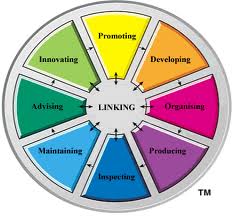
Implementing Your Turnaround Plan

A turnaround plan presupposes that someone will be around to implement it. A lack of execution or inappropriate one (timing or lack of adaptation) will quickly undermine all earlier efforts that went into drafting the plan. Control over operations is therefore a must–no single part of the business should monopolize the company’s attention and efforts.

Controlling Operations

Motivation

The motivational skills of a “take charge” leader can enhance job performance in many ways. Many employees complain they are not being used effectively because they don’t have enough to do or their efforts are being applied inappropriately. Management that makes the most of employee work efforts has a knack for spotting actions that, if performed immediately, will have a tremendous, positive impact on company success.

Efficiency

To ensure that operations are monitored and controlled correctly, the individual who reviews system reports must make decisions based on indicators of company efficiency. For example, if variance reports show (project or product) costs exceeding budget, action must be taken immediately to prevent further overruns. Similarly, if non-payment has a vendor worried, the top financial manager must find a way to keep the vendor on board so a return to profitability can occur.

Sound management is exhibited when field operations or internal reports require responses to abnormalities. For example, a business owner in the midst of a turnaround had a new hire (< 2 months) supervisor request on Thursday to take Monday and Tuesday off to pursue some personal matters. The business owner was not in a production crunch and was short on cash, so he approved the time off–particularly since the supervisor was not using vacation (paid) time to take leave. When the supervisor strode onto the job Monday late morning, the owner was surprised. When he requested to work the balance of Monday and all of Tuesday, the owner declined the request, citing that she had to make other arrangements that inconvenienced others and that last-minute notice would not be accommodate in this or future instances.

In this instance, the owner did what was necessary to maintain control over operations. Though it may have ruffled the supervisor’s feathers for a few days, it demonstrated the importance of setting policies and commitments–and living by them. It was also to the owner’s advantage not to have to pay the supervisor for work that had been reassigned to someone else. Proper planning was used to make sure that someone would be able to supervise the work. Additional follow-up was necessary to make sure no problems were slowing down production for those two days. Had the owner failed to exercise sound management, proper planning, or follow-up, she would have lost time, money and credibility with others due to one employee’s circumstances.

Focusing on Common Objectives

Getting employees to focus on common objectives is a difficult task. Executives an managers who are able to motivate their workers to avoid distractions, do their jobs effectively, and remember to follow the turnaround plan do so with tremendous skills/abilities.

Employee Problem Solving

Employees can best avoid distractions and aid in the turnaround process by quickly resolving issues in which they have innate skills and referring all other issues to appropriate personnel. Additionally, employees should report any persisting problems or confrontations to the executive team.

Problem-solving should be a relatively painless process, requiring only that he or she utilize skills learned on the job and “do what seems best” based on prior experience. If an employee has little or no experience in the problem area , she should not hesitate to find someone who is experienced. It is far better to admit a need for help than to take a chance on behalf of the company.

Employees should be reassured that involving others is not “shirking” or “dumping” work into another’s lap. Rather, this process is a way of relieving employees of the likelihood of error in making an uninformed decision. However, employees are not absolved from making sure the problem is resolved. Make it a habit of celebrating when employees help one another out to build camaraderie.


 

The House on the Sand Went Smash

As a youngster, I remember learning a Vacation Bible School ditty about the wise man and the foolish man. In the song, there was a great rainstorm. One builder had built his house upon a rock, and that house stood firm. The other had built his house upon sand and the house fell down (went smash!) The morale of the story is to make a sure foundation before beginning an endeavor whose outcome is important.

Most businesses know that they need to do some business or strategic or turnaround planning. Planning is vital to creating shared mission and eliciting commitment from stakeholders in the outcome(s). Most executive teams, however, underestimate the value of educating employees to prepare them to execute the plan and achieve the desired results.

We all want employees and managers who maintain a cool head and concentrated focus. What is our role, however, within executive teams, to help our people become prepared? We would assert that our role is to lead and influence through empowerment. Empowerment enhances employee engagement and reduces the likelihood that only executives will be expected to take responsibility for outcomes. 

Skilled employees are usually made, not born. Therefore, key employees deserve professional education and job training. Be constantly grooming your staff to take on more and more responsibility. Much like a second-string player on a sports team, a second generation of managers should be in waiting, ready to step in when called. This intentionality is also very useful in succession planning, because those who vacate their positions already have trained backups who would be ready to perform the role should their predecessor no longer be able or willing.

Grooming Effective Managers

Continuously analyze employees for management potential through an interactive process of interview, observation, and written response. Be on the lookout for employees in all areas who posses strong analytical and evaluation skills, combined with the emotional intelligence to handle changes effectively and appropriately. Give your people the opportunity to prove themselves worthy of consideration for grooming.

When evaluating management candidates, leaders will often try to determine, through an employee’s actions or words, the employee’s perceptions about the company’s mission. A demonstrated commitment to the mission shows promise. Using individual interviews and feedback sessions, leaders can determine whether employees understand chain of command and critical success factors for business success. Asking employees how to improve the productivity of their part of the business, their own execution, and corporate profitability can reveal (through their responses and actions) whether they understand the key levers of management.

Education and Training

Those who can consistently make recommendations for company improvement should be considered for management positions and be given an opportunity to refine their skills through education and training. The employee development need not be formal; the one-to-one mentoring of high potential employees can yield significant results. Formal workshops and continuing education offered within your industry or organizations serving people in key roles can sharpen skills, focus, and performance.

Personnel files should document employee attendance at educational programs as well as innovative solutions they have offered to real problems. These files serve as the basis for performance reviews as well as management development. Difficult work assignments containing known problems offer the high potential employees to contribute on  meaningful decisions. If unsatisfactory decisions are made in these situations, the employees can be coached and mentored through what should have been done differently and learning will occur.

Adapting to Change

Over time, employees will learn to adapt to changing events in the operating environment. The first few times a managerial candidate faces unforeseen circumstances, it may be difficult to revise the game plan to suit the conditions. With effective coaching and a sprinkling of successes, however, the new manager will learn to handle tough situations without the need to involve a higher up.

Every business has its share of unpredicatable events that can influence performance. While these events cannot be anticipated exactly, they can be expected and planned for in a hypothetical sense. As employees become more flexible in the way in which they carry out their responsibilities, they will be able to aid the business plan execution by adapting to change more quickly and accurately.


SCARF Up Some Change

In an HBR blog post about organizational change this morning, Walter McFarland draws in the role of the brain in defining whether change efforts will meet with success. Some of the casualties of failure to adapt to changing market conditions he mentions include Sunbeam, Polaroid, and Circuit City. While each of these formerly strong companies is no longer in business, proponents of organizational change struggle to define why some are able to reinvent themselves and others are not, other than the nefarious “human element.”

Organizational change as a field of study has long maintained that change can be defined in linear, sequential terms and processes. What we are discovering, largely through examining principles of neuroscience, is that change is neither. Instead, McFarland, the board chair elect of the American Society of Training and Development (ASTD), argues that modern business dynamics would suggest that it is chaotic. It is the chaotic nature of change that creates the need for greater research. We live in a time when the need to constantly change is critical to competitiveness. Neuroscience may be a key to helping us steer organizations through adaptation more effectively.

Thompson and Luthans wrote that typical reactions to change “can be so excessive and immediate, that some researchers have suggested it may be easier to start a completely new organization than to try to change an existing one.” While industrial psychologists refer to this as “human resistance to change,” very few who study the phenomenon have identified how to lower the resistance consistently and pervasively. 

At the NeuroLeadership Summit, being held in New York this week, a panel discussion with senior executives and experts from The Conference Board, the Association of Change Management Professionals, Change Leaders, and Barnard College will explore the connection between neuroscience and organizational change, understanding how we can effectively deal with the human resistance to change. 

A new organizational change model is being proposed that takes into account how successful change functions in a modern organization, where work is conceptual, creative, and relational, and talent is portable. According to McFarland, activities that have contributed to the continuing poor performance of change initiatives include:

  • Perpetual underpreparation: change is always dreaded and a surprise to employees
  • A perceived need to “create a burning platform”: meant to motive employees via expressed or implied threat
  • Leading change from the top of the organization down: only a few individuals are actively involved in the change and either under communicate or miscommunicate with others

Top-down change (the traditional model) can trigger fear within employees because it “deprives them of key needs that help them better navigate the social world in the workplace. These needs include status, certainty, autonomy, relatedness, and fairness” — the foundation of the SCARF model

  • Status is about relative importance to others.
  • Certainty concerns being able to predict the future.
  • Autonomy provides a sense of control over events.
  • Relatedness is a sense of safety with others – of friend rather than foe.
  • Fairness is a perception of fair exchanges between people.

SCARF is a summary of important discoveries from neuroscience about the way people interact socially and is built on three central ideas:

  1. The brain treats many social threats and rewards with the same intensity as physical threats and rewards (Lieberman, & Eisenberger, 2009). 
  2. The capacity to make decisions, solve problems and collaborate with others is generally reduced by a threat response and increased under a reward response (Elliot, 2008). 
  3. The threat response is more intense and more common and often needs to be carefully minimized in social interactions (Baumeister et al, 2001).

Since organizational change is a significant social interaction in the marketplace, it is important to minimize perceived risk. Understanding how people tick, empowering them to vocalize their ideas, and creating better systems to engage them in the change process is best practice. More organizations need to get on board.


Small Business Management Information and Organizational Staffing

Different-sized businesses have different needs in terms of internal structure and systems, particularly during times of economic decline. As the entrepreneur adapts to changes in his or her competitive situation, the size of the business may vary enough to put it in competition with either larger or smaller competitors. Implementing systems to match competitive requirements is a necessary first step toward efficient organization and operation.

Management Information Systems

Small businesses usually enjoy the pace a smaller organization and a high level of personal involvement in decision-making. The systems typically in place range from a manual bookkeeping system inadequate in reporting timely developments to overly complex programs that require more attention than the small business leader can give. Therefore, the goal in a small operation should be to minimize company reliance on record-keeping as a chore and focus on the development of meaningful reports. With all systems tied together, the financial systems can work with marketing and operations systems. The reports generated can then be used by each department.

Accounting Information

Accounting information that should exist in at least a semi-automated form includes accounts payable, cash projections, expense estimating, and quotation systems. It is impossible to run an efficient operation with anything less than this skeleton. The payables are easily recordable as invoices are received and paid. Cash projections contain–at a minimum–information about loans, revenues, and disbursements. A basic expense estimating system posts invoice amounts  (direct costs) and allocates indirect  costs as appropriate to to specific projects or clients. Finally, a method of preparing quotes should be implemented to standardize pricing based on cost data.

Marketing Information

Marketing information should include inventory listings, commission agreements, advertising schedules, and research into market demand and competitor product offerings. Inventory listings are a natural by-product of the job costing (expense estimating) system and should include gross profit percentages, inventory age, and a measurement of the relative sales priority of inventory based on carrying costs. Commission agreements highlight the sales force’s expectations for representation of company products. Advertising schedules will help the business leaders plan for regular promotions. Finally, research into market demand and competitor product offerings will require periodic updates.

Operations Information

While accounting information is preferably computerized or otherwise automated, operations information, like marketing, need not be automated as a first priority. Information systems for monitoring operations include purchase orders, scheduling, and either timekeeping or job progress. A purchase order system is essential for cost controls, order documentation, and verification of amounts and qualities delivered. Finally, scheduling systems provide for systematic fulfillment of orders.

Organizational Staffing

Small businesses must determine the organizational development and staffing levels based on their need to delegate tasks and thus free themselves for critical activities. Office management, marketing and operations managers should be hired only after careful screening. These individuals need to possess industry specific experience and a good general feel for how your business works. Sales people and administrative staff are not innately qualified to work for a particular organization. When verifying references and conducting interviews, then, look for a match in values!

Office Management Staff

In the management of the office functions, organization and attention to details are essential. One or two well-trained individuals–preferably capable of performing each other’s jobs–should be enough to keep the internal operations running smoothly and to help with some of the company’s daily busy work when necessary. Ideally, these office employees should be able to handle accounting, calls, filing, and word processing.

Marketing Staff

The marketing staff need not consist of one or two well-trained individuals either. One person must have responsibility for digital marketing–all things web-based including website, social media, and CRM. The other should handle strategy and supporting sales and other executive staff on marketing issues, including advertising, branding, collateral materials, proposals, etc.

Operations Management

A team of one or two should again be sufficient. Depending on the size of the organization, the complexity of its operation, and the rate of growth, a good rule of thumb is that one manager should have responsibility for no more than five to eight direct reports. These managers should be expert in keeping work on time and on budget.


Entrepreneurs: Learn to Delegate to Capable Employees

Delegation

The “take charge” attitude that permeates a builder’s very makeup is easily channeled and tempered with proper direction and focus. Avoiding “one man rule” tendencies is as easy as one word: delegation. The effective executive delegates rather than performing all critical tasks. However, successful delegation requires that responsibility and authority also be delegated. Herein lies a problem for the executive–“hands off” management.

An experienced founder’s abilities and characteristics relate to starting and preserving a good business idea. Chief among those abilities would be creating a vision for the company, which is usually unstated but somehow understood. While it may seem a chore for others in the company, projecting a confident and self-assured image that appeals to prospective buyers  comes naturally to the experienced executive.

Additionally, identification of market opportunities and provision of top notch service to meet customer needs are focal points of the founder’s vision. Unfortunately, the ability to create a workable organization to achieve company goals and objectives may prove more elusive. The business owner who possesses the innate skill to attract others to pursue an unwritten vision may lack the skill to build an efficient organization.

Employees

Clearly, employees are critical to the success of profit maximization in any business; it is their effort that keeps the wheels of progress turning. Most employees have spent careers in similarly sized (small) companies in the same industry setting–be that white collar or blue collar–with limited exposure to alternate environments. Consequently, their frame of reference in employer/employee relationships amounts  to that which the founder and, where applicable, previous employers have provided.  With limited cross-training in other professional disciplines, these members of the team have the least job flexibility and therefore generally welcome changes in work flow patterns that can make their jobs appreciably easier and more effective.

Job Specialization

While cross training or shared skill sets occur as a matter of necessity, job specialization is a focus of many small businesses. A certain “pride of ownership” can arise from this high degree of specialization. Fiercely loyal, most employees would rather sacrifice some temporary perks rather than leave a benevolent employer “high and dry” in a time of financial duress. Since the employees tend to be skill-oriented, they require a great deal of direction in defining work assignments. At the same time, they spend a lot of time observing the founder and mimicking his or her efforts; if the entrepreneur is a go-getter, they will learn to hustle on the job in order to meet production requirements. In short, employees can be extremely valuable in performing the legwork that makes the business optimization a reality.

Employee Responsibilities

Employees are required to adhere to schedules, commit to the strategic plan, be willing to work long hours, and be brand ambassadors of the company in the community. Schedules governing production, documentation, and reporting must be religiously followed to ensure optimal work efficiencies. Time, budget, and administration constraints are to be respected and emphasized among employees and their  supervisors.

Mindful of how they represent the company, your people are the “front line” experience that others have with your brand. Whether buying from suppliers, meeting with customers, or serving in a local non-profit, they have an opportunity to make you look great–or not.

When company plans cause inconveniences for employees, it should be up to the employees themselves to raise the issue with their superiors. Once they have been given the right to voice their opinions and concerns, they should be expected to fall in line with the plan. Failure to follow established guidelines should not be tolerated. Without respect of your core values, your employees should be replaced by those who can carry your banner proudly!