Social Media – the Village Approach to Innovation

It’s interesting how social media has subtly made the migration from a peripheral domain for adolescents to share extraneous to a mainstream business tool. Even within the business arena, social media (SM) used to be relegated to a branding or marketing activity rather than the comprehensive resource many now realize it to be. In a recent blog post, Braden Kelly points out, for instance, how innovation can be fueled by social media:

‘What is the role of social media in innovation? (Either inside or outside the organization)’ Social media serves an incredibly important role in innovation. Social media functions as the glue to stick together incomplete knowledge, incomplete ideas, incomplete teams, and incomplete skillsets. Social media is not some mysterious magic box. Ultimately it is a tool that serves to connect people and information.

How can SM be like glue in your organization? Is there a way to use blogs, wikis, and online videos to enhance learning, information sharing, and collaboration within your daily practice? For instance, posting questions for which your team has no answers to elicit knowledge possessed by others can be a very good use of social media. Or, learning a skill foreign to your core team through an online video can be a means to spur growth or learn how to more effectively manage a contractor/consultant. 

(Kelly:) Social media can help ideas grow and thrive that would otherwise wither and die under the boot of the perfectionist in all of us. Do you remember the saying “it takes a village to raise a child”? Well, it takes a village to create an innovation from an idea as well, and social media helps to aggregate and mobilize the people and knowledge necessary to do just that. But, that is social media working in the positive. We must remember that social media tools are just that – tools.

Village innovation – Hillary Clinton should have thought of that! How does the collaboration effect pertain to SM? Quite simply, there is no substitute for building knowledge systems. For non-proprietary information, you and your peers can start an online conversation thread that others build upon and you are able to glean insights non-resident to your group.  When you do wish to protect methods, processes and intellectual property, it is still preferable to find an internal means to capture group best practices, lessons learned, and puzzles to be solved. How could one or more forms of SM enable you to do this better? Kelly suggests that SM tools are seen in a positive light when they do the following:

  1. To make innovative ideas visible and accessible
  2. To allow people to have conversations
  3. To build community
  4. To facilitate information exchange
  5. To enable knowledge sharing
  6. To assist with expert location
  7. To power collaboration on idea evolution
  8. To help people educate themselves
  9. To connect people to others who share their passion
  10. To surface the insights and strategy that people should be building ideas from

The better you become at the above, the stronger your organization’s innovation capability will become, the more engaged your employees will become, and the more ready you will become to engage successfully in open innovation…Please consider the ways in which social media in your organization might be able to strengthen inter-disciplinary cooperation, make the organization itself more adaptable, and how it could help to create an organization with the power to transform more ideas into innovations.

Retool for Catalytic Success

Business macrotrends are illuminating. With sufficient data, organizations like BCG, McKinsey & Bain can advise their clients better as to thought leadership positions, best practices, and optimization. As the national economy has improved from recession to stagnation or slow growth, businesses have shifted their focus from expense reduction to growth. Increasing revenues is important to companies providing goods, services, or non-profit benefits.

When Bain performed a study last year, 80 percent of the executives believed innovation to be important than cost reduction for long-term success. Also, 68 percent of respondents believed that taking care of customers and employees should come before shareholders. Bain’s interpretation: executives realize that growth depends on having happy, productive employees and satisfied customers. Shareholder returns will be the natural byproduct.

Growth Catalysts:

In the Bain survey, popular management tools were rated by respondents. Of 25 total tools, the top 3 were:

  • open innovation (expanding the sources of breakthrough products)
  • scenario and contingency planning (testing the “what ifs” to plan for the future/minimize risks) &
  • price optimization (addressing rising commodity prices). 

Social media was seen as an additional emerging tool of choice. Whether websites, micro-bogging, or online communities, there has been a growing commitment to explore the value of the medium to enhance relationships–internally as well as externally. “While only 29 percent of all respondents say they used social media in 2010, usage is expected to surge to 56 percent in 2011. Even so, executives tell us they’re uncertain about how to measure the effectiveness of this tool.”  

The standard approach with the introduction of new tools is to make a limited investment to vet the value of the tool, then make a more sizable commitment if it proves to have merit. Bain study leaders felt that this approach presented two risks:

First, while it’s understandable that companies do not want to make major investments before they fully understand how a tool will work, we have found that using tools on a limited basis consistently leads to lower satisfaction, so caution may inadvertently result in failure. The second risk we have found: companies start using a tool because their competitors are using it, or because it’s the hot topic in the business press, but if they do not fully understand how and why to use it, the experience ends up in failure.

Think of business process reengineering, where we witnessed an inverse relationship between usage and satisfaction rates when it was the hot tool of the 1990s. We witnessed reengineering drop from the tool with the fifth highest satisfaction rate in 1993 all the way to 21st in the late 1990s. It was only after usage rates declined that satisfaction began to improve again. Any time we see high usage but low satisfaction, there is cause for concern.

What Tools Work & What to Degree?

Benchmarking made a comeback a couple years ago and displaced strategic planning, a perennial No. 1, as the tool of choice. In addition to benchmarking, the most widely used tools during the recession period were strategic planning and mission and vision statements. These tools have rated in the Bain top 10 for usage over the years, regardless of the economic climate.

The survey found the least used tools included open innovation, decision rights tools and rapid prototyping. One tool that was surprisingly unpopular was mergers & acquisitions. During a downturn, M&A deals often create bargains that give the acquiring company increased scale and broadened scope. Yet in each recession we see relatively few deals. 

Among the  preferred tools, strategic planning was the tool with the highest satisfaction rating. Other tools with above-average satisfaction scores included mission and vision statements, total quality management, customer segmentation and strategic alliances. On the other end of the spectrum, downsizing, outsourcing and shared services centers–despite being seen as expense reduction tactics–were three of the five tools with below-average satisfaction scores. The other two tools with low satisfaction ratings were knowledge management and social media programs.

Due Diligence Lip Service

“Culture isn’t just one aspect of the game. It is the game.”                          

 –   Lou Gerstner, former IBM chairman & CEO

Pritchett conducted a study of 135 executives from public and private companies and found that, on a 10 point scale, cultural due diligence rated a mean importance factor of  7.45. Privately held companies and private equity firms generally rated the importance higher than public companies. Yet, the same population rated their organizations’ success in blending cultures as only a 5.62. What does this mean? Have you ever heard the phrase “lip service?” It is one thing to acknowledge the importance, but something altogether difference to act in a way that supports that belief.

The study authors go on to note that, while culture is perceived as a key factor in merger success, there is not a consistent approach to measuring effectiveness, let alone the components that comprise it. Slightly less than half (49%) of organizations make an effort to measure. Privately held mid-cap companies and private equity companies set the pace in this arena. Non-profits and publicly-held large cap companies make far less effort to measure effectiveness post-merger or acquisition. 

Given, again, the relatively high value placed on the importance of culture to integrating two companies, it is dismaying that culture is not normally a part of the due diligence process. Of the executives surveyed, 4% say their teams ask specific questions about culture during vetting. Similarly, only 5% attempt to assess compatibility through some standardized means, with less than half of those administered by an objective outsider.  

It was observed that, when assessment is attempted, it tends towards subjective intuitions rather than a strategic metric. Furthermore, HR is excluded from the cultural discussion 94% of the time. On a high note, organizations that consider themselves savvy with regards to cultural due diligence perform assessments 70% of the time. 

While the results for pre-merger analysis and process are not good, those for post-merger are dismal by comparison. Only 21% of organizations surveyed have an established, repeatable process that is used consistently to facilitate seamless blending of organizations. 

The broad findings of the study were:

  1. Culture should be a more strategic consideration in the merger process. It deserves far more weight in the initial targeting of potential acquisitions or merger partners.
  2. Due diligence should scrutinize cultural aspects of the deal with the same discipline given to financial and legal issues. This simply cannot be done via a traditional culture gap analysis or compatibility survey. 
  3. Culture integration should be driven from the CEO/President level. This initiative cannot be delegated effectively. The architecture of culture strategy, plus the critical first steps of execution, belong to the leader.
  4. Organizations should be more astute in crafting their merger communications relating to cultural issues. Both the substance and timing of these messages are crucial. Management needs to be fine-tuned in managing people’s expectations, all the while shaping workforce behavior in the desired cultural direction.


Decision Making is Like Chopping Wood

The Woodcutter’s Story

Simon was a diligent son, but not that bright.  Eventually his mother became exasperated with him lying around the house and urged him to get a job.  Now Simon was good at one thing:  chopping down trees.  So, off he went, his axe over his shoulder, in search of work.

Soon he came upon a clearing in which logging was being carried out.  (Readers of a nervous disposition should be reassured that this logging was a fully sustainable and environmentally ethical operation.) He marched up to the supervisor and asked if there was any work available.  “Well it depends how good you are.  Chop down that tree and I’ll see.” Simon enthusiastically set about the task and completed it to the supervisor’s satisfaction. “You’re hired.  Start right away”, he said.

And Simon started work, applying himself with a commendable zeal.  It was Monday afternoon, and the day soon passed.  As did the following few days. On Friday afternoon, Simon happened to see the supervisor.  “I’m glad I’ve found you” the supervisor said.  “Please collect your cards and leave, your services are no longer wanted.”

Simon was flabbergasted!  “How come?  I am your most productive worker.  And now you’re rewarding me by sacking me!” “Well, it’s true you were the most productive worker on Tuesday.  But by Thursday you had sunk to the least productive.  And you’re doing even less well today.” “But I start early and finish last.  I work through lunch.  I spend all my time chopping down your trees.”

“I agree”, replied the supervisor, “but how much time do you spend sharpening your axe?”

-Anon

What is equivalent to sharpening the axe in your business? Management team and high potential employees choosing to pursue professional development through honing emotional intelligence (EQ) competencies. EQ is the unique intersection of heart and head—the outcome of which is effective use of feelings to enhance thought.

When EQ becomes a priority in an organization, good things happen. Consider:

  • In one study, experienced partners with high EQ in a multinational firm delivered $1.2 million more profitfrom their accounts — 139% — over their cohorts.
  • A study of manufacturing supervisors given EI training saw a reduction of 50% in lost-time accidents, 20% in formal grievances, and plant productivity goals exceededby $250,000.
  • In a cross-cultural study of senior executives, EI competencies outweighed both IQ and experience in top performers.

Superior performance is driven by strong decision making. Strong decision making is a physiological factor of: 1.) competency, preceded by 2.) behavior, preceded by 3.) cognition, preceded by emotional intelligence. EQ is a body of personal characteristics and social abilities that are closely tied to success in both our professional and personal lives. Dan Goleman, quoted in the Harvard Business Review, said, “Emotional intelligence isn’t a luxury tool you can dispense with in tough times. It’s a basic tool that, deployed with finesse, is the key to professional success.”

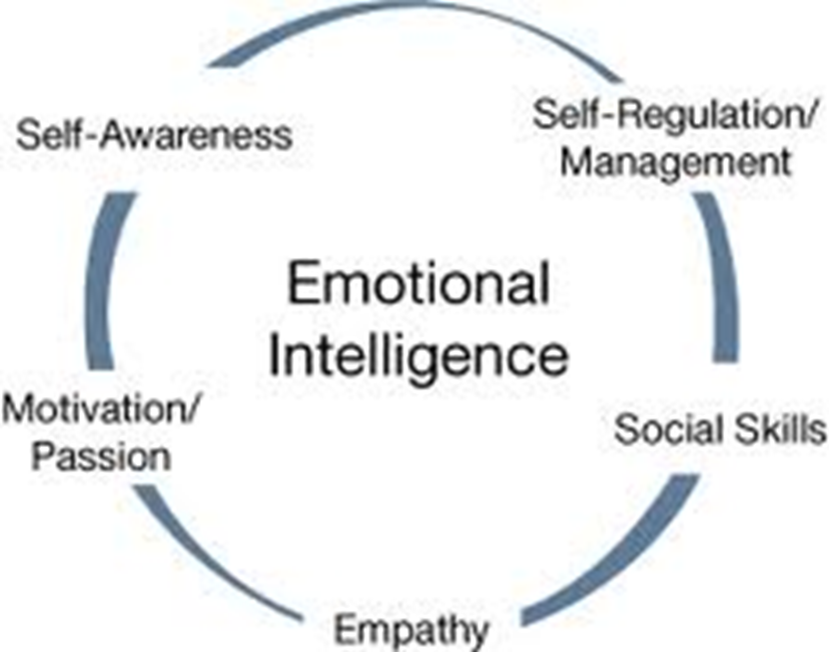
The tool is comprised of five core competencies: self-awareness, self-regulation, motivation (these three comprising the intrapersonal self), empathy and social skills (the latter two representing interpersonal acumen.) Think about bright, skillful people in your organization who are passed over for leadership and/or despised by subordinates. Chances are, these individuals are deficient in at least one of the EQ competencies.

EQ can be learned. What we try to do with clients is identify a small group to work with initially–usually direct reports to the president or high potential leaders. These are assessed individually for their relative emotional intelligence “scores.” The scores lead to individualized professional development plans (“axe sharpening”.) Mentoring occurs during which hypothetical scenarios are discussed in periodic sessions. The hypothetical gives way to the mentees bringing real life situations to discuss. With the mentor’s help, the mentees learn how to process decisions better. Over time, the team gels as its members learn how to “say hard things in soft ways,” and use feelings as an asset rather than a liability. When the team becomes high functioning in this manner, superior performance is likely its traveling partner!


Execute The Idea

Many businesses start these days by vetting a good idea in front of an audience. We present at conferences, competitions, and events like the IdeaSlam at Cary Innovation Center. For some, the whole process of deciding what idea to pursue can be daunting. (The director of a small business center at a local community college who has been asked to tell an inquirer what kind of business to start validates this fact.) Those who never start a business, but envy those who do, will say that they could have been rich if only they had thought of a concept first. Whichever category above fits you, know this: the initial idea is not the key to success–execution is!

Herein lies the “rub” — that many entrepreneurs expend enormous amounts of energy, financial capital, and (often) human capital in an effort to make an idea work that needs to be rethought. Frequently, we call in favors and have been know to burn bridges in the headlong pursuit of our personal holy grail. Emotionally, it is easy to become consumed with the idea to the point that we are blinded to any and every other thing around us–even important things! Along with the emotional “sunk cost,” we often lose our objectivity because of the amount of money invested in the initial idea.

Far more important is a rock-solid business model that creates value for a customer, especially relative to existing solutions. When the business model is battle tested through the incubation process, it becomes invincible. Very few businesses end up creating billions of dollars of value based on the initial idea – superstars such as Facebook, Apple, and Microsoft changed their business models many times before settling on a scalable solution.

-Karl Stark & Bill Stewart

Stark & Stewart go on to say that too many folks are afraid to share their idea with others for fear it will be stolen/copied. They are quick to point out that the true value lies “not in the idea, but in the execution.” Their approach is to share the idea broadly enough with others with different points of view, more experience, and who can offer healthy skepticism that will help you to re-work the idea. It is the supreme compliment to have your idea “stolen.” But, fear not–you still win the competition with superior execution. Three tips they offer for improving execution:

1. Stop perfecting the idea, and get out in front of customers.

The business you develop through a test and learn approach will be worth multiple times more than your original idea.

2. Don’t focus on things that don’t exist.

Instead, look at existing solutions and figure out ways to create more customer value than what those solutions offer.

3. Positively differentiate yourself from the competition.

Most products can’t be all things to all people. A differentiated product will attract a segment of customers that value different things. An innovative start-up is almost always advantaged when chipping away at a market leader if they can offer something different that appeals to a small group of customers.

What is needed, in the final analysis, is a process to create value. One process that I’ve observed to work is the Six Steps to Success program being used with mentees of EntreDot:

  • Ideation – Determine if the idea has any commercial merit
  • Conceptualization – Complete the concept development and determine market value
  • Creation – Perform R&D and establish proof of concept
  • Evaluation – Complete the business plan and determine business value
  • Preparation – Prepare the launch plan for the business
  • Commercialization –  Commence business operations

As the business owner goes through the steps, sustainable customer and shareholder value is created. When the process is “complete,” it is, in fact, just beginning as entrepreneurs are encouraged to go back to the drawing board with the next idea. The commitment to executing idea after idea creates a strong market position that is hard to duplicate.