Sacrifice Opens Door to Opportunity for a Leader

You need not to have been on this planet very long before you will encounter adversity. One popular adage states that we become stronger by going through tough times. Yet, not everyone who encounters obstacles is able to surmount them and achieve success. In Obstacles Welcome, Ralph de la Vega recounts his own “pivot points,” born of a challenging early life that shaped and molded him into a very successful businessman (currently, he serves as the President and CEO of AT&T Mobility and Consumer Markets. His positive responses to adversity formed the backbone of a successful values-based management system.

Rather than seeing separation from his parents at the age of four as a bad omen, de la Vega found a way to accentuate the positives in his life. He innately recognized that dwelling on negative thoughts and feelings was counterproductive. After that tough, early life challenge, he moved to Miami and had to overcome a language barrier in the classroom. He adapted again to his environment instead of letting it get him down in the dumps. 

Many people tack a passive approach to setbacks. They hope, wait, and some earnestly pray for a change in circumstances. The course our example provides, though, is one of planning, taking risks, and maximizing opportunities. In the book, he offers up the premise that obstacles should be embraced as a chance for personal growth. In the midst of living life, we come across those “pivot points” personally and professionally that define us–for good or bad. Getting in the right frame of mind can be achieved through his recommended 8 step process:

1. Hope is not a strategy. It is necessary to plan for success.
2. To achieve big goals and dreams, it is necessary to take calculated risks.
3. Big wins in life come from an ability to recognize opportunities. The most significant and important opportunities lie in problems that are waiting to be solved.
4. Embrace and overcome obstacles. Obstacles and adversity make stronger, wiser, and more capable leaders.
5. Be willing to unlearn old habits and relearn old lessons from life experiences.
6. Building winning teams involves effective, honest, and open communication.
7. The greatest successes always involve willingness to make sacrifices.
8. Leadership is not something inborn, but learned and practiced.

As a young executive at  Bell South Latin America, de la Vega experienced everything from military insurgency, economic meltdown, and political revolution, in addition to unstable markets, lack of uniformity in corporate leadership, and nonexistent profits. How did he respond? He took a chance and embraced the challenges as opportunities to lead an entire sector of the international communications market into profitability. What he advocates is to “become comfortable with being uncomfortable,” In order to do that, we may have to set aside what we feel we already know and become flexible in our approach to the challenges set before us.

A key habit to learn is to not allow the past to hinder the future. That is not to say, however, that our past(s) cannot be instructional. Previous experiences can help us deal with new situations only by using them to look backwards and forwards at the same time. It is important to think about how what we have done before might be useful down the road
in similar situations.  

Finally, de la Vega describes what he terms an “Extraordinary” leader, one who is able to consistently deliver excellence in all aspects of personal and corporate leadership. To achieve such status, a leader needs to do the following:

• Set the direction, create the vision.
• Establish values and lead by them.
• Select strategies and key initiatives.
• Build plans to achieve vision.
• Establish goals, priorities, and focus.
• Establish key metrics to measure progress.
• Align and inspire people.
• Empower and enable people to achieve vision.
• Create winning culture.
• Select, recruit, and develop other leaders.
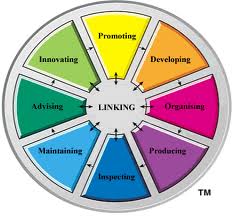
 

Small Business Management Information and Organizational Staffing

Different-sized businesses have different needs in terms of internal structure and systems, particularly during times of economic decline. As the entrepreneur adapts to changes in his or her competitive situation, the size of the business may vary enough to put it in competition with either larger or smaller competitors. Implementing systems to match competitive requirements is a necessary first step toward efficient organization and operation.

Management Information Systems

Small businesses usually enjoy the pace a smaller organization and a high level of personal involvement in decision-making. The systems typically in place range from a manual bookkeeping system inadequate in reporting timely developments to overly complex programs that require more attention than the small business leader can give. Therefore, the goal in a small operation should be to minimize company reliance on record-keeping as a chore and focus on the development of meaningful reports. With all systems tied together, the financial systems can work with marketing and operations systems. The reports generated can then be used by each department.

Accounting Information

Accounting information that should exist in at least a semi-automated form includes accounts payable, cash projections, expense estimating, and quotation systems. It is impossible to run an efficient operation with anything less than this skeleton. The payables are easily recordable as invoices are received and paid. Cash projections contain–at a minimum–information about loans, revenues, and disbursements. A basic expense estimating system posts invoice amounts  (direct costs) and allocates indirect  costs as appropriate to to specific projects or clients. Finally, a method of preparing quotes should be implemented to standardize pricing based on cost data.

Marketing Information

Marketing information should include inventory listings, commission agreements, advertising schedules, and research into market demand and competitor product offerings. Inventory listings are a natural by-product of the job costing (expense estimating) system and should include gross profit percentages, inventory age, and a measurement of the relative sales priority of inventory based on carrying costs. Commission agreements highlight the sales force’s expectations for representation of company products. Advertising schedules will help the business leaders plan for regular promotions. Finally, research into market demand and competitor product offerings will require periodic updates.

Operations Information

While accounting information is preferably computerized or otherwise automated, operations information, like marketing, need not be automated as a first priority. Information systems for monitoring operations include purchase orders, scheduling, and either timekeeping or job progress. A purchase order system is essential for cost controls, order documentation, and verification of amounts and qualities delivered. Finally, scheduling systems provide for systematic fulfillment of orders.

Organizational Staffing

Small businesses must determine the organizational development and staffing levels based on their need to delegate tasks and thus free themselves for critical activities. Office management, marketing and operations managers should be hired only after careful screening. These individuals need to possess industry specific experience and a good general feel for how your business works. Sales people and administrative staff are not innately qualified to work for a particular organization. When verifying references and conducting interviews, then, look for a match in values!

Office Management Staff

In the management of the office functions, organization and attention to details are essential. One or two well-trained individuals–preferably capable of performing each other’s jobs–should be enough to keep the internal operations running smoothly and to help with some of the company’s daily busy work when necessary. Ideally, these office employees should be able to handle accounting, calls, filing, and word processing.

Marketing Staff

The marketing staff need not consist of one or two well-trained individuals either. One person must have responsibility for digital marketing–all things web-based including website, social media, and CRM. The other should handle strategy and supporting sales and other executive staff on marketing issues, including advertising, branding, collateral materials, proposals, etc.

Operations Management

A team of one or two should again be sufficient. Depending on the size of the organization, the complexity of its operation, and the rate of growth, a good rule of thumb is that one manager should have responsibility for no more than five to eight direct reports. These managers should be expert in keeping work on time and on budget.


How to Handle Lenders

In dealing with lenders, it is important for executive teams to understand the background of those with whom they transact business. Bankers, for instance, are often conservative by nature, have little experience running their own business, and can be a part of a corporate system that is bureaucratic and slow moving. Realizing from the outset that the word “risk” is a four-letter word to these professionals can prepare you to have better conversations. Furthermore, you must accept that most front-line bankers are not empowered to question the standards they must enforce on behalf of their employer or the banking system as a whole. All of this is especially true after the recent mortgage industry troubles of the 2008 recession genre. By keeping in mind who is on the other side of the desk when a loan request is submitted, you as a management team member can position your request in a way that gives the banker the best ammunition to give you an affirmative response.

How Lenders Think

Understanding how lenders think helps the entrepreneur better understand why lending policies are pragmatic rather than opportunity-driven, standard rather than adaptable, and monitoring rather than recommending. While market opportunities drive the entrepreneur, lenders approach the very same data with caution. The same unpredicted cash shortage that merely surprises a business owner may send a lender into a panic. Lenders are not in the business of selling advice–in fact, they can be held liable if found to be doing so and the business goes under. They are in the business of making money on loans. Therefore, their loyalty is to company profits and a return on their monies borrowed–and noting else! Anyone who wishes to test the strength of this premise should try missing a few note payments.

Consistency is the hallmark of the lender, due in large part to the constraints of a corporate directive of standardization. The seemingly two-sided face that the entrepreneur sees the lender wear is real; the lending officer truly wants to help and has empathy, but is governed by institutional guidelines. Overidentification with the needs of the borrower can cause a lender to lose her job. 

Consequently, the face the business owner sees is not reality but rather a front depicting what the lending institution would like to see happen. Rarely does a borrower learn the true acceptable level of performance that a lender would be willing to accept. Since lenders control the purse strings to the resources that keep the borrower in business, these lenders are impossible to control. Knowing a lender’s true bottom line enables the borrower to influence lending policies that permit operation under the best possible conditions.

How Lenders Act

During tough economic times, lenders are expected to:

  • serve as a flexible yet profitable source of capital,
  • monitor the performance of borrowers in their book of business, and 
  • provide sound references to inquirers on behalf of their clients.

Lenders must be allowed to continue to make money on the loans they have extended, but the borrower may request modifications of the terms of repayment based on business financial performance. Principal payment deferrals, interest accruals, and other methods can be used to create cash within the business operation, but one is ill advised to single-handedly embark on such practices without securing the commitment of the lending institution in advance.

To the extent they are able, lenders should be encouraged to visit the places of business of their borrowers and check things out. Outside assessment of company execution of its plans by this important stakeholder group can prove valuable to the management of the company. Hopefully, an open dialogue creates an environment where the lender reference in credit applications is always a positive one and facilitates smooth operations in your company!


Entrepreneurs: Learn to Delegate to Capable Employees

Delegation

The “take charge” attitude that permeates a builder’s very makeup is easily channeled and tempered with proper direction and focus. Avoiding “one man rule” tendencies is as easy as one word: delegation. The effective executive delegates rather than performing all critical tasks. However, successful delegation requires that responsibility and authority also be delegated. Herein lies a problem for the executive–“hands off” management.

An experienced founder’s abilities and characteristics relate to starting and preserving a good business idea. Chief among those abilities would be creating a vision for the company, which is usually unstated but somehow understood. While it may seem a chore for others in the company, projecting a confident and self-assured image that appeals to prospective buyers  comes naturally to the experienced executive.

Additionally, identification of market opportunities and provision of top notch service to meet customer needs are focal points of the founder’s vision. Unfortunately, the ability to create a workable organization to achieve company goals and objectives may prove more elusive. The business owner who possesses the innate skill to attract others to pursue an unwritten vision may lack the skill to build an efficient organization.

Employees

Clearly, employees are critical to the success of profit maximization in any business; it is their effort that keeps the wheels of progress turning. Most employees have spent careers in similarly sized (small) companies in the same industry setting–be that white collar or blue collar–with limited exposure to alternate environments. Consequently, their frame of reference in employer/employee relationships amounts  to that which the founder and, where applicable, previous employers have provided.  With limited cross-training in other professional disciplines, these members of the team have the least job flexibility and therefore generally welcome changes in work flow patterns that can make their jobs appreciably easier and more effective.

Job Specialization

While cross training or shared skill sets occur as a matter of necessity, job specialization is a focus of many small businesses. A certain “pride of ownership” can arise from this high degree of specialization. Fiercely loyal, most employees would rather sacrifice some temporary perks rather than leave a benevolent employer “high and dry” in a time of financial duress. Since the employees tend to be skill-oriented, they require a great deal of direction in defining work assignments. At the same time, they spend a lot of time observing the founder and mimicking his or her efforts; if the entrepreneur is a go-getter, they will learn to hustle on the job in order to meet production requirements. In short, employees can be extremely valuable in performing the legwork that makes the business optimization a reality.

Employee Responsibilities

Employees are required to adhere to schedules, commit to the strategic plan, be willing to work long hours, and be brand ambassadors of the company in the community. Schedules governing production, documentation, and reporting must be religiously followed to ensure optimal work efficiencies. Time, budget, and administration constraints are to be respected and emphasized among employees and their  supervisors.

Mindful of how they represent the company, your people are the “front line” experience that others have with your brand. Whether buying from suppliers, meeting with customers, or serving in a local non-profit, they have an opportunity to make you look great–or not.

When company plans cause inconveniences for employees, it should be up to the employees themselves to raise the issue with their superiors. Once they have been given the right to voice their opinions and concerns, they should be expected to fall in line with the plan. Failure to follow established guidelines should not be tolerated. Without respect of your core values, your employees should be replaced by those who can carry your banner proudly!


Stop the Rhetoric About SmallBiz, Politicians!

We small business owners watched the political conventions over the last month and were listening to what the pols had to say about watching out for our interests. Numerous speakers took the podium to address an economic challenge not seen in this generation. We of the post-Baby Boom era are wondering whether our way of life will bounce back, rather than when. So many people have lost jobs, big companies have lost revenues they had taken years to build, and small business owners have lost both jobs and revenues as well as their livelihoods. We are, to say the least, keenly interested in whether we are being heard by Washington and our state capitals. We are certain that social security and probably Medicare will not be there for us when we reach retirement age. We truly do not care what happens to those programs–tell us what is going to be done to help us with issues we face!

Saying that small business is the backbone of the economy is not enough–both presidential candidates kowtowed to the convention audiences and said what they had to, but it wasn’t convincing. Part of the reason the comments seemed disingenuous is that “small business” is a catch-all phrase that does not distinguish between differing types of enterprises. As  others have pointed out, a restaurant is a very different type of company than a small manufacturing concern.  Dan Danner, the CEO of  the National Federation of Independent Business (NFIB) says, “There is always a tendency for lawmakers to think that small businesses are just smaller versions of General Motors, and they’re not.” Main Street businesses have very different perspectives on policies that are developed by government. Policies  covering health care, trade, taxation, and ecology often reflect the lobbying power of big business over small business. Chris Holman, chair of the National Small Business Association, says that politicians often “go and vote against small business.”

Data from the Small Business Administration shows that small business has been hit harder than big business by our recent recession. One of the statistics–share of nonfarm GDP from private companies–fell from 48+% in 2002 to <44% in 2010. With home building and related trades suffering from the aftermath of the mortgage crisis, there has been a very slow return to stability –let alone growth–in many small business sectors. Uncertainty over potential changes in the tax code and Obamacare has many small business owners anxious as to what to plan for and how to develop strategies  focused on more than just a few months down the road.

Bloomberg Businessweek writer Peter S. Green profiled several small business owners in the September 17-23 issue who spoke to the issues above. Tom Campbell, who owns the Regulator Bookshop in Durham, NC, spoke out against the unfair advantage online retailers like Amazon have due to sales tax exemptions. He’d like to see the exemptions lifted to create a more competitive playing field. The 20 employees under his supervision have concerns about the future of small bookstores who have to compete in an environment where their customers pay an additional 7+% due to the imbalance in tax liability.

Tom Secor, who owns Durable Corp. in Norwalk, OH, feels that the tax system favors larger businesses. Preferential loopholes in the tax code seem to favor those who have the klout to petition government to listen to them, he says. “Big business is getting the better end of this because they have the money to spend.” Secor’s comments are similar to those voiced by Richard Eidlin, director of public policy at the American Sustainable Business Council. Eidlin decries subsidies offered to big business–whether broadband spectrum or ethanol price guarantees. He says, “If there’s going to be corporate welfare, you could throw some of that at the small corporations.”

In summary, small businesses want someone who understands their needs, can develop programs for sectors of the small business economy, and won’t bog them down in paperwork and red tape. While few actually believe that a president can personally be attuned to these issues, we hope against hope that they will make it a part of their platform and governance!