Your Perspective May Undermine Innovation and Value Creation

Every company, whether privately owned or with public stockholders, is concerned about its valuation. The value of an enterprise is enhanced when its future growth opportunities are well understood, documented, and pursued. Why is it, then, that so many small to medium size enterprises fail to articulate a compelling innovation strategy that will fuel the needed growth? Kevin McFarthing, who operates the Innovation Fixer consulting firm, argues that it can be a lack of perspective. He has seen too many companies obsessed with current period performance of the exclusion of the long term “big rocks” that must be put in place to build a foundation for sustainable success.

McFarthing evokes the Three Horizons model of the late 20th century in many consulting projects as a means to draw corporate executives’ focus into more far-reaching and significant perspective. Baghai, Coley and White first outlined the model in “The Alchemy of Growth” in 1999. Markets and technology are seen as drivers in the model and are depicted in the diagram below (from Tim Kastelle’s blog).

Three Horizons Model


McFarthing’s interpretation of the Three Horizons model is as follows:

The Three Horizons process forces an assessment of technology strengths and market dynamics. It then forces a view of how much resource is allocated to each of the Three Horizons. The example above shows Google’s allocation of 70/20/10, which will differ for different companies in each category. It also forces a portfolio approach to innovation.

It also helps to retain the concept of emergent strategy in your approach to the innovation portfolio, as the days of fixed long term planning are diminishing…You can’t just write a five-year plan, lock it down and expect it to deliver. Large companies must continually revise their perspective of the role radical innovation will play in their growth.

The balance of the projects and resource applied to each element of the portfolio should be decided by the top team in the company, and be dictated by corporate strategy. Incidentally, it’s not just the resource that should follow a strategic allocation; the use of management time should also follow the Horizon split. Too often resource is applied to the opportunities on the edge, but thinking time is taken up by the short term. It should be followed through, and the temptation to reallocate Horizon Three resources to fight Horizon One fires should be resisted.

Where the application of these principles falls apart in many organizations is in the allocation of strategic (often scarce and/or over-committed) resources to pursue what has been stated as a priority. You know the saying, “You gotta walk the talk.” Breakthrough innovation, then, must move from strategy and communications (though it needs to be thoughtfully developed therein) to execution via competent actions. The right combination of talent, unique skills, and initiative, when coupled with appropriate resources, produces an environment ripe for innovation to occur.  While some organizations are able to spur internal innovation, most rely on open innovation (external sources) to re-energize their enterprises. Even large companies like Kraft Foods estimated that 98% of IP in the food industry existed outside Kraft. Knowing that an industry leader like Kraft saw value in eliciting the help of others should embolden your team to admit the need for outside help.

Three Horizons, while instructional, is not the only model used to enhance one’s perspective on the opportunity for innovation. What these models have in common, according to McFarthing, are the following principles:

  • Make space in your portfolio for bets on radical innovation;
  • Balance your portfolio over different time frames;
  • Balance your portfolio over different technology needs;
  • Exploit the potential offered by Open Innovation;
  • Balance your portfolio over different market opportunities;
  • In all cases, stretch your view and take a broader perspective.

Sounds like good risk management, creative strategy, and a plan for sustainability rolled into one approach!

Are You Doing it “To” or “For” a Prospect?

Many who aspire to increase the top line (revenues) of a business know that sales can seemingly cure a multitude of other problems. With enough money to spread around for paying bills and employees, plus some for marketing, customer service or maintenance, your company can improve morale and your ability to retain top talent as well as existing customers. However, in an effort to develop new business, our sales teams often do a very poor job. Conversion rates are low, so more leads are needed than would otherwise be necessary. In turn, more time is required, more overhead expenses thereby generated, and profits eroded. If we were able to improve the way we secure new clients, our organizations would be vastly more successful!

The biggest challenge a sales (interchangeable with “business development” or “client development” in settings wherein the word is anathema) professional faces is the distrust of the person on the other side of the table. Buyers are often afraid that something is being done to them, and dig in their heels or tune out their minds. Against this type of resistance, it can be extremely difficult to secure new accounts. The conversation must, therefore, disarm the buyer (in a genuine, sincere way) so that the perception changes to one of feeling like the salesperson is doing (well) for the buyer or her organization.

With the  combination of easily accessible information via the Internet and increased competition via globalization, it is incumbent on sales teams to keep their products and services from becoming commodities whereby the only means of competition is price. This objective can best be accomplished through consultative conversations. One of the leading minds on the topic of consultative selling is Mahan Khalsa, author of Let’s Get Real or Let’s Not Play (aka Helping Clients Succeed.) Helping (prospective) clients succeed should be the goal of every sales effort, but rarely is. In fact, hard line sales methods don’t seem to to take the client success into consideration as all, so long as the selling organization’s goals are met. 

Khalsa writes often about two key concepts: “getting real,” and developing an “exact solution.” To be real is to be authentic, truthful, expressing clear intent, and speaking from values. It is a paradigm wherein the seller doesn’t accept the first response without asking clarifying questions–the purpose is to break down false pretenses, move past fears, and to get to core issues as comfortably as possible for all parties concerned. While no solution is perfect unto itself, the goal of creating an exact one is to have a strong urge to leave few stones unturned in order to reduce ambiguity and partner on both identifying problems and the methods of resolving them.

With the right mindset, a salesperson can overcome the following (* taken from Let’s Get Real, chapter entitled “We Both Want the Same Thing”)  inhibitors of client success:

Our issues:

  • we don’t listen
  • we make assumptions
  • we have preconceived solutions
  • we need to make the sale
  • it takes too much time
  • we don’t understand their business
  • we know what they need better than they do, and
  • we don’t talk to the right people.

Client issues:

  • they don’t know what they need
  • the can’t articulate what they need
  • they don’t agree on what they need
  • they won’t give us good information
  • they don’t let us talk to the right people
  • they are unrealistic about time, money, and people needed
  • politics count more than business sense
  • they procrastinate, and
  • they can’t make decisions.

Taking time up front to either determine (jointly with client) that a solution does not exist or create a solid business case is critical for better sales success. When we match client expectations to those of our organization with regards to the people, time, and money needed to achieve success with regards to a given opportunity, we demonstrate shared interests and feasibility. Knowing how decisions are made, by whom, and the timetable removes guesswork and allows us to offer a solution that exactly meets the client’s needs.

Smarter Family Business Via Communication

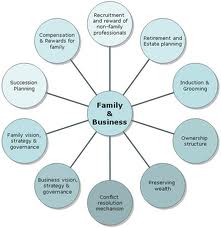
Having grown up in a family owned business, I have experienced a thing or two in common with many of my clients. Even when I was yet in middle school, I would be recruited to help out in the business, much to my own dismay at times when I would much rather be doing something (anything?) else. However, a little bit of pay went a long ways to making a young man very content. As I grew older, however, the conflict between what needed to be done in the business and what I wanted to do became greater. My goals, dreams, and ambitions had less and less to do with staying in town, working alongside my dad, and us building something together. As you can imagine, this difference of opinion caused a bit of a rift in our relationship. So it goes with many family businesses.

The mismatch between the expectations that a founder has in terms of the involvement of children in the business and their actual desire to be involved is one of the leading problems encountered in family businesses. The parent (substitute other type of founder, but effect is similar) wonders why the child doesn’t put forth the same effort, see the same vision, realize the potential, etc. I delivered a talk for Harley Davidson University on this subject a few years ago, “Why They Don’t Ride With You.” In my session, I spoke with dealers about their frustrations with family members who seemed disinterested in working in or taking over the business. My encouragement to them was to do three things:

  1. Hold the opportunity with an open hand. Instead of making up your mind that there is only one “right” scenario for family members to take part in your business, be flexible! Determine that, while you may have preferences, you will corral your opinions and keep them in check as you attempt to find a common ground.
  2. Communicate often, specifically, including listening. Far too often, a patriarch will squelch the input of a child, spouse, etc in the home–and at work–particularly if work and home blend as in the case of a family business. Rather than honing in on what the other person has to say, we can easily insist on getting our point across before seeking to understand the other person’s view. Ask open ended questions about what the family member enjoys doing, what role they see themselves in, and how those choices affect the business. Create an open dialogue-constantly.
  3. Distinguish between ownership and management. An heir may work in the business or out of it, but still function as an owner. Sometimes, it is best for all if it’s known to be a safe choice to be just an owner or just a manager, rather than both as the founder has been. Realizing that such options exist can diffuse tension, lead to productive conversations, and aid in succession planning. Quite often, outsiders are better successors to founders because they can be objective about the contribution family members make to the business.

There are many other issues that, seen operating in a family business, look and feel different than their counterparts in other types of businesses. Everything from performance measurement to compensation, perks to preferences, psychology to sociology, and very much in between can be seen at work and become a spark for emotions. By far, family businesses are more emotional than others. Whatever your situation, think about tools that help create objective conversations about business issues so that you can lessen the impact of emotions in decisions that are being made. Your business and your family will be better off for it!


Innovating Words Make Healthy Corporate Hearts


Cheryl Heller, Board Chair of PopTech, a laboratory for disruptive innovation focused on technology and social change, says that,

The wealth of jargon used to describe intrapreneurship (itself a bit of jargon), innovation and corporate social responsibility is more exhausting than enriching, and as their importance becomes more evident, the labels and complexities grow. What’s the difference between corporate social responsibility, cause branding, cause marketing, and a triple (or sometimes lately double, as if we can just decide to leave the environment out of it) bottom line? Should companies now stop all their work on sustainability in order to focus on resilience? Has all independent thinking, or even perhaps all generative thinking inside big organizations become intrapreneurship?  What’s the difference between social innovation and innovation? What’s the relationship between design thinking and innovation? What’s the difference between disruptive innovation and incremental innovation? Is some innovation more innovative than others and is more innovation always better? And does anybody else see this as a silly and dangerously circuitous trap of our own devising?

The significance of the debate about the proper terminology is to find a means to communicate disruptive breakthrough ideas as a valuable corporate asset–without simultaneously creating anarchy! Words cited in Heller’s comment (above) evoke values and desired activities that can help an organization create–or sustain competitive advantage.  Yet, if innovation is perceived as an altogether separate category than “ordinary business,”  then it can be argued that no one will want to do what is methodical if they can be celebrated and rewarded for dreaming over practical execution of existing initiatives. Most organizations and their leaders would prefer that employees see the process of introducing initiatives as a normal part of their positions, rather than stand alone activities that become the topic du jour and are jettisoned when times get tough in favor of “that’s the way we’ve always done it here. (TTWWADIH)” 

TTWWADIH can be a pervasive attitude that implies that we can add to what exists, but should not be expected to improve what exists. In this scenario, positions and/or departments are launched rather than tackling sticky, often political issues. Star studded teams are put together many times to represent cutting edge thinking, only to exempt the teams from performance, which ultimately leads to demotivated executive management.

Yesterday, we looked at Scott Anthony’s HBR article about Medtronic, a company well known for innovation, and their efforts to become even more adept at broad scale innovation. The Healthy Heart For All product has been launched towards the rural Indian population target market. Medtronic is large, smart, connected, positioned and incentivized enough to out-hustle upstart competitors. Though they brought in a key intrapreneur, the company was effective in changing the corporate cultural stance on what it takes to be competitive.

No one wants an unmotivated workforce. Nor do we want idealists who are not well grounded. The concept to “innovate properly” is a core value of a former employer of mine who understood that creativity and innate personal responsibility for the benefit of others must work in concert. By including this core value in position descriptions, the leadership team recognized the need to challenge employees to see advanced initiatives as the responsibility of every employee–not an isolated activity. Furthermore, when innovation becomes the expectation, we don’t have to “stop the presses” to encourage innovative thinking and actions.

Find a way to articulate your expectations for intrapreneurship (or innovation if you prefer) (or corporate social responsibility if you are a part of a grandiose cause) inside your environment. Ask people to define what they mean when using these terms. Expect all employees to take initiative!


Intrepid Intrapreneurship, 2012 Style

Have you heard about the League of Intrapreneurs competition going on right now? Ashoka and Accenture are serious about helping companies “build better business from the inside out.”  Early applications were due by October 24; final nominations and entries by January 15, 2013. The top 15 entrants from the competition will form the inaugural class of the League of Intrapreneurs, becoming part of an elite global network of changemakers. These entrants will also receive media and press recognition and will be featured in the publication of a globally distributed intrapreneur toolkit. Of this league, the top four winners will be profiled on Fast Company’s blog, Co.EXIST, and will receive consulting support from Accenture Development Partnerships to further their work.

What is Intrapreneurship? The Wikipedia definition that is quoted on the home page of the Intrapreneurship Conference being held in Paris next month says it is “the act of behaving like an entrepreneur in a bigger organization.”  Their promotional pitch continues: 

Intrapreneurship is a rising concept that tries to gather the natural objective of any organisation in the 21st century to be more innovative with the often non-tapped energy dug into any would-be entrepreneurs. Intrapreneurship create(s) a framework where the latter is granted some freedom to try out a project of his/her own, the benefit being shared with the employer in the case of a successful experimentation.

The… conference, on December 13th, aims to cover this growing trend in corporations’ life, which addresses both the need of companies to produce more innovations and the will of talented people to find achievement opportunities. Experts and representatives of some of the most innovatives companies will share their view on why intrapreneurship is positively impacting their organisation and how they implement it. The conference is designed for human resources managers, chief strategy and chief operating officers, as well as everyone who is interested in the new growing management trends for change.

Ernst & Young has noticed the power of the intrapreneurship trend and, based on recent survey results, offers six guidelines for creating a culture ripe for innovation within larger organizations:

  1. Set up a formal structure for intrapreneurship. Give people enough time away from their “day jobs” to work on creative projects, but provide a formal process for new product development.
  2. Ask for ideas from your employees. They have their fingers on the pulse of the marketplace. Encourage them to contribute to the innovation dialogue.
  3. Assemble and unleash a diverse workforce. It’s no secret that diverse groups come up with more innovative ideas. Tap into this multifaceted source of power.
  4. Design a career path for your intrapreneurs. For the most part, intrapreneurs are mavericks who will quit — and take their best ideas with them — if they don’t see prospects for career advancement.
  5. Explore government incentives for innovation. Ask how these can support your intrapreneurial ventures. Governments all over the world are offering new tax breaks and other incentives for research and development (R&D) — and corporations in turn are urging governments to support innovation.
  6. Prepare for the pitfalls of intrapreneurship. Not all ideas will produce successful new products. Failure is an important part of the process.

Scott Anthony, of Innosight, writing for an HBR blog post earlier this Fall, cited a story of how Medtronic fostered intrapreneurship through a culture of innovation in introducing the Healthy Heart to hospitals. He felt Medtronic had a competitive advantage: 

Medtronic had an internal “corporate catalyst” — someone who marshaled resources both inside and outside the company and built organizational support for the disruptive growth strategy. Medtronic mixed the entrepreneurial approach of a VC-backed start-up with the unique capabilities once housed in corporate labs. Its story illustrates how big companies are powerfully and uniquely suited to tackling large-scale social problems such as hunger, health care, sustainability, and education. These aren’t stand-alone corporate social responsibility efforts — they are strategic initiatives to create profitable businesses that improve the world.

In many ways, Medtronic was applying the E&Y recommended best practices without even having read them. What is your company doing to foster a culture of innovation? Tomorrow, we will tackle the language of intrapreneurship!