Your Perspective May Undermine Innovation and Value Creation

Every company, whether privately owned or with public stockholders, is concerned about its valuation. The value of an enterprise is enhanced when its future growth opportunities are well understood, documented, and pursued. Why is it, then, that so many small to medium size enterprises fail to articulate a compelling innovation strategy that will fuel the needed growth? Kevin McFarthing, who operates the Innovation Fixer consulting firm, argues that it can be a lack of perspective. He has seen too many companies obsessed with current period performance of the exclusion of the long term “big rocks” that must be put in place to build a foundation for sustainable success.

McFarthing evokes the Three Horizons model of the late 20th century in many consulting projects as a means to draw corporate executives’ focus into more far-reaching and significant perspective. Baghai, Coley and White first outlined the model in “The Alchemy of Growth” in 1999. Markets and technology are seen as drivers in the model and are depicted in the diagram below (from Tim Kastelle’s blog).

Three Horizons Model


McFarthing’s interpretation of the Three Horizons model is as follows:

The Three Horizons process forces an assessment of technology strengths and market dynamics. It then forces a view of how much resource is allocated to each of the Three Horizons. The example above shows Google’s allocation of 70/20/10, which will differ for different companies in each category. It also forces a portfolio approach to innovation.

It also helps to retain the concept of emergent strategy in your approach to the innovation portfolio, as the days of fixed long term planning are diminishing…You can’t just write a five-year plan, lock it down and expect it to deliver. Large companies must continually revise their perspective of the role radical innovation will play in their growth.

The balance of the projects and resource applied to each element of the portfolio should be decided by the top team in the company, and be dictated by corporate strategy. Incidentally, it’s not just the resource that should follow a strategic allocation; the use of management time should also follow the Horizon split. Too often resource is applied to the opportunities on the edge, but thinking time is taken up by the short term. It should be followed through, and the temptation to reallocate Horizon Three resources to fight Horizon One fires should be resisted.

Where the application of these principles falls apart in many organizations is in the allocation of strategic (often scarce and/or over-committed) resources to pursue what has been stated as a priority. You know the saying, “You gotta walk the talk.” Breakthrough innovation, then, must move from strategy and communications (though it needs to be thoughtfully developed therein) to execution via competent actions. The right combination of talent, unique skills, and initiative, when coupled with appropriate resources, produces an environment ripe for innovation to occur.  While some organizations are able to spur internal innovation, most rely on open innovation (external sources) to re-energize their enterprises. Even large companies like Kraft Foods estimated that 98% of IP in the food industry existed outside Kraft. Knowing that an industry leader like Kraft saw value in eliciting the help of others should embolden your team to admit the need for outside help.

Three Horizons, while instructional, is not the only model used to enhance one’s perspective on the opportunity for innovation. What these models have in common, according to McFarthing, are the following principles:

  • Make space in your portfolio for bets on radical innovation;
  • Balance your portfolio over different time frames;
  • Balance your portfolio over different technology needs;
  • Exploit the potential offered by Open Innovation;
  • Balance your portfolio over different market opportunities;
  • In all cases, stretch your view and take a broader perspective.

Sounds like good risk management, creative strategy, and a plan for sustainability rolled into one approach!

Don’t Business Plan Before Test Marketing


Take a look at the programs available to start-up businesses and you will certainly find that many offerings are based on a business plan. Governmental and educational agencies in particular are often enamored with curricula that present a template for plans that is easily administered and a breeze to teach. The emphasis is usually on the various business disciplines that can be found in a larger business, but applied to a small business. Instructors generally come from corporate or academic careers and are most comfortable with this approach. Yet, most entrepreneurs, when “equipped” with the suggested program, are unable to reach the five years in business anniversary–a full 50%+ fail according to the U.S. Department of Labor’s Bureau of Labor Statistics.

Observe the chart below, used by EntreDot to illustrate how an idea should become a commercially viable business:


Business planning is an outgrowth of three prior steps: ideation, conceptualization, and creation. What occurs in each of those steps that better prepares the entrepreneur to actually write a business plan? “Ideation is the process for structuring an idea into a well explained business idea that has enough information for the entrepreneur to decide whether it has commercial potential and whether or not it should be pursued any further. Conceptualization is focused on developing an understanding of the market the entrepreneur intends to pursue, and gathering enough information about it to be able to decide if there is commercial value in the business idea. Creation provides the details of the products and services from the point of view of what capabilities the customer will have and how they will see quantifiable benefit. The focus is on what it provides the buyer and the description has to be from the customer’s point of view and what will be delivered to them.” (courtesy, EntreDot)

Every viable business needs to address the following five issues:

o What is the opportunity (premise)?
o What are you offering (solution)?
o Who will buy it (market)?
o Why will I win (Advantage)?
o How do I make money (Business)?

Ideation is the step in which the issues are raised–not Evaluation (Step 4, where business planning occurs). By wrestling with these questions early, the entrepreneur hones a business idea into an elevator pitch that can be “test marketed” to potential buyers. The key advantage to having a story to tell and people to whom it can be told is the opportunity to collect key data during Conceptualization. The feedback is incorporated into the Creation step. As a result of this improved process, entrepreneurs are able to refine the product offering and message to become a more powerful resonator with a specific target audience. 

The other process, the more prevalent one described in the first paragraph, is faulty by comparison–and not just because it is being carried out by people who have next to no small business experience (launching their own enterprises.) By beginning with a business planning process, the typical entrepreneur is making a series of assumptions. The vast number of assumptions that have to be made to construct a business model from which a plan can be developed is likely to be the proverbial “house of cards.” Assumptions built upon assumptions that lead to projections about assumptions is a presumptuous risk, the outcome of which is likely to be business failure in one out of every two businesses started by the five year mark.

It is way better to eliminate as much of the guesswork as possible so that, when we arrive at Evaluation (Step 4, including the business plan), the planning is focused. The discipline of determining buyer needs–rather than simply looking at internal capabilities and developing products in an isolated manner–yields a recipe for improved business success as risk is eliminated through data verification. 

Do your homework before business planning and your ideas will meet with greater implementation success!


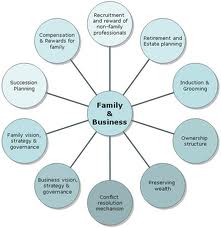
Smarter Family Business Via Communication

Having grown up in a family owned business, I have experienced a thing or two in common with many of my clients. Even when I was yet in middle school, I would be recruited to help out in the business, much to my own dismay at times when I would much rather be doing something (anything?) else. However, a little bit of pay went a long ways to making a young man very content. As I grew older, however, the conflict between what needed to be done in the business and what I wanted to do became greater. My goals, dreams, and ambitions had less and less to do with staying in town, working alongside my dad, and us building something together. As you can imagine, this difference of opinion caused a bit of a rift in our relationship. So it goes with many family businesses.

The mismatch between the expectations that a founder has in terms of the involvement of children in the business and their actual desire to be involved is one of the leading problems encountered in family businesses. The parent (substitute other type of founder, but effect is similar) wonders why the child doesn’t put forth the same effort, see the same vision, realize the potential, etc. I delivered a talk for Harley Davidson University on this subject a few years ago, “Why They Don’t Ride With You.” In my session, I spoke with dealers about their frustrations with family members who seemed disinterested in working in or taking over the business. My encouragement to them was to do three things:

  1. Hold the opportunity with an open hand. Instead of making up your mind that there is only one “right” scenario for family members to take part in your business, be flexible! Determine that, while you may have preferences, you will corral your opinions and keep them in check as you attempt to find a common ground.
  2. Communicate often, specifically, including listening. Far too often, a patriarch will squelch the input of a child, spouse, etc in the home–and at work–particularly if work and home blend as in the case of a family business. Rather than honing in on what the other person has to say, we can easily insist on getting our point across before seeking to understand the other person’s view. Ask open ended questions about what the family member enjoys doing, what role they see themselves in, and how those choices affect the business. Create an open dialogue-constantly.
  3. Distinguish between ownership and management. An heir may work in the business or out of it, but still function as an owner. Sometimes, it is best for all if it’s known to be a safe choice to be just an owner or just a manager, rather than both as the founder has been. Realizing that such options exist can diffuse tension, lead to productive conversations, and aid in succession planning. Quite often, outsiders are better successors to founders because they can be objective about the contribution family members make to the business.

There are many other issues that, seen operating in a family business, look and feel different than their counterparts in other types of businesses. Everything from performance measurement to compensation, perks to preferences, psychology to sociology, and very much in between can be seen at work and become a spark for emotions. By far, family businesses are more emotional than others. Whatever your situation, think about tools that help create objective conversations about business issues so that you can lessen the impact of emotions in decisions that are being made. Your business and your family will be better off for it!


Traffic Schmaffic – Get Conversions

In the course of advising startups (and some existing clients) on how to gain traction with their business proposition, I ultimately have a conversation about target buyers. Notice the word “buyer” –it is a different word altogether than “shopper” and “viewer.” When we obsess on trying to get web traffic, foot traffic, and the like–but not on conversion–we have lost sight of what is ultimately most important.

If given the choice between 100 website visitors of whom 20 become buyers or 1000 of whom only 15 become buyers, most would actually choose the 1000. Their reasoning would likely be that 1000 impressions is better than 100 and that they hope that the other 985 could be targeted for future conversion or word of mouth marketing. Yet, your business would have 5 fewer sales and a significantly lower conversion rate (1.5% vs 20%). Better, we would argue, to have a high conversion rate, more revenues, enhanced cash flow, and the opportunity to build relationships with five more people.

So much effort is wasted among entrepreneurs to get traffic–and not just in an online sense–that very little is left to think through conversions. Conversions are a better predictor of long term success than impressions. Get this thought into your psyche. It can make the absolute difference between success an failure.

Matthew Toren, founder of Young Entrepreneur, offers the following 5 tips for lead nurturing:

1. Be a problem solver. You have to admit that at least part of business success has to do with the timeliness of your products or services. You must answer people’s needs. The key is settling into a business that has problems you really love to solve, with customers whose pressing needs you are very good at addressing. When you’re able to identify your niche, you don’t only go out there to earn, you have a unique passion and an offering that suits the needs of those people.

2. Get into your customers’ psyche. People buy not only because they need things, they often buy to satisfy something deeper in them. It’s often the feeling they associate with a product that they finally make the decision to buy. Everybody needs a pair of shoes, but not just any shoes can satisfy that need. This is when branding, reputation and customer service come into play. In fact, this is why there is marketing in the first place. Get into what excites and interests your target market. This is the only way you can tailor-fit your campaign to the people who would not think twice of paying for what you have to offer.

3. Where are your customers? In online marketing, determining how your market interacts with the Internet is very important. It gives you leads to “where” they are online. Online behavior can point you to what sites they frequent, the social-media networks they prefer, the news they’re more likely to read and so on. If you know where they are, you can be sure to focus on places you need to have a commanding presence. This assures you of a steady stream of traffic of ready-to-pay customers, and it prevents you from effectively barking up the wrong tree. We all know how costly and time consuming that can be.

4. Do you really know them? To really pinpoint who your target customer is, you’ll want to dig in deep… find out how they tick, if you will. The key is to learn about them, even change with them over time. So basically, this means you can’t just buy one customer list and operate off that in perpetuity. You’ll need to continuously find out about your target audience. Are they reading things you should be reading? Do they shop at stores you’ve never heard of? All of these puzzle pieces could fit together and help you identify the bigger customer picture, if you’re willing to spend time accumulating them.

5. Close in on the deal. Once you know your customers and understanding where they are and how they think, you can specifically design an online marketing campaign that appeals to those people who would love to pay for your products or services. By being a problem solver, you’re forced to know yourself and understand your brand’s strengths and weaknesses. But understanding who you want to engage with online really seals the success of your business.

Market Your Way to the Top

Businesses who are ineffective in conveying their mission and product offering  to the marketplace simply cannot effective and efficient enough to wring profits out of insufficient revenues. Image may not be everything, but it can mean a great deal in terms of buyer perceptions that influence purchasing decisions. Clearly, not every business can be recognized as the “best in category.” However, you can continuously improve your market position by marketing and positioning your company as one that fulfills its mission and satisfies customers. The public must know your company and its offering!

Name Recognition

One goal for keeping a business strong in its marketing efforts is to increase name recognition. Keeping the company–and often one or more of its top executives–in front of the local “players” (centers of influence who will talk you up) can provide tremendous benefits; when these individuals refer or bring a client to you, it is because they:

  • know you,
  • know your reputation, and
  • trust you to do a good job for their friend(s).

Other means of getting the word out include building a thought leadership role through public speaking. If you are not the type who enjoys standing in front of a room and attempting to engage them in a conversation, you may be more comfortable as a panelist or panel facilitator. Through active participation in community groups, you are afforded a unique opportunity to discuss your company’s success and how your core values, product offerings, and service standards are opportune for the listener or someone they know. 

Customer Research

The customer must be researched continually, paying particular attention to discriminating tastes and preferences. Your sales team should be your best source of information as to what buyers seek. Research reports should compile information gathered from key figures in your community–those “centers of influence” who are gateways to networks of potential buyers for you. Study what you find out with an eye towards possible adjustments in product offerings as quickly as possible; the key here is to beat competitors to the punch. When you meet new prospects, ask them questions about what they like, try to keep a running tab of demographic trends about them, and find out what may be holding them back from purchasing from you.

Marketing Trends

Attend industry meetings for either your vertical market or the markets in which your customers are likely to hang out–better yet–do both! Stay abreast of trends in the market, listening carefully for changes in design, pricing, or delivery. This information can serve as a launching point for later team discussion back at the office of how to “up your game.” On at least a quarterly basis, someone should “shop” the competition, pay attention to how they operate and promote, so you can glean strategic insights. Chances are high that, armed with better information, you will make significantly better decisions!

Weighing the Competition

Ask your management team what they hear about competitors from suppliers, attorneys, CPAs, banks, and the like. It can be very helpful to keep spreadsheets listing others’ products, price points, features, and promotional incentives. By monitoring these over time, your team begins to get a feel for where the competition feels the market is moving–and you can adjust your own planning accordingly. Try to figure out how many employees your rivals have, as well as their real estate expenses, number of sales or distribution arrangements, and other key metrics. Watching these statistics from one measurement period to another can provide you with opportunities to win market share. When you have a feel for what obligations the other guy has, you can estimate their break even point, which translates into pricing policies, potential availability of financing, and many other factors critical to your success!