Growth Through Market Knowledge

Market positioning is won through a combination of market insights, product features, and delivery of “the promise.” Superior use of these three components makes for a winning strategy to outperform the competition. Market insights are critical to determining what to offer, in what way, and how to communicate one’s message effectively. There are two types of insights that should be studied in unison to drive your internal strategies an external tactics–competitor and buyer. 

Researching the Competition

Understanding where your product fits in the market is just good business sense. If you never take the time to study what others are doing, you will likely not be on target. When I was taking a strategy course in my MBA studies, we were treated to a semester long simulator assignment. The simulator was comprised of five teams of students who each organized to make decisions about their unique computer chip company. We were given freedom to make decisions about what size, durability, and other features different models in our product line would have. We also elected financing options, manufacturing capacities and human resources/training choices. Finally, we were able to allocate dollars between marketing and sales activities and each team received market data that showed what buyers were purchasing, along with trend reports showing products likely to be in demand in the future. Observing what changes others were making, and relatively what they were spending for parts of their businesses, then tracking both sales and profitability performance and plotting it against market share and stock price was a very instructional exercise.

What was most valuable for us was to see a glimpse into the decisions that our competitors were making. Much like a game of chess or a soccer match, the tactical maneuvers employed by others were not just to be noticed, but anticipated, planed for, and counter actions developed. Additionally, we would have strategy sessions to think through whether to do something unexpected, stay the course, expand/shrink products based on resource needs and profitability, plus make trade-offs between automation and personnel. 

In your own business environment, research data is compiled form three main sources:

  1. Primary: first-hand interaction with the market and reporting.
  2. Secondary: compiled reference materials outlining primary research others have done.
  3. Tertiary: facts and figures derived from someone else’s summary research statistics.

Surveys, focus groups, interviews, literature searches, online services, and personal observation are all legitimate ways to collect the above data, dependent on your desired level of confidence in the decisions you must make. Industry associations, through conferences and publications, provide a fair amount of secondary and tertiary research information about competitors and buyers.

Buyer Research

Though I have guided many companies in market research projects over the years, these days I try to guide clients to resources when someone is more dedicated to a discipline than I. Jay Nolfo, who writes the blog Pensare, and is a good friend of mine is one such  resource. (By the way, his company uses a rhino rather than a hippo, but at least we’re similar!) Here’s what he had to say in a blog post earlier this year:

  • Introduction of New Product or Service: Any new business, or introduction of a new product or service that the company is thinking of offering, needs market research.  By developing a good understanding of the product by developing a good business plan based on market research helps provide a solid foundation for your offering.
  • Customer Development: Next to understanding the product or service you are offering, understanding the customer who will be buying it is paramount.  In a consumer based business, understanding the demographics and psychographics of a target market can be determined by looking at previous purchase behavior or through a needs analysis.  In a business which sells to other businesses, understanding their needs can be a little more difficult.  However, this can be understood by doing surveys or focus groups.
  • Customer Satisfaction: After your customers have purchased your product or service, following up with them to understand their satisfaction of that purchase is key.  By understanding why they liked or disliked your offering and the reasons why the customer purchased your product or service over the competition can provide a basis of what could be your competitive advantage.

Take the matter to heart…consider how to improve your knowledge of what competitors are doing and what buyers want. You will then, as we did in our MBA class, be better prepared to develop winning business ideas!


 

Watch Your Asset – It May Not Be a Resource

First, the bad news: making operations, finances, and employees work to maximum value can mean having to eliminate some employees or operations at times. The good news, though, is that many businesses have been able to hold on to existing resources–even during a turnaround situation–by reassigning them to better purposes and uses where required. This is the heart of asset redeployment–the practice of reassigning people, things, and efforts to achieve optimal efficiency. By using capital wisely, your team can make it stretch a lot further. For example, coordinating employee and independent contractor work to produce the greatest amount of work with the fewest number of people working the least number of hours means greater return on efforts and dollars.

Eliminating Operations

Eliminating unprofitable operations–in whole or in part– is a wide-ranging task. Anything that may be termed “waste” in the company needs to be discarded or put to better use. One area that should be addressed is waste due to unnecessary multiple consumption of potentially shared resources. In plain terms, the individual use of items that could be shared is an extravagance that few small businesses can afford. Think of shared printers rather than a printer on each desk as an example. it is highly unlikely that every single person in the office will be printing at the same time. What’s more, high volume printer/copier combination machines use less expensive toner than ink cartridges in smaller units. This initiative may require more cooperation and patience than providing unique units for each employee, but such a move can reduce the amount of money the company must spend to get work done.

Avoiding Duplicate Efforts

A counter problem to the above is too many employees doing the exact same job, either knowingly or unknowingly. Such multiple effort, a clear waste of time, resources, and money, often occurs when someone is fearful of delegation or feels threatened by another’s talents and abilities. Therefore, management should make sure that several people are not doing the same job in differing formats and degrees. 

Non-linked software is a perfect example of this kind of waste; if the secretary maintains supplier addresses and phone numbers, and the accounting group keeps the same information in their files, someone is performing an unnecessary job. Instruct employees in ways to avoid duplication of effort. Look across your organization, document processes by task, and find ways to reduce overlap. This is not to say that your staff should not be cross-trained. It is, in fact, good succession planning and talent management to have people who could do someone else’s job in a pinch!

Managing Capital Resources

Capital resources include facilities, supplies, and work in process. Buying only what is needed when needed (“just in time”) is one way to wisely manage resources. Another way would be to try to have more finished goods inventory than unfinished, because finished goods can be sold quickly to raise cash. At times, you may consider renting or leasing an asset rather than purchasing it–especially if the term of the contract is less than the useful life. You may elect to “turn in” resources that you don’t need very often or convert them to less cash intensive resources through alternate financing. 

Coordinating Human Resources

This is an area often overlooked because it is seen as “just administrative.” When employees, however, have jobs that overlap in requirements, it is up to the executive team in the small business to correct the situation for optimization. When your people are performing jobs that are not their strong suit, they usually take more time and make more mistakes than a better qualified and motivated counterpart.

Develop a competent management team to help you steward resources more efficiently. There are multiple areas for gains in efficiency and profitability if you will commit to the process. Note: process rather than one-time task–follow-through and experience the fruit of your labors!

Keeping Costs Under Control

If expenses are simply allowed to fluctuate, with no way of monitoring where they will be, optimal profitability will be hard to come by. Cut out as much fat as possible and keep the company lean. Clearly, certain expenditures are necessary and unavoidable. There are ways, however, to limit their influence on company profitability. For example, taking advantage  of any offered cost savings an creating efficient procedures to save time and project financing overruns will cut costs significantly. A purchasing requirements program is a start for reducing many hard costs. Most soft costs, however, can be decreased through effective scheduling.

An effective requirements program includes the following steps:

  • using purchase orders 
  • inspecting all deliveries
  • taking advantage of discount incentives
  • implementing invoice verification procedures
  • scheduling efficiently

Using Purchase Orders

Purchase orders are seen as a relic of old business practices by some. Others view them as an indispensable management tool. Somewhere in between the extremes there is a fit for every organization. Their usefulness is in getting reliable quotes upon which invoices can be checked later.

Inspecting all Deliveries

Inspecting all deliveries is essential to make sure orders are shipped according to the quantities and quality specifications provided on the purchase orders. Many managers complain that they do not have the time to physically inspect every item delivered to a work place. Inasmuch as doing so would require a huge time commitment, they are right.  However, for containing cost overruns, these same managers could not be more wrong in their assumptions.  Inspecting samples  from every delivery when delivered and figuring quantities by up close, visual inspection are necessary steps to ensure that suppliers are responding to the company’s needs.

Taking Advantage of Discounted Materials Prices

When suppliers make discounts available on purchases, your team should try to make the most of them. In addition, verify all invoices against delivery inspection reports, checking  the invoiced amount against the total amount delivered, and unit prices against the purchase order. This procedure will help ensure that a supplier’s negligence is not costing the company money.

Scheduling Efficiently

Time constraints are of utmost importance in eliminating inventory carrying costs–whether your business produces goods or services. If a product line or project is slow to be completed, many extra costs begin to accumulate. Alternative uses of profit margins are foregone. Had your team been able to finish sooner and collect within a finance cycle closer to the one in which work began, there would have been profit margin to discuss how to allocate. With margins, choices exist that don’t otherwise–suppliers can be kept happy and bankers and investors can too! If yours is a business that uses work in process assets, insuring those assets is an ongoing cost for the company. Theft and obsolescence of design and features due to carrying raw inputs too long further eat away at margins. The cost to repair items damaged over time also rings up expenses. All of these combine to make inventory (due to delayed delivery) costly.

Proper scheduling is not limited to getting one work team to immediately follow another onto the job. By ordering raw inputs in bulk through purchase orders, trips to supply houses are reduced, resulting in cost savings through lower fuel costs and less time away from actual work. As these employees spend more time on the job and less time running around town picking up materials, their projects are completed faster. Getting teams to succeed one another promptly with slight overlaps can also tighten production schedules and help reduce costs.

By tying your project financing to interest rates in a market where rates are rising, you and your team can make the most of prompt completion of projects. If you operate efficiently, you can move before rates rise consistently. Finally, scheduling vacations with as little overlap as possible will help with your production efficiency, and thereby improve margins.


What to Do When Financing Fails

Having been in business in the same town for almost twenty years, a Midwest company was accustomed to expansion and going after market opportunities. The owner had kept her business competitive by continuously improving product offerings and learning from the input of both customers and target customers. With a loyal, experienced operations team, she felt that she had the recipe for long-term success. However, when the recession of 2008 hit, she was unable to obtain a renewal of her line of credit by which she had historically been able to normalize cash flows.

The case study above illustrates a business principle–that we must always as business owners prepare for the unexpected and have the flexibility to adapt to changing market conditions. If we seem surprised when an action that we did not anticipate occurs, then it follows that either: 1.) our planning is incomplete, 2.) our systems and processes are too unresponsive to key indicators, or 3.) we have not established a feedback loop that provides us as small business executives with vital, timely information. Regardless the reason, it is poor management to not have a contingency strategy or tactic in mind for situations that may arise.

What should an executive team do when financing from lenders or investors falls through? First, the reason  for such a collapse in financing is normally attributable to one of the following:

  1. Partners or new regulations restricted the financing source from making (continuing) the deal.
  2. A more attractive alternative was available to the lender/investor from another source at the same time.
  3. The company failed to read the market conditions and adjust the financing request accordingly.

To stabilize the business in response to one of these situations, the owner and top finance executive should always seek new sources of funds–even if today’s source has been very reliable. If you have built relationships with other providers of financing, you may be able to reduce the risk any one player undertakes by spreading it among several. Alternately, you may find that some institutions have differing standards for new clients than for existing ones and may want the entire financing facility.  In either scenario, it is incumbent upon you and your team to perform due diligence. Find out how the bank (or alternate source) has shown commitment to other borrowers. In many cases, your accountant or attorney may be able to recommend new sources for you. Others in your trade group may have similar referrals to provide.

Being able to lay out both your best case scenario and a worst case one will show a new source your planning strengths and help to establish credibility. Ask questions about how credit facilities could be expanded as you hit milestones. Offer your plan for reporting your financial and operating performance. Discuss what the loan covenants may look like and have frank conversations about how your team will accommodate the request to demonstrate creditworthiness.

To avoid a recurring financing problem, owners should try to over-finance their operating needs whenever possible. It is extremely valuable to have credit available that is not being used–this cannot be overstated! Given that this funding source may dry up at any point, you never want to have to go back to the lender or investor because you failed to anticipate growth. 

The other recommendation is that you look at different types of credit. If you traditionally have only taken out installment loans, look for lines of credit–and vice versa. There are additional types of financing that may also be advantageous to consider–accounts receivable, factoring, purchase order financing, contract or project financing, asset based lending, leasing, etc. By using more than one type of funds from more than one source, you are diversifying your vulnerability to a credit restriction that could be deleterious to your business success.

Urgency in Turnarounds

When a team has tried everything in their power to solve a dilemma and is unsuccessful, the turnaround manager must step in. The buck stops with him; if a third party cannot reach resolution with company staff, someone with more clout must reestablish credibility. Use of a consistent complain resolution process can prove quite effective. It frees the team up to not have to stress relationships with those with whom they have either had long term relationships or with whom they must transact business once the turnaround is complete. Even managers should appeal to the business owner or turnaround executive if a third party will not accept their efforts to resolve issues.

Doing the Job Effectively

Encouraging employees to perform their jobs thoroughly, to the point they exceed performance standards, is most easily done by providing responsibility and reward. Treat employees as peers, recognizing that they too have responsibilities and commitments. Offering them the opportunity to wield more authority is rarely rejected. Promote a diligent working atmosphere wherein employees want to go the extra mile.

Ask all employees to document any problems with suppliers, customers, or service providers. Often, taking it a step further and documenting issues with sales teams, distributors and governmental agencies (where appropriate) can provide a paper trail to  help the executive team and turnaround artist in their work to remove roadblocks. When relevant facts are understood, appropriate actions can be taken.

Dealing With a Lack of Resources

When a company is in the middle of a turnaround, certain items that would make work easier are not going to be available due to a lack of funds. Using skills and abilities creatively to overcome this lack of resources or other unpredicted occurrence as an example for employees to follow. In tough situations, executives should look for a way to overcome the situation rather than dwelling on the inconvenience caused.

Successful turnarounds are a tribute to employees who strive to overcome limitations and exceed performance standards rather than merely meet them. To bring work projects in early and under budget, everyone must strive to do much better than is required, constantly searching out ways to improve efficiency. No time can be wasted–every minute and every dollar that exceeds schedule or budget extends the distance between a struggling company and its ultimate goal of renewed profitability.

Following the Turnaround Plan

All employees need to be reminded that a plan has been developed to promote optimal recovery and that all actions taken are done so in accordance with the dictates of the plan. United by common objectives, the work force can and will help to implement the turnaround plan. Three essential principles apply:

  • Some short-term gains will be sacrificed for ling-term profitability.
  • Some long-term successes will have to be postponed for short-term cash flow.
  • The means of implementation is always open to suggestion and never open to argument.

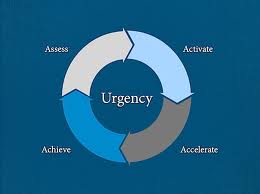
Creating a Sense of Urgency

Certain goals, particularly dates and milestones, need to be met without fail. To accomplish these goals, a sense of urgency must prevail. Departures from the schedule can cause the company to lose out on windows of opportunity. The interest carrying cost of financing operations longer than anticipated is an example; if work projects are completed on time, lines of credit can be paid down sooner. Even one foot-dragging employee can impede the progress of the group, and the resulting missed deadlines can mean substantial financial losses.

Meet With Employees

Sit down with your staff and clearly and frankly describe the situation. Inform them that the company is experiencing some short-term problems in meeting its objectives and that actions are being undertaken to minimize long-term  impact. Explain and reiterate throughout the turnaround that company health can be restored through combined best efforts. Explain the turnaround plan, with an emphasis on the valuable role of each and every employee in reaching plan goals.

Meet With Management

Regular meetings with managers will be needed to discuss progress in detail. Begin with twice weekly meetings and progress to biweekly as the situation improves. Update reports should be given on activities since the prior meeting, with input required from managers from each department. Discuss problems and develop plans to resolve them within the meeting. Take advantage of a quorum of opinions to move the company forward in rapid-fire fashion.