Pick 7 Marketing Trends for 2012

Lists can be so helpful for us to get our minds around the critical messages for a given subject. In a deliberate play on words, I wanted to juxtapose a “Pick 7” lottery concept with a “7 Marketing Trends” informational piece. Collectively, we can agree that any “list” is one person’s opinion and that it really is a “luck of the draw” as to whether applying someone else’s  recommended best practices will make a difference in your given market. Yet…simply attacking the subject matter sharpens our minds, encourages us to support our strategies with sound arguments, and generally makes for better decision-making! So…the list:

  • Location, Location, Location: Check-ins match message with timing
  • People are People: Listen, observe & match individualized message to feedback
  • Not One Size Fits All: Designing for multiple devices
  • Customers for Life: Customer retention through engaging multiple times
  • Behavior Speaks: Connect individuals based on how they interact with you
  • “Mocial”: Email, mobile, local & social
  • Dynamic Email: Static content is passe’; modernize!

With help from the folks at Silverpop, we hope to help you understand what’s at stake in each of these trends so that you may consider the impact to your marketing strategy and implementation. Location: think Facebook, Twitter & Foursquare–it’s important to help your customers share your brand with their friends. By combining incentives for people to let others know they frequent your business with intention in making it easy for your story to be told via email or social networks, you are able to create a user experience that keeps them coming back.

People: King Arthur Flour found that, by simply including quotes from customers in its emails, it was able to increase open rates, orders, and sales by 30%. What are you doing to move away from a generic message to a highly tailored one with a human element that is more engaging?

Device-specific: Smartphones and tablets are overtaking the computer world. Design with this in mind. If someone’s finger has to do the “clicking,” then spread clickable items out from one another and create “buttons” that are easy to use. Think about what you do/don’t like about viewing a website on a smaller device; make changes accordingly.

Retention: We’ve always heard that the customers we already have are the best ones and that soliciting a new one takes a ton of effort. Whether you are emailing those who have abandoned their online shopping carts, or reaching out with special campaigns to those who don’t usually open your emails, it’s important to think about getting as high a return as possible on the relationships we already have.

Behavior: Create a marketing database to track who visits your website, blog, online store, etc, what they do while there, whether they share your brand, and so on. Use tools like CRM to help track and segment your targets into smaller groups to whom you can send very tailored messages. Observe the response to the custom communications and refine what you send out.

“Mocial”: is a phrase used at Silverpop to explain the inter-connectedness of media and communications. What the connectivity means for you as a marketer is that thought must be given to how messages flow across platforms, how brand leadership can be stimulated and captured, and how to get users to check you out in as many formats as you are active.

Dynamic email: That should be enough to say on this subject, but some of us are thick-skinned (and -headed!) Consider: Air New Zealand sends customized pre-flight emails to passengers with information about booked destinations, crew members who will be serving on the flight, and social media buttons to share cultural articles, photos, videos etc about the local weather, itinerary or other matters of interest.

Challenging to think about? You bet! Determine to become a stronger marketer in 2012.
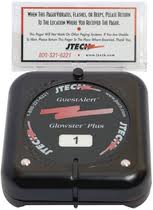
JTECH Your Way to a True Competitive Advantage

First things first: what/who is JTECH? It’s the former name of a restaurant paging company that eventually became a subsidiary of MICROS Systems. It was founded by a couple of guys from Florida who owned a great restaurant that had too many “walkaways”–people who were not willing to endure the wait for a table seating. In the old days (19990s, mind you!), patrons of their restaurant (like diners in most other establishments) used to have to wait by the hostess stand for an indeterminate amount of time until a table became available. By providing the electronic pager, these guys gave their patrons the freedom–and most importantly, peace of mind–to leave the front door area, relax, and look forward to a sumptuous meal.

But, what of the “true competitive advantage?” To even throw the phrase out suggests that false competitive advantages exist! Don’t they? You be the judge. How many businesses do you know of where price is the main negotiating point in the sales cycle? Unfortunately, way too many. You see, when price becomes the only distinction between a business and its competition, then it is not long before that business enters into a death spiral of decline. At the point that price is all that separates one business offering from another, the battle for customers is lost.

What, then, is a legitimate means of creating a distinctive in the marketplace? Many will argue that Service separates them from others. Alternately, Quality (products) or Experience (Services) are touted as key concepts that persuade one to buy from us versus them. Yet, I have seen over and over (and over !) where these are just words in many situations, without anything to back up the claim–OR anything that is being said that the competition cannot also say!

The original owners of JTECH ended up leasing their restaurant to others because they had found a much better opportunity. It was a great opportunity because and only because they had found a way to monetize the value they had created for restaurants and their customers. True competitive advantage is objective, quantifiable, uniquely claimed, and not a cliche’. (With due thanks to Jaynie L. Smith.)

What was the statement that JTECH developed to carve out such a market -leading position? Of the 50 largest chains who use paging, 100 percent use JTECH! Obviously, they were not able to make this claim Day One. It was something that was earned, one customer at a time.  What absolutely amazes is the recurring bad habit in many companies (and agencies) of developing marketing messages without customer input. Existing customers will tell you why they selected you, what you do better than the competition, and what it would take for someone else to snatch the business away. If you don’t know what your customers would say for each of these categories, you are tuned out. If tuned out, you have no strong competitive advantage positioning!


Who Moved My Marketing?

If a traveling salesman from the early 20th century were to be transported in time into modern day, he would have to be astounded at how marketing messages are conveyed. No longer is the day’s work measured by how many individual presentations were made. No–the world has changed quite a bit and we now have access to prospects around the clock through the power of the internet. Printed materials have given away to digital versions, the materials themselves have become flexible tools that are dynamic rather than static, and the information is disseminated through a variety of methods including the ubiquitous social media.

The information in the described value chain is referred to as “content.” The field of content marketing is now the dominant topic in marketing conversations around the world. The infographic below has a lot of messages. Briefly, thought leadership is the goal and may be accomplished through a variety of means. Increased visibility, wider reach, and improved sales are the outcomes of a well-executed content strategy. Credibility is built and enhanced through well-written pieces online that are disseminated via popular applications such as LinkedIn and Twitter.

As you read through the information in the infographic, we suspect it challenges you to think about your own business promotional strategy in new ways. How do you generate content? Who is responsible for amassing it? Through what means do you share your content? Do you have strategies for niche markets? What is your budget (of financial and human capital) for all of this?

Whew! That’s a lot to consider. Think on it. Develop a plan. Get some help if you need to. But, it’s time to stop putting it off. Your company needs a content strategy–because it has become a primary marketing strategy!


Super Blues Day

When we are in a presidential election year, the first Tuesday in March brings a flurry of primaries and caucuses that are a strong influence in the nomination process. Often, the candidate who does exceptionally well on that date is propelled into a position of strength at the convention due to the results. The other candidates can be left “singing the blues” if their candidacy is negatively impacted by their showing. In many ways, business performance has its own “Super Tuesday” impetus.

The budgeting process in professional services firms can be likened to the Super Tuesday effort. Once per year, strategic planning leads to goal setting and the development of the financial plan for the upcoming fiscal year. Decisions are made to invest in recruiting, professional development, marketing, client development, client retention, and the other line items that constitute the operating accounts of the firm.

Champions of the first five listed disciplines are almost pitted against one another in vying for limited “discretionary” funds. The opportunity to articulate a business case for greater investment in the category of one’s specialty is a beauty pageant “won” usually by the fortunate individual(s) whose programs align with where the executive committee is motivated to invest. Those who do not receive the funding they would like are similar to political candidates who do not win enough states–their careers are not over, but they realize that they have suffered a setback that is visible to all.

To avoid the “bluesy” sense of winning and losing, firms need to become more savvy in the way they approach the process. Many firms with less than 50 total employees don’t have the luxury of having full time staff for even one of these very specific roles. There may be a generalist who oversees multiple categories (e.g. an HR director, firm administrator, or combo marketing and business development person), but not specialists with an experience base as deep as the billable professionals have in their own respective fields. What’s a firm to do? How about hiring the expertise on a fractional basis? In this modern age of telecommuting, contract workers, and flexible work environments, chances are high that one could secure insightful contributors without having to provide benefits or create a new full-time position.

The bigger challenge, however, is not simply getting professional (in their own field) leaders, but changing the strategic planning process to become more inclusive. Having these leaders participate earlier in the strategic planning process can yield great results for your firm. It may very well be that they would bring competitive intelligence about what other peer firms are doing. It is likely that they can sharpen one another’s areas by hearing what is of concern and passion. At the very least, they become more actively engaged stakeholders in the decisions that are made with regards to goals, budget and direction.

Avoid the post-budgeting blues by changing the way you develop your strategic plan and goals. Professionalize the management of your firm through intentionally building a team of smart leaders in the “back office.” Create the culture where your firm looks forward to your internal Super Tuesday season as a way to coalesce and build momentum!

Firms Outperform Industry By 22% With Design, Develop Deploy Approach

Would you like for your firm to be a market leader? Who wouldn’t, right? Yet, are the firm leaders willing to do what it takes to distinguish themselves from the crowd? If you are the managing partner, practice group leader, executive committee member, or key client group leader, you set the tone for culture and performance.

McKinsey found in a 2010 study that organizations who rank in the top quintile in talent management outperform their industry by 22%. By talent management, we mean grooming professionals throughout their careers to enhance competency, contribution, and performance–regardless the yardstick. However, traditional talent programs often fall short because they do not incorporate the best practices of organizational development.

Layers for Development

Organizational development components are more holistic and  include organization design, business development, work generation and management, and strategic business model communication.  The OD spectacles view recruitment, nurture, and retention of  legal talent as an expression of firm values, identity, vision, goals, strategy, and essence.  As Jim Collins in Good to Great describes the importance of helping the right people find the right seat on the bus, it is important inside firms to develop a system for aligning talent management with firm management.

The graphic to the right depicts the need for a cascading set of goals whereby organizational goals are broken down to team/practice area/section goals, and further still to individual goals. As firms find a way to chart a career development path that includes a competency model and clear role maps, the members of the firm and the teams on which they serve become more proficient in serving client needs and reaching business objectives.

Clarifying responsibilities for client acquisition, project management, and client retention guides the development of assignments that groom not just the technical, but also the soft skills necessary for achievement.  Competencies such as self awareness, self regulation, motivation, empathy and social skills  can be developed as a vital part of an overall career development plan that intentionally aligns experience, assignments, and mentoring needed with the exigency of getting billable work done.

  • Design your organization for success
  • Develop your people for greatness
  • Deploy human capital to serve meaningful client needs