Culture: Key to Performance

Recently, I had the opportunity to address a group of HR leaders on how to improve decision-making within their organizations. (Thank you RWHRMA, Masters Series participants!) The premise of our time together was that better decision-making translates into superior performance and that there are definite ways to improve the quality of decisions. Most of our workshop was used to define the components and use of emotional intelligence (EQ). In order for employees–and managers/executives–to consistently exhibit high EQ, valuing and engaging others is a key.

A focus on others and their needs is a result of purposeful culture development. Paul Spiegelman, founder and CEO of The Beryl Companies, writing for Inc. on June 6, described Beryl’s “10 Cs of Culture:” 

1. Core Values

..when we implemented our values strategy at Beryl about 10 years ago, I began to see how they guided everyday decision-making and how employees referenced them in meetings.  I came to realize they are essential guideposts when developed, communicated, and executed in a consistent manner…We start every big meeting with a conversation about values and tell stories about how our coworkers live by those values on a daily basis.  

2. Camaraderie 

It’s about getting to know colleagues not just as colleagues, but what they’re like outside the office.  To do that, Beryl hosts dress-up days, parties, games, and events all the time..We include not only employees, but also their families.  We publish a bi-monthly full-color magazine called Beryl Life that is sent to the homes of co-workers.  

3. Celebrations 

You can’t underestimate the importance of recognizing your team..we developed a program we call PRIDE (Peers Recognizing Individual Deeds of Excellence).  This allows coworkers to recognize others for living up to Beryl’s core values.  

4. Community

Part of the fabric of a successful company culture is connecting with and giving back to the local community.  

5. Communication

I hold quarterly Town Hall meetings, which includes six meetings over two days..I also have informal “chat and chews” where I bring in lunch for 12 to 15 people and just ask one question–How’s it going?–to get the conversation started.  

6. Caring

Show your employees you genuinely care about them in the totality of their lives..Any manager can explain a situation on an internal website that identifies a coworker, and lists what’s going on (birth, death, injury, wedding, among other things).  That submission generates an email to me that is my trigger to send a personal notecard, make a phone call, or visit someone in a hospital.  

7. Commitment to Learning

Show your employees you’re committed to their professional growth. This can be done in small, incremental steps. 

8. Consistency

Culture is based on traditions..One-time efforts to improve the culture will feel disingenuous.  

9. Connect

Don’t isolate yourself at the top.  Connect with people at all levels of your company.  Get out of your comfort zone.  

10. Chronicles

Does everyone in your organization know how the company started?  Do they know the personal stories of the founders and what led them to build a sustainable business?  People want to know they are part of something special and unique.  

Do you get the feel that, at Beryl, you could fit in and feel engaged in the key conversation(s) that contribute to its success? What about your company? Do you have a culture that is engaging? If not, what can you do about it? What’s holding you back? Talk with your peers and come up with a plan, then implement it!
Decision Making is Like Chopping Wood

The Woodcutter’s Story

Simon was a diligent son, but not that bright.  Eventually his mother became exasperated with him lying around the house and urged him to get a job.  Now Simon was good at one thing:  chopping down trees.  So, off he went, his axe over his shoulder, in search of work.

Soon he came upon a clearing in which logging was being carried out.  (Readers of a nervous disposition should be reassured that this logging was a fully sustainable and environmentally ethical operation.) He marched up to the supervisor and asked if there was any work available.  “Well it depends how good you are.  Chop down that tree and I’ll see.” Simon enthusiastically set about the task and completed it to the supervisor’s satisfaction. “You’re hired.  Start right away”, he said.

And Simon started work, applying himself with a commendable zeal.  It was Monday afternoon, and the day soon passed.  As did the following few days. On Friday afternoon, Simon happened to see the supervisor.  “I’m glad I’ve found you” the supervisor said.  “Please collect your cards and leave, your services are no longer wanted.”

Simon was flabbergasted!  “How come?  I am your most productive worker.  And now you’re rewarding me by sacking me!” “Well, it’s true you were the most productive worker on Tuesday.  But by Thursday you had sunk to the least productive.  And you’re doing even less well today.” “But I start early and finish last.  I work through lunch.  I spend all my time chopping down your trees.”

“I agree”, replied the supervisor, “but how much time do you spend sharpening your axe?”

-Anon

What is equivalent to sharpening the axe in your business? Management team and high potential employees choosing to pursue professional development through honing emotional intelligence (EQ) competencies. EQ is the unique intersection of heart and head—the outcome of which is effective use of feelings to enhance thought.

When EQ becomes a priority in an organization, good things happen. Consider:

  • In one study, experienced partners with high EQ in a multinational firm delivered $1.2 million more profitfrom their accounts — 139% — over their cohorts.
  • A study of manufacturing supervisors given EI training saw a reduction of 50% in lost-time accidents, 20% in formal grievances, and plant productivity goals exceededby $250,000.
  • In a cross-cultural study of senior executives, EI competencies outweighed both IQ and experience in top performers.

Superior performance is driven by strong decision making. Strong decision making is a physiological factor of: 1.) competency, preceded by 2.) behavior, preceded by 3.) cognition, preceded by emotional intelligence. EQ is a body of personal characteristics and social abilities that are closely tied to success in both our professional and personal lives. Dan Goleman, quoted in the Harvard Business Review, said, “Emotional intelligence isn’t a luxury tool you can dispense with in tough times. It’s a basic tool that, deployed with finesse, is the key to professional success.”

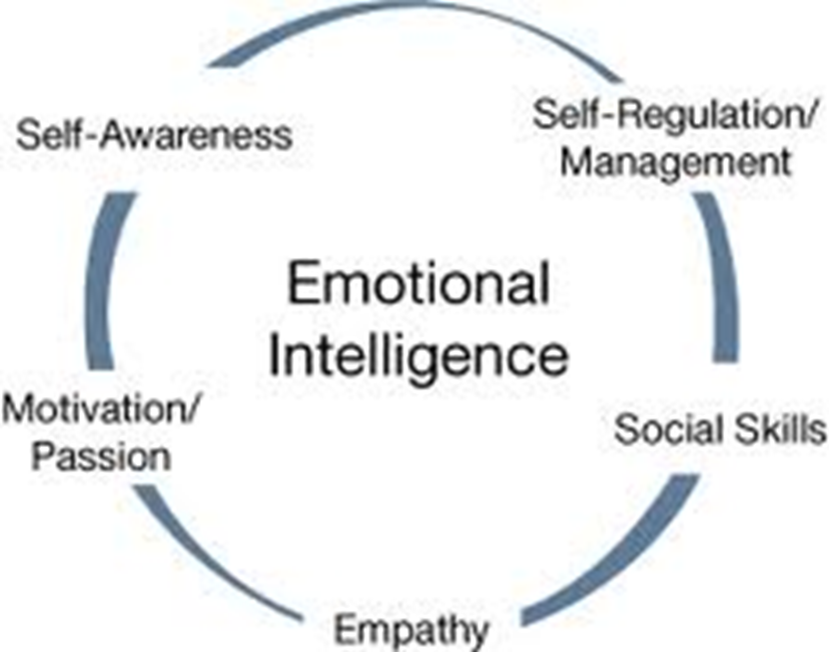
The tool is comprised of five core competencies: self-awareness, self-regulation, motivation (these three comprising the intrapersonal self), empathy and social skills (the latter two representing interpersonal acumen.) Think about bright, skillful people in your organization who are passed over for leadership and/or despised by subordinates. Chances are, these individuals are deficient in at least one of the EQ competencies.

EQ can be learned. What we try to do with clients is identify a small group to work with initially–usually direct reports to the president or high potential leaders. These are assessed individually for their relative emotional intelligence “scores.” The scores lead to individualized professional development plans (“axe sharpening”.) Mentoring occurs during which hypothetical scenarios are discussed in periodic sessions. The hypothetical gives way to the mentees bringing real life situations to discuss. With the mentor’s help, the mentees learn how to process decisions better. Over time, the team gels as its members learn how to “say hard things in soft ways,” and use feelings as an asset rather than a liability. When the team becomes high functioning in this manner, superior performance is likely its traveling partner!


Only Superheroes Make Tough Sales

Whether you are in the process of launching a business or have been at it a while, one of the things that is an important factor in your success is the ability to covert sales leads. The more prestigious the prospect, the more pressure we feel to say just the right thing and win the other party over. But…sometimes the meeting doesn’t go as planned and you feel the opportunity slipping away. 

Greg Digneo, the author of the blog Sales Leads in Thirty Days, recommends that, in order to become better at converting these opportunities consistently, you become a superhero. Surely you have seen the resurgence in movies about superheros of late. Why is that? Because we all want to believe that things will turn out rosy if we just had some hidden power that gave us an advantage. Just like Batman, or any other, superhero, you want to be able to save the prospect who is in distress from this situation and deliver them to the safety you can uniquely provide. How? Digneo recommends in an article that you find a superpower:

What’s Your Super Power?

I used to run a marketing agency where we helped B2B companies generate online sales leads in thirty days. Promising to get clients sales leads in thirty days is such a bold claim that it subjected me to a large helping of cynicism. That’s when I morphed from a mild-mannered marketing consultant into a superhero.

Here’s how it went down:

The prospect would be disengaged and skeptical. Then I would say: “I know you think what I’m proposing is impossible, but if I can get you sales leads by the end of this week, would you consider hiring us?” The prospect never believed we’d come through, so they usually answered “yes.” At the end of the week, when we had gotten the prospect sales leads, they were so impressed that hiring us became a no-brainer.

And you can do the exact same thing in your business!

The process to becoming a superhero, according to Digneo, requires the following 4 steps:

  1. Find the Ideal Prospect
  2. Identify the Problem
  3. Unleash Your Superpower
  4. Make the Sale

To find your ideal prospect, he recommends that you ask yourself three questions:

  1. Do you know who you want to work with?
  2. Do they need your services?
  3. Can they afford to pay you?

Only if you can answer “yes” to these three questions can you move on to the next step.

In order to identify the problem, one most overcome the objection to spend money with you. However, every prospect has a problem you can help them solve. Using consultative listening skills and asking poignant questions, you can develop a good understanding of the nature of the problem, what has been tried to resolve it, and how much a solution may be worth. 

Your “phone booth” trick is your ability to solve what confounds the prospective customer. Think up several ways you can demonstrate impact/success for your prospect. Digneo offers two examples–If you have a book keeping service, you know your prospect wants help with cash flow management. Or, your heroic deed may be that you show the prospect how they can source parts cheaper, making an immediate impact on their bottom line. Find a way to be wonderful!

Making sales becomes much easier once we have established credibility and respect. Promising, then delivering on what it takes to solve problems sets the table for sales.

Dispense With Heroics; Be Practical

Last night we tackled three themes from Contentrix founder Alice Seba’s top 40 lessons learned. As a reminder, the themes were: get others involved, focus, and execute. Tonight, in looking over numbers 21-40, we take a look at three more themes: batch processing, succession planning, and prioritization.

#21. It’s okay that a lot of people don’t understand what I do

#22. Technology is my friend, but I don’t mess around with it more than I have to or am capable of

#23. Customer service is a critical part of your business, but it’s a productivity inhibitor

#24. Other people’s blogs can be useful

#25. Nothing on the Internet is private

#26. If you don’t own the site you’re publishing too, you really don’t own that content

#27. Working in batches is great for productivity

#28. I used to think religion and business don’t mix

#29. There is no one quite like you, but you are dispensable…or at least you should be

#30. Tools and Software don’t grow your business, you do

#31. You don’t have to explore everything to diversify

#32. Listen to your audience…they can teach you a ton

#33. There is no shame in selling

#34. If you’re not confident, they’ll know

#35. Knowing the words to use is also important

#36. It’s okay to take a break when you just aren’t into it

#37. To do lists are always meant to be shortened

#38. Use your freedom to do good things

#39. Appreciate and be thankful for what you have

#40. Take care of yourself

People who are gifted at time management have been touting the virtue of “chunking your time” for years. The phrase means to set aside times when one type of activity is pursued exclusive to all others, thereby avoiding distractions and staying on course. Grouping tasks together into batches of similar issues can help build momentum.

Seba urges the entrepreneur to think of him/herself as dispensable.  “Start with the end in mind.” If we approach the process of building a business as trying to make it less and less dependent on the founder, then we are a.) empowering others to add their collective strengths to the development of the enterprise and b.) purposefully preparing for the day when others are making more of the major decisions. To arrive at the place where the business is capable of being handed over requires working on the business rather than in it.

It is so easy as a company founder to have an endless list of things that all seem important and urgent. We drive ourselves to work, work, work in headlong pursuit of milestones that indicate the business is on track and successful. With each passing day, the perfectionist inside drives towards an exhaustive, never-ending cataloging of “things to do.” here’s a secret: reduce the list to only a few things, execute at least the top two, and feel accomplishment rather than lack of fulfillment. You will be glad you did!

The combination of planning your own exit, prioritizing your work, and pursuing it in batches  should be beneficial for you. It has been for many others.


Focus, With Help, on Execution, Business Owner!

Turning 40–or any number after 20 and ending in “0”–causes the birthday person to pause and ponder lessons learned up to that point in life. The founder of Contentrix, Alice Seba, shared her list of personal observations (below). Several of them caught my attention for tonight’s blog post.

When Seba makes the point (#2) that entrepreneurs should not try to go it alone, I should a hearty “amen!” The attempt to be a master of everything rather than using outsiders, additional insiders, or advisors/mentors who are a little of both is a huge mistake. Similarly, the isolation exemplified by avoiding friendly relationships with competitors usually is a bad move. Instead, follow the advice to get to know them (#7 & #8) and enjoy the benefits of vicarious growth.

#1.  Working a lot doesn’t necessarily mean working hard…nor does it imply working smart

#2. There is no point in doing things solo

#3. Focus on your talents and your passions, but be realistic

#4. Don’t compare yourself to others

#5. Define success in your own way

#6. You can’t please everyone, nor should you try

#7. Embrace your would be competitors

#8. Making friends in your niche is one of the biggest accelerator to your success

#9. Don’t be a social butterfly

#10. Content has always been what sets long term successful businesses apart from others

#11. Content is one of the simplest, least expensive and most effective ways to generate leads and sales for your business

#12. If you’re not actively building and nurturing your mailing list, you’re stunting your business growth big time

#13. Existing customers are the key to getting more sales

#14. Staying the course will help you get to success much faster

#15. Posting your blog is rarely the most critical activity for a business

#16. SEO was easy in 2002 – It’s like chasing rainbows in 2012

#17. If your children say they need you while you’re on the computer, go to them

#18. If you are just starting out and reek of desperation, scammers will sniff you out a mile away

#19. There comes a point when you have to stop educating yourself and you just have to start doing

#20. I no longer believe in continuously investing in my education to improve my business

#21. It’s okay that a lot of people don’t understand what I do

#22. Technology is my friend, but I don’t mess around with it more than I have to or am capable of

#23. Customer service is a critical part of your business, but it’s a productivity inhibitor

#24. Other people’s blogs can be useful

#25. Nothing on the Internet is private

#26. If you don’t own the site you’re publishing too, you really don’t own that content

#27. Working in batches is great for productivity

#28. I used to think religion and business don’t mix

#29. There is no one quite like you, but you are dispensable…or at least you should be

#30. Tools and Software don’t grow your business, you do

#31. You don’t have to explore everything to diversify

#32. Listen to your audience…they can teach you a ton

#33. There is no shame in selling

#34. If you’re not confident, they’ll know

#35. Knowing the words to use is also important

#36. It’s okay to take a break when you just aren’t into it

#37. To do lists are always meant to be shortened

#38. Use your freedom to do good things

#39. Appreciate and be thankful for what you have

#40. Take care of yourself

The second key theme from the list is the power of focus. Whether choosing to focus on a few strategic relationships (#9), or valuing customers individually (#13), you will find that constantly seeking newness rather than depth will be a distraction that makes success harder to come by. 

Three’s the charm for tonight. In addition to the other two themes, I find it important to mention that there comes a time to just work your business. I am a firm believer in seeking wise counsel and insight but not, as indicated in #20, to the exclusion of executing priorities today.

We’ll attempt to highlight items from the second part of the list tomorrow night!