Due Diligence Must Include Culture

60% of mergers, acquisitions, and joint ventures fail to perform up to expectations in their first year, often because of cultural incompatibilities between the two prospective partners. The losses in shareholder value are in the hundreds of millions of dollars in many of these star-crossed liaisons. Cultural Due Diligence is a technique for keeping both eyes wide open when approaching an attractive prospect, whether for a merger, joint venture, or offshore vendor.

-Wayne State University, Institute for Information Technology and Culture

When two companies agree to join forces in some type of agreement, cultural fit is usually the last factor considered-if at all! Instead, many numbers are crunched, recrunched, and analyzed ad nauseum. Market impact, anticipated back office savings, etc receive the lion’s share of the secondary consideration after financial statement items. “Culture” is perceived as too soft an issue to justify the time and attention of high-powered executives. Big mistake!

At the very minimum, the operating environment and organizational structure of each entity needs to be explored. When we are working with a client, we use the following two charts to help us ask solid questions about these two components of culture. From the answers received, we make value judgments and recommendations as to the degree of “fit” between organizations and what to do about it.
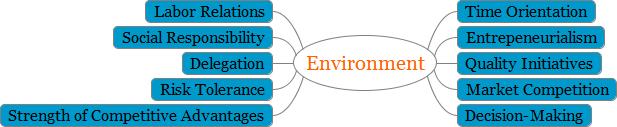
In considering the operating environment, we look at whether the company has a long-range or short-term approach to management. We ask questions to determine whether the organization is more entrepreneurial or bureaucratic. Quality initiatives are a good indicator of what aspects of performance are most important to management. The degree an strength of market competition for each party is important. How decisions are made is another leading indicator of what it may be like to work alongside the other team.

How management handles relationships with employees, (unions), and contractors is important to search out. Is giving back to the community and having respect for the environment a value of the other organization? Do meaningful tasks get delegated effectively, or are there barriers to professional development , shared responsibility, and growth through the contributions of many? Discovering how the other party perceives risk and builds strategy accordingly is a key conversation. When one’s competitive advantages are articulated, it is vital to verify how strong they are in the eyes of the buyers.

In addition to the operating environment, it is critical to understand the organizational structures that represent the philosophy of your intended. Do employees have direct access to top executives, or must they work through a layered management team? Understand whether the employees feel that they are protected to the point of not being allowed to make any mistakes. Examine whether generalist skills are valued versus everyone having a narrow scope. Look at the board of directors to see whether it is comprised of objective, strong leaders. Pay attention to the diversity of the employees and management team.

If the other company has a multi-office system, is it managed out of corporate, or are those in the field given autonomy? Notice whether task or relationships seem to carry more weight. Analyze the turnover rate among management and key positions. Is the human resources department deep enough to undertake complex issues like training and development, talent management, succession planning, coaching and the like, or compliance focused? Ask for examples of how technology is used to solve problems and enhance work flow.

The careful review of these “soft” factors can save you some headaches and hardships–do it! (We would love to help.)

 

Advice For Entrepreneurs RE: Succession

Sometimes, big company practices need to trickle down to the SMB world. Whether the subject is a hot start-up with co-founders who must one day shed decision-making authority or family-owned businesses, the selection of successors is a critical topic. Without true outside boards of directors, these decisions often become volatile and can ruin relationships as well as cause collateral damage to the company and its valuation. Having seen the drama play out more often than I’d like, I read extensively about ways to “head off at the pass” struggles that need not become an entrepreneur’s undoing.

A law firm client of mine has a nice boutique corporate practice with a penchant for corporate governance topics. Though I subscribe to Google alerts on corporate governance, I also rely on content curators like Beverly J. Conquest (@bconquest) to follow feeds that I cannot daily read. Conquest came across an HBR blog post recently, “Advice For Boards in CEO Selection and Succession Planning” that featured some superb insights from David A. Katz and Laura A. McIntosh. Their original work was featured in the New York Law Journal. Certain excerpts are featured below:

Selecting the chief executive officer and planning for CEO succession are among the most important responsibilities of a company’s board of directors. In ideal circumstances, the succession process will be managed by a successful and trusted incumbent CEO, with the board or a board committee overseeing the process, reviewing the candidates and providing advice throughout. However, in exceptional circumstances, such as when the board lacks full confidence in the incumbent CEO or when a crisis occurs and the normal succession process cannot be utilized, the board will need to take the lead in managing this crucial task…In 2011, the CEO turnover rate increased as compared to the previous two years…Directors facing these challenges should keep in mind that the attitude and smooth functioning of the board are crucial to a sound process and good result, and that the fates of the board and its chosen CEO often are inextricably entwined.

Process Is Key

CEO selection is, first and foremost, about the future. As the adage goes, one picks a general for the next war, not for the last one…We advise that there be a comprehensive discussion at least annually regarding internal candidates and planning for emergency circumstances…Breakout sessions of the independent directors should include regular discussions of the succession plan, so that the lead director can hear the views of the other independent directors privately. Boards should be active in identifying talented leaders so that there is a bench of qualified internal and external candidates at the ready. The directors may wish to seek first-hand exposure to the company’s most promising executives at board and company functions and may consider working with the CEO to establish policies and procedures for the development and evaluation of internal candidates…

In order to set priorities and find candidates who meet their requirements, directors must first establish a well-designed selection process, which may include the advice of counsel and other external consultants. A sound process will enable the board to achieve its goals while at the same time providing a roadmap to keep the directors on course through the inevitable difficulties they will encounter. In the event of disagreements, the process stands as the neutral, pre-agreed path to which the directors and any advisors can return in order to continue progress toward the final selection.

An organized, careful process is necessary to undertake the substantive evaluation of candidates’ capabilities. There is no better guide than past performance; however, in many situations, red flags from top executives’ pasts have been ignored by boards in their selection process, and the choice has, to some extent predictably (in hindsight), been a mistake. When boards feel rushed into selecting a new CEO—which can happen when the company faces a crisis or lacks a succession plan—due diligence can suffer. The board should look for examples in each candidate’s past that bear directly on how the candidate will cope with the future challenges identified by the board.

Two Elements to Consider

There are two key corporate-governance related elements that should be near the top of a board’s list for evaluating potential CEO candidates, particularly when the board is not able to rely on the incumbent CEO to lead the succession planning process. The first is that the new CEO should be a good fit culturally with the board and the company…The tone set by the CEO helps to shape corporate culture and permeates the company’s relationships with investors, employees, customers, suppliers, regulators, local communities and other constituents…The second key element is that the CEO should have a long-term vision for the company that accords with that of the board. A crucial aspect of this is the ability to resist the powerful forces of short-termism…

Healthy Board Dynamics

A healthy board dynamic is essential to an effective succession process and positive result…A 2009 working paper published by the Harvard Business School’s Corporate Governance Initiative observed: “As a practical matter it is difficult, if not impossible, to find directors who possess deep knowledge of a company’s process, products and industries but who can also be considered independent.” This lack of deep experience and expertise can make it more difficult to identify and evaluate candidates from other companies in the relevant industry or even from within the company…

CEO selection is one of the most formidable, as well as one of the most consequential, decisions a board must make. Using a thoughtful selection process, a well-functioning board that has taken the time to consider CEO succession on a regular basis will be in a good position to identify its top priorities and the best-suited candidates should a crisis present itself. 


Decision Making is Like Chopping Wood

The Woodcutter’s Story

Simon was a diligent son, but not that bright.  Eventually his mother became exasperated with him lying around the house and urged him to get a job.  Now Simon was good at one thing:  chopping down trees.  So, off he went, his axe over his shoulder, in search of work.

Soon he came upon a clearing in which logging was being carried out.  (Readers of a nervous disposition should be reassured that this logging was a fully sustainable and environmentally ethical operation.) He marched up to the supervisor and asked if there was any work available.  “Well it depends how good you are.  Chop down that tree and I’ll see.” Simon enthusiastically set about the task and completed it to the supervisor’s satisfaction. “You’re hired.  Start right away”, he said.

And Simon started work, applying himself with a commendable zeal.  It was Monday afternoon, and the day soon passed.  As did the following few days. On Friday afternoon, Simon happened to see the supervisor.  “I’m glad I’ve found you” the supervisor said.  “Please collect your cards and leave, your services are no longer wanted.”

Simon was flabbergasted!  “How come?  I am your most productive worker.  And now you’re rewarding me by sacking me!” “Well, it’s true you were the most productive worker on Tuesday.  But by Thursday you had sunk to the least productive.  And you’re doing even less well today.” “But I start early and finish last.  I work through lunch.  I spend all my time chopping down your trees.”

“I agree”, replied the supervisor, “but how much time do you spend sharpening your axe?”

-Anon

What is equivalent to sharpening the axe in your business? Management team and high potential employees choosing to pursue professional development through honing emotional intelligence (EQ) competencies. EQ is the unique intersection of heart and head—the outcome of which is effective use of feelings to enhance thought.

When EQ becomes a priority in an organization, good things happen. Consider:

  • In one study, experienced partners with high EQ in a multinational firm delivered $1.2 million more profitfrom their accounts — 139% — over their cohorts.
  • A study of manufacturing supervisors given EI training saw a reduction of 50% in lost-time accidents, 20% in formal grievances, and plant productivity goals exceededby $250,000.
  • In a cross-cultural study of senior executives, EI competencies outweighed both IQ and experience in top performers.

Superior performance is driven by strong decision making. Strong decision making is a physiological factor of: 1.) competency, preceded by 2.) behavior, preceded by 3.) cognition, preceded by emotional intelligence. EQ is a body of personal characteristics and social abilities that are closely tied to success in both our professional and personal lives. Dan Goleman, quoted in the Harvard Business Review, said, “Emotional intelligence isn’t a luxury tool you can dispense with in tough times. It’s a basic tool that, deployed with finesse, is the key to professional success.”

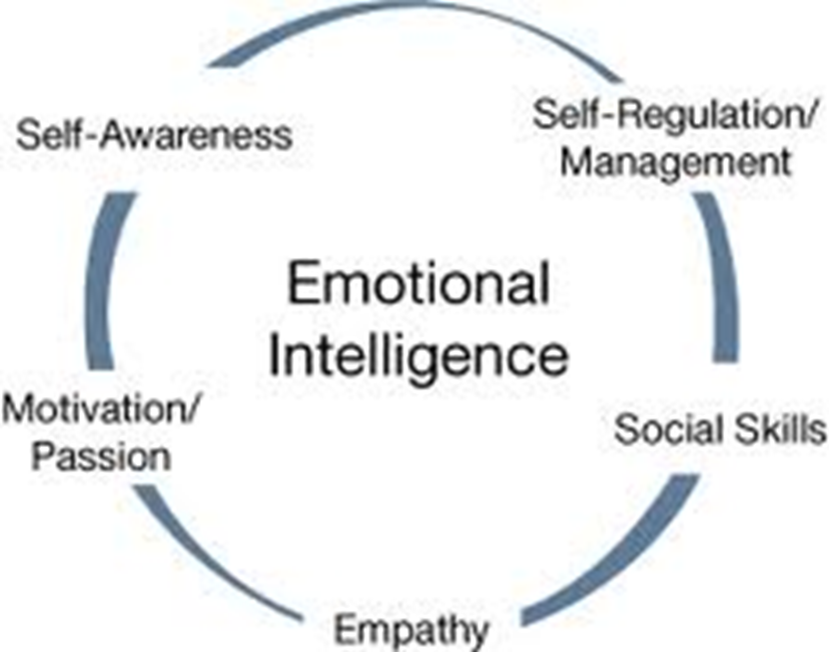
The tool is comprised of five core competencies: self-awareness, self-regulation, motivation (these three comprising the intrapersonal self), empathy and social skills (the latter two representing interpersonal acumen.) Think about bright, skillful people in your organization who are passed over for leadership and/or despised by subordinates. Chances are, these individuals are deficient in at least one of the EQ competencies.

EQ can be learned. What we try to do with clients is identify a small group to work with initially–usually direct reports to the president or high potential leaders. These are assessed individually for their relative emotional intelligence “scores.” The scores lead to individualized professional development plans (“axe sharpening”.) Mentoring occurs during which hypothetical scenarios are discussed in periodic sessions. The hypothetical gives way to the mentees bringing real life situations to discuss. With the mentor’s help, the mentees learn how to process decisions better. Over time, the team gels as its members learn how to “say hard things in soft ways,” and use feelings as an asset rather than a liability. When the team becomes high functioning in this manner, superior performance is likely its traveling partner!


Dispense With Heroics; Be Practical

Last night we tackled three themes from Contentrix founder Alice Seba’s top 40 lessons learned. As a reminder, the themes were: get others involved, focus, and execute. Tonight, in looking over numbers 21-40, we take a look at three more themes: batch processing, succession planning, and prioritization.

#21. It’s okay that a lot of people don’t understand what I do

#22. Technology is my friend, but I don’t mess around with it more than I have to or am capable of

#23. Customer service is a critical part of your business, but it’s a productivity inhibitor

#24. Other people’s blogs can be useful

#25. Nothing on the Internet is private

#26. If you don’t own the site you’re publishing too, you really don’t own that content

#27. Working in batches is great for productivity

#28. I used to think religion and business don’t mix

#29. There is no one quite like you, but you are dispensable…or at least you should be

#30. Tools and Software don’t grow your business, you do

#31. You don’t have to explore everything to diversify

#32. Listen to your audience…they can teach you a ton

#33. There is no shame in selling

#34. If you’re not confident, they’ll know

#35. Knowing the words to use is also important

#36. It’s okay to take a break when you just aren’t into it

#37. To do lists are always meant to be shortened

#38. Use your freedom to do good things

#39. Appreciate and be thankful for what you have

#40. Take care of yourself

People who are gifted at time management have been touting the virtue of “chunking your time” for years. The phrase means to set aside times when one type of activity is pursued exclusive to all others, thereby avoiding distractions and staying on course. Grouping tasks together into batches of similar issues can help build momentum.

Seba urges the entrepreneur to think of him/herself as dispensable.  “Start with the end in mind.” If we approach the process of building a business as trying to make it less and less dependent on the founder, then we are a.) empowering others to add their collective strengths to the development of the enterprise and b.) purposefully preparing for the day when others are making more of the major decisions. To arrive at the place where the business is capable of being handed over requires working on the business rather than in it.

It is so easy as a company founder to have an endless list of things that all seem important and urgent. We drive ourselves to work, work, work in headlong pursuit of milestones that indicate the business is on track and successful. With each passing day, the perfectionist inside drives towards an exhaustive, never-ending cataloging of “things to do.” here’s a secret: reduce the list to only a few things, execute at least the top two, and feel accomplishment rather than lack of fulfillment. You will be glad you did!

The combination of planning your own exit, prioritizing your work, and pursuing it in batches  should be beneficial for you. It has been for many others.


Entrepreneur, Not CEO

Everybody (entrepreneur) calling himself or herself a CEO—listen up, this is for you: stop it. Calling yourself the CEO will label you as either an egoist or someone with confidence compensation issues. That will make people less willing to work with you or help you. Taking the top title in a company also suggests a limited vision of what your company can become. Ask yourself: would you still be CEO if it were a $100 billion business or would you require what’s euphemistically called “adult supervision?”

So stop pretending to have attained a title you didn’t earn and start doing what you need to do to get to where you want to be. Here’s how:

Attract Awesome People

Jobs had Wozniak and later, Markkula. Clark had Andreessen. McNeally had Bechtolsheim, Joy and Khosla. A remarkable CEO should be like the moon, illuminated by the reflected light of all the stars he or she has brought into orbit. Awesome people act as accelerants to whatever you’re doing. They push ideas forward, execute with aplomb and challenge you to new heights.

If you can hire, hire. If you can’t hire, bring them into your orbit as advisors, friends and fellow travelers. Get them to invest their creativity and energy. To get the true benefits of awesome people, focus on diversity. You want to have as many different perspectives on a problem as you possibly can, so bring on the best people from as wide array of backgrounds and from different generations. They’ll learn from each other and the confluence of their experiences will be the basis of company creativity for years to come.

Most importantly, attracting awesome people to your company precludes retreat. You carry too valuable a cargo of energy and confidence invested by others to turn back.

Build an Experience, Not a Product

Eric Ries has put the concept of the minimally viable product (MVP) front and center in the minds of Silicon Valley startups. But this focus is somewhat misguided. Products give you utility and then may be discarded. Products are the one-night stands of business. Experiences give you memories and good experiences will bring you back for more, it engenders a long-term relationship. The best CEOs know this instinctively and do all that they can to create and cultivate an attractive experience for their customers.

Once you’ve got a good experience, cement it with the bond of buying..That price tag is valuable to you too. It focuses the mind tremendously and forces you to deliver a unique and memorable experience of real value. When you offer a product for free, you aren’t forced to justify your existence to customers or show a useful benefit..

Learn Finance

If you wanted to be a rock star, you’d have to learn to read music and if you wanted to be an award-winning novelist, you’d have to learn basic grammar. It should not come as a surprise that if you want to be the CEO of a business you should learn finance. Yet we regularly see founders blowing off finance or outsourcing major financial decisions to hired guns..

For startups, there’s one important financial metric that matters more than any other: months left to live given your current burn rate. Real CEOs know this number and manage it religiously.

Define a Big Goal and Take Small Steps

Plenty of wannabe Silicon Valley CEOs have read Jim Collins and will tell you about their BHAG (That’s their Big, Hairy, Audacious Goal). They’ll tell you that they want to revolutionize the datacenter, or change the face of mobile payments, or create a new paradigm for social sharing, or something equally nebulous. That’s great. But it’s the ability to both set that goal and show how you’re going to achieve it that marks a real CEO.

Successful CEOs balance aspirations with operations. They focus on things that can be done today to secure customers and growth over time—not on the title they put on their business cards.

The quoted text above is from a post by Alexander Haislip that appeared on TechCrunch recently. Thanks to blogger Beverly J. Conquest for posting an excerpt on her blog, Accounting & Small Business|Beverly Shares.