Management: Information, Structure, Mission & Goals


Thorough management information systems can also aid the company in gaining a competitive advantage. By monitoring job progress, collecting data about percent complete against target, a good system can help the organization adapt more quickly to changes in either the internal or external environment. In the financial area, a proper system can eliminate much busywork, thereby allowing office staff and managers to focus on priorities, such as customer service.

Therefore, management information systems should be designed to provide the meaningful financial and operating information necessary to plan a company’s direction. The costing, pricing, and scheduling systems produce information necessary to control expenses. Similarly, work schedules, purchasing systems (purchase orders or the equivalent), and supplier files establish the framework for orderly completion of work according to budget. An accurate reporting system is required to maintain financial controls. However, many of these systems take on characteristics over time that may not aid the company in achieving optimal efficiencies. Only through review and analysis of the documented assumptions behind the systems and the logic of the systems themselves can the executive team determine whether reporting can be improved.

An illustration of one area in which management information systems can shape corporate planning is in inventory listings for a manufacturing or retail company. Inventory classifiable as old or having low margins can be highlighted for increased marketing focus to increase sales turnover. As sales increase, interest carrying costs diminish. Carrying costs include the cost of capital, insurance, theft, obsolescence, repair, financing costs, maintenance, and loss of use of capital.
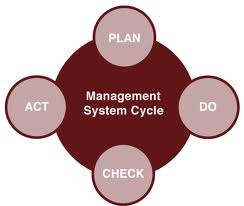
Management Structure and Characteristics

The structure of a company contributes to its strengths and weaknesses. In turn, the form of management, motivation techniques, and employee job skills dictate the structure of the company. If management and employees are not motivated to perform their jobs or lack the skills to do so, the entire business suffers. Every company must be based on three essential elements:

  • mission statement
  • goals 
  • objectives

Mission Statement

Many executives carry their company’s mission statement around in their heads but fail to share it with employees in a way that encourages them to share the enthusiasm and commitment. Committing the mission statement to writing in language understandable by all interested parties lays the groundwork for the joint development of company goals and objectives. This mission statement should explain the product, the operating focus, and the distinguishing characteristics of the company’s vision. The statement should remain valid for the life of the company.

Goals and Objectives

Goals that take shape through employee input usually result in shared dreams. If the goals, objectives, and tactics needed to accomplish the mission are agreed upon by all at the outset, they become a standard against which performance can be judged. An example of a goal would be to achieve 15 percent market share in the Gen Y demographic in a certain geography within five years. An objective would be to sell X number of units in one to three years. A tactic would be to sell X number of units in a given channel in a given price range by a certain date within one year.

A review of organizational charts reveals much about the work flow in a given operation. The actual flow of work needs to be compared against planned work flow and adjusted periodically to achieve efficiency. In addition, job descriptions need to reflect reality and effectiveness. Employees should be asked to write both what they have been hired to do and, additionally, what they actually do. After receiving the employee descriptions, the executive team can draft job descriptions that promote effective work completion.


 

How Do Successful Businesses Manage Their Finances?

Once the marketing plan has been developed and the product (service) mix defined, successful executive teams develop a financial plan to determine whether their offerings are economically feasible. Such financial considerations as sources of funding, cash availability, and marketing investment need to be evaluated.

Again, no department or manager can operate in a vacuum during this planning process; it is highly likely that staff in the marketing, finance and operations areas will collaborate on the development of plans for their respective areas, as well as on all aspects of an overall business plan. When a new project, product, or service is contemplated, the finance and accounting staff, in conjunction with the business owner(s), head of marketing, and head of operations should evaluate the company’s ability to:

  • get the initiative off the ground,
  • fund it during development and launch, and
  • continue to support it through sales process and beyond.

Successful businesses are always careful to perform all necessary analysis of these three aspects of innovation. They never assume the financial capability to launch a new idea guarantees success; rather, it is understood that the ability to begin a project is of no value if momentum cannot be sustained through the point of post-sale customer service and satisfaction. The cash required to pay overhead and ongoing obligations when no revenues are coming in from the new initiative can put a company into bankruptcy if not anticipated beforehand.

Securing capital sources is another step in sound business financial planning. The timing and amounts of cash infusions are critical considerations within the overall plan. Sometimes, the lure of a large project or contract can cloud judgment. Without adequate preparation for the cash impact of “ramping up” for new scopes of work, sales volume can become a curse. In fact, some businesses become specific in their growth goals so as to not outstrip precious capital reserve allocation guidelines. (This is not to say, however, that financial instruments such as contract financing are not a way to “have one’s cake and eat it too.”)

Making sure that the business has the wherewithal to “scale” to fit customer demand is important. There will invariably be times when the requirements to pay down payables balances will be instituted by lenders or investors. Likewise, receivables balances cannot become too large too quickly without causing alarm as to the liquidity of the business to meet obligations. Creating a working capital account that is adequately funded to weather fluctuations in business volume–in either direction–is wisdom. How one goes about pre-funding it is “science!”

Businesses that plan for their monetary requirements at every stage of innovation will consistently make more money than those that “fly by the seat of their pants.”  Developing financial plans that support marketing and operational plans is essential for profit maximization. The results of this planning are recommendations to either scrap, revise, or move forward speedily with exciting projects that can lead to increased brand awareness, market share, revenues, and profitability. However, one would do well to remember that no going concern has ever gone broke because its executive team did not start a new project. 

How Do Successful Companies Market?


Businesses on the leading edge of industry trends and developments are market-driven. Thus is not to say they manage their financial and operating efforts poorly; rather, the financial and operating efforts serve as strong support bases for the marketing power from which they derive most of their profits. Possessing a thorough understanding of the various markets in which a business competes, top companies are able to identify which exact product offerings, features and characteristics are most desirable for their target customers in each market sought. Having identified these key characteristics, top performers direct aggressive marketing campaigns at the universe of prospects who meet the general description, letting them know what they plan to offer, when, how and where. Further marketing efforts are focused on developing consultative conversations to entice this target market to purchase, usually including a solid follow-up process for keeping in touch with potential buyers.

Continual market research is essential for small business success, helping the successful executive team to develop a feel for the target markets. You need to know who your ideal client will be–and create corresponding prospective buyer profiles. By studying the types of prospects who visit your website and those of your competitors, it is not hard to get a feel for who your prospects are. What other constituencies should be studied?

  • Competitors
  • Distributors or referral networks
  • Sales channels–online and other
  • Demographic groups and their buying patterns
  • Prior customers and their feedback

Knowing as much as possible about the purchaser of your offering helps successful companies design aspects of the offering that fulfill unique needs (think about how Starbucks creates an environment in which we pay three times as much for a hot beverage as the prior source). By thinking through the offering thoroughly, savvy companies gain a competitive advantage over the competition through informed development decisions. From the same marketing information gathered about prospective buyers and their habits, a business can determine pricing and sales techniques that should lead to higher revenues and profitability. This research process gives you a distinct leg up on those who do not put in adequate effort to understand customer needs.

Putting information to the best possible use is a skill that further distinguishes the successful enterprise from its competition. Selective–and effective–advertising and promotional campaigns can be carried out on even the smallest budget. Social media outsourcing companies will do a phenomenal job for you for as little as $500/month. Other forms of promotion should not be ignored, however, as many traditional approaches are still valid, perhaps none more so that one-to-one networking with the right people. Successful executive teams realize that marketing is all about building a conversation–online and in person. Good information sets the stage for the conversation, but we still must create an open two-way dialogue with people who matter. 

Successful businesses also develop marketing plans that lure prospects into asking to be contacted. For example, if your company can offer better terms than the competition, that needs to be promoted. Sales or promotions can drive short-term traffic, but are not your best long-term tactic for profitable growth. Better, think about bundling and cross selling opportunities to entice a customer to sample more of your wares. The intent is to create a symbiotic relationship wherein they see you as a trusted provider of multiple things they need and value. There are more ways to attract and optimize customer interactions, the common thread being that you need to think through how you make your offering “sticky” enough to hold someone’s attention in a day when so many other messages are competing for it. Motivate prospects to buy your offering over the competition’s!


Solve Rather Than Analyze

Is your business underperforming? If so, chances are high that your CFO or you as owner have determined that it is necessary to “manage the business by the numbers.” Reporting systems are put in place and monitored rigorously. I know this to be the pattern because I have observed turnarounds for over 20 years. It is predictable.  For some, the focus is on sales, for others, on leads, expenses, receivables, payables, etc…

What can be lost in the “shuffle” is necessary focus on what actions are necessary to change the patterns. So much effort is dedicated to capturing information, reporting information, and communicating information that not enough is given to improving performance. Simply noting what needs to change without the corresponding strategies and tactics, as well as daily behaviors, is not enough!

When the organization takes time to problem solve, innovation can occur. Instead of doing the same thing and expecting different results (insanity), new solutions need to be developed, new processes tired, new personnel invited to help develop solutions.

Paul Williams invites change managers to ask the question “How Might We…?” How might we drive sales? How might we drive traffic? Determine at least four “how might we” answers. Then, for each of those answers ask again “How might we…” Identifying at least four responses for each.

In his blog for the Idea Sandbox, Williams recommends the tool below to guide the exploratory process:

Let’s use the “How might we drive sales?” as an example.

ROUND 1:

How might we… drive more sales?

Here are four ideas…

  1. By building more awareness.
  2. By charging more to those already coming in. (Raise Prices)
  3. By getting existing customers to visit/buy more frequently. (Increase Frequency)
  4. Get people who come in to buy more than what they normally do. (Add-on Sales)

ROUND 2:

How might we… drive more sales?

Let’s take those first four answers and ask “how might we?” about each.

1) How might we… build awareness?

  • Do advertising.
  • Do PR.
  • Do community events.
  • Word of mouth: get current customers to tell others.

2) How might we… raise prices?

  • Increase prices across the board.
  • Increase price of most popular products.
  • Add perceived higher-tier items – that command a higher price point.
  • Remove lower-priced / smaller sized options from menu.

3) How might we… increase frequency?

  • Add items for a different time of the day / daypart (e.g. add breakfast).
  • Offer special in-store events to encourage non-traditional visits (e.g. art events, live music).
  • Run frequency-building consumer promotion(s).
  • Create / suggest additional uses for your product (e.g. baking soda for cleaning, cranberry sauce – not just for Thanksgiving).

4) How might we… get add-on sales?

  • Put impulse items near the cash register.
  • Offer add-on extended warranty / product insurance.
  • Show customers products that pair with and enhance what they normally buy.
  • Offer specials encouraging families and group sales.

Williams advocates that we continue to ask the “how” question to arrive at possible solutions. By repetition, more ideas surface. Though he stopped after two rounds of brainstorming (problem solving in this case), you need not feel limited except by the creativity of your team and amount of time you are willing to commit to the process. 

Even stopping at the point above, you notice that 16 potential solutions to enhance sales were generated. While not all of them will create the desired improvement, many will and the effort is way more valuable than perseverating on the problem, as organizations and their leadership teams are wont to do.

Move to action rather than “paralysis by analysis” and you will be better off!


Social Media – the Village Approach to Innovation

It’s interesting how social media has subtly made the migration from a peripheral domain for adolescents to share extraneous to a mainstream business tool. Even within the business arena, social media (SM) used to be relegated to a branding or marketing activity rather than the comprehensive resource many now realize it to be. In a recent blog post, Braden Kelly points out, for instance, how innovation can be fueled by social media:

‘What is the role of social media in innovation? (Either inside or outside the organization)’ Social media serves an incredibly important role in innovation. Social media functions as the glue to stick together incomplete knowledge, incomplete ideas, incomplete teams, and incomplete skillsets. Social media is not some mysterious magic box. Ultimately it is a tool that serves to connect people and information.

How can SM be like glue in your organization? Is there a way to use blogs, wikis, and online videos to enhance learning, information sharing, and collaboration within your daily practice? For instance, posting questions for which your team has no answers to elicit knowledge possessed by others can be a very good use of social media. Or, learning a skill foreign to your core team through an online video can be a means to spur growth or learn how to more effectively manage a contractor/consultant. 

(Kelly:) Social media can help ideas grow and thrive that would otherwise wither and die under the boot of the perfectionist in all of us. Do you remember the saying “it takes a village to raise a child”? Well, it takes a village to create an innovation from an idea as well, and social media helps to aggregate and mobilize the people and knowledge necessary to do just that. But, that is social media working in the positive. We must remember that social media tools are just that – tools.

Village innovation – Hillary Clinton should have thought of that! How does the collaboration effect pertain to SM? Quite simply, there is no substitute for building knowledge systems. For non-proprietary information, you and your peers can start an online conversation thread that others build upon and you are able to glean insights non-resident to your group.  When you do wish to protect methods, processes and intellectual property, it is still preferable to find an internal means to capture group best practices, lessons learned, and puzzles to be solved. How could one or more forms of SM enable you to do this better? Kelly suggests that SM tools are seen in a positive light when they do the following:

  1. To make innovative ideas visible and accessible
  2. To allow people to have conversations
  3. To build community
  4. To facilitate information exchange
  5. To enable knowledge sharing
  6. To assist with expert location
  7. To power collaboration on idea evolution
  8. To help people educate themselves
  9. To connect people to others who share their passion
  10. To surface the insights and strategy that people should be building ideas from

The better you become at the above, the stronger your organization’s innovation capability will become, the more engaged your employees will become, and the more ready you will become to engage successfully in open innovation…Please consider the ways in which social media in your organization might be able to strengthen inter-disciplinary cooperation, make the organization itself more adaptable, and how it could help to create an organization with the power to transform more ideas into innovations.