Know the Customer Before Business Planning

Previously, I have referenced the column from Inc.com on “Herding Gazelles,” written by Karl Stark & Bill Stewart. These guys have a consultancy that works with businesses on strategy as it relates to attracting investment. Their contributions to Inc are well thought out and I enjoyed this morning’s edition:

We have been working with an early-stage enterprise tech company to help them get their product to market. We recently gathered to watch their first customer installation. They were naively fearless–they knew things would go wrong, but they didn’t know what or how severe the problems would be.

No one, however, expected the install to go as badly as it did. If there was a feature that could be broken, it was. If there was a process that could be challenged by the new technology, it was. If there was a remote possibility that some network setting would cause chaos, it did.

All the testing they did in advance didn’t prepare them for “real” users. The tech team was at first horrified by the volume and severity of the challenges they experienced. But then something amazing happened. They showed us exactly why we are excited about their potential.

They took a deep breath, stopped trying to gloss over the challenges, and instead embraced their flaws. They encouraged users to try to break things. They feverishly took notes as they learned what they needed to do better.Customer insight wordle

The customer wasn’t scared off by the bugs because our client had prepared them for possible issues. The team was honest about where the problems were, but more importantly, they showed the customer their resolve to learn everything that they could to develop a great product. The customer’s attitude actually shifted from tolerance to excitement as they realized the system was going to be refined beyond just fixing flaws and that they were going to be a part of designing a system that they would love to use.

The tech company accepted that they didn’t know it all and eagerly solicited feedback from the customer. The experience gave them the best free product development input they could ever expect.

We thought to our own client experiences, and the experiences our other clients have with their customers. If we can all listen to customers as openly as this tech start-up did, we will not only build great products and services, but we will forge the sort of lasting relationships that most companies seek.

When developing new products and services, it’s good to trust your intuition and your internal expertise–to a point. But when an opportunity to learn from a real live customer presents itself, you need to be all ears. You can’t possibly know it all if you don’t recognize the wisdom of others.

What is recommended here echoes what I am sharing with entrepreneurs on a recurring basis: until you fully understand the needs of your (target) customer, you are fooling yourself as to the viability of your business model. Taking the time to first identify target market segments, then messaging appropriate to each, followed by testing your proof of concept in an effort to revise your offerings is Business 101.

We are passionate about the need to understand how your target buyer thinks, what is important to them, and how you can produce something that they perceive as highly valuable. Asking is a great start! Slowing down from product or service development, let alone ongoing business operations, and asking yourself tough questions requires discipline and commitment. Kudos to those who are strategic enough to realize the potential compound payback on the investment!


 

Don’t Let Your Sales Tail Wag My Marketing Dog

The age old battle of chicken and egg takes shape in companies around the world as debates rage on the importance of marketing versus sales. Late 20th century management leaders, including Peter Drucker, felt that selling would become unnecessary in favor of marketing. ideas such as “frictionless markets” advocated for a day wherein buyers would deal directly with vendors via the internet. Now, folks like Geoffrey James, who writes the Sales Source column for Inc. magazine online, question whether there is a future for marketing and feel that sales is king. 

James argues that online definitions of marketing make it sound like a weak link in company management that seems to be high on shifting responsibility to other departments and avoiding accountability. Instead, he posits that 

“Marketing consists of specific activities that make it measurably easier for selling to take place.”

Tail wagging dogThen, because he’s a sales guy and sees marketing as a support function for marketing, James continues–

The advantages of such a no-nonsense definition are that:

  1. It throws the emphasis on what the marketing group actually does (and spends) rather than allowing marketing take credit for tasks actually performed by other groups.
  2. It emphasizes that Marketing activities must lead to a specific financial benefit in order to be consider useful and justifiable expenses.
  3. It turns amorphous activities like “setting strategies” and “providing requirements” into organizational overhead rather than a reason for existence.

Under this definition, the following activities (among others not listed) qualifies as “real” marketing:

  • Generating leads that the current sales group (rather than an ideal sales group as defined by the marketing group) finds it easy to close.

  • Running advertisements that, when shown in geography “A,” increase sales faster than in a similar geography “B” where those advertisements were not shown.

  • Providing sales tools that measurably help a salesperson close more business than a similarly-skilled salesperson who did not use those tools.

  • Building a sales channel that allows a company to sell profitably to a set of customers not currently being reached by existing sales channels.

James goes on to quote studies from research groups like CSO Insights that show that only 23 percent of 600 sales and marketing groups surveyed feel like the marketing team supplies fully qualified leads to the sales team. (As though the highest priority of marketing is to feed sales!) Also dismissed are marketing collateral pieces meant to assist sales efforts. James mentions CMO Council, American Marketing Association and Booz Allen Hamilton research indicates that sales staff are almost as likely to prepare their own collateral as to use what marketing has created. Channel development responsibility on the part of marketing is also questioned, citing an additional study be the CMO Council, claiming that vendor marketing campaigns are generally ineffective. 

(James, cont..):

The problem, according to sales guru and bestselling author Neil Rackham, is that as companies grow, Marketing tends to get disconnected from the selling function. Most companies begin with a sales function but without a marketing function but as they expand, they add marketing as a sales support function. Over time, however, marketing groups lose focus and become “atmospheric” and increasingly irrelevant to actually generating revenue.


I like reading columns by James because he is a good sales guy. However, my marketing bias would argue that marketing is the large concentric circle inside of which sales is a smaller circle.  When he quotes Rackham, he does so to prooftext his point rather than question the assumption. I think companies should begin with a marketing function, because marketing is all about setting direction via identification of what markets and buyers to pursue. Furthermore, the marketing function is the one that tests assumptions, makes strategic recommendations, and determines what channels need to be pursued with what messages by the sales team. When Sales drives the bus, it’s like a tail wagging a dog!

‘Treps Funded Through Future Earnings

Previously, I blogged about Ami Kassar’s views on the state of small-business lending. Kassar, the founder of Multifunding, feels that we need to find a way to “break through the gridlock in order to open up access to reasonably priced capital for small-business owners and entrepreneurs.” He is a big advocate for alternative lending approaches.

multifundingIn a newer post from last week, Multifunding’s founder goes so far as to recommend the creation of new financial products with entrepreneur and small business needs front of mind. Here’s his concept: change the rules so that “loans” would have a component that allows lender to be repaid through the entrepreneur’s future earnings. Then, he takes it a step further to recommend that the earnings pay back continue regardless of where the entrepreneur goes in terms of employment, running a company, or starting another one. In his own blog, Kassar elaborates that the payments would need to continue until the obligation to the lender was satisfied in full. Quotes from the NY Times blog post last week appear below:

While I am sure that many will consider this idea controversial, it’s also fairly simple. If you are an entrepreneur looking for a loan, and you have enough confidence in your business or idea, you should be willing to pledge to pay a percentage of your future earnings — regardless of whether your current idea succeeds — until you have fulfilled your obligation. This way, the lender is betting not just on a particular company or idea but on a person, one who is willing to put his or her neck on the line.

Perhaps this financing could be offered by Federal Deposit Insurance Corporation-regulated banks that could leverage their low cost of capital to help small businesses. Of course, this would require federal bank regulators to think outside of the box, but a form of this type of financing exists. It’s called revenue-based financing, and it involves a lender’s making a loan to a company in exchange for a future piece of the company’s revenue. In this case, the financing is tied to the success of a specific company, and not to the future of the entrepreneur. And it comes with expensive rates.

The market clearly needs new forms of collateral in order to keep rates reasonable and in check. In today’s environment, many small-business owners are forced to use their homes as collateral — but with so many homes underwater, many entrepreneurs do not even have that option. The upshot is that this “collateral crisis” either stymies innovation or forces the entrepreneur to obtain capital from an alternative source at very high interest rates.

In the new model I am proposing, because the lender is assured of a piece of the entrepreneur’s future earnings regardless of whether the current business succeeds, the lender should be willing to be more flexible with terms and rates. And finally, the mechanisms to enforce these loans do exist. If we can track down deadbeat fathers for a piece of their future earnings, we should be able to do so with entrepreneurs.

Like the blog author, I wonder if entrepreneurs would be interested in such a loan. To offer up future earnings as a form of collateral seems drastic–unless you really believe that you have some great ideas in you. The upside, as Kassar presents his case, is an interest rate that is lower, though the term would likely be longer. Lenders, on the other hand, seem to be better protected against entrepreneurs who jump ship, but may have to wait longer for repayment. What are your thoughts about the approach?


Why Your Company Struggles to Innovate


Jeffrey Phillips, a friend of mine in Raleigh, North Carolina is a savvy adviser to companies on the topic of innovation. In a blog post today at Innovation Excellence, Phillips shares his top recommendations to companies who want to differentiate themselves from the competition. Excerpts from the blog post are cited below to provide a framework for you to consider with regards to your own situation. {Commentary in brackets represent my thoughts/contribution.)

The strange concept to me is that many executives want more innovation, but they don’t understand the investments, or perhaps recoil from the costs. Many mid and senior level managers want to do more innovation, for growth in their own careers, more differentiation of products and services, and simply to expand their horizons. But they don’t have any indications that if they do more innovation that the innovations will be favorably received. So two groups, that talk frequently to each other, have deep desires for more innovation, and both are waiting for the others to make the first move.

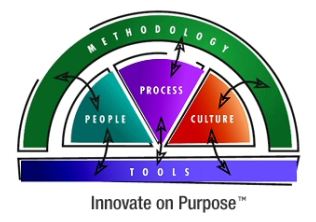
When everyone wants something and yet no one feels free to act, it makes sense to unpack the barriers and explore them.Innovate on Purpose

First Barrier – Immediate Results

While executives want innovation, to help differentiate the company or grow new revenues and profits, they also don’t want to risk distraction from existing revenues and quarterly promises. Potential revenue or differentiation is just never as interesting as near term results. To counteract this issue, we need to establish priorities and re-balance investments and commitments, or reduce the stated demand for innovation. 

{What are the priorities at your company? Are investments and commitments aligned with the need to make an impression in the short-term, or do they need to be matched with innovation initiatives?}

Second Barrier – Clear Goals

3M’s stated goal of driving 30% of revenues from products released in the last 3 years is a good example. It’s clearly stated, measurable and stakes out an important need for a continual stream of new products. Yes, it can be jockeyed, by claiming that an existing product is a “new product” because it has new features. But which argument would you rather have?  The debate about how “new” a substantial portion of your portfolio is, or why you are losing market share?

{Innovation can only be understood to be successful when “success” is well-defined and embraced by all.}

Third barrier – Time and Resource

After years of lean, Six Sigma, right sizing, downsizing and outsourcing, most people are working more than ever, and don’t have much slack time to take on innovation projects, especially when those projects may require new tools or new ways of thinking. If we can’t turn a project quickly with minimal risk and minimal investment, we probably won’t do it at all. 

{What will your “ask” be to upper management to allocate necessary time and resources? Do you have data that supports innovation as a good return on investment? How much time do you think should be invested on innovation on a pro rata basis?}

Fourth barrier – Internal Focus

If your firm can’t afford the internal resources and people necessary to innovate and sustain quarterly results, you can find incremental services for innovation from third parties, whether this is “open” innovation or something you choose to outsource. I’d argue that you should outsource the management and extension of existing products and services and in-source innovation of new products and services, because that’s where the growth lies.

{Too many companies have dysfunctional research and development teams that get bogged down in “skunk works” and function in a silo-like environment. By creating and pursuing horizontal work processes–whether they are interdepartmental or involving external strategic alliances, your organization can overcome the navel gazing so typical in larger, bureaucratic companies.}


Innovation: Spurred By Introverts or Not?

introvert v extrovert

We are all familiar with the stereotypes surrounding introverts. Yet, Stefan Lindegaard at 15inno.com, in a blog post today, while acknowledging that he is an introvert and prefers to be alone, looks at the unique role introverts can play in innovation.  He projects that, in terms of innovation, more innovation will happen in communities either in the b2c form of crowdsourcing or in the b2b form of innovation networks, alliances and challenges. He sees the communities as not just virtual/online, but also in person. Some of Lindegaard’s observations about introversion as it relates to innovation are below (he doesn’t perceive the shift to synchronized collaboration to be one that will exclude introverts from innovation.)

Reflection is an important, but forgotten capability. It is often said that introverts get more energy through reflection and that it dwindles during interaction. Well, we need more reflection. There is too much action in this fast paced world and when it comes to ideas and innovation, the best results seem to come when you take a break and reflect on the problems you are trying to solve.

Organizational structures need to make room for introverts. With the exception of a few pockets such as R&D and accounting most functions within a company seem to be driven with an extrovert-like attitude. But not all people are social. Many are introverts and don’t necessarily want to socialize and focus on external matters. What about them?

Introverts must learn to turn on the switch. Far too many meetings either take too long or should never have taken place at all. The matters could have been dealt with in more effective ways than a meeting. Introvert or not. 

But when I need to interact with others in the physical world, I have trained myself to turn on a switch that allows me to be a good networker (ask questions, focus on the other person) and deliver good talks. I would actually argue that introverts are capable of becoming better networkers than most other people because we are more likely to define a purpose and execute on this before we interact like this.

We need to develop the softer skills. Yes, it is kind of a cliché that soft skills such as networking, communication and “people skills” are really the hard skills, but this does not change the fact that too many companies fail to educate their employees on this. More importantly; they don’t give the employees the time needed to develop these skills. Those who want to succeed in the social era need to change this.

Social media works well for introverts. You can “hide” and still have a strong voice in your community or industry. This is one reason that I spent so much time with social media. It is a great way to communicate and since there is so much input (some call this information overload), it gives you plenty of opportunities to reflect on what is happening and thus build further on your own thoughts and ideas. Social media makes it easier for introverts to become more social. It is a win for everyone.

Introverts can challenge the crowd. Since most introverts shy away from the crowd, they often see the crowd in a different perspective. We need all perspectives when we work with innovation and good innovation leader make an effort to recognize this and thus pay extra attention to listen to the more “quiet” introverts.


Lindegaard’s comments should be challenging to traditional organizational development thought. He almost goes so far as to recommend diversity strategies to balance personality types in work groups. Furthermore, he portrays as valuable the tension between thinking and communication, solitary productivity vs group performance. Think about these concepts and your own organization. Consider how you may better organize yourselves to be more innovative.