What Can EQ Do For You?

Whether your executive team is trying to evaluate cultural fit, develop a post-merger integration strategy, or simply run a business, emotional intelligence is the key to decision making.  Some proof of the benefits of superior emotional intelligence:

1. The US Air Force used the EQ-I to select recruiters (the Air Force’s front-line HR
personnel) and found that the most successful recruiters scored significantly higher in
the emotional intelligence competencies of Assertiveness, Empathy, Happiness, and
Emotional Self Awareness. The Air Force also found that by using emotional
intelligence to select recruiters, they increased their ability to predict successful
recruiters by nearly three-fold. The immediate gain was a saving of $3 million
annually. These gains resulted in the Government Accounting Office submitting a
report to Congress, which led to a request that the Secretary of Defense order all
branches of the armed forces to adopt this procedure in recruitment and selection.
(The GAO report is titled, “Military Recruiting: The Department of Defense Could
Improve Its Recruiter Selection and Incentive Systems,” and it was submitted to
Congress January 30, 1998. Richard Handley and Reuven Bar-On provided this
information.)
2. Experienced partners in a multinational consulting firm were assessed on the EI
competencies plus three others. Partners who scored above the median on 9 or more
of the 20 competencies delivered $1.2 million more profit from their accounts than
did other partners – a 139 percent incremental gain (Boyatzis, 1999).
3. An analysis of more than 300 top-level executives from fifteen global companies
showed that six emotional competencies distinguished stars from the average:
Influence, Team Leadership, Organizational Awareness, self-confidence,
Achievement Drive, and Leadership (Spencer, L. M., Jr., 1997).
4. In jobs of medium complexity (sales clerks, mechanics), a top performer is 12 times
more productive than those at the bottom and 85 percent more productive than an
average performer. In the most complex jobs (insurance salespeople, account
managers), a top performer is 127 percent more productive than an average performer
(Hunter, Schmidt, & Judiesch, 1990). Competency research in over 200 companies
and organizations worldwide suggests that about one-third of this difference is due to
technical skill and cognitive ability while two-thirds is due to emotional competence
(Goleman, 1998). (In top leadership positions, over four-fifths of the difference is
due to emotional competence.)
5. At L’Oreal, sales agents selected on the basis of certain emotional competencies
significantly outsold salespeople selected using the company’s old selection
procedure. On an annual basis, salespeople selected on the basis of emotional
competence sold $91,370 more than other salespeople did, for a net revenue increase
of $2,558,360. Salespeople selected on the basis of emotional competence also had
63% less turnover during the first year than those selected in the typical way (Spencer
& Spencer, 1993; Spencer, McClelland, & Kelner, 1997).
6. In a national insurance company, insurance sales agents who were weak in emotional
competencies such as self-confidence, initiative, and empathy sold policies with an
average premium of $54,000. Those who were very strong in at least 5 of 8 key
emotional competencies sold policies worth $114,000 (Hay/McBer Research and
Innovation Group, 1997).
7. In a large beverage firm, using standard methods to hire division presidents, 50% left
within two years, mostly because of poor performance. When they started selecting
based on emotional competencies such as initiative, self-confidence, and leadership,
only 6% left in two years. Furthermore, the executives selected based on emotional
competence were far more likely to perform in the top third based on salary bonuses
for performance of the divisions they led: 87% were in the top third. In addition,
division leaders with these competencies outperformed their targets by 15 to 20
percent. Those who lacked them under-performed by almost 20% (McClelland,
1999).
8. Research by the Center for Creative Leadership has found that the primary causes of
derailment in executives involve deficits in emotional competence. The three primary
ones are difficulty in handling change, not being able to work well in a team, and
poor interpersonal relations.
9. After supervisors in a manufacturing plant received training in emotional
competencies such as how to listen better and help employees resolve problems on
their own, lost-time accidents were reduced by 50 percent, formal grievances were
reduced from an average of 15 per year to 3 per year, and the plant exceeded
productivity goals by $250,000 (Pesuric & Byham, 1996). In another manufacturing
plant where supervisors received similar training, production increased 17 percent.
There was no such increase in production for a group of matched supervisors who
were not trained (Porras & Anderson, 1981).
10. One of the foundations of emotional competence — accurate self-assessment — was
associated with superior performance among several hundred managers from 12
different organizations (Boyatzis, 1982).
11. Another emotional competence, the ability to handle stress, was linked to success as a
store manager in a retail chain. The most successful store managers were those best
able to handle stress. Success was based on net profits, sales per square foot, sales
per employee, and per dollar inventory investment (Lusch & Serpkeuci, 1990).
12. Optimism is another emotional competence that leads to increased productivity. New
salesmen at Met Life who scored high on a test of “learned optimism” sold 37 percent
more life insurance in their first two years than pessimists (Seligman, 1990).
13. A study of 130 executives found that how well people handled their own emotions
determined how much people around them preferred to deal with them (Walter V.
Clarke Associates, 1997).
14. For sales reps at a computer company, those hired based on their emotional
competence were 90% more likely to finish their training than those hired on other
criteria (Hay/McBer Research and Innovation Group, 1997).
15. At a national furniture retailer, sales people hired based on emotional competence had
half the dropout rate during their first year (Hay/McBer Research and Innovation
Group, 1997).
16. For 515 senior executives analyzed by the search firm Egon Zehnder International,
those who were primarily strong in emotional intelligence were more likely to
succeed than those who were strongest in either relevant previous experience or IQ.
In other words, emotional intelligence was a better predictor of success than either
relevant previous experience or high IQ. More specifically, the executive was high in
emotional intelligence in 74 percent of the successes and only in 24 percent of the
failures. The study included executives in Latin America, Germany, and Japan, and
the results were almost identical in all three cultures.
17. The following description of a “star” performer reveals how several emotional
competencies (noted in italics) were critical in his success: Michael Iem worked at
Tandem Computers. Shortly after joining the company as a junior staff analyst, he
became aware of the market trend away from mainframe computers to networks that
linked workstations and personal computers (Service Orientation). Iem realized that
unless Tandem responded to the trend, its products would become obsolete (Initiative
and Innovation). He had to convince Tandem’s managers that their old emphasis on
mainframes was no longer appropriate (Influence) and then develop a system using
new technology (Leadership, Change Catalyst). He spent four years showing off his
new system to customers and company sales personnel before the new network
applications were fully accepted (Self-confidence, Self-Control, Achievement Drive)
(from Richman, L. S., “How to get ahead in America,” Fortune, May 16, 1994, pp.
46-54).
18. Financial advisors at American Express whose managers completed the Emotional
Competence training program were compared to an equal number whose managers
had not. During the year following training, the advisors of trained managers grew
their businesses by 18.1% compared to 16.2% for those whose managers were
untrained.
19. The most successful debt collectors in a large collection agency had an average goal
attainment of 163 percent over a three-month period. They were compared with a
group of collectors who achieved an average of only 80 percent over the same time
period. The most successful collectors scored significantly higher in the emotional
intelligence competencies of self-actualization, independence, and optimism. (Selfactualization
refers to a well-developed, inner knowledge of one’s own goals and a
sense of pride in one’s work.) (Bachman et al., 2000).

-Cary Cherniss, Ph.D., Rutgers University

What role does emotional intelligence (EQ) play in your organization’s management? How can it become more integral?
Decision Making is Like Chopping Wood

The Woodcutter’s Story

Simon was a diligent son, but not that bright.  Eventually his mother became exasperated with him lying around the house and urged him to get a job.  Now Simon was good at one thing:  chopping down trees.  So, off he went, his axe over his shoulder, in search of work.

Soon he came upon a clearing in which logging was being carried out.  (Readers of a nervous disposition should be reassured that this logging was a fully sustainable and environmentally ethical operation.) He marched up to the supervisor and asked if there was any work available.  “Well it depends how good you are.  Chop down that tree and I’ll see.” Simon enthusiastically set about the task and completed it to the supervisor’s satisfaction. “You’re hired.  Start right away”, he said.

And Simon started work, applying himself with a commendable zeal.  It was Monday afternoon, and the day soon passed.  As did the following few days. On Friday afternoon, Simon happened to see the supervisor.  “I’m glad I’ve found you” the supervisor said.  “Please collect your cards and leave, your services are no longer wanted.”

Simon was flabbergasted!  “How come?  I am your most productive worker.  And now you’re rewarding me by sacking me!” “Well, it’s true you were the most productive worker on Tuesday.  But by Thursday you had sunk to the least productive.  And you’re doing even less well today.” “But I start early and finish last.  I work through lunch.  I spend all my time chopping down your trees.”

“I agree”, replied the supervisor, “but how much time do you spend sharpening your axe?”

-Anon

What is equivalent to sharpening the axe in your business? Management team and high potential employees choosing to pursue professional development through honing emotional intelligence (EQ) competencies. EQ is the unique intersection of heart and head—the outcome of which is effective use of feelings to enhance thought.

When EQ becomes a priority in an organization, good things happen. Consider:

  • In one study, experienced partners with high EQ in a multinational firm delivered $1.2 million more profitfrom their accounts — 139% — over their cohorts.
  • A study of manufacturing supervisors given EI training saw a reduction of 50% in lost-time accidents, 20% in formal grievances, and plant productivity goals exceededby $250,000.
  • In a cross-cultural study of senior executives, EI competencies outweighed both IQ and experience in top performers.

Superior performance is driven by strong decision making. Strong decision making is a physiological factor of: 1.) competency, preceded by 2.) behavior, preceded by 3.) cognition, preceded by emotional intelligence. EQ is a body of personal characteristics and social abilities that are closely tied to success in both our professional and personal lives. Dan Goleman, quoted in the Harvard Business Review, said, “Emotional intelligence isn’t a luxury tool you can dispense with in tough times. It’s a basic tool that, deployed with finesse, is the key to professional success.”

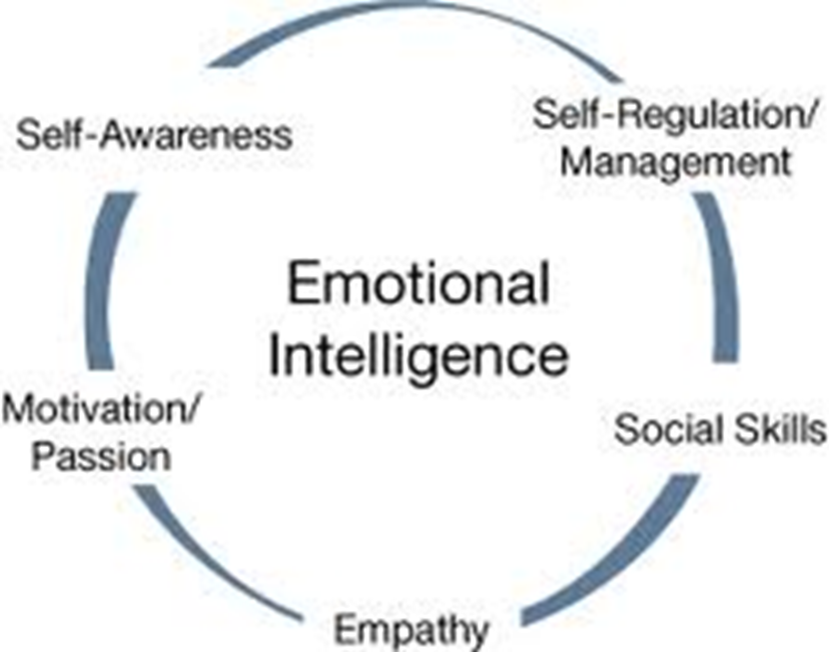
The tool is comprised of five core competencies: self-awareness, self-regulation, motivation (these three comprising the intrapersonal self), empathy and social skills (the latter two representing interpersonal acumen.) Think about bright, skillful people in your organization who are passed over for leadership and/or despised by subordinates. Chances are, these individuals are deficient in at least one of the EQ competencies.

EQ can be learned. What we try to do with clients is identify a small group to work with initially–usually direct reports to the president or high potential leaders. These are assessed individually for their relative emotional intelligence “scores.” The scores lead to individualized professional development plans (“axe sharpening”.) Mentoring occurs during which hypothetical scenarios are discussed in periodic sessions. The hypothetical gives way to the mentees bringing real life situations to discuss. With the mentor’s help, the mentees learn how to process decisions better. Over time, the team gels as its members learn how to “say hard things in soft ways,” and use feelings as an asset rather than a liability. When the team becomes high functioning in this manner, superior performance is likely its traveling partner!


Entrepreneur, Not CEO

Everybody (entrepreneur) calling himself or herself a CEO—listen up, this is for you: stop it. Calling yourself the CEO will label you as either an egoist or someone with confidence compensation issues. That will make people less willing to work with you or help you. Taking the top title in a company also suggests a limited vision of what your company can become. Ask yourself: would you still be CEO if it were a $100 billion business or would you require what’s euphemistically called “adult supervision?”

So stop pretending to have attained a title you didn’t earn and start doing what you need to do to get to where you want to be. Here’s how:

Attract Awesome People

Jobs had Wozniak and later, Markkula. Clark had Andreessen. McNeally had Bechtolsheim, Joy and Khosla. A remarkable CEO should be like the moon, illuminated by the reflected light of all the stars he or she has brought into orbit. Awesome people act as accelerants to whatever you’re doing. They push ideas forward, execute with aplomb and challenge you to new heights.

If you can hire, hire. If you can’t hire, bring them into your orbit as advisors, friends and fellow travelers. Get them to invest their creativity and energy. To get the true benefits of awesome people, focus on diversity. You want to have as many different perspectives on a problem as you possibly can, so bring on the best people from as wide array of backgrounds and from different generations. They’ll learn from each other and the confluence of their experiences will be the basis of company creativity for years to come.

Most importantly, attracting awesome people to your company precludes retreat. You carry too valuable a cargo of energy and confidence invested by others to turn back.

Build an Experience, Not a Product

Eric Ries has put the concept of the minimally viable product (MVP) front and center in the minds of Silicon Valley startups. But this focus is somewhat misguided. Products give you utility and then may be discarded. Products are the one-night stands of business. Experiences give you memories and good experiences will bring you back for more, it engenders a long-term relationship. The best CEOs know this instinctively and do all that they can to create and cultivate an attractive experience for their customers.

Once you’ve got a good experience, cement it with the bond of buying..That price tag is valuable to you too. It focuses the mind tremendously and forces you to deliver a unique and memorable experience of real value. When you offer a product for free, you aren’t forced to justify your existence to customers or show a useful benefit..

Learn Finance

If you wanted to be a rock star, you’d have to learn to read music and if you wanted to be an award-winning novelist, you’d have to learn basic grammar. It should not come as a surprise that if you want to be the CEO of a business you should learn finance. Yet we regularly see founders blowing off finance or outsourcing major financial decisions to hired guns..

For startups, there’s one important financial metric that matters more than any other: months left to live given your current burn rate. Real CEOs know this number and manage it religiously.

Define a Big Goal and Take Small Steps

Plenty of wannabe Silicon Valley CEOs have read Jim Collins and will tell you about their BHAG (That’s their Big, Hairy, Audacious Goal). They’ll tell you that they want to revolutionize the datacenter, or change the face of mobile payments, or create a new paradigm for social sharing, or something equally nebulous. That’s great. But it’s the ability to both set that goal and show how you’re going to achieve it that marks a real CEO.

Successful CEOs balance aspirations with operations. They focus on things that can be done today to secure customers and growth over time—not on the title they put on their business cards.

The quoted text above is from a post by Alexander Haislip that appeared on TechCrunch recently. Thanks to blogger Beverly J. Conquest for posting an excerpt on her blog, Accounting & Small Business|Beverly Shares.

Better Feedback Models

Traditionally feedback has been seen as occurring externally between a customer and a provider and internally as flowing from a manager to a direct report. Many changes in the work environment, including self-directed project teams, matrix management, flat organizational structures, and doing more with less resources, lead employees to work more closely with one another and become less dependent on management to provide them with feedback.

The Feedback Cycle graphic below illustrates that, these days, we must recognize that feedback – from project team members, peers, and direct reports – is the primary way to give and provide information and suggestions to each other to improve work output and performance. We must also be certain to listen for emotions and feelings as part of the feedback process. Whether your role is within a multinational corporation or a small start-up, the need to look around you 360 degrees and see yourself and your work product as others see it is critical to charting your own and team success.

Within the field of emotional intelligence, there’s a best practice of trying to see matters from another’s perspective. It is in this ability to “be on the outside looking in,” observing our decisions as a series of choices based on information we have processed, that we gain insight, perspective, and mutually desirable outcomes. Intentionally studying how our actions will affect others, asking for their input, and incorporating a “win-win” scenario into our decisions makes for better management of self, projects, and others.

In the start-up world, the Feedback Model can be used to test and validate “fit” with co-founders, employees, strategic vendors, investors, professional services providers, and so on. If the other party is not incorporating your input into their communication, planning, and execution, they are not a good fit. Likewise, if we are not able to receive feedback from others, we will not be successful in executing our business/departmental/project strategy.

Reverse the Mentoring Stereotype

In its most common context, mentoring is understood as someone with experience (and a few grey hairs!) showing someone younger how to perform key job functions. Yet, one of the hottest trends in human resources is termed “reverse mentoring.” Whether due to job loss and the need for new training, or “Second Act” entrepreneurship, or simply the precipitous amount of change being introduced in organizations trying to compete globally, there has arisen a need for this practice where younger workers are now showing the older ones “the ropes.”

While the concept is that exposure to those outside the corporate suite may be good for staying in touch with the values held by newer workers, there are several other benefits. Higher employee retention rates among younger workers are cited as an unexpected, but welcome outcome. Exposure to management issues and how decisions are made are additional upsides.

When Jack Welch was the CEO of General Electric, he  was mentored on how to use the internet by a young employee in her 20s. He saw such promise from the process that he mandated that 500 of his top executives reach out to younger employees to do likewise. These days, mentees are learning how to use social media effectively from their younger mentors. Even at top ad agencies like Ogilvy & Mather, a worldwide managing director admitted that his more youthful mentors had shown him how to enhance his Twitter posts to be less boring. His eyes have been opened to new possibilities and he now plans to utilize Skype and videoconferencing to facilitate distance mentoring across the firm’s 450 offices. HP & Cisco also have reverse mentoring programs in place.

Michelle Rafter, in a blog post entitled “8 Ways to Make a Reverse Mentorship Work For You,” suggests the following guidelines:

1. Find a compatible partner –someone with skills in areas you’re lacking

2. Set expectations- create ground rules for what you want out of a partnership, such as how often you’ll meet and what both parties will get out of it

3. Get your boss’s OK- A lot of reciprocal mentoring can happen on an informal basis. But if you want or need to set up a formal program, you’ll need your manager’s or company’s approval.

4. Be open to suggestions and criticism- learn in days from someone else what one could take decades otherwise by having a thick skin

5. Make it more than just about tech- maybe a younger person could help you learn about sushi, Chinese, popular music, or even how to lead the next generation more effectively

6. Give as much as you get-the relationship should be mutually beneficial

7. Experiment with approaches– a single department, a program that crosses departments, and a multitude of variations

8. Don’t stereotype- not every 45-year-old has the same knowledge or expertise, so don’t assume every Gen Y worker does, either.