Artisan Opportunists Make Great Entrepreneurs

Having served entrepreneurs for years, I tell my consulting clients that I have worked in almost every industry niche possible. Until my recent involvement with an incubator in Raleigh, North Carolina that is serving artisan entrepreneurs, however, I had not worked with many artistic types in a business setting. A group of Baylor University scholars wrote Small Business Management: An Entrepreneurial Emphasis a few years ago in an effort to define what small businesses need in terms of critical success factors. The authors borrowed some thoughts from a forerunner of management thought, Norman R. Smith. Smith held that there are 2 styles of the entrepreneur; the craftsman (artisan) entrepreneur and the opportunistic entrepreneur. He developed a 14 characteristic scoring system to classify entrepreneurs into one of the two categories, including qualities such ranging from breadth of education to employee relations.

Artisans were observed to possess a skill or talent that drives their initiative to open a business (vs. the tendency of an opportunistic entrepreneur to amass resources needed to respond to a market need.) Many grew up in an environment that values tasks and hard work, often as a result of exposure to the work world very early in life. With a preference for mastering the mechanics of machinery, they tend to become production-oriented early in their work lives. Many have become frustrated with management or unions and take the start-up route only after some critical event occurs.

Other key distinctions include a reluctance to delegate authority and a preference to develop customers by personal contacts only. Often, growth plans are hard to identify in the way they conduct business. This entrepreneur has a paternalistic attitude and tends to think of employees as part of the family. Accordingly, operations are focused inwardly with little engagement of the community around the artisan. With concerns about losing control over a “good” situation, artisan entrepreneurs have been known to resist involving others in key management decisions and shun interaction with outsiders. Traditional forms of financing and marketing are the rule here.

As I think about the artisans whom we serve at Kindred Boutique (the incubator in Raleigh), I see many of these factors at work. While many characterizations are stereotypical, there are enough patterns to validate the mindset of artisan entrepreneurs whom we encounter as being very similar to what is described. We work with the artisans to establish better cooperation–the boutique itself is intended to show the benefits of collective marketing and “product” testing. Often, an artisan entrepreneur has chosen this new career because of frustration with his prior one. Non-traditional forms of marketing and funding their ideas are not well received.Opportunist

What is desirable is to help the artisan think more opportunistically. (This line of thought is not meant to denigrate artisans in favor of non-artisans, who often need to think more creatively and divergently.) Smith found  that opportunistic entrepreneurs come from a background of predominately middle- to upper-economic status; their fathers are typically skilled and professional workers and own small or family businesses. As a result of the household income, these entrepreneurs have been groomed for success through formal education and exposure to other cultures through travel and attending fine arts events. This type of entrepreneur is observed to have significantly more marketing, selling, general administration, and merchandising skills.

Having watched their fathers in the business world run organizations, this group understands and appreciates management practices like delegation, advanced segment marketing techniques, and the value of strategic planning. As a rule, this group enjoys competitive situations, and may be more likely to burn their bridges. There is no critical event that decides when they should go into business. instead of competing on price and personal reputation, the opportunist relies on product development and strategy. 

Artisans can benefit from the experiences of opportunists and vice versa. Take a moment to think about which group represents your basic worldview. Modify the way you start and run your business to incorporate an approach that your counterpart from the other group may employ. You will be more successful in life and business as a result.
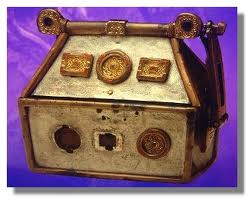
Reliquary, Hajj, or Commons – Choose to Engage

In analyzing the entrepreneurial contribution of artisans, we scratched the surface of an underlying question as to what constitutes the arts business. Some would argue that there is a defined business model that has worked for many artists and artisans for decades and that newcomers should kowtow to the tradition. Others proffer that art is not to be seen as a profit making enterprise, but as creating an aesthetic that serves the individual and/or community psyche.

Doug Borwick, immediate past President of the Board of the Association of Arts Administration Educators, queries in his blog over the weekend whether art is an ….

Individual or Community Resource?
A good (and valuable) preliminary question might be “Are the arts an individual or a community resource?” Trick question, of course. The arts inevitably serve both. However, I think much of our focus is on the individual, both as creator and consumer. I certainly believe more attention should be paid to the arts as a resource for community improvement. And, of course, by community I mean any collection of people who are bound–intentionally or, sometimes, de facto–by a characteristic they share: geography, certainly, but also culture, interests, concerns, preferences, background, etc. We speculate that this service to community was one of the origins of the arts but their binding or healing power for communities has been, in my opinion, under-appreciated, under-valued, and under-utilized by the arts infrastructure. 

He then suggests that the community service contribution of the arts has not been valued and monetized properly. The definition of community is interesting–in addition to geography, he references culture, interests, concerns, preferences, background, ans other contributing factors. In admitting what artists and artisans focus on the individual as creator and consumer, it is unspoken that the creative individual understands the consumer’s needs. In my own experience with friends and family members who are highly creative, as well as artisans who participate in a boutique/incubator I advise in Raleigh, NC, I am stunned that very little thought appears to be given to buyer personas. 

Buyer personas are what helps the entrepreneur figure out what may sell. Knowing as much as possible about the thoughts and values of your target buyer gives you the best opportunity to tailor your works for sale. While I understand that consumer sales are not the motivation of the typical creative, it does factor into the computation of how not to be a starving artist. There is also room to create works for the cultural enrichment of the community if, as Borwick points out, one can find a way to monetize it. In fact, Borwick uses a series of metaphors to try and explain the business of art:reliquary

Reliquary, as in a shrine or container of relics. The only focus here is on the relic. A reliquary would still be a reliquary if no one looked at it. Arts organizations that are “all about the art” are reliquaries whether they deal in visual (fixed) or performing (variable) work.

Hajj, as in a regularly occurring pilgrimage to a holy place.. A pilgrim is required for a hajj, but the intent is for the participants to be uplifted by objects or experiences. In the arts hajj, it is the audience/visitor who is transformed or edified; the art is fixed and not altered or affected by external concerns, interests, or influences. 

Commons, as in a resource accessible to all members of society. The commons belongs to everyone, even those who do not take advantage of it. .. if a work of art is not speaking to the community, that’s not the community’s fault; their response is either community-focused education or selection of alternative works.

Think through these metaphors in your own creative journey. While you may not consciously think you are creating shrines or a “city on a hill,” the question remains whether the community for whom you claim to create appreciates your work. If not, back to the proverbial drawing board to  rethink the buyer persona for something that resonates more powerfully!


Ingenuity Expressed in Art(isan) Entrepreneurship

John Bogle, founder of Vanguard mutual funds, attended Princeton University and was fascinated with entrepreneurship. In his senior thesis in 2006, he cites Joseph Schumpeter as the first economist to recognize how start-ups are so vital to the national economy. Schumpeter was understood to advocate for the fact that entrepreneurs are motivated by the following two characteristics (more so than materialism):

  1. “The joy of creating, of getting things done, of simply exercising one’s energy and ingenuity,”  and
  2. “The will to conquer: the impulse to fight,…to succeed for the sake, not of the fruits of success, but of success itself.”

Certainly, these characteristics are resonators for many entrepreneurs; perhaps most especially so for art(isan) ones. What? Art(isan) entrepreneurs? What is meant by this juxtaposition of terms? Heretofore, many have considered the creative types to be an island unto themselves, rather that a subset of he entrepreneurial movement that is sweeping our land. Yet, if we were to characterize creative types as right brain entrepreneurs and those who pursue STEM education, career opportunities, and new enterprises as left brain, we can create a new construct that is helpful to understand how to encourage the greater number of people to flourish in what is generally regarded as the Creative Age, successor to the Information Age.

Creative thought processes may be said to represent divergent thinking at its essence–the ability to hold an idea without passing judgment of any type. Systematic and analytical processes, therefore, tend towards convergent thinking-a deliberate effort to arrive at a conclusion based on facts and data. In the Research Triangle Park area of North Carolina, we are seeing nothing short of an epic surge of entrepreneurial fervor, much of it trumpeted as helping our economy–both local and beyond–to improve through enhanced job creation, capital flow, and value creation. Yet, virtually all of the media attention is on savvy technology start-ups that seem to rely almost exclusively on the left brain mindset.

Thankfully, there are overlaps such as the digital art required for serious gaming that brings the two sides of the brain together. Outside of such obvious blends of thinking modes, most who inhabit the incubators, accelerators, and entrepreneurial playgrounds of our region are tuned out as to how art(isan) talent can establish entrepreneurial enterprises. 

The art(isan) population has been challenged to find itself, both locally and nationally, as economic recession has caused many galleries, academies, and the like to cut back on programs, space, and staff. Those who have graduated with degrees in various creative fields from design to fashion, studio arts to music, have found employment hard to come by. In times past, many graduates became instructors in the arts or pursued employment in businesses that served entertainment venues. In order for the creative class to find optimal professional engagement, however, new ways will need to be discovered to help art(isan) entrepreneurs convert their passions into their professions. Like a hero on a journey (think of epics like The Odyssey), artists and artisans must set out to manifest her ideals in her creation. 

Creative types do not need skills training from career development types in order to become successful (and more readily accepted) entrepreneurs. What they need is to find people who appreciate their contributions. Just as indie music has shown huge demand for music that is not recorded in an album format, carried on mainstream radio, and performed in huge concert venues, there exist niches for virtually every type of created expression if the artist/artisan will labor to identify the target market. 

The opportunity to showcase one’s talent in a coffee shop, a multi-artisan boutique, or a street show are all vital to artisan entrepreneurship. By inviting others to experience one’s proof of concept, feedback can be gleaned that shapes the creative offerings going forward. Once enough traction is gained within a target market, the artisan can make decisions about what part of the production and delivery of talent she wants to play without fear of being unable to earn a living just as powerfully as any other entrepreneur.

Artisan holiday support

Iterate Instead of Analyze for Innovation Success

Intrapreneurship is needed in large companies.  Commonly, these companies tend to have plenty of data that has been collected to document market dynamics. Whether it is corporate strategy or corporate development, larger businesses have departments that constantly evaluate opportunities for growth–be they organic or inorganic.  Encouraging innovation and breakthroughs can be hard. The main reason big business becomes stagnant is that the mindset required for disruptive advances is very different than the risk management and mitigation approach of many market leaders.

Kevin McFarthing, who leads the Innovation Fixer consulting firm, suggests in a recent blog that “These companies also have a very rational approach to the assessment of investment opportunities. Of course, they find that the expenditure line has a much higher level of confidence than either the timeline or the scale of revenue. For that reason large companies want to increase the level of confidence in the income stream. Various techniques are used; for example, many consumer goods companies will undertake a fairly standard sequential program of qualitative and quantitative market research. This will relate to a database of similar products launched in the past. So, as long as you do the market research correctly, you can reduce your uncertainty and proceed.”

As is pointed out above, the traditional analytical tools used to evaluate comparable opportunities are somewhat like the comparables sought out when buying a new residence: intended to estimate what already exists instead of what has never been built. Relying on historical information rather than anticipating future demand is like driving down the road only looking in the rear view mirror!

On the opposite end of the spectrum, small businesses being run by visionary entrepreneurs tend to rely far less on the projection techniques of their larger counterparts. These start-ups rely on gut instinct, passion, and drive rather than systems. Instead of evaluating a market based on dozens of data points, the executive teams of thriving young businesses gather market information, develop a proof of concept, test it on a limited basis, revise the offering, and are nimble in their adjustments to feedback so that they can quickly bring something new to the marketplace. 

leap of faith

Large companies find what is done in the entrepreneurial space to be akin to a leap of faith. It’s very hard for a corporate type to operate from a place of judgment rather than logic. The willingness to produce something that is not perfect is much less in an organization with extensive quality initiatives.  The whole concept of try…try…try again that is the mantra of an entrepreneur is eschewed in favor of taking calculated risks. While it sounds stereotypical, it is not at all uncommon for the large company approach to be one that avoids undertaking projects without tons of documentation and extensive project and/or product planning down to minute details.  This predictable approach has severe shortcomings in an environment where responsiveness can make the difference between producing an offering that resonates versus one that is a “me too” alternative.

Instead of performing market and buyer research that resembles a canned, rote methodology, what is needed is flexibility, customization, and the ability to constantly iterate. Instead of sequence and a step-wise stage gate process, truly innovative organizations are far more willing to engage in trial and error.

McFarthing says that many large organizations lack the right mindset to explore potential. Changes he advocates that they make to become more innovative include: 

–   Rely much more on judgment to move projects ahead rapidly;

–   Don’t apply the same criteria to incremental and radical innovation;

–   Use a fast and iterative sequence of prototyping and market testing to learn and reduce uncertainty;

–   Go to market as soon as you can, don’t wait for all the facts.

Follow these suggestions and you will change your culture to become more intrapreneurial!


Your Perspective May Undermine Innovation and Value Creation

Every company, whether privately owned or with public stockholders, is concerned about its valuation. The value of an enterprise is enhanced when its future growth opportunities are well understood, documented, and pursued. Why is it, then, that so many small to medium size enterprises fail to articulate a compelling innovation strategy that will fuel the needed growth? Kevin McFarthing, who operates the Innovation Fixer consulting firm, argues that it can be a lack of perspective. He has seen too many companies obsessed with current period performance of the exclusion of the long term “big rocks” that must be put in place to build a foundation for sustainable success.

McFarthing evokes the Three Horizons model of the late 20th century in many consulting projects as a means to draw corporate executives’ focus into more far-reaching and significant perspective. Baghai, Coley and White first outlined the model in “The Alchemy of Growth” in 1999. Markets and technology are seen as drivers in the model and are depicted in the diagram below (from Tim Kastelle’s blog).

Three Horizons Model


McFarthing’s interpretation of the Three Horizons model is as follows:

The Three Horizons process forces an assessment of technology strengths and market dynamics. It then forces a view of how much resource is allocated to each of the Three Horizons. The example above shows Google’s allocation of 70/20/10, which will differ for different companies in each category. It also forces a portfolio approach to innovation.

It also helps to retain the concept of emergent strategy in your approach to the innovation portfolio, as the days of fixed long term planning are diminishing…You can’t just write a five-year plan, lock it down and expect it to deliver. Large companies must continually revise their perspective of the role radical innovation will play in their growth.

The balance of the projects and resource applied to each element of the portfolio should be decided by the top team in the company, and be dictated by corporate strategy. Incidentally, it’s not just the resource that should follow a strategic allocation; the use of management time should also follow the Horizon split. Too often resource is applied to the opportunities on the edge, but thinking time is taken up by the short term. It should be followed through, and the temptation to reallocate Horizon Three resources to fight Horizon One fires should be resisted.

Where the application of these principles falls apart in many organizations is in the allocation of strategic (often scarce and/or over-committed) resources to pursue what has been stated as a priority. You know the saying, “You gotta walk the talk.” Breakthrough innovation, then, must move from strategy and communications (though it needs to be thoughtfully developed therein) to execution via competent actions. The right combination of talent, unique skills, and initiative, when coupled with appropriate resources, produces an environment ripe for innovation to occur.  While some organizations are able to spur internal innovation, most rely on open innovation (external sources) to re-energize their enterprises. Even large companies like Kraft Foods estimated that 98% of IP in the food industry existed outside Kraft. Knowing that an industry leader like Kraft saw value in eliciting the help of others should embolden your team to admit the need for outside help.

Three Horizons, while instructional, is not the only model used to enhance one’s perspective on the opportunity for innovation. What these models have in common, according to McFarthing, are the following principles:

  • Make space in your portfolio for bets on radical innovation;
  • Balance your portfolio over different time frames;
  • Balance your portfolio over different technology needs;
  • Exploit the potential offered by Open Innovation;
  • Balance your portfolio over different market opportunities;
  • In all cases, stretch your view and take a broader perspective.

Sounds like good risk management, creative strategy, and a plan for sustainability rolled into one approach!