What Can EQ Do For You?

Whether your executive team is trying to evaluate cultural fit, develop a post-merger integration strategy, or simply run a business, emotional intelligence is the key to decision making.  Some proof of the benefits of superior emotional intelligence:

1. The US Air Force used the EQ-I to select recruiters (the Air Force’s front-line HR
personnel) and found that the most successful recruiters scored significantly higher in
the emotional intelligence competencies of Assertiveness, Empathy, Happiness, and
Emotional Self Awareness. The Air Force also found that by using emotional
intelligence to select recruiters, they increased their ability to predict successful
recruiters by nearly three-fold. The immediate gain was a saving of $3 million
annually. These gains resulted in the Government Accounting Office submitting a
report to Congress, which led to a request that the Secretary of Defense order all
branches of the armed forces to adopt this procedure in recruitment and selection.
(The GAO report is titled, “Military Recruiting: The Department of Defense Could
Improve Its Recruiter Selection and Incentive Systems,” and it was submitted to
Congress January 30, 1998. Richard Handley and Reuven Bar-On provided this
information.)
2. Experienced partners in a multinational consulting firm were assessed on the EI
competencies plus three others. Partners who scored above the median on 9 or more
of the 20 competencies delivered $1.2 million more profit from their accounts than
did other partners – a 139 percent incremental gain (Boyatzis, 1999).
3. An analysis of more than 300 top-level executives from fifteen global companies
showed that six emotional competencies distinguished stars from the average:
Influence, Team Leadership, Organizational Awareness, self-confidence,
Achievement Drive, and Leadership (Spencer, L. M., Jr., 1997).
4. In jobs of medium complexity (sales clerks, mechanics), a top performer is 12 times
more productive than those at the bottom and 85 percent more productive than an
average performer. In the most complex jobs (insurance salespeople, account
managers), a top performer is 127 percent more productive than an average performer
(Hunter, Schmidt, & Judiesch, 1990). Competency research in over 200 companies
and organizations worldwide suggests that about one-third of this difference is due to
technical skill and cognitive ability while two-thirds is due to emotional competence
(Goleman, 1998). (In top leadership positions, over four-fifths of the difference is
due to emotional competence.)
5. At L’Oreal, sales agents selected on the basis of certain emotional competencies
significantly outsold salespeople selected using the company’s old selection
procedure. On an annual basis, salespeople selected on the basis of emotional
competence sold $91,370 more than other salespeople did, for a net revenue increase
of $2,558,360. Salespeople selected on the basis of emotional competence also had
63% less turnover during the first year than those selected in the typical way (Spencer
& Spencer, 1993; Spencer, McClelland, & Kelner, 1997).
6. In a national insurance company, insurance sales agents who were weak in emotional
competencies such as self-confidence, initiative, and empathy sold policies with an
average premium of $54,000. Those who were very strong in at least 5 of 8 key
emotional competencies sold policies worth $114,000 (Hay/McBer Research and
Innovation Group, 1997).
7. In a large beverage firm, using standard methods to hire division presidents, 50% left
within two years, mostly because of poor performance. When they started selecting
based on emotional competencies such as initiative, self-confidence, and leadership,
only 6% left in two years. Furthermore, the executives selected based on emotional
competence were far more likely to perform in the top third based on salary bonuses
for performance of the divisions they led: 87% were in the top third. In addition,
division leaders with these competencies outperformed their targets by 15 to 20
percent. Those who lacked them under-performed by almost 20% (McClelland,
1999).
8. Research by the Center for Creative Leadership has found that the primary causes of
derailment in executives involve deficits in emotional competence. The three primary
ones are difficulty in handling change, not being able to work well in a team, and
poor interpersonal relations.
9. After supervisors in a manufacturing plant received training in emotional
competencies such as how to listen better and help employees resolve problems on
their own, lost-time accidents were reduced by 50 percent, formal grievances were
reduced from an average of 15 per year to 3 per year, and the plant exceeded
productivity goals by $250,000 (Pesuric & Byham, 1996). In another manufacturing
plant where supervisors received similar training, production increased 17 percent.
There was no such increase in production for a group of matched supervisors who
were not trained (Porras & Anderson, 1981).
10. One of the foundations of emotional competence — accurate self-assessment — was
associated with superior performance among several hundred managers from 12
different organizations (Boyatzis, 1982).
11. Another emotional competence, the ability to handle stress, was linked to success as a
store manager in a retail chain. The most successful store managers were those best
able to handle stress. Success was based on net profits, sales per square foot, sales
per employee, and per dollar inventory investment (Lusch & Serpkeuci, 1990).
12. Optimism is another emotional competence that leads to increased productivity. New
salesmen at Met Life who scored high on a test of “learned optimism” sold 37 percent
more life insurance in their first two years than pessimists (Seligman, 1990).
13. A study of 130 executives found that how well people handled their own emotions
determined how much people around them preferred to deal with them (Walter V.
Clarke Associates, 1997).
14. For sales reps at a computer company, those hired based on their emotional
competence were 90% more likely to finish their training than those hired on other
criteria (Hay/McBer Research and Innovation Group, 1997).
15. At a national furniture retailer, sales people hired based on emotional competence had
half the dropout rate during their first year (Hay/McBer Research and Innovation
Group, 1997).
16. For 515 senior executives analyzed by the search firm Egon Zehnder International,
those who were primarily strong in emotional intelligence were more likely to
succeed than those who were strongest in either relevant previous experience or IQ.
In other words, emotional intelligence was a better predictor of success than either
relevant previous experience or high IQ. More specifically, the executive was high in
emotional intelligence in 74 percent of the successes and only in 24 percent of the
failures. The study included executives in Latin America, Germany, and Japan, and
the results were almost identical in all three cultures.
17. The following description of a “star” performer reveals how several emotional
competencies (noted in italics) were critical in his success: Michael Iem worked at
Tandem Computers. Shortly after joining the company as a junior staff analyst, he
became aware of the market trend away from mainframe computers to networks that
linked workstations and personal computers (Service Orientation). Iem realized that
unless Tandem responded to the trend, its products would become obsolete (Initiative
and Innovation). He had to convince Tandem’s managers that their old emphasis on
mainframes was no longer appropriate (Influence) and then develop a system using
new technology (Leadership, Change Catalyst). He spent four years showing off his
new system to customers and company sales personnel before the new network
applications were fully accepted (Self-confidence, Self-Control, Achievement Drive)
(from Richman, L. S., “How to get ahead in America,” Fortune, May 16, 1994, pp.
46-54).
18. Financial advisors at American Express whose managers completed the Emotional
Competence training program were compared to an equal number whose managers
had not. During the year following training, the advisors of trained managers grew
their businesses by 18.1% compared to 16.2% for those whose managers were
untrained.
19. The most successful debt collectors in a large collection agency had an average goal
attainment of 163 percent over a three-month period. They were compared with a
group of collectors who achieved an average of only 80 percent over the same time
period. The most successful collectors scored significantly higher in the emotional
intelligence competencies of self-actualization, independence, and optimism. (Selfactualization
refers to a well-developed, inner knowledge of one’s own goals and a
sense of pride in one’s work.) (Bachman et al., 2000).

-Cary Cherniss, Ph.D., Rutgers University

What role does emotional intelligence (EQ) play in your organization’s management? How can it become more integral?

Due Diligence Must Include Culture

60% of mergers, acquisitions, and joint ventures fail to perform up to expectations in their first year, often because of cultural incompatibilities between the two prospective partners. The losses in shareholder value are in the hundreds of millions of dollars in many of these star-crossed liaisons. Cultural Due Diligence is a technique for keeping both eyes wide open when approaching an attractive prospect, whether for a merger, joint venture, or offshore vendor.

-Wayne State University, Institute for Information Technology and Culture

When two companies agree to join forces in some type of agreement, cultural fit is usually the last factor considered-if at all! Instead, many numbers are crunched, recrunched, and analyzed ad nauseum. Market impact, anticipated back office savings, etc receive the lion’s share of the secondary consideration after financial statement items. “Culture” is perceived as too soft an issue to justify the time and attention of high-powered executives. Big mistake!

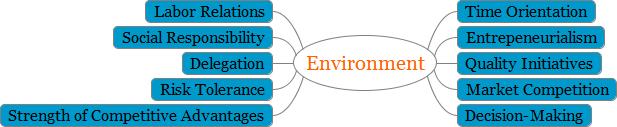
At the very minimum, the operating environment and organizational structure of each entity needs to be explored. When we are working with a client, we use the following two charts to help us ask solid questions about these two components of culture. From the answers received, we make value judgments and recommendations as to the degree of “fit” between organizations and what to do about it.

In considering the operating environment, we look at whether the company has a long-range or short-term approach to management. We ask questions to determine whether the organization is more entrepreneurial or bureaucratic. Quality initiatives are a good indicator of what aspects of performance are most important to management. The degree an strength of market competition for each party is important. How decisions are made is another leading indicator of what it may be like to work alongside the other team.

How management handles relationships with employees, (unions), and contractors is important to search out. Is giving back to the community and having respect for the environment a value of the other organization? Do meaningful tasks get delegated effectively, or are there barriers to professional development , shared responsibility, and growth through the contributions of many? Discovering how the other party perceives risk and builds strategy accordingly is a key conversation. When one’s competitive advantages are articulated, it is vital to verify how strong they are in the eyes of the buyers.

In addition to the operating environment, it is critical to understand the organizational structures that represent the philosophy of your intended. Do employees have direct access to top executives, or must they work through a layered management team? Understand whether the employees feel that they are protected to the point of not being allowed to make any mistakes. Examine whether generalist skills are valued versus everyone having a narrow scope. Look at the board of directors to see whether it is comprised of objective, strong leaders. Pay attention to the diversity of the employees and management team.

If the other company has a multi-office system, is it managed out of corporate, or are those in the field given autonomy? Notice whether task or relationships seem to carry more weight. Analyze the turnover rate among management and key positions. Is the human resources department deep enough to undertake complex issues like training and development, talent management, succession planning, coaching and the like, or compliance focused? Ask for examples of how technology is used to solve problems and enhance work flow.

The careful review of these “soft” factors can save you some headaches and hardships–do it! (We would love to help.)


Soccer, Fighter Planes, and Strategy

In most other countries around the world, soccer (“futbol”) is the national past time and a great source of the good kind of pride. It inspires its observers to sing national anthems, set differences aside, and salute efforts where one or many “put it on the line.” During the course of the weekend, I have been observing UEFA 2012, the European tournament held on the same four year schedule as the Olympic games.

One of the interesting things that occurs in the format of the tournament is the pairing of teams against one another wherein one appears–on paper–to have far superior credentials to another. In many cases, a starting lineup for one side can be stacked with players who have 100+ games (matches) on the international stage. With such vast experience, the veteran side enjoys a presumed advantage over the opposition. Often, the more veteran team enjoys an additional upper hand due to the superior ball-handling, striking, and passing skills of its players.

The scenario is analogous to young or smaller businesses trying to compete against prohibitively endorsed large, mature businesses. Yet, whether in futbol or in business settings, we see the underdog come out on top often enough that we realize competition is not decided through analysis and predictions. What, then, are some of the reasons that a presumably out-manned competitor emerges victorious?

If I may bring in yet another comparison without losing the train of thought, I’d like to reference the story of the Tuskegee Airmen, revived through the recent Red Tails movie produced by George Lucas. In the movie, the African-American pilots are disdained by both their own armed forces as well as the haughty Luftwaffe (German Air Force). The heroes are initially perceived as being less intelligent, having slower reflexes, and lacking the experience to get the job done of protecting U.S. bomber squadrons during the second World War strategic air campaigns to reach Berlin and help the Allied forces achieve victory. What the featured pilots bring to the air battles (at least in the movie version) are the following distinctives:

  1. They were not fighting for individual glory,
  2. They were not afraid to take reasonable risks,
  3. They were (for the most part) disciplined in their consistent approach.

In business, it is very important to observe how applying these distinct characteristics would benefit a company’s performance–whether going against peers or seemingly over-matched foes. In order to build the “esprit de corps” requisite to compete will require emotional intelligence. More self-awareness and significant amounts of empathy and self-regulation are traits that are uncommon in the masses, but very evident in those who are not selfish.

Risk taking and management of the risk-rewards trade-off is a nuance rather than the exact science some would have us to believe. As depicted both in the movie and in a game between Spain and Italy this weekend, there is a “right time” to go for the gusto. Italy was successful playing quick attacks over the top of the Spanish defense and the Red Tails had success in attacking peripheral targets after primary targets were taken out. Business strategies that include both a primary objective and additional (discretionary) targets are wise.

Finally, the commitment to the plan–a resolute determination to dismiss the criticism of others and stay focused–is vital. Don’t mistake this focus, however, for sticking to a bad idea too long. Strategies must be proven to be successful before being implemented far and wide and held up as the “best practice.” Once featured, the strategy should be re-evaluated based on results and feedback. While being pursued, however, there can be no dissension among the ranks.

Decision Making is Like Chopping Wood

The Woodcutter’s Story

Simon was a diligent son, but not that bright.  Eventually his mother became exasperated with him lying around the house and urged him to get a job.  Now Simon was good at one thing:  chopping down trees.  So, off he went, his axe over his shoulder, in search of work.

Soon he came upon a clearing in which logging was being carried out.  (Readers of a nervous disposition should be reassured that this logging was a fully sustainable and environmentally ethical operation.) He marched up to the supervisor and asked if there was any work available.  “Well it depends how good you are.  Chop down that tree and I’ll see.” Simon enthusiastically set about the task and completed it to the supervisor’s satisfaction. “You’re hired.  Start right away”, he said.

And Simon started work, applying himself with a commendable zeal.  It was Monday afternoon, and the day soon passed.  As did the following few days. On Friday afternoon, Simon happened to see the supervisor.  “I’m glad I’ve found you” the supervisor said.  “Please collect your cards and leave, your services are no longer wanted.”

Simon was flabbergasted!  “How come?  I am your most productive worker.  And now you’re rewarding me by sacking me!” “Well, it’s true you were the most productive worker on Tuesday.  But by Thursday you had sunk to the least productive.  And you’re doing even less well today.” “But I start early and finish last.  I work through lunch.  I spend all my time chopping down your trees.”

“I agree”, replied the supervisor, “but how much time do you spend sharpening your axe?”

-Anon

What is equivalent to sharpening the axe in your business? Management team and high potential employees choosing to pursue professional development through honing emotional intelligence (EQ) competencies. EQ is the unique intersection of heart and head—the outcome of which is effective use of feelings to enhance thought.

When EQ becomes a priority in an organization, good things happen. Consider:

  • In one study, experienced partners with high EQ in a multinational firm delivered $1.2 million more profitfrom their accounts — 139% — over their cohorts.
  • A study of manufacturing supervisors given EI training saw a reduction of 50% in lost-time accidents, 20% in formal grievances, and plant productivity goals exceededby $250,000.
  • In a cross-cultural study of senior executives, EI competencies outweighed both IQ and experience in top performers.

Superior performance is driven by strong decision making. Strong decision making is a physiological factor of: 1.) competency, preceded by 2.) behavior, preceded by 3.) cognition, preceded by emotional intelligence. EQ is a body of personal characteristics and social abilities that are closely tied to success in both our professional and personal lives. Dan Goleman, quoted in the Harvard Business Review, said, “Emotional intelligence isn’t a luxury tool you can dispense with in tough times. It’s a basic tool that, deployed with finesse, is the key to professional success.”

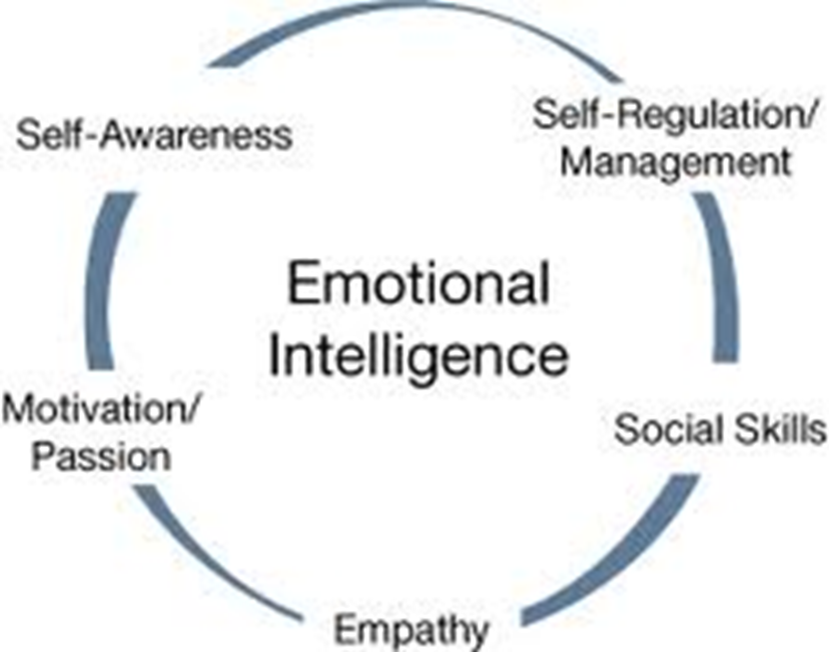
The tool is comprised of five core competencies: self-awareness, self-regulation, motivation (these three comprising the intrapersonal self), empathy and social skills (the latter two representing interpersonal acumen.) Think about bright, skillful people in your organization who are passed over for leadership and/or despised by subordinates. Chances are, these individuals are deficient in at least one of the EQ competencies.

EQ can be learned. What we try to do with clients is identify a small group to work with initially–usually direct reports to the president or high potential leaders. These are assessed individually for their relative emotional intelligence “scores.” The scores lead to individualized professional development plans (“axe sharpening”.) Mentoring occurs during which hypothetical scenarios are discussed in periodic sessions. The hypothetical gives way to the mentees bringing real life situations to discuss. With the mentor’s help, the mentees learn how to process decisions better. Over time, the team gels as its members learn how to “say hard things in soft ways,” and use feelings as an asset rather than a liability. When the team becomes high functioning in this manner, superior performance is likely its traveling partner!


Dispense With Heroics; Be Practical

Last night we tackled three themes from Contentrix founder Alice Seba’s top 40 lessons learned. As a reminder, the themes were: get others involved, focus, and execute. Tonight, in looking over numbers 21-40, we take a look at three more themes: batch processing, succession planning, and prioritization.

#21. It’s okay that a lot of people don’t understand what I do

#22. Technology is my friend, but I don’t mess around with it more than I have to or am capable of

#23. Customer service is a critical part of your business, but it’s a productivity inhibitor

#24. Other people’s blogs can be useful

#25. Nothing on the Internet is private

#26. If you don’t own the site you’re publishing too, you really don’t own that content

#27. Working in batches is great for productivity

#28. I used to think religion and business don’t mix

#29. There is no one quite like you, but you are dispensable…or at least you should be

#30. Tools and Software don’t grow your business, you do

#31. You don’t have to explore everything to diversify

#32. Listen to your audience…they can teach you a ton

#33. There is no shame in selling

#34. If you’re not confident, they’ll know

#35. Knowing the words to use is also important

#36. It’s okay to take a break when you just aren’t into it

#37. To do lists are always meant to be shortened

#38. Use your freedom to do good things

#39. Appreciate and be thankful for what you have

#40. Take care of yourself

People who are gifted at time management have been touting the virtue of “chunking your time” for years. The phrase means to set aside times when one type of activity is pursued exclusive to all others, thereby avoiding distractions and staying on course. Grouping tasks together into batches of similar issues can help build momentum.

Seba urges the entrepreneur to think of him/herself as dispensable.  “Start with the end in mind.” If we approach the process of building a business as trying to make it less and less dependent on the founder, then we are a.) empowering others to add their collective strengths to the development of the enterprise and b.) purposefully preparing for the day when others are making more of the major decisions. To arrive at the place where the business is capable of being handed over requires working on the business rather than in it.

It is so easy as a company founder to have an endless list of things that all seem important and urgent. We drive ourselves to work, work, work in headlong pursuit of milestones that indicate the business is on track and successful. With each passing day, the perfectionist inside drives towards an exhaustive, never-ending cataloging of “things to do.” here’s a secret: reduce the list to only a few things, execute at least the top two, and feel accomplishment rather than lack of fulfillment. You will be glad you did!

The combination of planning your own exit, prioritizing your work, and pursuing it in batches  should be beneficial for you. It has been for many others.