Retool for Catalytic Success

Business macrotrends are illuminating. With sufficient data, organizations like BCG, McKinsey & Bain can advise their clients better as to thought leadership positions, best practices, and optimization. As the national economy has improved from recession to stagnation or slow growth, businesses have shifted their focus from expense reduction to growth. Increasing revenues is important to companies providing goods, services, or non-profit benefits.

When Bain performed a study last year, 80 percent of the executives believed innovation to be important than cost reduction for long-term success. Also, 68 percent of respondents believed that taking care of customers and employees should come before shareholders. Bain’s interpretation: executives realize that growth depends on having happy, productive employees and satisfied customers. Shareholder returns will be the natural byproduct.

Growth Catalysts:

In the Bain survey, popular management tools were rated by respondents. Of 25 total tools, the top 3 were:

  • open innovation (expanding the sources of breakthrough products)
  • scenario and contingency planning (testing the “what ifs” to plan for the future/minimize risks) &
  • price optimization (addressing rising commodity prices). 

Social media was seen as an additional emerging tool of choice. Whether websites, micro-bogging, or online communities, there has been a growing commitment to explore the value of the medium to enhance relationships–internally as well as externally. “While only 29 percent of all respondents say they used social media in 2010, usage is expected to surge to 56 percent in 2011. Even so, executives tell us they’re uncertain about how to measure the effectiveness of this tool.”  

The standard approach with the introduction of new tools is to make a limited investment to vet the value of the tool, then make a more sizable commitment if it proves to have merit. Bain study leaders felt that this approach presented two risks:

First, while it’s understandable that companies do not want to make major investments before they fully understand how a tool will work, we have found that using tools on a limited basis consistently leads to lower satisfaction, so caution may inadvertently result in failure. The second risk we have found: companies start using a tool because their competitors are using it, or because it’s the hot topic in the business press, but if they do not fully understand how and why to use it, the experience ends up in failure.

Think of business process reengineering, where we witnessed an inverse relationship between usage and satisfaction rates when it was the hot tool of the 1990s. We witnessed reengineering drop from the tool with the fifth highest satisfaction rate in 1993 all the way to 21st in the late 1990s. It was only after usage rates declined that satisfaction began to improve again. Any time we see high usage but low satisfaction, there is cause for concern.

What Tools Work & What to Degree?

Benchmarking made a comeback a couple years ago and displaced strategic planning, a perennial No. 1, as the tool of choice. In addition to benchmarking, the most widely used tools during the recession period were strategic planning and mission and vision statements. These tools have rated in the Bain top 10 for usage over the years, regardless of the economic climate.

The survey found the least used tools included open innovation, decision rights tools and rapid prototyping. One tool that was surprisingly unpopular was mergers & acquisitions. During a downturn, M&A deals often create bargains that give the acquiring company increased scale and broadened scope. Yet in each recession we see relatively few deals. 

Among the  preferred tools, strategic planning was the tool with the highest satisfaction rating. Other tools with above-average satisfaction scores included mission and vision statements, total quality management, customer segmentation and strategic alliances. On the other end of the spectrum, downsizing, outsourcing and shared services centers–despite being seen as expense reduction tactics–were three of the five tools with below-average satisfaction scores. The other two tools with low satisfaction ratings were knowledge management and social media programs.

Task Tyrants Steal Success

When one of my friends invited me to a continuing education luncheon offering credits I did not need, I debated whether to attend. Once there, I was engaged by strong networking and a guest speaker whose subject matter was very familiar to me–professional services marketing. However, his approach was to talk about the predictable objection of time availability. The challenge to the audience was to think about their schedules in a different way. When he pulled out Covey’s four quadrant model for time management (below), I was right at home as I use the tool often in mentoring on a variety of subjects.

If you are unfamiliar with the model, allow me to briefly explain. When performing tasks and crossing off “to-do” lists, too many people spend the majority of their time in quadrant #4–the items that are urgent yet not important.  Quadrant #1 activities demand our attention and get done. What suffers, however, are quadrant #2 tasks, which are often the last to be done but can make a huge difference in overall execution of business goals.

Jeff Nischwitz was the guest speaker and what he said next was very revealing. He said that most billable hour professionals know that marketing (or business development) should be something we place in #2, but our behavior usually places it in #3. As a result, our best intentions are not realized because we never place the appropriate priority or value on what fills our pipeline. He went on to say that, until marketing becomes a quadrant 1 focal point, our organizations will falter and stagnate rather than grow and flourish.

Pause and think about that and evaluate your use of time. If the things that matter keep being put off in favor of what commands our attention today that may not be as important in the long run, we are not managing ourselves well. The message that is sent to a new prospect, for instance, when a proposal is turned in the last day possible, or a call or email is returned much later that desired is that the relationship is insignificant because we already have enough (too much) to do.

Challenge yourself to be better–do what is important on a daily basis as though it were urgent!

What Can EQ Do For You?

Whether your executive team is trying to evaluate cultural fit, develop a post-merger integration strategy, or simply run a business, emotional intelligence is the key to decision making.  Some proof of the benefits of superior emotional intelligence:

1. The US Air Force used the EQ-I to select recruiters (the Air Force’s front-line HR
personnel) and found that the most successful recruiters scored significantly higher in
the emotional intelligence competencies of Assertiveness, Empathy, Happiness, and
Emotional Self Awareness. The Air Force also found that by using emotional
intelligence to select recruiters, they increased their ability to predict successful
recruiters by nearly three-fold. The immediate gain was a saving of $3 million
annually. These gains resulted in the Government Accounting Office submitting a
report to Congress, which led to a request that the Secretary of Defense order all
branches of the armed forces to adopt this procedure in recruitment and selection.
(The GAO report is titled, “Military Recruiting: The Department of Defense Could
Improve Its Recruiter Selection and Incentive Systems,” and it was submitted to
Congress January 30, 1998. Richard Handley and Reuven Bar-On provided this
information.)
2. Experienced partners in a multinational consulting firm were assessed on the EI
competencies plus three others. Partners who scored above the median on 9 or more
of the 20 competencies delivered $1.2 million more profit from their accounts than
did other partners – a 139 percent incremental gain (Boyatzis, 1999).
3. An analysis of more than 300 top-level executives from fifteen global companies
showed that six emotional competencies distinguished stars from the average:
Influence, Team Leadership, Organizational Awareness, self-confidence,
Achievement Drive, and Leadership (Spencer, L. M., Jr., 1997).
4. In jobs of medium complexity (sales clerks, mechanics), a top performer is 12 times
more productive than those at the bottom and 85 percent more productive than an
average performer. In the most complex jobs (insurance salespeople, account
managers), a top performer is 127 percent more productive than an average performer
(Hunter, Schmidt, & Judiesch, 1990). Competency research in over 200 companies
and organizations worldwide suggests that about one-third of this difference is due to
technical skill and cognitive ability while two-thirds is due to emotional competence
(Goleman, 1998). (In top leadership positions, over four-fifths of the difference is
due to emotional competence.)
5. At L’Oreal, sales agents selected on the basis of certain emotional competencies
significantly outsold salespeople selected using the company’s old selection
procedure. On an annual basis, salespeople selected on the basis of emotional
competence sold $91,370 more than other salespeople did, for a net revenue increase
of $2,558,360. Salespeople selected on the basis of emotional competence also had
63% less turnover during the first year than those selected in the typical way (Spencer
& Spencer, 1993; Spencer, McClelland, & Kelner, 1997).
6. In a national insurance company, insurance sales agents who were weak in emotional
competencies such as self-confidence, initiative, and empathy sold policies with an
average premium of $54,000. Those who were very strong in at least 5 of 8 key
emotional competencies sold policies worth $114,000 (Hay/McBer Research and
Innovation Group, 1997).
7. In a large beverage firm, using standard methods to hire division presidents, 50% left
within two years, mostly because of poor performance. When they started selecting
based on emotional competencies such as initiative, self-confidence, and leadership,
only 6% left in two years. Furthermore, the executives selected based on emotional
competence were far more likely to perform in the top third based on salary bonuses
for performance of the divisions they led: 87% were in the top third. In addition,
division leaders with these competencies outperformed their targets by 15 to 20
percent. Those who lacked them under-performed by almost 20% (McClelland,
1999).
8. Research by the Center for Creative Leadership has found that the primary causes of
derailment in executives involve deficits in emotional competence. The three primary
ones are difficulty in handling change, not being able to work well in a team, and
poor interpersonal relations.
9. After supervisors in a manufacturing plant received training in emotional
competencies such as how to listen better and help employees resolve problems on
their own, lost-time accidents were reduced by 50 percent, formal grievances were
reduced from an average of 15 per year to 3 per year, and the plant exceeded
productivity goals by $250,000 (Pesuric & Byham, 1996). In another manufacturing
plant where supervisors received similar training, production increased 17 percent.
There was no such increase in production for a group of matched supervisors who
were not trained (Porras & Anderson, 1981).
10. One of the foundations of emotional competence — accurate self-assessment — was
associated with superior performance among several hundred managers from 12
different organizations (Boyatzis, 1982).
11. Another emotional competence, the ability to handle stress, was linked to success as a
store manager in a retail chain. The most successful store managers were those best
able to handle stress. Success was based on net profits, sales per square foot, sales
per employee, and per dollar inventory investment (Lusch & Serpkeuci, 1990).
12. Optimism is another emotional competence that leads to increased productivity. New
salesmen at Met Life who scored high on a test of “learned optimism” sold 37 percent
more life insurance in their first two years than pessimists (Seligman, 1990).
13. A study of 130 executives found that how well people handled their own emotions
determined how much people around them preferred to deal with them (Walter V.
Clarke Associates, 1997).
14. For sales reps at a computer company, those hired based on their emotional
competence were 90% more likely to finish their training than those hired on other
criteria (Hay/McBer Research and Innovation Group, 1997).
15. At a national furniture retailer, sales people hired based on emotional competence had
half the dropout rate during their first year (Hay/McBer Research and Innovation
Group, 1997).
16. For 515 senior executives analyzed by the search firm Egon Zehnder International,
those who were primarily strong in emotional intelligence were more likely to
succeed than those who were strongest in either relevant previous experience or IQ.
In other words, emotional intelligence was a better predictor of success than either
relevant previous experience or high IQ. More specifically, the executive was high in
emotional intelligence in 74 percent of the successes and only in 24 percent of the
failures. The study included executives in Latin America, Germany, and Japan, and
the results were almost identical in all three cultures.
17. The following description of a “star” performer reveals how several emotional
competencies (noted in italics) were critical in his success: Michael Iem worked at
Tandem Computers. Shortly after joining the company as a junior staff analyst, he
became aware of the market trend away from mainframe computers to networks that
linked workstations and personal computers (Service Orientation). Iem realized that
unless Tandem responded to the trend, its products would become obsolete (Initiative
and Innovation). He had to convince Tandem’s managers that their old emphasis on
mainframes was no longer appropriate (Influence) and then develop a system using
new technology (Leadership, Change Catalyst). He spent four years showing off his
new system to customers and company sales personnel before the new network
applications were fully accepted (Self-confidence, Self-Control, Achievement Drive)
(from Richman, L. S., “How to get ahead in America,” Fortune, May 16, 1994, pp.
46-54).
18. Financial advisors at American Express whose managers completed the Emotional
Competence training program were compared to an equal number whose managers
had not. During the year following training, the advisors of trained managers grew
their businesses by 18.1% compared to 16.2% for those whose managers were
untrained.
19. The most successful debt collectors in a large collection agency had an average goal
attainment of 163 percent over a three-month period. They were compared with a
group of collectors who achieved an average of only 80 percent over the same time
period. The most successful collectors scored significantly higher in the emotional
intelligence competencies of self-actualization, independence, and optimism. (Selfactualization
refers to a well-developed, inner knowledge of one’s own goals and a
sense of pride in one’s work.) (Bachman et al., 2000).

-Cary Cherniss, Ph.D., Rutgers University

What role does emotional intelligence (EQ) play in your organization’s management? How can it become more integral?

Successful Acquisitions Focus on Integration

Acquisitions are more prevalent when economies are tough. Companies hope that they will be able to achieve economies of scale by combining functions that require repetitive tasks. What is often underestimated is the work that must be done post-merger to actually experience the desired results. Yesterday, we examined the role of cultural due diligence in assessing the promise of combining efforts with another company. We assume that that assessment has been done and the decision was made to proceed. What is at issue is how to proceed!

Price Waterhouse Coopers conducted research that indicates that approximately 85% of acquisitions are seen as failures after the fact. In the UK, Cass Business School at City University of London studied 12,339 deals between 1984 and 2008. The findings were that price was not the best predictor of success, but that integration of the two companies was. The CEO Rountable recommends the following process and checklist for better integration:

Create a master to-do list broken down into themes including key items that arose in due diligence.

  • Allocate a manager, for each theme.
  • Be realistic with timetables.
  • Break items down into actions within 30, 60 and 90 days.

Checklist:

Finance/Costs

1. Get control of the bank accounts. Ensure all accounts are receiving the best group interest rate.
2. Establish operating budgets including capex with authorization guidelines.
3. Establish a new management information timetable. Metrics will be key.
4. Review balance sheets for adequacy of provisions.
5. Drive through planned cost savings quickly and effectively with clear communication.

People

1. Establish a reporting structure to ensure continuing trading is seamless.
2. Review reward structures to ensure continuity of management.
3. Anomalies between acquirer and target sales commissions will require urgent action as sales teams talk.
4. Quickly review of problem employment contracts and put resolutions in place to minimize exposure.
5. Organize immediate sales & customer service training.
6. Establish a key meetings schedule to allow free and timely flow of information.
7. Establish a clear understanding of the authority levels of the target’s leadership team.

Systems

1. Deal with exposures revealed by due diligence, prioritizing those related to keeping the trains running!
2. Plan for merging disparate systems or at least to allow them to “talk” to each other.
3. Lock down the security around customer databases.
Sales & Customers 

1. Ensure live deals under negotiation are not disrupted by the acquisition.
2. Cleanse all sales forecasts ASAP and integrate the revised version into the group cash forecasting system.
3. Review cross selling opportunities between key customers of buyer and seller.

PR

1. Communicate often and clearly with staff and key stakeholders externally, especially key customers.
2. Visit key customers to share the strategy of the merged group and why it’s good news for them.
3. Use the joint press release on the deal to motivate staff and impress existing customers.
Marketing

1. Set a timetable for all web site changes and allocate a webmaster to drive the project.
2. Collateral may need to change to reflect the new products of the merged entity.
3. Emphasize the benefits of the merger for the customers.

Legal

1. Draw up a detailed checklist of contingent liabilities.
2. Note earn-out implications for company management. Factor into the integration plan.
3. Insurance and risk exposure reviews should be conducted as a high priority.
4. Tax and accounting matters related to regulatory compliance may require urgent action.

Obviously, this list is by no means exhaustive, but illustrative of how one would go about dissecting potential problem areas and making adequate preparation. If your team will make a commitment to be thorough and anticipate things that could go wrong, you will know what questions to ask and what systems to take apart and reassemble. Integration is hard, but the effort is critical to successfully meeting the goals of the transaction.


Due Diligence Must Include Culture

60% of mergers, acquisitions, and joint ventures fail to perform up to expectations in their first year, often because of cultural incompatibilities between the two prospective partners. The losses in shareholder value are in the hundreds of millions of dollars in many of these star-crossed liaisons. Cultural Due Diligence is a technique for keeping both eyes wide open when approaching an attractive prospect, whether for a merger, joint venture, or offshore vendor.

-Wayne State University, Institute for Information Technology and Culture

When two companies agree to join forces in some type of agreement, cultural fit is usually the last factor considered-if at all! Instead, many numbers are crunched, recrunched, and analyzed ad nauseum. Market impact, anticipated back office savings, etc receive the lion’s share of the secondary consideration after financial statement items. “Culture” is perceived as too soft an issue to justify the time and attention of high-powered executives. Big mistake!

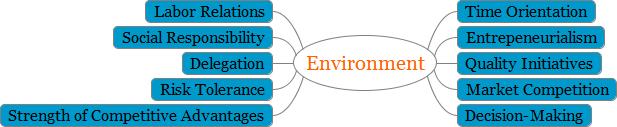
At the very minimum, the operating environment and organizational structure of each entity needs to be explored. When we are working with a client, we use the following two charts to help us ask solid questions about these two components of culture. From the answers received, we make value judgments and recommendations as to the degree of “fit” between organizations and what to do about it.

In considering the operating environment, we look at whether the company has a long-range or short-term approach to management. We ask questions to determine whether the organization is more entrepreneurial or bureaucratic. Quality initiatives are a good indicator of what aspects of performance are most important to management. The degree an strength of market competition for each party is important. How decisions are made is another leading indicator of what it may be like to work alongside the other team.

How management handles relationships with employees, (unions), and contractors is important to search out. Is giving back to the community and having respect for the environment a value of the other organization? Do meaningful tasks get delegated effectively, or are there barriers to professional development , shared responsibility, and growth through the contributions of many? Discovering how the other party perceives risk and builds strategy accordingly is a key conversation. When one’s competitive advantages are articulated, it is vital to verify how strong they are in the eyes of the buyers.

In addition to the operating environment, it is critical to understand the organizational structures that represent the philosophy of your intended. Do employees have direct access to top executives, or must they work through a layered management team? Understand whether the employees feel that they are protected to the point of not being allowed to make any mistakes. Examine whether generalist skills are valued versus everyone having a narrow scope. Look at the board of directors to see whether it is comprised of objective, strong leaders. Pay attention to the diversity of the employees and management team.

If the other company has a multi-office system, is it managed out of corporate, or are those in the field given autonomy? Notice whether task or relationships seem to carry more weight. Analyze the turnover rate among management and key positions. Is the human resources department deep enough to undertake complex issues like training and development, talent management, succession planning, coaching and the like, or compliance focused? Ask for examples of how technology is used to solve problems and enhance work flow.

The careful review of these “soft” factors can save you some headaches and hardships–do it! (We would love to help.)