Trends to Watch in Small Biz For 2013

In mid-December, small business owners are thinking about year end numbers and whether their companies will meet the annual goal(s). Advisers to small business owners are thinking about tax liabilities, the expiration of certain programs favorable to their clients, and whether the upcoming year will be better for their own businesses. What is little discussed but super important is what the future holds. In preparing to answer that very significant question, the small business leadership team is thinking proactively about strategy, innovation, and how to turn today’s customers and competitive advantages into a plan for sustainable success.

American Express publishes a blog under the OPEN Forum brand. One of its leading bloggers is John Jantsch of Duct Tape Marketing. A few weeks ago, he identified the following top 5 trends in business for 2013:Futuristic conference room

1. “Crowdsolving” becomes a hot innovation trend. Some of the greatest challenges we face in the world..are being tackled in unique ways. Instead of relying on the existing machines and organizations to address problems, innovative organizations such as the X Prize Foundation are creating competitions that reward disparate groups of individuals to collaborate and create innovative solutions in ways that had not previously been possible..This form of what is being called “crowdsolving” will make its way into the mainstream of business innovation. Asking our customers, vendors and employees to act as a community think tank will become one of next year’s hottest innovation trends.

2. Technology evolves to assist human contact. ..Instead of a world lacking human connections, these.. innovations have actually made it easier for some to create real human contact—one-to-one. For example, medical-monitoring devices provide the opportunity to create better doctor patient relationships and care; new scheduling and meeting services make it easier to connect in real life; and sharing ideas in virtual space leads to a greater desire to connect offline in social settings.

3. Content-filtering becomes a significant marketing practice. ..Moving forward valuable content must include insight, and filtering should be a central practice in order to help people and prospects get what they need when they need it. Service providers will be chosen based on their ability to find and share the good stuff in addition to making sense of the changing stuff.

4. Visual simplicity becomes the desired communication method. From a design standpoint you don’t need to look beyond sites and services such as Pinterest, Pinvolve and The Fancy to see that people want visual content. The current trend in Web design takes a cue from this desire for visual scanning and marries it with the need for simplicity and white space. 

5. Tablet optimization becomes the mobile standard. ..The new generation of mini tablets are going to impact responsive design and what we’ve been calling mobile devices. Tablets and mini tablets will see a tremendous jump in server logs and become the de facto design standard for mobile content. That doesn’t mean mobile phone size browsers aren’t important, it means there will eventually need to be a divide in how we address tablets vs. phones.

How you apply these trends to your own business is a big decision. Let’s take the trends in reverse order. If you have a website, it is simply inexcusable any more to not have it prepared to be read on multiple platforms/types of devices. Secondly, please take a look at your website and consider how to make it more simple, visually appealing, and written with the mindset of the user in mind. Everyone has content available–come up with a strategy of how you are going to share it with others professionally, opportunistically and systematically. Work with your leadership team to use technology to make your business more personable. When you encounter problems that need solving or innovation that needs to occur, outsource the brainstorming to others related to your business–they will be glad you thought to involve them and your ideas will be stronger as a result!


Becoming an Overnight Artisan Success in Only 5 Years

When someone is touted as a wunderkind in any line of work, many line up to try and figure out how success was achieved. So many become disheartened when their passion or education does not produce immediate results. While most recognize that success does not come over night, it is not at all uncommon for an artist or artisan to go from unknown to well known in a short amount of time. Achieving recognition, however, is a cumulative process. How does one go about doing so on a shortened time horizon?

Fundamentally, an entrepreneur in this space must be willing to undergo wholesale change. It’s not enough to become masterful at creating great designs; without the corresponding strategies to maximize business operations and processes, success will be hard to come by. Too few artisan entrepreneurs take the time and make the effort to understand that sweet convergence of operational, artistic, and marketing opportunities. Those who do create value that is appreciated by the target market.

If you seek to identify and serve target buyers with relevant offerings, create cross promotions with other artisans and handmade entrepreneurs, and craft an airtight plan to execute your strategies, you will be far ahead of the average artisan. Hopefully, your artisan start-up will resonate with the target market, sales revenues will provide the opportunity to grow your team, and you can become strategic about roles and responsibilities. In addition to your design, production, and sales efforts, you will need to task team members with the following responsibilities:

  • strategy
  • vision
  • marketing
  • advertising
  • social media
  • partnerships
  • scheduling
  • logistics

artisan potterObviously, one person cannot handle all of these important roles for very long. That’s precisely why a focus on sales, production, and design early will help create the capital structure to build a team.

If the skill sets listed above are foreign to you as an artisan, you are not alone. Those with degrees in the fine arts, and related disciplines have been prepared to pursue a skill, but not necessarily a business. More importantly, planning, confidence, and diligence go a long ways towards helping you execute on your idea. Since many artisans are not prepared through educational instruction to be proficient in such things as negotiation and team work, they have to learn these things from a mentor. Please find a suitable mentor with a background different form your own who understand business principles well enough to guide you into disciplines that are needful but likely unfamiliar!

Basic business principles in marketing, communications, customer service, selling, and relationship management are undervalued in the art and design community. Disciplining yourself to learn and apply nest practices in each of these principles will yield wonderful results. Very, very few artisan entrepreneurs are able to transition from hobby to avocation to employing others. For you to be more successful, you must work on the business side of your brain, engaging more left brain convergent thinking.

Friends who have been successful in the arts community have told me that, not unlike big businesses, change is hard for an artist. The willingness to tinker with what you make, how you describe it, who you make it for, how you determine who will buy it, how you promote your wares, how you replicate success, and how to transition from sole proprietor to small business are all based on being able to hold your talent with an open palm. Objectively stepping back from your creations to seriously consider who may appreciate them will, by nature, cause you to think differently about what you are making, how you are making, and what it will take to sell enough to pay not just yourself but others.

Best wishes on your journey!


Artisan Opportunists Make Great Entrepreneurs

Having served entrepreneurs for years, I tell my consulting clients that I have worked in almost every industry niche possible. Until my recent involvement with an incubator in Raleigh, North Carolina that is serving artisan entrepreneurs, however, I had not worked with many artistic types in a business setting. A group of Baylor University scholars wrote Small Business Management: An Entrepreneurial Emphasis a few years ago in an effort to define what small businesses need in terms of critical success factors. The authors borrowed some thoughts from a forerunner of management thought, Norman R. Smith. Smith held that there are 2 styles of the entrepreneur; the craftsman (artisan) entrepreneur and the opportunistic entrepreneur. He developed a 14 characteristic scoring system to classify entrepreneurs into one of the two categories, including qualities such ranging from breadth of education to employee relations.

Artisans were observed to possess a skill or talent that drives their initiative to open a business (vs. the tendency of an opportunistic entrepreneur to amass resources needed to respond to a market need.) Many grew up in an environment that values tasks and hard work, often as a result of exposure to the work world very early in life. With a preference for mastering the mechanics of machinery, they tend to become production-oriented early in their work lives. Many have become frustrated with management or unions and take the start-up route only after some critical event occurs.

Other key distinctions include a reluctance to delegate authority and a preference to develop customers by personal contacts only. Often, growth plans are hard to identify in the way they conduct business. This entrepreneur has a paternalistic attitude and tends to think of employees as part of the family. Accordingly, operations are focused inwardly with little engagement of the community around the artisan. With concerns about losing control over a “good” situation, artisan entrepreneurs have been known to resist involving others in key management decisions and shun interaction with outsiders. Traditional forms of financing and marketing are the rule here.

As I think about the artisans whom we serve at Kindred Boutique (the incubator in Raleigh), I see many of these factors at work. While many characterizations are stereotypical, there are enough patterns to validate the mindset of artisan entrepreneurs whom we encounter as being very similar to what is described. We work with the artisans to establish better cooperation–the boutique itself is intended to show the benefits of collective marketing and “product” testing. Often, an artisan entrepreneur has chosen this new career because of frustration with his prior one. Non-traditional forms of marketing and funding their ideas are not well received.Opportunist

What is desirable is to help the artisan think more opportunistically. (This line of thought is not meant to denigrate artisans in favor of non-artisans, who often need to think more creatively and divergently.) Smith found  that opportunistic entrepreneurs come from a background of predominately middle- to upper-economic status; their fathers are typically skilled and professional workers and own small or family businesses. As a result of the household income, these entrepreneurs have been groomed for success through formal education and exposure to other cultures through travel and attending fine arts events. This type of entrepreneur is observed to have significantly more marketing, selling, general administration, and merchandising skills.

Having watched their fathers in the business world run organizations, this group understands and appreciates management practices like delegation, advanced segment marketing techniques, and the value of strategic planning. As a rule, this group enjoys competitive situations, and may be more likely to burn their bridges. There is no critical event that decides when they should go into business. instead of competing on price and personal reputation, the opportunist relies on product development and strategy. 

Artisans can benefit from the experiences of opportunists and vice versa. Take a moment to think about which group represents your basic worldview. Modify the way you start and run your business to incorporate an approach that your counterpart from the other group may employ. You will be more successful in life and business as a result.

Reliquary, Hajj, or Commons – Choose to Engage

In analyzing the entrepreneurial contribution of artisans, we scratched the surface of an underlying question as to what constitutes the arts business. Some would argue that there is a defined business model that has worked for many artists and artisans for decades and that newcomers should kowtow to the tradition. Others proffer that art is not to be seen as a profit making enterprise, but as creating an aesthetic that serves the individual and/or community psyche.

Doug Borwick, immediate past President of the Board of the Association of Arts Administration Educators, queries in his blog over the weekend whether art is an ….

Individual or Community Resource?
A good (and valuable) preliminary question might be “Are the arts an individual or a community resource?” Trick question, of course. The arts inevitably serve both. However, I think much of our focus is on the individual, both as creator and consumer. I certainly believe more attention should be paid to the arts as a resource for community improvement. And, of course, by community I mean any collection of people who are bound–intentionally or, sometimes, de facto–by a characteristic they share: geography, certainly, but also culture, interests, concerns, preferences, background, etc. We speculate that this service to community was one of the origins of the arts but their binding or healing power for communities has been, in my opinion, under-appreciated, under-valued, and under-utilized by the arts infrastructure. 

He then suggests that the community service contribution of the arts has not been valued and monetized properly. The definition of community is interesting–in addition to geography, he references culture, interests, concerns, preferences, background, ans other contributing factors. In admitting what artists and artisans focus on the individual as creator and consumer, it is unspoken that the creative individual understands the consumer’s needs. In my own experience with friends and family members who are highly creative, as well as artisans who participate in a boutique/incubator I advise in Raleigh, NC, I am stunned that very little thought appears to be given to buyer personas. 

Buyer personas are what helps the entrepreneur figure out what may sell. Knowing as much as possible about the thoughts and values of your target buyer gives you the best opportunity to tailor your works for sale. While I understand that consumer sales are not the motivation of the typical creative, it does factor into the computation of how not to be a starving artist. There is also room to create works for the cultural enrichment of the community if, as Borwick points out, one can find a way to monetize it. In fact, Borwick uses a series of metaphors to try and explain the business of art:reliquary

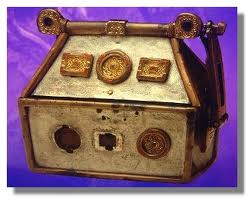
Reliquary, as in a shrine or container of relics. The only focus here is on the relic. A reliquary would still be a reliquary if no one looked at it. Arts organizations that are “all about the art” are reliquaries whether they deal in visual (fixed) or performing (variable) work.

Hajj, as in a regularly occurring pilgrimage to a holy place.. A pilgrim is required for a hajj, but the intent is for the participants to be uplifted by objects or experiences. In the arts hajj, it is the audience/visitor who is transformed or edified; the art is fixed and not altered or affected by external concerns, interests, or influences. 

Commons, as in a resource accessible to all members of society. The commons belongs to everyone, even those who do not take advantage of it. .. if a work of art is not speaking to the community, that’s not the community’s fault; their response is either community-focused education or selection of alternative works.

Think through these metaphors in your own creative journey. While you may not consciously think you are creating shrines or a “city on a hill,” the question remains whether the community for whom you claim to create appreciates your work. If not, back to the proverbial drawing board to  rethink the buyer persona for something that resonates more powerfully!


Ingenuity Expressed in Art(isan) Entrepreneurship

John Bogle, founder of Vanguard mutual funds, attended Princeton University and was fascinated with entrepreneurship. In his senior thesis in 2006, he cites Joseph Schumpeter as the first economist to recognize how start-ups are so vital to the national economy. Schumpeter was understood to advocate for the fact that entrepreneurs are motivated by the following two characteristics (more so than materialism):

  1. “The joy of creating, of getting things done, of simply exercising one’s energy and ingenuity,”  and
  2. “The will to conquer: the impulse to fight,…to succeed for the sake, not of the fruits of success, but of success itself.”

Certainly, these characteristics are resonators for many entrepreneurs; perhaps most especially so for art(isan) ones. What? Art(isan) entrepreneurs? What is meant by this juxtaposition of terms? Heretofore, many have considered the creative types to be an island unto themselves, rather that a subset of he entrepreneurial movement that is sweeping our land. Yet, if we were to characterize creative types as right brain entrepreneurs and those who pursue STEM education, career opportunities, and new enterprises as left brain, we can create a new construct that is helpful to understand how to encourage the greater number of people to flourish in what is generally regarded as the Creative Age, successor to the Information Age.

Creative thought processes may be said to represent divergent thinking at its essence–the ability to hold an idea without passing judgment of any type. Systematic and analytical processes, therefore, tend towards convergent thinking-a deliberate effort to arrive at a conclusion based on facts and data. In the Research Triangle Park area of North Carolina, we are seeing nothing short of an epic surge of entrepreneurial fervor, much of it trumpeted as helping our economy–both local and beyond–to improve through enhanced job creation, capital flow, and value creation. Yet, virtually all of the media attention is on savvy technology start-ups that seem to rely almost exclusively on the left brain mindset.

Thankfully, there are overlaps such as the digital art required for serious gaming that brings the two sides of the brain together. Outside of such obvious blends of thinking modes, most who inhabit the incubators, accelerators, and entrepreneurial playgrounds of our region are tuned out as to how art(isan) talent can establish entrepreneurial enterprises. 

The art(isan) population has been challenged to find itself, both locally and nationally, as economic recession has caused many galleries, academies, and the like to cut back on programs, space, and staff. Those who have graduated with degrees in various creative fields from design to fashion, studio arts to music, have found employment hard to come by. In times past, many graduates became instructors in the arts or pursued employment in businesses that served entertainment venues. In order for the creative class to find optimal professional engagement, however, new ways will need to be discovered to help art(isan) entrepreneurs convert their passions into their professions. Like a hero on a journey (think of epics like The Odyssey), artists and artisans must set out to manifest her ideals in her creation. 

Creative types do not need skills training from career development types in order to become successful (and more readily accepted) entrepreneurs. What they need is to find people who appreciate their contributions. Just as indie music has shown huge demand for music that is not recorded in an album format, carried on mainstream radio, and performed in huge concert venues, there exist niches for virtually every type of created expression if the artist/artisan will labor to identify the target market. 

The opportunity to showcase one’s talent in a coffee shop, a multi-artisan boutique, or a street show are all vital to artisan entrepreneurship. By inviting others to experience one’s proof of concept, feedback can be gleaned that shapes the creative offerings going forward. Once enough traction is gained within a target market, the artisan can make decisions about what part of the production and delivery of talent she wants to play without fear of being unable to earn a living just as powerfully as any other entrepreneur.

Artisan holiday support