Why You Can’t Turn the Company Around

Yesterday, we briefly touched on three different types of turnarounds–strategic, operational, and financial. The point was also made that many successful turnarounds are a combination of more than one type. If you have never had experience determining which type fits a given situation, chances are high that you will make some mistakes than could prevent the company’s successful recovery. There are at least two other reasons the desired recovery may never be seen–procrastination and delusion. We aim to explore both of these mindsets, but first want to dive deeper into our definitions of turnaround types. 

  • Strategic – the changing of markets and products, for instance going after new segments of the market.To do so would require new strategies and tactics with regards to promotions, pricing, design features that would need to be scheduled in the turnaround plan to guide management through the remarketing of the company.
  • Operational – transforms the cost structure of the operations. Unloading aged inventory and increasing sales efforts are two examples of use of this method. The operations section of a turnaround plan discusses schedules, budgets, estimating, purchase orders, direct costs, work in process, customer service, and time and dollars to get profitable work out the door.
  • Financial – this section of the turnaround plan ordinarily addresses debt structure, debt payment, accounts payable aging, accounts receivable strategy,  cash flow, inventory turns, revenue projections, and general and administrative cost structures (among other things). The costs recorded are actual, rather than accrual or standard, due to the time constraints of a crisis situation. 

The Danger of Procrastination

Too many companies decide to “ride it out” -like a foolish person in a coastal area with a category 5 hurricane approaching. Staying in the bad situation and only wringing one’s hands about lurking danger is NOT a solution! Management paralysis extends into business operations in the form of delayed strategic decisions. Those who refuse to admit that a problem actually exists do themselves, their employees, creditors, and customer a huge disservice. 

The business continues to lose credibility and money, and the loss of credibility can incapacitate a  leader’s ability to pursue many options. Teams must, therefore, avoid any procrastination and make the decisions necessary to initiate immediate action. Any delay simply makes the turnaround that much more difficult to accomplish.

The Investor Delusion

At this point, another common delusion is that a “white knight” investor exists who will swoop in and save the company with a cash infusion. Turnaround funds are only available when a credible turnaround exists, a plan that, not surprisingly, must include a substantial return for the turnaround investor. A desirable return normally includes the following:

  1. Origination fees for fund placements: 2 to 10 percent
  2. Management fees for recovery oversight: 5 percent
  3. Equity positions (transfer of ownership via stock): 25 percent or more
  4. Redemption based on retained earnings: 3 to 4 times retained earnings

As one can see…seeking the outside investor can make an imbalanced balance sheet much worse in a hurry. Instead, it’s wiser to work with existing stakeholders: vendors, lenders, (employees) and stockholders. Focus on management–not miracles!
Facing the Problem

When the executive team owns the fact that they must find a new, viable solution and they are willing to do “whatever it takes,” a new course of action must be chosen. Three distinct options should be considered:

  • A complete and comprehensive change in modus operandi–and the implementation of accountability and controls. This almost always is a shift to more team involvement in making decisions to counteract traditional one-man rule.
  • Pursuit of a bankruptcy procedure, led by attorneys, accountants, and others to protect the company assets and try to buy time. The turnaround plan is drafted in legal and accounting language and creditors are put at bay temporarily. Everything then hinges, however, on profitable growth moving forward.
  • Retaining a turnaround advisor who has significant experience in crisis situations is often the best choice. Often, bankruptcy filings can be avoided and the cash saved used to fuel a quicker recovery.

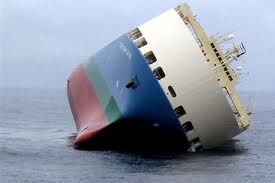
Your choice of option must be agreed upon by the entire management team if you plan to emerge with momentum. Greater transparency than ever before will win morale points with the team and the employees, plus help restore credibility with outsiders. With hard work, tighter controls, and improved leadership, you an “right the ship!”

Growth, Decline & Stabilization Via Turnaround

Clearly, many of the signals of company decline are a result of the growth a company may have experienced. When the growth ends and the business enters a period of stability, management may find itself unable to cope with the lack of growth. The team may continue to manage as if the rate of growth will continue in the near future. However, the plans for an expanding business differ markedly from those of a stable or declining one. When plans are not modified to address the new situation, companies often court trouble. A plan that is carved in granite will become part of the problem, rather than part of the solution.

Case Study: Be Tall Houses

be Tall Houses is an example of a company that has internal and external problems. Be Tall was building forty single-family homes in the $100,000-$150,000 price bracket annually. Sales stood at $4.5 million, and the company employed nine employees.  Internally, there were excessive layers of management, excess wages, material waste, cost overruns, employee morale problems, and information flow deficiencies. In short, the company had almost every signal of decline. Externally, new competition had entered the market. Since Be Tall had damaged its relationships with material suppliers, it could not receive the necessary materials to compete.

The company is now undergoing a turnaround. Part of the strategy is to reduce costs and payroll by a minimum of $250,000 per year. There is also a slump in Be Tall’s markets, so revenue has slipped. The internal elements were changed by laying off unnecessary supervisors, reducing wages, adding a profit-sharing plan, settling lawsuits with suppliers and resuming business on account, reducing costs, and adding computerized information systems to prevent selling homes below cost. External elements are being addressed by rebuilding relationships with suppliers and banks. Finally, Be Tall Houses’ image is being restored in the mind of new home buyers. For example:

  • low offers are being refused,
  • real estate agents are advised that the builder is doing fine, 
  • the builder’s presence in the local community has been heightened, and
  • the builder now meets personally with each buyer.

A building company–or any other company–that suffers from problems and decreased volume becomes a part of the industry and/or community “rumor mill.” Stakeholders–anyone who has an economic interest in the business–may begin to discuss the company’s demise before the business feels the impact of declining profitability. Customers may begin to complain about service. Small problems may take on monumental proportions.

Be hesitant to respond to rumors. Telling stakeholders optimistic stories only makes the situation worse when the stories never come true. A company in trouble needs to face its problems and seek advice on how to solve them. By managing the rumormongers part of the solution, rather than part of the problem, the top executive can begin to clear an effective path toward increased profitability.

Stabilization

Once the signals of a declining business are recognized, the hemorrhaging must be stopped. it is imperative that the company determine its future direction immediately. Faced with an enterprise that has suffered deteriorating value, direct and specific actions must be undertaken by the executive team to reverse the downward spiral. Clearly, changes need to be made; the question now becomes: how should this change be implemented?

The Turnaround: Three Methods

The methods employed in a turnaround vary from case to case but can generally be classified as strategic, operational, or financial (or some combination of the three): Strategic is a changing of markets and products. Operational is an emphasis on cost reductions, revenue generation, and asset reduction. Financial is a restructuring of the balance sheet and income statements to generate cash to fund business growth or reorganization.


Common Danger Signals of Company Decline

Previously, we have examined the internal and external elements of decline and some of the early warning signals of each. Notably, we have made the distinction that, while internal elements are easier to control, external elements are capable of being influenced as well. It is the responsibility of the executive team to coordinate marketing and sales, operations and finance in such a way as to anticipate changes in the environment and plan accordingly.

The clear danger signals of decline vary with the stages of decline, and become more serious as the decline intensifies. Some of the common danger signals are as follows:

Common Danger Signals

Early Decline:

  • shortage of cash
  • strained liquidity
  • reduced working capital
  • stretched accounts payable
  • late accounts receivable
  • reduction of return-on-investment (ROI) by 20-30 percent
  • flat sales
  • several quarters of losses
  • increased employee absenteeism
  • increased employee accidents
  • increased customer complaints (product quality, delivery)
  • late financial and management information

Mid-Term Decline:

  • increasing inventory
  • decreasing sales
  • decreasing margins
  • increased expenses
  • increased advances from banks
  • requests for additional considerations from banks
  • late and unreliable financial and management information
  • erosion of customer confidence
  • accelerated accounts payable from vendors
  • overdrafts at the bank
  • delayed accounts receivable from opportunistic customers
  • violation of loan covenants
  • bank used to cover payroll
  • increased interest rates on indebtedness from banks due to increased perception of risk

Late Decline:

  • little attention  paid to profit decrease
  • staff cutbacks without analyzing cause of problems
  • overdrawn bank accounts as substitute for line of credit
  • cash crisis
  • accounts payable 60-90 days late
  • accounts receivable 90+ days late
  • further decline in sales
  • extremely low employee morale
  • eroding company credibility
  • excessive decreased inventory turnover
  • supplier restrictions
  • fewer reports to bank
  • qualified opinion from auditor
  • bounced checks
  • cutoff on supplies
  • credit offsets
  • accounts receivable continuing to age
  • further decrease in margins
  • further decrease in volume of sales
  • increase in uncollectible receivables
  • no liquidity
  • depleted working capital
  • lack of funds for payroll
  • ineffective management
  • attempts to convince creditors that company is viable and that liquidation is not necessary

Signals That Can Occur At Any Stage:

  • decreased capital utilization
  • decreased market share in key product line(s)
  • increased overhead costs
  • increased management and employee turnover
  • salaries/benefits growing faster than productivity/profits
  • increased management layers
  • lost market share to competition, which is not keeping up with marketplace changes
  • management in conflict with corporate goals and objectives
  • opposing directions for company and management
  • sales forecasts that predict that company can sell its way out of difficulty
  • poor internal accounting
  • credit advances to customers who do not pay on time
  • non-seasonal borrowing
  • sudden overdrafts
  • increased trade credit inquiries (a signal that new vendors are being sought out)

Not all of these symptoms may appear; it is sufficient cause for self-examination if some of them occur. As the problems of the business increase, its reputation with suppliers, banks, current customers, and other stakeholders is severely diminished. A credibility gap may occur, placing the business in the position of having to defend itself not just from internal and external factors, but also from a loss of esteem in the business community. Credibility is a key factor to the success of a business. Just as a company’s credibility within the commercial and banking community can ensure its success, a lack of credibility can just as surely cause its demise.


(Internal) Early Warning Signals of Decline

As ominous as uncontrollable external elements may appear, they are not the major cause of business failure. Rather, controllable internal elements are most frequently the problem. The internal elements that affect businesses are finance, operations, and marketing and sales. These are the basic functions over which a company’s executive team exercises direct control. Any business function can be placed within these categories. 

Business management is the force that drives these functions; yet changes in internal elements are at the root of the majority of business failures. These failures do not occur overnight; rather, such business decline usually occurs in stages. Extensive research that the founder of our organization performed suggests that the basic reason companies fail to recognize the onset of decline is simple management myopia or ignorance.

When your team fails to recognize the internal signals of decline, rationalization often ensues, with blame attributed to uncontrollable external elements. This approach appears on the surface to absolve management of responsibility for the company’s problems. For example, a shortage of cash might be blamed on stricter banking standards or lack of demand for the product/service. This “problem” can then be attributed to the nation’s economy.

Management can then take smaller “leaps of logic” to shift the blame to increased competition, which has made the marketplace unpredictable. While a shortage of cash is a symptom of a problem and surely a major signal of decline, the shortage of cash itself is not the actual problem; the problem may be buried deep within the business’s management and accounting information systems. You may be making sales at a price that does not cover the fixed costs of operations, or accounting personnel may not have developed contribution margin, product cost, and direct cost of sales standards. If your “system” cannot measure the causes of unprofitability, how do you know what changes to make?

As with external elements, internal elements can also interact with one another. Finance, operations, and marketing and sale shave a natural interaction with each other and are, in fact, related to one another. any one of these internal elements may cause decline. As the problem persists, the other functions become involved. Operations techniques may become antiquated. Marketing and sales can be in the wrong market with the wrong product. Finance may be unaware of other departments’ changing financial requirements. Such a lack of information flow between departments also signals decline. Businesses cannot survive without information about both internal and external environments.

Coping With Internal Elements

It is unfortunate when managerial tools are not used for maximum benefit. Many companies fail to manage by cash projections; instead they rely on “looking backward” statements like balance sheets and P&L. Budgets comparing projections to performance are critical to effective management. When budgets are tasks rather than tools, your management is weak. Balance sheets can show working capital reserves even when a company is in decline. Changes in accounts is important to track–it can point you to root causes and symptoms of real problems.

Controlling Internal Elements

The internal elements are the factors that should be most familiar to executive teams, but they are often the most overlooked. The very nature of the internal elements is dynamic; they are continually evolving and require constant monitoring. Since managers may be unable to understand the dynamic nature of the internal elements, a decline may go unnoticed for a while. Management’s primary role is to use these elements to maximize profits. Controlling finance, marketing, and operations requires monitoring of all the functions to identify potential signals of decline.


Recognizing a Declining Business

In the past week, we have taken the time to look at characteristics of successful companies. In case you missed one of the posts, feel free to catch up by reading them in order (links below):

  1. How Successful Businesses Plan For Growth
  2. How Successful Companies Market
  3. How Successful Businesses Manage Their Finances
  4. How Successful Businesses Manage Their Operations
  5. How Successful Businesses Create Positive Cash Flow
  6. Revenue, Cost & Capital In Your Business
  7. How Successful Businesses Maintain Organizational Morale

This week, we are “flipping the equation” on you and examining what a business in decline looks like. As you track with the principles shared and lessons learned, you may find yourself to closely resemble a declining business in one way or another. Don’t despair! Knowing what needs to be fixed is important. You are that much closer to success than someone who doesn’t even realize that crisis is around the next corner because of ignorance.

No one is consistently successful. When things start to go wrong, however, the shrewd executive must recognize those events that are catastrophic and those that are not. Early warning signals of imminent business decline can occur both inside and outside a business. Changes in the operating environment due to external and internal elements may signal the beginning of decline. Once an executive team determines that the business is showing some symptoms of decline, the next step is to determine whether the decline is shaping up to be a twenty-four-hour bug or a terminal disease. Can it be treated? Can it be cured?

The Stages of Decline

Stages of decline include early, mid-term, and late periods, and recognition of these stages has an impact on the steps to reverse the decline. In early decline, it is very probable that the business can be totally saved and profitability restored quickly–often within a matter of months. In mid-term decline, the business has been suffering some erosion of value, and it may take a year or more to restore the value and resume profitable operations. Finally, there is a late decline. Sadly, fewer that one-third of companies in this type of serious trouble are able to reverse their decline and emerge on the other side “whole”–with existing management, ownership, and operations intact.

Before examining the warning signals of decline, we should look at the root causes leading to those signals. The earlier these causes of decline are observed, the easier it is to resolve them. The most common causes of decline–from both internal and external elements–are as follows:

The Causes of Decline

  • management by exception rather than by flexible planning
  • delegation without inspection or control–no feedback, review, or reinforcement
  • vertical organization chart with little if any interaction between departments (silos)
  • managers with responsibility for more than five direct reports
  • employees with more than one boss
  • chain of command broken when employees think necessary
  • breakdown in formal communications
  • overreliance on strategic plan
  • overreliance on management by objectives
  • senior managers’ abuse of outside activities and company benefits
  • marketing the wrong products
  • marketing in the wrong locations
  • aging workflow management techniques
  • inadequate research
  • inadequate staffing
  • inappropriate sales methods
  • unresponsive financial information systems
  • loss of competitive advantage
  • displacement by competition
  • changing technology
  • buyer preference changes
  • regulatory changes
  • economic changes
  • inadequate understanding of buyer needs
  • inadequate information flows, both between business functions and between company and customer
  • one department or business function dictating the mission, goals, and objectives of the company

All of the above causes for business decline are valid, and any one of them can precipitate the downfall of even an experienced team. Recognizing the warning signals of decline is the next step in righting the ship…