JTECH Your Way to a True Competitive Advantage

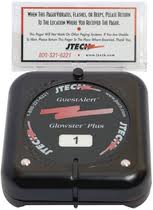
First things first: what/who is JTECH? It’s the former name of a restaurant paging company that eventually became a subsidiary of MICROS Systems. It was founded by a couple of guys from Florida who owned a great restaurant that had too many “walkaways”–people who were not willing to endure the wait for a table seating. In the old days (19990s, mind you!), patrons of their restaurant (like diners in most other establishments) used to have to wait by the hostess stand for an indeterminate amount of time until a table became available. By providing the electronic pager, these guys gave their patrons the freedom–and most importantly, peace of mind–to leave the front door area, relax, and look forward to a sumptuous meal.
But, what of the “true competitive advantage?” To even throw the phrase out suggests that false competitive advantages exist! Don’t they? You be the judge. How many businesses do you know of where price is the main negotiating point in the sales cycle? Unfortunately, way too many. You see, when price becomes the only distinction between a business and its competition, then it is not long before that business enters into a death spiral of decline. At the point that price is all that separates one business offering from another, the battle for customers is lost.

What, then, is a legitimate means of creating a distinctive in the marketplace? Many will argue that Service separates them from others. Alternately, Quality (products) or Experience (Services) are touted as key concepts that persuade one to buy from us versus them. Yet, I have seen over and over (and over !) where these are just words in many situations, without anything to back up the claim–OR anything that is being said that the competition cannot also say!

The original owners of JTECH ended up leasing their restaurant to others because they had found a much better opportunity. It was a great opportunity because and only because they had found a way to monetize the value they had created for restaurants and their customers. True competitive advantage is objective, quantifiable, uniquely claimed, and not a cliche’. (With due thanks to Jaynie L. Smith.)

What was the statement that JTECH developed to carve out such a market -leading position? Of the 50 largest chains who use paging, 100 percent use JTECH! Obviously, they were not able to make this claim Day One. It was something that was earned, one customer at a time.  What absolutely amazes is the recurring bad habit in many companies (and agencies) of developing marketing messages without customer input. Existing customers will tell you why they selected you, what you do better than the competition, and what it would take for someone else to snatch the business away. If you don’t know what your customers would say for each of these categories, you are tuned out. If tuned out, you have no strong competitive advantage positioning!


 

Who Moved My Marketing?

If a traveling salesman from the early 20th century were to be transported in time into modern day, he would have to be astounded at how marketing messages are conveyed. No longer is the day’s work measured by how many individual presentations were made. No–the world has changed quite a bit and we now have access to prospects around the clock through the power of the internet. Printed materials have given away to digital versions, the materials themselves have become flexible tools that are dynamic rather than static, and the information is disseminated through a variety of methods including the ubiquitous social media.

The information in the described value chain is referred to as “content.” The field of content marketing is now the dominant topic in marketing conversations around the world. The infographic below has a lot of messages. Briefly, thought leadership is the goal and may be accomplished through a variety of means. Increased visibility, wider reach, and improved sales are the outcomes of a well-executed content strategy. Credibility is built and enhanced through well-written pieces online that are disseminated via popular applications such as LinkedIn and Twitter.

As you read through the information in the infographic, we suspect it challenges you to think about your own business promotional strategy in new ways. How do you generate content? Who is responsible for amassing it? Through what means do you share your content? Do you have strategies for niche markets? What is your budget (of financial and human capital) for all of this?

Whew! That’s a lot to consider. Think on it. Develop a plan. Get some help if you need to. But, it’s time to stop putting it off. Your company needs a content strategy–because it has become a primary marketing strategy!


Too Much? Technology Intrusion @SXSW

The Washington Post, reporting from Austin, provided coverage of South by Southwest 2012. While there were certainly gadgets galore, applications abounding, and technology that teased, today’s article brought up the premise that technology threatens the fabric of our relationships. The intrusion of interruptive “advances” can overwhelm the brain, says Amber Case, a cyborg anthropologist.

Avi Zev Weider offered a documentary for screening, “Welcome to the Machine,” that attempted to ask the question of how inter-human relationships are compromised. Similar to the Matrix film series, there was a strong undercurrent that the network is not always our friend and we need downtime, to unplug and be human and regenerate.

How does this vein of thought factor into our office environments? The tyranny of emails, interoffice communications, tweets, posts, etc can overwhelm even the most resolute worker. I’ve been in many businesses wherein the employees–even department heads–are afraid to walk away from their desks for fear that they may receive a communication to which they do not have the opportunity to respond in real time.

There is something inherently wrong with being captive to the powerful tools that were created–ostensibly–to make our lives better. In working with employees in a number of companies, I have given the employees permission to work strategically on projects, check their messages according to a predetermined schedule, and enjoy the resulting focus, clarity, and peace of mind.

In my own life, it can be harder to set the smartphone down when I know someone may try to communicate with me. The Tweets, email messages on my work email, emails on my home email, text messages from family & friends, alerts that I’ve set up to keep the day flowing, blog updates, LinkedIn updates, etc just keep rolling in and it can be soooo seductive to allow the flow to determine my pace and disposition.

What can we collectively do? Simple, purposeful choices can break the habitual “checking in” that can be so distracting. Determine when you will pick up your cell–make it less frequent than you’ve been observing. Schedule email reading and response time. Most importantly–schedule “think” and “rest” times. Without them, our collective quality of life, contentment on and off the job, and health–physical and emotional–will all suffer.

One-man rule vs. One-man band

Businesses often can be managed by a strong leader who seems to be involved with every significant decision. In some cases, this type of one-man band is almost unavoidable (e.g. a company with less than five employees, four of whom are in support roles.) However, in organizations that have been fortunate to grow, add management teams, and have complex issues, the controlling leader can either be an icon or an albatross. When is it good–and when is it bad–that the proverbial “buck” stops on one person’s desk?

art by Eldon Doty


Chief executives who make decisions without the input of colleagues engage in one-man rule. This practice is a two-edged sword. While few will argue that group management can slow progress and that one can move more nimbly than many, there is always the latent risk that decisions that are made lack depth, insight, and the benefit of buy-in. The biggest travesty of the urge to “go it alone” is that it undermines management succession by depriving others from the opportunity to make meaningful choice on behalf of the enterprise.

Management depth is always in the list of prime characteristics of best managed companies. Management change then, by default, becomes a disorderly process, at times exacerbated by recession or prosperity. The entire organization is often thrown into chaotic operation and often requires a turnaround thereafter.

Instead of putting one’s peers–and, perhaps, one’s own retirement via earnout/sale–at risk, better to avoid one-man rule and seek to engage others. This concept holds true in may of the sexy technology start-up models as well, wherein the “one-man” is equivalent to the group of initial founders who can function as to inhibit the contribution of successive hires. Often, these top executives are extremely bright and have a very high IQ, but lack the EQ (emotional quotient = emotional intelligence) to build out the model and achieve the important milestones due to an unwillingness to invite the input of others.

More to come on how to build out the management team and empower them to make meaningful contributions…